
 Robert Hamer
Note: Spoilers for one of the most well-known novels in the English language, and a variety of its adaptations, are discussed below.
I watched a lot of Frankenstein movies during the last week of October in preparation for the latest version of the classic story from Guillermo del Toro, which is now available to stream on Netflix. At first, it was just a fun little marathon to get me “in the mood” for the Academy Award-winning filmmaker’s swing at it. But then, the more I watched, the more I pondered its enduring popularity, all the ways it’s been radically (and not-so-radically) reinterpreted over the last 207 years, and where our storytellers might be able to take the story in the future.
I knew I needed to watch the iconic Universal classic from 1931. I also committed myself to rewatching Mary Shelley’s Frankenstein for the first time in twenty years, because back then I thought it was one of the worst movies I had ever seen… but a lot can change in two decades. From there I decided to round out my marathon with at least one “meta” exploration of Frankenstein as a mythology, one unabashed comedy, and one modern reinterpretation (within the last quarter-century) of the story from a novel perspective.
It’s the latter selection that provided my most unpleasant viewing experience and deepest regret. For whatever reason that I cannot for the life of me recall, I settled on Paul McGuigan’s Victor Frankenstein. Maybe I was intrigued by the notion of the story told from henchman Igor’s perspective? I regretted my decision within the first few minutes of screening the movie. It not only became painfully obvious that this was just riding the coattails of Sherlock Holmes, ripping it off in Victorian steampunk aesthetic, gratuitous slow-motion effects, and snottily irreverent attitude, but it doesn’t even do anything interesting from setting up Igor as the POV protagonist. The culprit was easy to spot: Max “Sure, I admit I treated dozens of women in my life like shit and I regularly make public statements of contempt towards women in general but, like, none of that should be held against me and all the women who came forward with specific allegations of abuse and assault are liars and psychopaths and sluts so when you think about it I’m the real victim in all this and also my daddy did nothing wrong on the set of The Twilight Zone: The Movie” Landis, one of my bête noires of modern cinema. Thanks for reminding me why I think you’re a hack, Max.
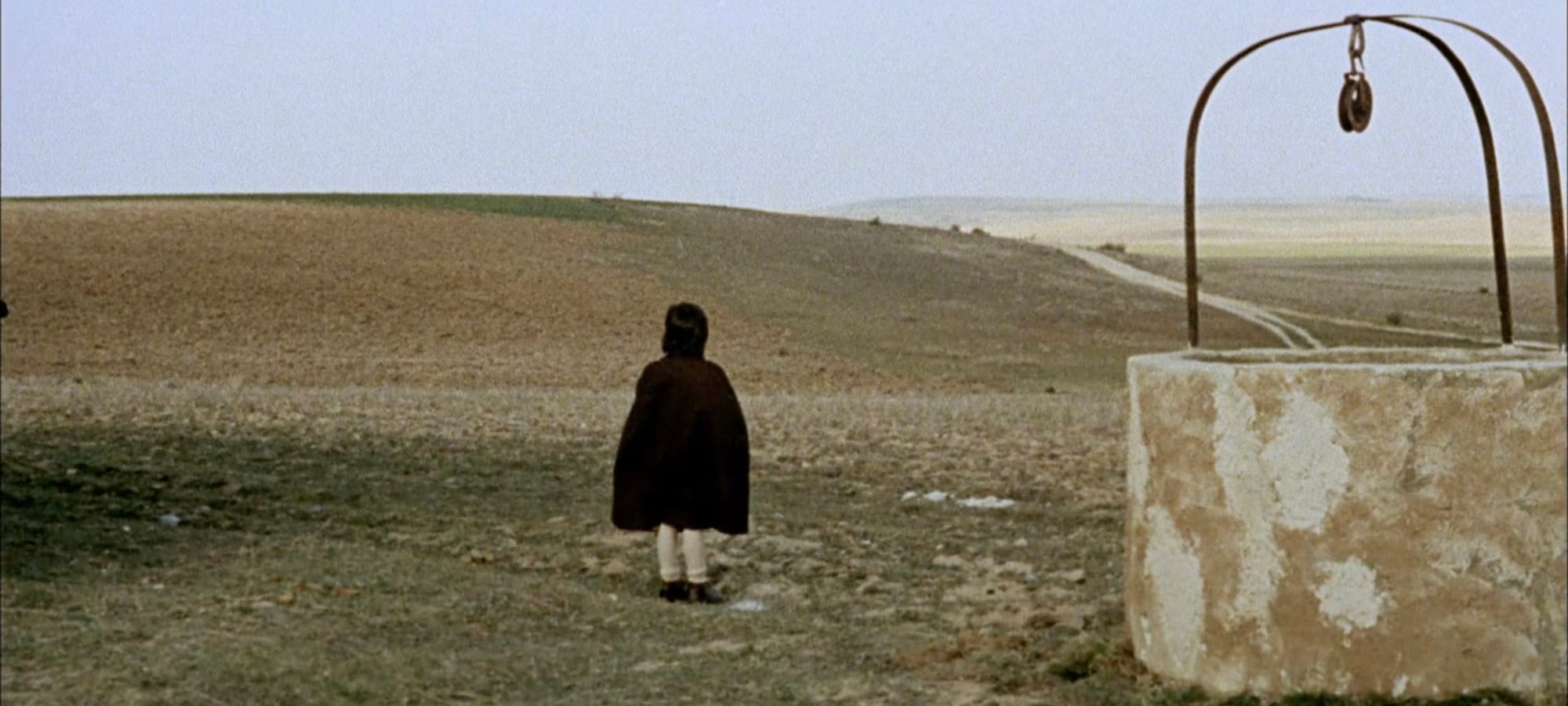
Thankfully, that was the low point of my marathon, because despite an intriguing lineup of “meta” movies around the mythology I considered that included A Nightmare Wakes and Gothic, ultimately, I went with Víctor Erice’s childhood fable The Spirit of the Beehive, and boy am I glad I did, as this was a gem that I had been putting off for too long. The story is a simple one, but it touches on an experience I think a lot of us had as kids: a little girl watches the original 1931 classic horror movie Frankenstein at way too young an age, and it has a profound effect on her psyche as she navigates growing up in Castile at the tail end of the Spanish Civil War. This does something I rarely see other movies about childhood depict, in that it takes into account how stories and media shape a young child’s means of perceiving reality itself, but not in any way that feels patronizing. This has to be one of Guillermo del Toro’s favorites as well: The Devil’s Backbone and Pan’s Labyrinth share so many similarities to this classic bildungsroman.
Speaking of the 1931 classic, yeah, it still holds up. It’s pretty radical to be reminded of how much this departs from the source novel, which by then had long been canonized as an iconic piece of literature. James Whale was a true visionary for the iconography he introduces here, which must have been shocking for audiences to experience for the first time back then. And with all due respect to Bela Lugosi, Boris Karloff delivers the best performance of any monster from the original run of those Universal Monsters films, with such convincing physical gestures identical to a child in the body of a hulking creature. His acting also helped solidify in the popular consciousness the idea that Frankenstein’s creation was a mostly gentle, misunderstood figure… which is interesting, since that’s not only a departure from the creature in the novel, but it’s one of many changes Whale makes in this movie that has carried over in nearly every subsequent adaptation of the novel.
Including ones that market themselves as more “faithful” adaptations! Guillermo del Toro’s approach to the story does this, and fidelity was the selling point (well, maybe it was “Did you enjoy Bram Stoker’s Dracula? Then you’ll love this!”) of Mary Shelley’s Frankenstein. What really stands out to me, in comparing and contrasting the two, is how there is a dramatic devolution of the creature’s aggression and moral agency from Kenneth Branagh’s hilariously goofy vanity project interpretation of the text to del Toro’s take. Robert De Niro’s goodfella creature, just like in the novel, kills Elizabeth as an act of revenge against frequently shirtless seductive sexpot Victor (by total coincidence, the director and star of Mary Shelley’s Frankenstein just so happen to be the same man). But Jacob Elordi’s creature is outright framed by Victor after he accidentally shoots and kills Elizabeth, who then dies in the arms of the creature while it gently comforts her. And instead of killing William intentionally, William sort of dies in the scuffle and condemns his older brother in his final moments in this new cinematic version of the story, literally saying “You are the monster.”
And I suppose that is the point of the original novel, but also, if Victor is the True Monster™ for creating the creature in the first place, doesn’t it diminish Victor’s monstrousness if his creation is almost entirely morally blameless throughout the story? Heck, del Toro’s movie ends with it actively saving the crew of the ship in the Arctic! Again, this is not really The Problem with the new Frankenstein movie (the bigger problem is that Victor’s portion of the first half of the narrative is bloated and boring), but I do feel like some of the essential horror of the story is diminished when Victor is presented as literally the only monster. Especially in this day and age, when a lot of reprehensible individuals are coming to the realization that the then-nascent cretins they shaped and empowered are now turning against them or taking on an even worse monstrousness, a filmmaker presenting us a creature with more of a calculating and malicious streak exceeding even Victor’s could feel more relevant to us in the here and now. Especially since we already got, in my opinion, the best possible version of the Gentle Giant creature just over fifty years ago…

Which leads me to Young Frankenstein, the comedy I selected for my marathon. I personally consider this one of the greatest comedies ever made, a triumphant love letter to the aesthetics of old-timey Universal Monster movies, the most successful marriage of bawdy humor and genuine heart from Mel Brooks, and a showcase for some of the funniest performances in any movie from the 1970s. But after watching it again last week and discussing its legacy with a friend, we realized that we hadn’t seen another adaptation of this story where both the doctor and the creature both survive and more or less live happily ever after by the end. Sure, it’s a comedy, so a depressing ending would feel weird. But also, in this version of the story, both Frankenstein and his creation never give up on the essential humanity of the other. Both characters grow to appreciate the value of empathy and care for others, even when they don’t always understand who they’re caring for. In every other cinematic version of this story I’ve seen, Victor Frankenstein is the real monster. But in Young Frankenstein, no one is a monster.
Why bother making another movie with a sympathetic version of the creature, after this movie already did it perfectly?


Comments
Loading…