

 Shane Slater
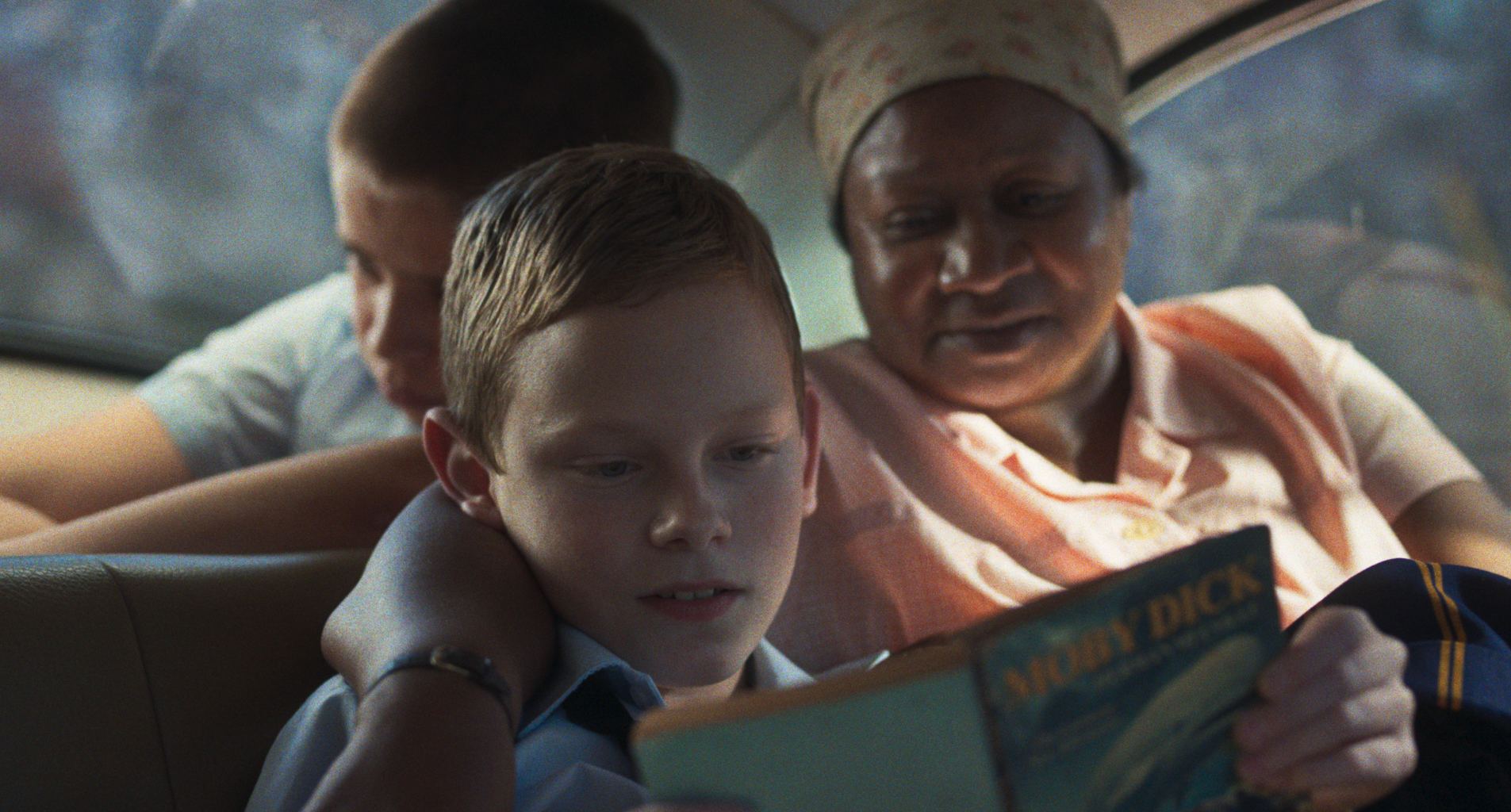
The city of Cape Town is one of the most beautiful in the world. But under its idyllic visage hides dark truths from the apartheid era. That juxtaposition is one of the central themes of John Trengove’s new film The Smell of Apples, based on the novel of the same name. It follows an 11-year old White South African boy, who becomes awakened to the severe cruelties of the 1970s apartheid regime and his complicity in it. After its world premiere at the Toronto International Film Festival, Awards Radar interviewed Trengove to discuss the making of the film and its intriguing perspective.
Shane Slater: What drew you to adapting this novel to a film?
John Trengove: This novel has been with me since I was a teenager. I read it in the 90s and reread it over the years. I’ve always loved it. I’m an Afrikaner, grew up in the last 10 years of the apartheid regime. So the novel really resonated with some of my own experiences. Particularly, the way in which, as a child, you kind of come into the world, and you take for granted what’s around you. The world is ordered and safe, and everything seems good and right. And then slowly, there’s this kind of growing awareness that there are problems in the country and unrest in the townships, and it’s not safe to go here, you know? So a kind of weird tension, I think, between what you see and what you feel. And I just think that the novel articulated that so brilliantly.
So when I first read it, it was the first time that I’d encountered anything that described this experience that was familiar to me. Then over the years, it’s just kind of stayed in me. And somewhere I think 2017, I was approached by Eric Abraham, producer with Portobello, and they had the rights for it. And I said, oh my God, I love this novel, and I just jumped at the chance to to adapt it.
SS: There are other films surrounding societal horrors where the children are very innocent and unaware. But the children in this film have a sense of the injustice, even if they don’t know the full extent of it. Could you touch on this perspective?
JT: Yeah, I think it’s important. It’s also about the age of the protagonist. You know, he’s 11, so he’s innocent in the sense that he can’t grasp the full extent of what’s going on, but he’s also not that young to not understand the kind of power that he is able to wield within the household. There’s that scene where he tells on Neville, and he sort of waits for Doreen to be out of the room and tells his mother about Neville being in the house. And I love that. That moment is really interesting to me and really telling because you get a sense that he’s understanding the power of his words, even though he doesn’t necessarily know what they will lead to.
And I think that’s that double edge, and I think when you get right down to it, the film for me is about firstly how children are instructed to maintain a status quo. You know, there are things we talk about, and there are things we don’t talk about, and there are things that we pretend don’t exist. We protect the father at all costs. We close ranks to protect our own image. So these are all things that are ingrained from a very early age, and they are the kind of building blocks that sustain a system like apartheid. And so, in the course of the story, you have this kid, this protagonist who becomes complicit before he even completely understands what he’s complicit in. He’s already part of the machinery of white supremacy.
SS: My typical idea of an apartheid era film takes place in Johannesburg, but this film is set in Cape Town. The cinematography seems to intentionally draw attention to the tragic irony of the evils of apartheid happening in such a beautiful city. How did you approach the depiction of Cape Town?
JT: The beauty of Cape Town, I mean it still applies today, you know? It’s sort of a mask for all kinds of darkness and and injustice. But it was particularly fitting, and I’m sure that’s why the novel set the story where it did, because you create this idealized utopian existence, and it’s also a kid’s experience. So everything is a little bit more glorious and sun-kissed. So yeah, that was definitely part of the entry point of the story, because you’re talking about apartheid from the perspective of this insulated bubble. The intention was to first seduce the audience into a world that seems kind of perfect before the cracks start appearing.
SS: Celeste Matthews has such quiet power as Doreen. What was that collaboration like?
JT: We were casting for the role, and Celeste walked in one day. She sat down and said, “This role is mine. You can stop looking.” I love that so much. And she had really good reasons to do that. She is from Cape Town. Her own mother, I believe, was a domestic worker for a White family in a neighborhood not very far away from the one where the story is set. So she’s very, very closely connected to this character. She was saying in the Q&A the importance for her of representing this character and doing justice to this character and bringing something of the truth of this character to the story. It’s a very personal thing for her.
So there was really not much work required. She inhabited the character from day one, and she knew what she was talking about, and I could defer to her. It was a real privilege to bring her on board.
SS: Another memorable character and performance is Alejandro Goic as Mr. Smith. He stands out as the only non-South African, and there’s something but sauve and unsettling about him.
JT: There’s a Chilean general in the novel, so it was really one of the attractive things about the story, that we could tell this story about a very typical Afrikaner family, but they drop in this outsider, you know? And I think because you’re confined to a child’s perspective in many ways, a lot of the political machinations of the story are kind of out of reach. We don’t even try to explain, but I think the Chilean dictatorship, the Pinochet dictatorship, is something that is familiar to a lot of people, and so you don’t have to do a lot of work. You bring in this character who’s clearly South American, but he’s referred to as Mr. Smith from New York.
And immediately, I think it’s one of the first things where you kind of go, “Oh, what on earth is going on here?” It sort of keys us into a much broader and sinister political context. So yeah, quite a delicious character, and his role is to kind of set off ripples. He doesn’t enter into the story really. He doesn’t become active in the story. But he’s a kind of mirror and a catalyst for the characters. So he’s suave, cultured. An interest for Leonor. He’s a bit of a rival for Johan. He’s a caregiver for Marnus. He plays the piano. So he’s just there to kind of set off these little frictions and sparks.
And yes, I think the idea that we understand at one point we hear him talking about torture, and so we understand that he is intrinsically evil, or he represents some kind of evil that enters the story a bit, like a home invasion. But he’s dressed up in all these other layers of sophistication, and I think that mirrors the theme of the film: that we’re in this place that looks normal, that looks cultured, that looks civilized, but there is this darkness and violence that underpins and supports this society.
SS: There’s almost a separate standalone narrative within the film that explores masculinity and father-son relationships. Was that very prominent in the novel, or was that something you chose to amplify?
JT: Marnus’s relationship with his father is sort of a big part of the emotional engine of the film. Obviously, my previous work relates to masculinity and its different forms, and so it was definitely an entry point for me. But it was also something that could bring me to this other thing that I was really interested in. This idea of what happens inside the White bubble and the things that parents teach their children in order to to sustain a kind of evil.
SS: You’re very careful about not showing the extreme violence until a very shocking slideshow scene. How did you arrive at showing those images?
JT: We’re talking about this bubble that is insulated, and these children that are so sheltered and protected from the truth, and you have the character of Leonor, the mother, who is working so hard to to try and protect them from what she clearly knows. And I think the slideshow is the moment where she ultimately fails, where the bubble bursts, where the family life and the war and bloodshed kind of intersect. The walls come crashing down. So it’s an important scene for that reason because it’s really where the illusion completely breaks down. Up until then, it’s sort of like a dripping tap, and then suddenly there’s no hiding anymore.
SS: Where did these images come from?
JT: So, it was called the Secret War. South African forces were fighting in neighboring countries, resisting independent independence movements, fighting communism, supposedly. So some of those are actual archival images, and then we mix those with images that we created ourselves. Family photos from various photo albums, a little bit of Photoshop. It’s a hybrid of of different things.
[This interview has been edited for length and clarity]


Comments
Loading…