

 Steven Prusakowski
The more things change, the more they stay the same. In the world of HBO’s The Gilded Age, set in 1880s New York City, may be separated by nearly a century and a half, but this idea is always evident. Beneath the lavish costumes, exquisite mansions, and social etiquette, which today certainly often feels like a thing of the past, are problems that feel quite familiar. Women’s rights, racial inequality, the growing divide between economic classes, and the pursuit of power were essentially all on the ballot this week. While set in 1886, the characters’ struggles are as timely as if the series were set in 2026.
Awards Radar attended a recent HBO press conference at the world-famous Plaza Hotel celebrating the show’s fourth season, the cast discussed many of the challenges facing their characters and just how much their world has in common with today.
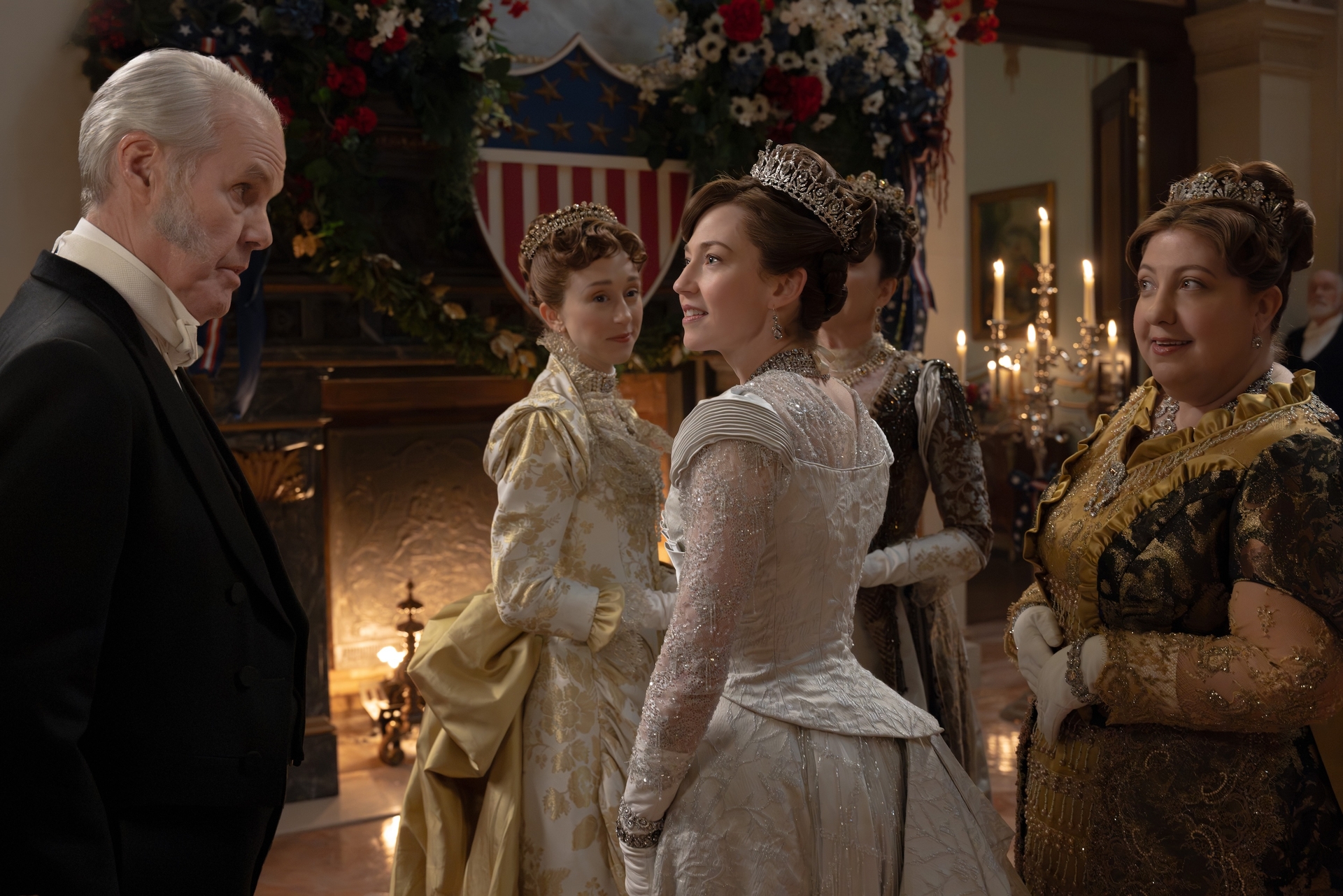
For Carrie Coon, who plays the endlessly ambitious Bertha Russell, when asked whether her character could ever find happiness, the actress questioned whether happiness is even a luxury many women can afford.
“I don’t know that the question of happiness is one that some women, in particular, because that’s the experience I can speak to, or have the luxury of asking. So much of what it means to be a woman in the world is about survival,” responded Coon. “Of course, Bertha has every advantage in the world, as do I. I live a life of tremendous privilege. And yet, the dance I am doing as a mother and a working mom in a society where both of those things are somehow wrong is not an easy one.”
Coon connected the pressure felt with her concerns about modern-day civil rights and women’s healthcare. “I feel that the erosion we are experiencing in our basic civil rights are going to hit outsider populations first and women also. I mean, the health care crisis in the United States,” said Coon. “Like what’s happening, women are bleeding out in parking lots and dying of sepsis. They’re trying to take our vote away. Like its survival every single day.”
While Bertha’s ambition has helped elevate the Russell family, her husband George, a wealthy railroad tycoon, played by Morgan Spector, is beginning to question the principles that once guided him.
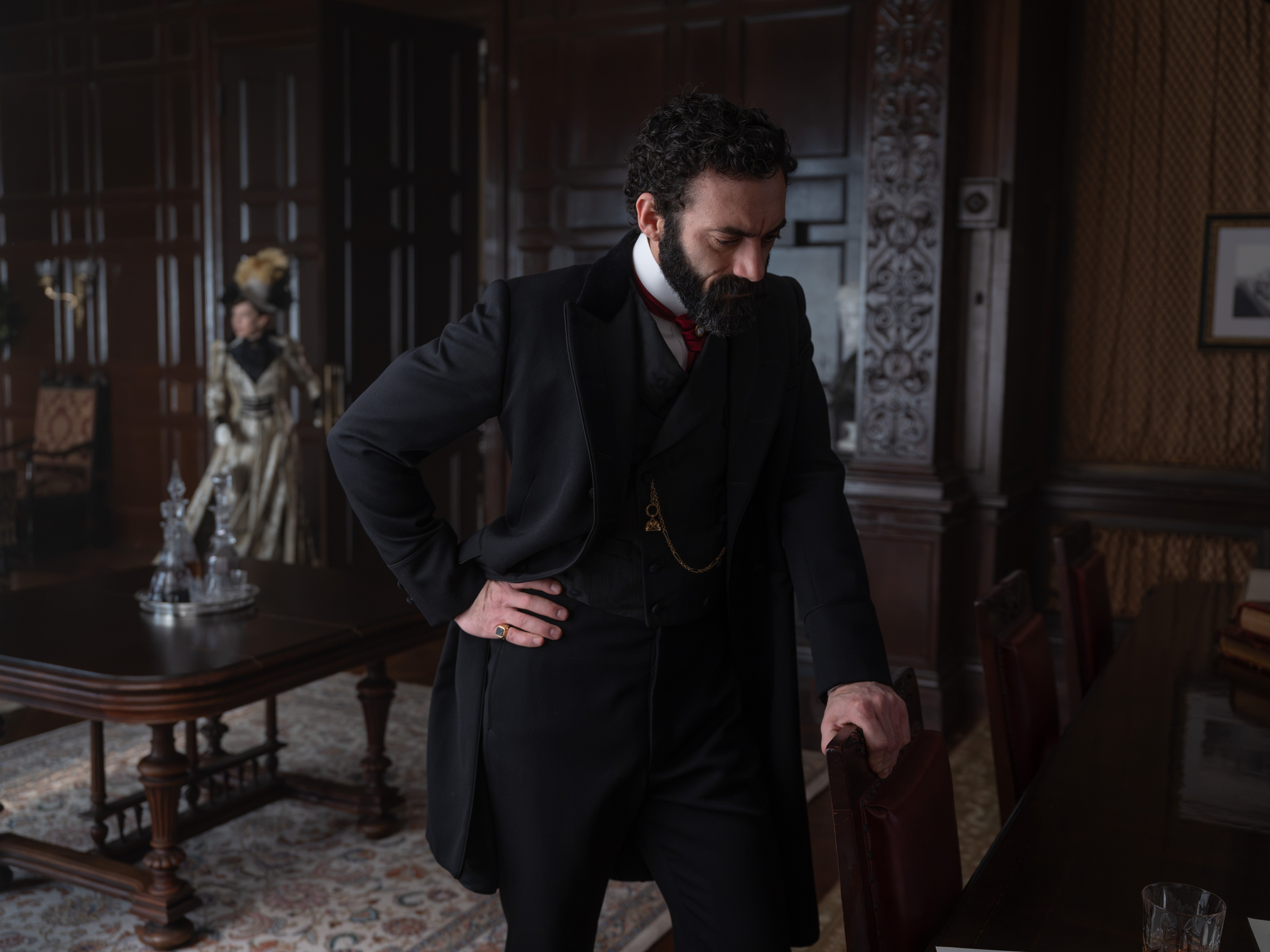
“I mean for George, the relationship with Gladys and the relationship with Bertha are just sort of central to his concept of himself as a good human being. I think both of those things, he’s really failed in both of these areas, and his capacity to compartmentalize and be business-ruthless, but kind and loving father at home, that’s all sort of out the window,” explained Spector. “And now he’s got to sort of figure out how he can think of himself as a decent person and what his principles really are going forward.”
The challenges of wealth and social status go beyond those born into privilege. Ben Ahlers, who plays Jack Trotter, the former servant to the Russells whose clock patent quickly moved him up the socioeconomic prestige ladder, discussed the challenges.
“This is a time in American history where you were really starting to see for the first time people being able to elevate beyond their class, really in global history, because we were such a caste sort of aristocratic system and we certainly suffer from that today in various ways,” said Ahlers.
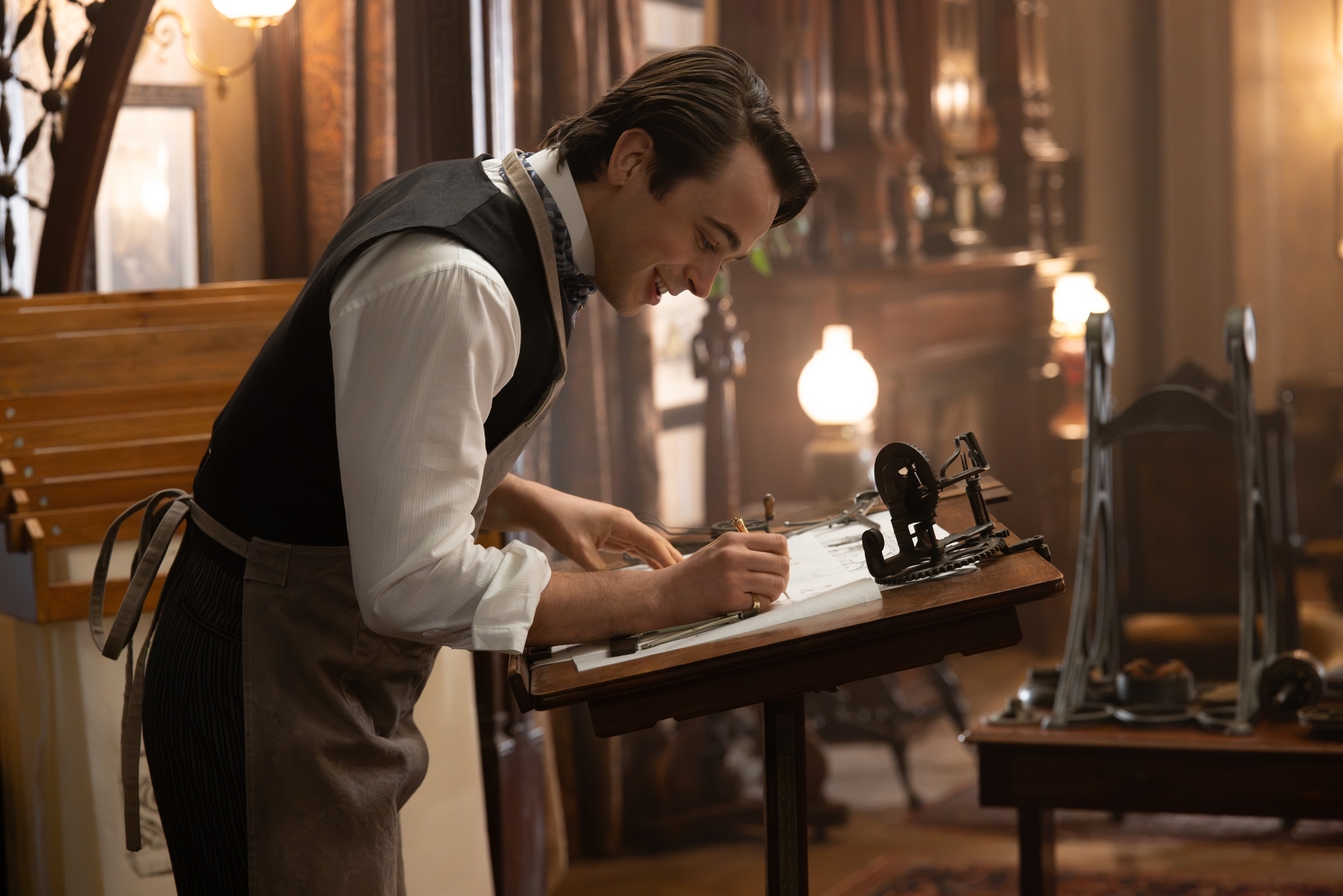
Jack’s newfound success brings opportunities, but also requires him to make compromises. “He sees that in order to exist, you oftentimes have to warp yourself to the given playbook,” shared the actor. “And that’s a negotiation that I think all of these characters really, in the end, have to make, is what are they willing to sacrifice for what they feel is right for them.”
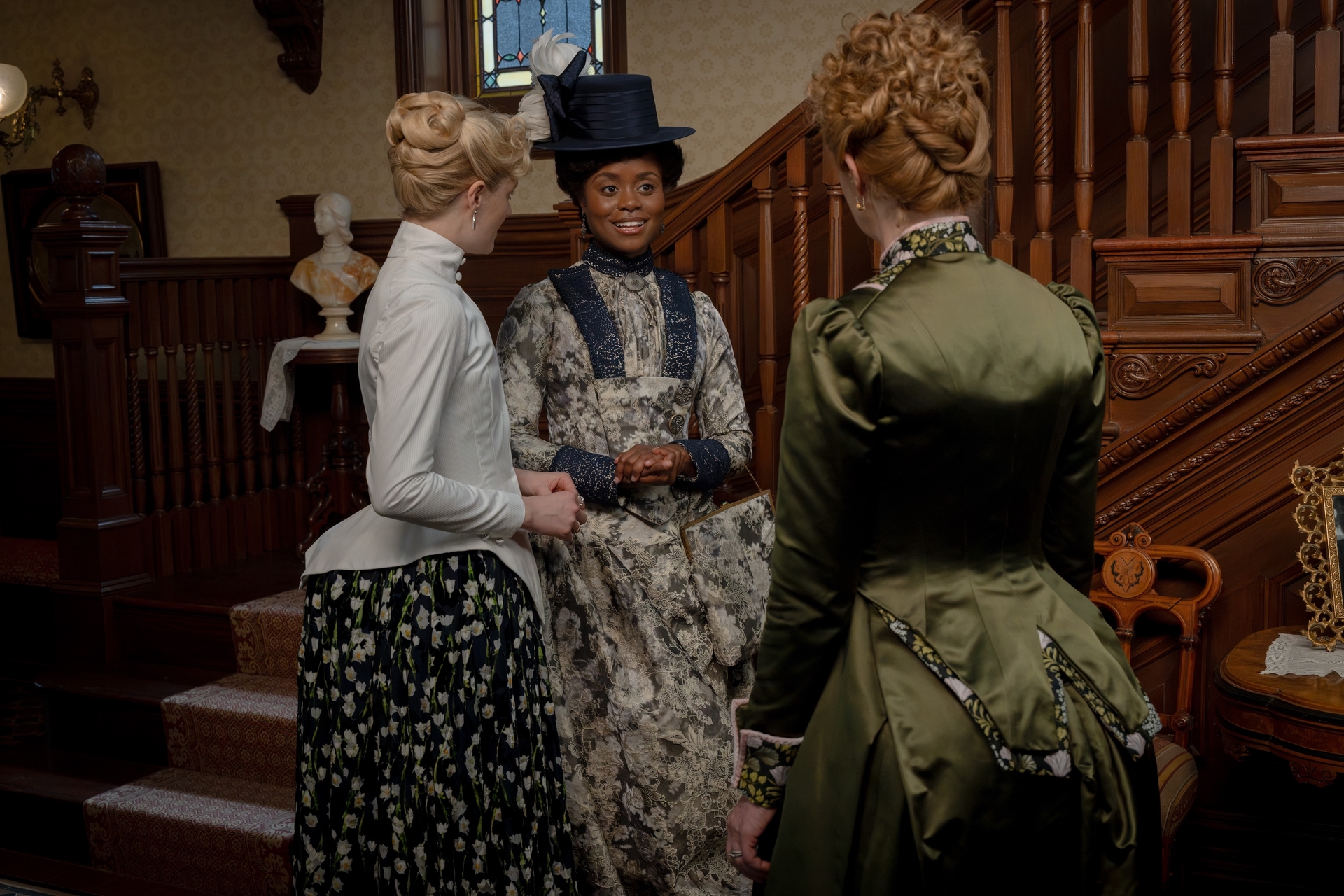
The series also explores a subject that sadly remains an issue today, racial inequality. It is explored through Dorothy Scott, played by Audra McDonald, the matriarch of an upper-class Black family, and her journalist daughter, Peggy, played by Denée Benton. They discussed the unique challenges and pressures Black Americans face, even those from wealthy families, including the expectation that they represent their entire community.
“A lot of people were being told, ‘Look, now when you’re out there in the world, you’re representing all of us. You’re representing us all, whether you want to or not, that’s how we’re being seen,” explained McDonald. “Therefore, we have to present ourselves as our best, we have to protect each other, and we have to support and raise each other up.'”
The conversation about the effects of wealth is woven throughout the show, connecting characters in unexpected ways to each other and today’s world. Ahlers made the observation about how wealth once came with a greater responsibility to the surrounding community – something that would solve so many of today’s problems. The rich did not only benefit from the community, they were a benefit to the community.
“One of the things that I am envious of my ancestors was a sense of participation within the community,” Ahlers explained. “Our rich couldn’t fly off to bunkers in Costa Rica. They had to invest in their community because if they wanted to see the opera, they had to help fund an opera.”
Benton added that Peggy’s privileged upbringing creates opportunities unavailable to many others, viewing wealth from both the nineteenth-century perspective and today.
“But I do think, something to what Ben said, that at this time, because of segregation, it wasn’t like you could get wealthy and leave your community,” explained Benton. “You still lived next to people who didn’t have as much wealth as you, so you still had a responsibility to create resources in space, which is something that is really suffering with black wealth now. You really get to separate yourself in class and kind of not be responsible for quote unquote them.”
Peggy’s struggle goes beyond racial and economic inequality, she also faces the very modern challenge of balancing career and personal happiness. Benton compared her to a certain career-driven character from Sex and the City who may just be played by a current co-star.
“Peggy is like, she’s a trailblazer in the sense that she doesn’t have a lot of people to model her dreams off of, which I love, like, a class of professional working woman wasn’t something that really existed widespread at that time,” explained Benton. “You were either working class or aristocracy. I like to joke that Peggy is the Miranda (Cynthia Nixon) of our show. She’s like, career woman forward, the men can get in where they fit in, and I do think that this season seeing her attempt to really balance love and work becomes this really modern struggle that I think the audiences will relate to.”
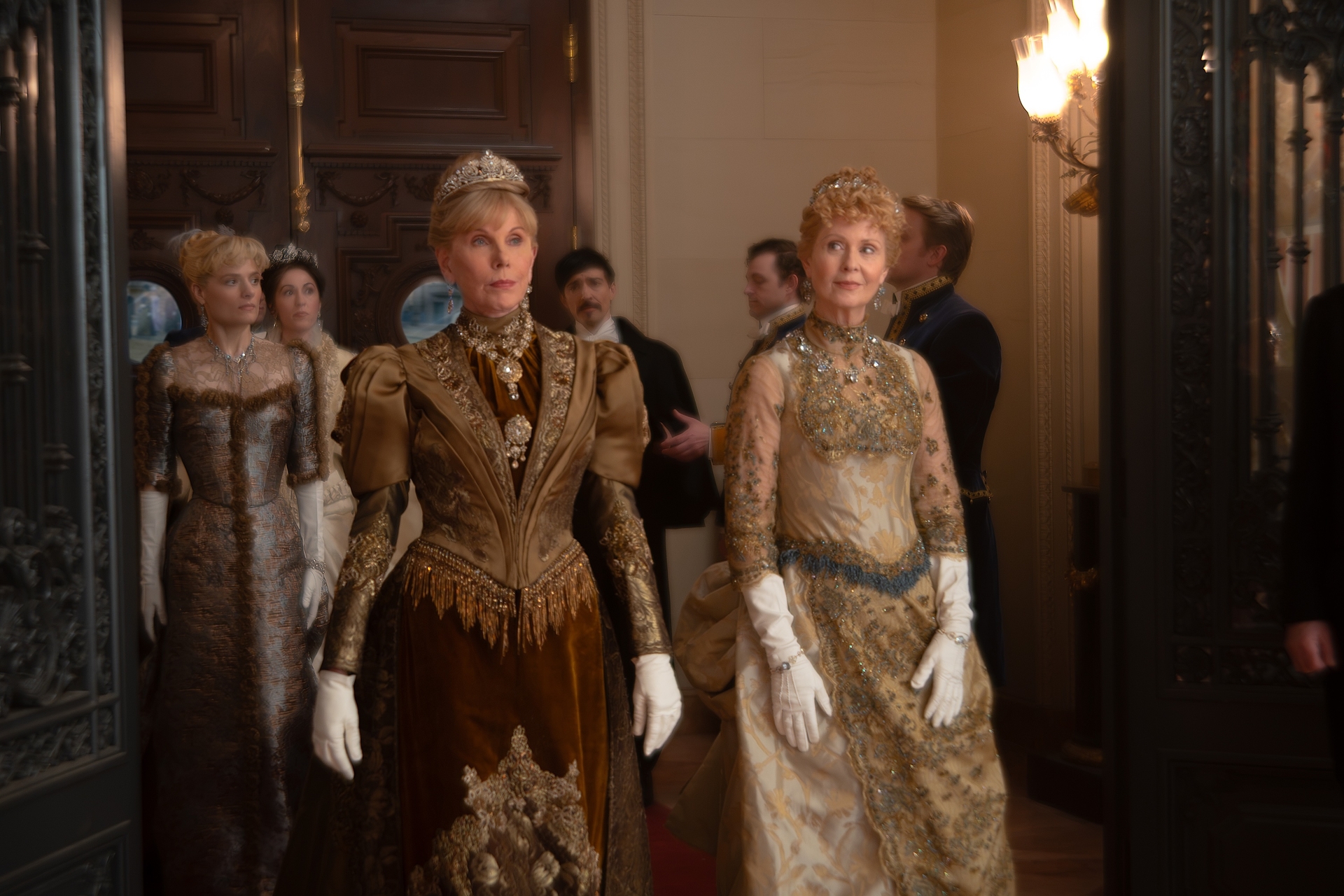
Romance is as big a universal theme explored as wealth in The Gilded Age. And speaking of Miranda, Nixon, who plays Ada Forte, the newly wealthy sister of Agnes van Rhijn (Christine Baranski), shared some insight on her character’s journey, particularly finding love later in life. “I mean, I just felt like I knew what instrument I had been assigned in the orchestra,” said Nixon. “I was in the string section and then I was given, like a drum set. I was like, ‘What’s happening?’”
Ada’s marriage was tragically short-lived, but it gave her character, who had for so long played second fiddle, something she had never experienced before. “I think it’s a wonderful thing that, that despite her age that she could fall in love for the first time with someone who loved her back and who chose her. I mean, that was incredible,” Nixon explained.
“I think it is really a lesson that we just can never learn enough, that whatever your life is, it’s probably going to be very different very soon, in good ways and bad ways. And it’s, you can’t be reminded of that ever too often.”
Oscar Van Rhijn, played by Blake Ritson, Agnes’ son, faces struggles as a gay man in a society where revealing his sexuality could have huge consequences, struggles that remain relevant today.
“I suppose playing Oscar, who is a gay character, in a time when there were huge legal and social ramifications to being found out to be gay, you could say that this is kind of locked in its periodness and that the stakes were much higher then, but I’ve been really overwhelmed by how people have reacted to the kind of effectively the coming-out scene in season three,” explained Ritson.

“I think it’s worth remembering that ‘The Gilded Age’ is a show that comes out in, I think, over 60 countries, is it? And I think there are still many, many cultures, contexts, where coming out is not an easy thing. It is painful, it’s illegal in some countries, obviously, to this day. So, it really is pertinent. And it’s lovely seeing it through this kind of refracted prism of The Gilded Age and knowing that there are kinds of legal repercussions,” he continued. “There was a very real threat, but it persists to this day.”
While the fashions, technology, and so much of how we act in society has changed since 1886. Just as much of The Gilded Age remains timeless. The fourth season of The Gilded Age premieres new episodes every Sunday at 9 p.m. ET on HBO and simultaneously on HBO Max.


Comments
Loading…