

 Maxance Vincent
Describing Bi Gan’s Resurrection, which won the Prix Spécial at this year’s edition of the Cannes Film Festival, in words is almost impossible. It’s the kind of ambitious, aesthetically jaw-dropping, once-in-a-generation cinematic tapestry you should experience for yourself by surrendering almost immediately to its logic, because it embarks the audience on a multisensory journey where the cinematic language constantly shifts, as the medium is in perpetual search of making you dream of something greater than the confines of your own reality.
Today’s hegemonic cinematic society has lost the ability to dream, or, more aptly, isn’t encouraging the audience to think of something greater than the harsh world they live in. In cinema, the audience’s imagination can be limitless, and the possibilities of an entirely imaginary universe feel real. Instead of this, we’re nowadays content with grey, synthetic images with no depth of field or striking colors because today’s studios (read: corporations) only care about their films (now qualified as “pieces of content”), turning a profit, without offering anything of note for moviegoers to latch onto and, more importantly, dream about.
Yet, cinema is the art form in which all of our most complex feelings as humans are projected back at us. It is, in other words, the ultimate dream factory. It reflects human society and encourages audiences to think about the world they live in, as the stories inherently explore their place on Earth. It’s the only mode of expression capable of blending many art forms (writing, photography, music, acting, architecture, to name a few) into a single object, making the audience believe the impossible is indeed possible. When done right, we believe a world like Pandora exists, that ghosts could be real, or that a monster might be hiding under our beds.
Cinema should encourage the audience to dream, yet few in our contemporary landscape have dared to make it an intrinsic part of their filmmaking. James Cameron is undoubtedly the only director, in the year of our lord 2025, to do this within the studio system, through Avatar: Fire and Ash, urging us to dream of a bigger potential of cinema that corporations are sadly crushing. Now, Bi Gan is pushing this thesis even further in his sprawling Resurrection, a 160-minute-long quasi-anthology that begins in the silent era and culminates on the cusp of the year 2000, through a 35-minute-long unbroken shot that’s somehow more intricate and soul-stirring than the form-blurring shot-in-3D, hour-long one-take in his last film, Long Day’s Journey Into Night.
In Resurrection, Bi visualizes a society that has achieved immortality by losing the ability to dream. There are, however, a select few, called “deliriants,” who still cling to their dreams but are decaying much faster than humans who have entirely given up their desire to imagine a world greater than their own. The protagonist (played by Jackson Yee) is a deliriant who is given, via the artifice of a film reel, five more dreams before his body moves on to the great beyond. Watched by Miss Shu (played by Shu Qi), an “Other One” tasked with finding deliriants and eliminating them, the dreamer goes through many periods of time (all realized in different cinematic expressions), and adopts many aliases as he reckons with his last dreams on this planet.
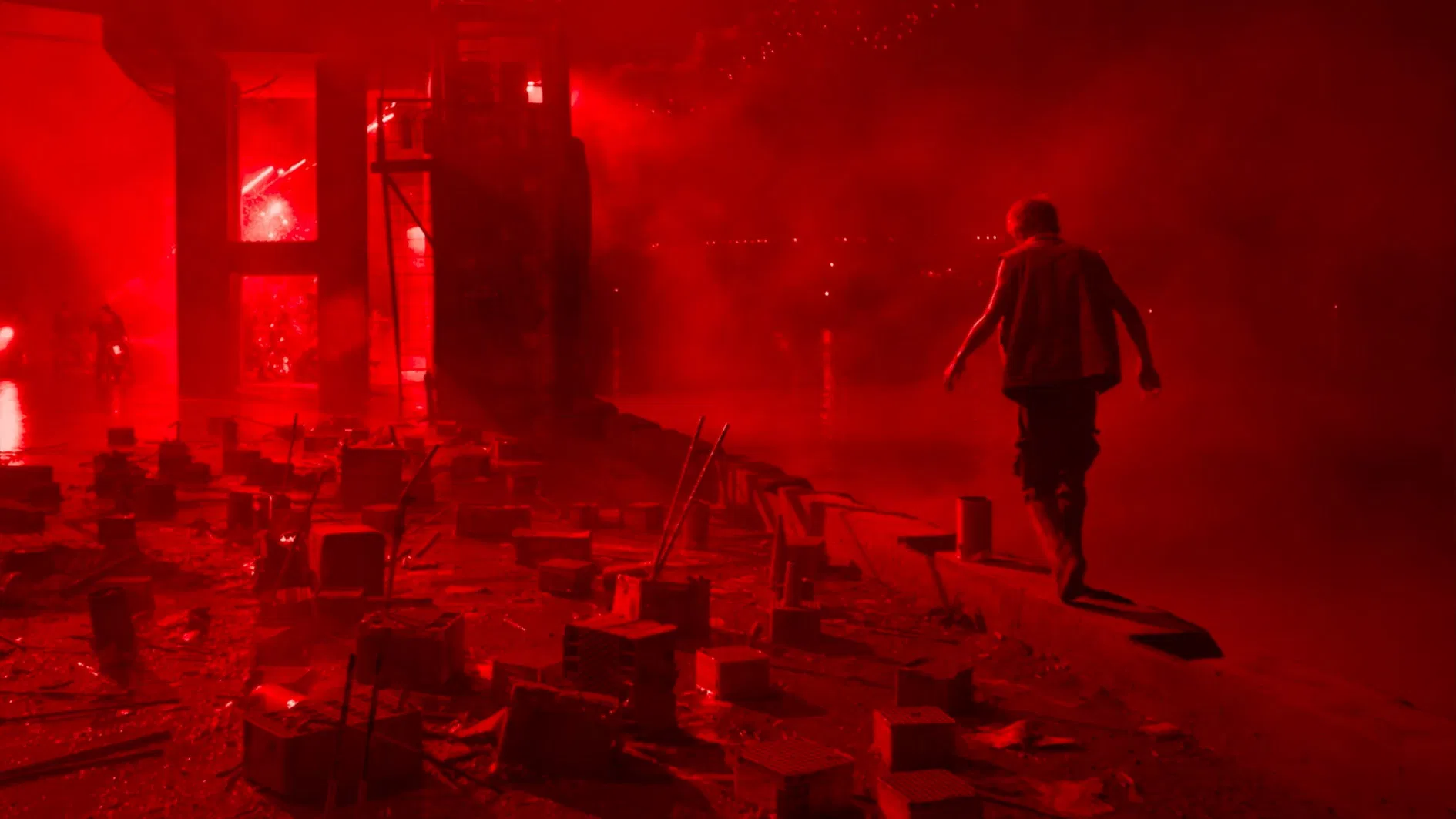
Resurrection is not a hard film to follow, but it’s one filled with so many unwieldy ideas and themes that it becomes a relatively dense object, especially when Bi links each “dream” to the five senses. For example, one dream plays with sound, and another is related to “supernatural powers” through smell. It’s an all-encompassing journey that isn’t afraid to stimulate more than just through our eyes (and ears). We get to feel visceral emotions that are seldom realized on the big screen, especially during the film’s bravura long take, a vampire love story whose tracking shot concludes with a simple – but powerful – gesture that could genuinely shock your system.
This multisensory approach to image (and sound) making is what makes Resurrection an object that dares to remind us what our lives were like as humans when we used to dream. Each fantasy the Deliriant enters is filled with an undercurrent of melancholy that gives his way of perceiving the world so much emotional texture, leading him to prefer remembering the days when all of us dreamed rather than giving it up and attaining a sterile form of immortality.
The Deliriant is cognizant that, when time moves, his time on this planet is achieving its finitude, which is why, after an aesthetically daring cold open that recalls the foundation of cinema, through references from Georges Méliès, Louis Feuillade, German Expressionnism and, of course, the Lumière Brothers (specifically 1895’s L’Arroseur Arrosé, which is referenced and eventually shown in its entirety), Bi’s aesthetic is less flashy and more subdued.
He patiently sits with the Deliriant, who reckons with his own existence, wondering if his desire to keep dreaming was all worth it when society itself abandoned it altogether and will now live forever. Of course, this doesn’t mean that Bi won’t dazzle, such as when he strikingly employs split diopters in the third segment, but the focus on character is extremely important before he lays it all out on the screen in the year’s most visually audacious sequence, which I still can’t wrap my head around.

It’s so easy nowadays to be cynical about film – it was once the primary artform that distilled human feeling in ways that transcended mere “entertainment.” Unfortunately, picture makers in our economy are now turned into “content” makers. The ability to dream is lost when you, as a creative, lack aspirations and aren’t willing to craft art that immerses your audience in uncharted cinematic territories. Through unprecedented formal daring at a scale we haven’t seen in ages, Bi Gan reminds us what cinema can achieve when we surrender to the harsh reality of our world and begin to dream again. Resurrection abandons all notions of space and time to deliver a major cinematic event that draws on cinema history while simultaneously prompting us to reflect on our own human history.
What keeps us alive and enduring in a world where the joy of living becomes harder is our ability to dream, to aspire to something greater than where we are. As kids, we have larger-than-life aspirations and think the world is ours. This becomes nullified when we grow up and realize that we’re meant to be treated as numbers and fill out a corporate void that will sucker all of the dreams we once had as children and even make us forget that our lives were once full of unbridled joy and limitless imagination.
Through his Deliriant, Bi dares us to remember a time when we used to dream, and when our lives were perhaps more stressful but more fulfilling as a result. Our nightmares were cogent, and the dreams we had made us all humans. If we lose the ability to imagine a greater society where all of our craziest ambitions can come true, is this life worth living? More importantly, if we lose the ability to create – and share these creations with the world in communal spaces – what will this planet come to? For the good of our collective imagination, we must keep dreaming, aspire to a better, more culturally literate society, and hope that one day our dreams become reality.
SCORE: ★★★★


Comments
Loading…