

 Shane Slater
They say it takes a village to raise a child, and that sense of community is embodied in both the filmmaking and the story behind Hayden McLean’s short film The Last Dance. Inspired by his own personal history and the experiences of Britain’s Windrush generation, this touching drama depicts a family as they plan for a final dance at their beloved bar when it faces a compulsory purchase order. As the film made its latest stop on the festival circuit at the HollyShorts Film Festival, Awards Radar chatted with McLean to discuss the film’s real life influences and its community-centric filmmaking approach.
Shane Slater: When I was watching this film, it struck that this story is so timeless. Since the earliest days of the Windrush, there continues to be this pushback against people of Caribbean heritage. What was the significance of the year 1997 for this film?
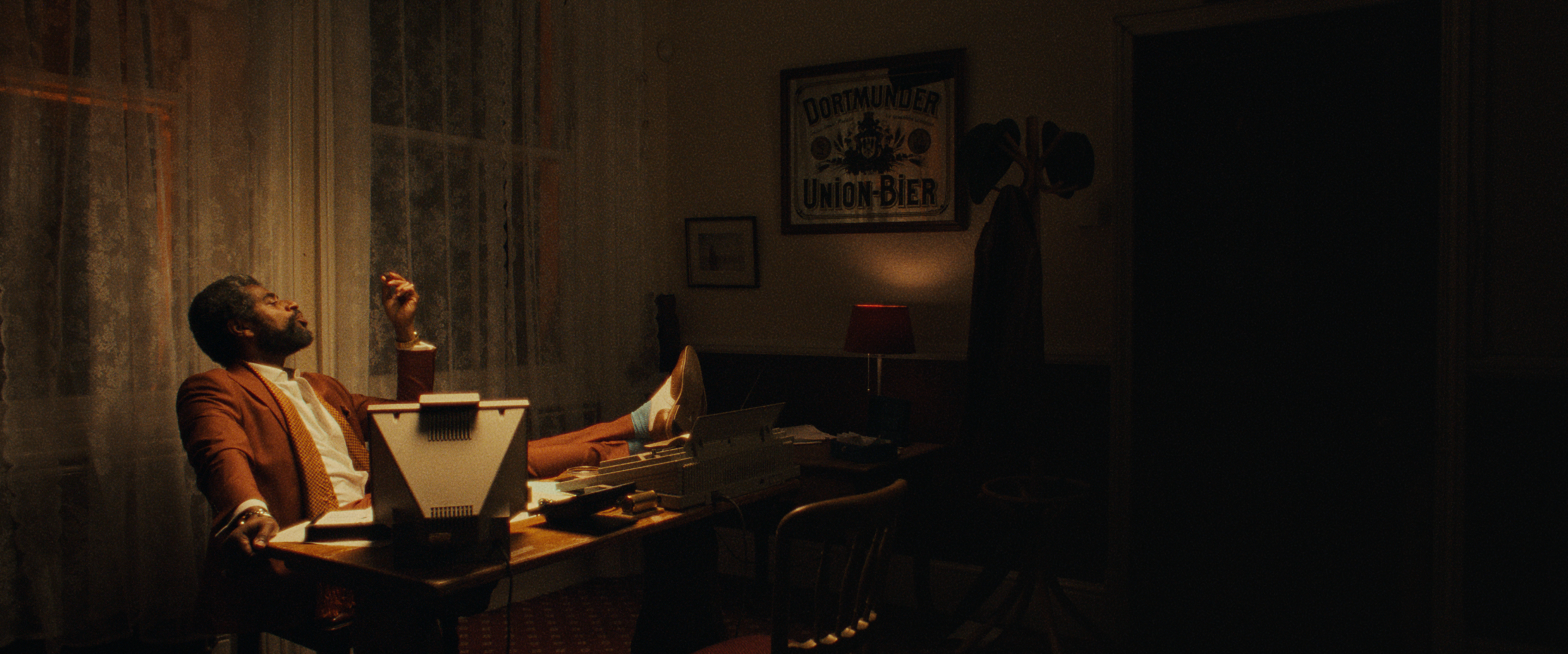
Hayden McLean: Well, in the obvious sense, 1997 was the year I was born. But also it marked the end of an era in my own family’s history where the venue that they owned, or one of which, was in the last year of operation in 1997. My granddad had owned venues in London. very much like the venue in the film for 20-odd years. So from the early 70s to his first venue, which was in North London in Seven Sisters, to his final venue, which was in 1997 in East London.
So it felt like a real closed chapter at that point. The closing of one chapter into the beginning of another, be it my life and also the life of my family. So it felt like the right year to have rooted it in. But also, in terms of Jamaican music and reggae music, it was a very interesting point in the mid-90s. It was like where reggae was giving way to dancehall and obviously the golden era of dancehall music was in that kind of period between mid-90s to early 2000s with the emergence of Beenie Man and the others. But I’ve just felt like what I was able to show quickly would be the old sound and the beginning of a new sound.
I think there was just an interesting time that was happening in London. That was kind of the beginnings of a lot of the gentrification we see now in black communities and, you know, Brixton, et cetera. And kind of marked a lot of my family history at the same time.
SS: With you having this personal attachment to the story, how did that guide the casting of these characters?
HM: It was central, to be honest. Even some of the characters that I didn’t know personally, like Clarkey, for example, I would hear them described to me and it kind of painted a vivid picture. The casing of Blanche, who is my grandma, was very easy because I know her qualities and me and my grandma are very close. My granddad passed away in 2005, but again, I had a close relationship with him throughout my early childhood. And also, I have so many pictures. Those that went before us did amazingly with capturing everything. They took so many photos of the heyday.
One of the characters, Clive, that was my uncle. And it was very easy. I just knew that I needed someone taller, dark-skinned and had a certain quality and charisma. And then the rest was just wanting the space and the characters to feel familiar to all of us. The type of men or women that you’d see at a family party, or your uncle’s friend, or this man you’d see at the barbershop. I wanted it to feel like these people were lived in, especially because we didn’t have a lot of time to establish relationships and arcs.
SS: The party scene has become a staple of British-Caribbean cinema. And in a sense, even pulling that all together is a way of rallying the community. What was it like to film that party scene?
HM: That was really special for me. We shot this for very little money, it was a completely independent film. So it really was just a good old-fashioned Whatsapp message to a group of my friends. We sent it out to maybe 50 to 70 people. And then I just kept badgering people for like, the next month. And a lot of people didn’t really RSVP, so I knew I’d have like maybe 25, 30 and make it work.
I think we had well over 50 people come. And it was our last night of shooting. So, that was kind of the sequence before we wrapped. And it was like Noah’s Ark. It was like, everyone’s coming in two by two. And then, me and my producers were having a conversation and realized there’s actually a lot of people here. It was a real show of love. I couldn’t have done it without my friends, my family, and my of community coming on board, seeing the importance of the story. And it just allowed us to play and have those moments that we needed, to make this feel real and alive and full of excitement, and also the sense of melancholy as well.
What was crazy for me was seeing some of my mum’s friends from back in the day who used to party at the same venue in the 90s, walking into a pub that felt like the same venue they used to party at, knowing how much life has changed. They didn’t have kids, they weren’t married. Some of them are now grandmothers who are reflecting on what it was like in their early 20s to be in venues just like this, whilst one of their friend’s sons has now made a film based on their time or their heyday. That was a very full circle moment, not just for myself, but for a lot of people in our community. And I felt really blessed that I was the one that was able to do that.
SS: I found the film to be ultimately hopeful, even though it doesn’t exactly have a happy ending. Could you talk a bit about the tone and the film’s message of celebrating how far we’ve come and making things better for the next generation, especially in this time of rising racism and anti-immigrant sentiment?
HM: Yeah, I think for me, it’s just reflecting on my granddad’s story. But even more, it’s always about the wider conversation about the Windrush generation, who are one of the most disrespected communities in the whole of the British story. These people were asked to come. After Britain was rubble, this community was asked as members of the Commonwealth, to come and help rebuild Britain and they did. They did the jobs that no one wanted to do. They lived in the areas that no one wanted to live in. And they built a life by hard work and endurance, in a London and a Britain that wasn’t ready to receive them.
So for me, when I look at the idea of building something in that system and in that structure and then someone or a system can then take it away from you, it resonated on a lot of levels. I was able to kind of reflect back on what that must have been like. Their journey, and also what it would have have been like for Jamaicans from the age of 18 to maybe 22, 23, getting on a boat, traveling weeks away to a whole other land, going through all of that, finding some even footing, building a life. And then that structure or foundation of a life that you built then gets taken away or gets attacked in some sense.
And we’re seeing it come around full circle. You know, like you said, with this anti-immigrant thing. We’re seeing it in London where even recently I saw an Instagram video about a pub, one of our only famous Black-owned pubs saying they are getting bought out. And I’m like, I told this story about a late 90s context, but it’s happening in real time in 2025. Black ownership is under attack. Black autonomy is under attack. Autonomy of action, autonomy of thought. And I think that this film for me, I wanted it to leave with a tone of hopefulness because a lot of things just feel so doom and gloom.
But I always try and be upful in life in general. And I think as much as we have challenges, we have amazing opportunities. I think we’re realising as a creative community that we need to come together, that Hollywood or the British system isn’t going to give us everything that we need. We have to come together as a community to work and build bridges together.
From both sides, we’re all trying to build towards leaving a legacy that we can be proud of. Blanche’s line kind of ties together the whole film. “What we did for you, you’ll do for yours and on and on and on.” That was not something that I wrote. That was something that the incredible Martina Laird gave us.
But I think it typified everything that I wanted to achieve. What we did for you as mom and dad, you’ll do for yours as mom and dad and on and on and on. And that’s how we build a more beautiful community.
[This interview has been edited for length and clarity]


a really great read!