
 Robert Hamer
Over the last few days, I haven’t been able to stop thinking about Oppenheimer, the ambitious, epic-scaled, apocalyptic historical drama that ended up being one half of an astonishing cultural phenomenon at the movies last year. Maybe it’s because we’re a film awards site and that was the latest recipient of the highest award from the film industry on the eve of us diving into another awards season. Or it could be because of the news of Academy Award-winning director Christopher Nolan putting together the star-studded cast of his next project.
Perhaps it’s because I was recently reminded of an op-ed I published last year outlining the three “types” of biopics and found myself struck by the realization that it doesn’t neatly fit into any of them. It covers most of its eponymous protagonist’s life, but… it’s not a cradle-to-the-grave structure. It’s nowhere near as avant-garde in its presentation as Neruda… but it’s not a straightforward depiction of the man, either. It does, mostly, laser-focus on the defining event of his life, while also expanding out and tying it back to a Senate confirmation hearing that initially seems completely superfluous until over halfway through the film. This is both the kind of movie the Academy “goes for,” but also… isn’t, in a lot of respects.
Especially since, unlike some other biopics I could name, there’s nothing here to ease the audience’s discomfort. No pat conclusions, no way for us to think to ourselves, “Wow, that was bad, but everything is better now!” And I don’t mean the erosion of nuclear nonproliferation progress and accelerated threats of outright nuclear war, either. Though, yes, “humanity is on a knife’s edge” to a degree unseen since the ostensible end of the Cold War. No, the most disturbing insight of Oppenheimer is its unflinching deconstruction of our own moral culpability in aiding engines of mass death against our judgment; even, against our senses. The delusions of men in believing they can seize the levers of power they serve, into thinking they are the ones in control when seeking glory, only to insist they were blameless and powerless when moral reckoning comes.
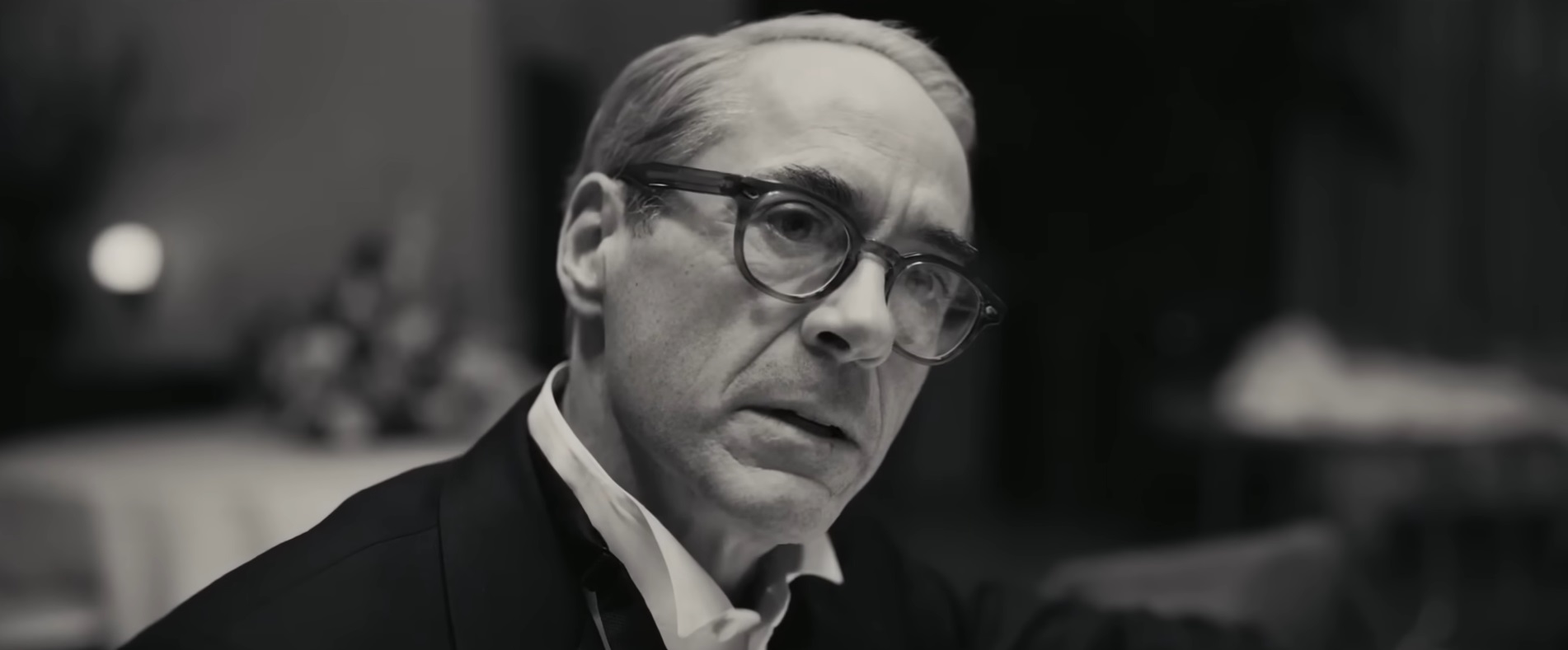
One of the key scenes, I think, comes near the end, when Lewis Strauss finally breaks down and confesses that he was the architect of the downfall of the Los Alamos Laboratory director. But rather than a cathartic “It was me all along, Austin!” moment, he makes some disquietingly valid points throughout his rant:
Which triggers a moment of realization that, yes, he sure did seem to beam with pride at the conclusion of the Trinity test, didn’t he? And his long-suffering wife, Kitty, did challenge him on his suspiciously inert response to the vindictive bureaucratic machine that cast him out after he gifted them the ultimate weapon; was he actually wrestling with inner turmoil over opening Pandora’s Box right around the time he was facing tangible consequences for relatively minor professional faux pas? Or was he simply hoping that retreating into himself would shield him from having to confront the full scale of what made him “the most important man who ever lived?”
But perhaps I’m being uncharitable. After all, he wasn’t some cackling mad scientist single-handedly forcing his research project onto an unwilling United States. Heck, he wasn’t even the one who started the race to build the bomb. Since the discovery of nuclear fission in 1938, scientists like Oppenheimer knew tearing apart matter at the subatomic level releases massive amounts of energy in a very short period of time. As he correctly observed to Ernest Lawrence, it was only a matter of time before someone was going to weaponize it, right? Why wait for the Germans to do it? Wouldn’t beating them to it, and win the war instantly as a result, serve the greater good to humanity?
But wait! Later on in the film, the Germans surrender. They lose before making that discovery. And it appears that Japan is on the backfoot. This world war may very well conclude before needing to throw world-ending weapons into the mix. Hooray! So, with that good bit of news, J. Robert Oppenheimer goes ahead and… pushes through the project to its conclusion, anyway. He, in fact, rushes to demonstrate a successful detonation just in time to notify Secretary Stimson at the Potsdam Conference. Because while the “official” reason for the conference was to manage the postwar peace, giving Harry Truman the ability to hint at Stalin our newfound ability to wipe out entire cities in the blink of an eye is a nice bonus (Stalin’s foreknowledge of our nuclear capabilities via Soviet espionage spoiled the surprise).
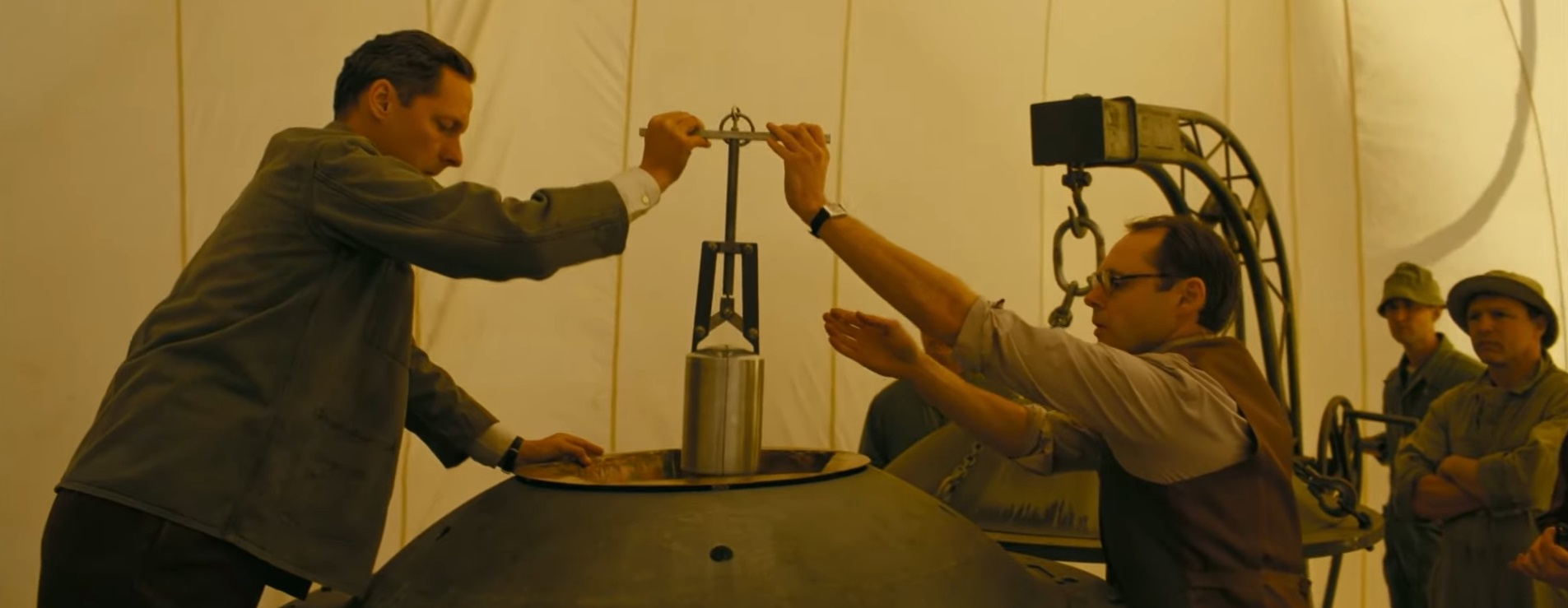
So why would President Truman lend a sympathetic ear to him after insisting on bringing about the bomb, after personally consulting on the selection of Hiroshima and Nakasaki to experience a hellish nightmare method of death unimaginable to anyone in the 19th century? This man who believes he has “blood on his hands” is just some far-left, adulterous little science nerd, do any of the survivors of those two bombings give a shit who built the bomb? No, “they care who dropped it.” The President did. And it’s not like we don’t collectively elect a President or Vice President, right? No blood is on our hands. Oppenheimer is just being a crybaby.
No room for crybabies as the system is jumping right into another, longer conflict at the conclusion of World War II. We’re getting far enough away from this that some of our younger readers might not fully comprehend it, but there was a time from the late 1940s to the early 1990s when two nations decided the preservation of their socioeconomic systems was so important that it was worth obliterating all life on Earth many times over. Something so horrible couldn’t be rewarded necessarily, but it couldn’t be punished too explicitly, either. That would threaten the system’s power. So just revoke his security clearance for… let’s see… how about… suspected communist sympathies? Sure, that’ll work. Don’t send him to prison, but definitely embarrass him just enough to “send a message.” The kind of message that his former colleagues and supporters will cower in the face of, as they also convince themselves that there was nothing more they could do. Because they are probably right. If General Groves or Edward Teller fight too hard for him, they might lose their security clearances, too. Gaining what? Not a fight worth fighting. So many fights not worth fighting, it seems.
And then – after the development of the far more powerful hydrogen bomb, after a missile crisis brings us closer to nuclear war than at any other point in time, after overthrowing a few sovereign governments and engaging in some proxy wars to lock in the new normal of the Cold War – the system will give him a rehabilitation. How about a nice public accolade? And he’ll accept it, too. We always do after we’re beaten down enough. After seeing too many of our idealist crusader friends fail and die, seeing our meager attempts at standing firm for our principles mean nothing. We’re too tired to “resist” or “fight back” against the system, anymore. It’s been so many years. Our supposed “allies” keep failing to stand up for us. Institutions aren’t holding anyone accountable, so why should we? We abetted the system, with our collective apathy, naïveté, and self-interest. Whatever harms it inflicted on you and so many others will eventually be forgiven in exchange for just being nice and comfortable in that system. Why bother rebelling against it, or dropping out of it completely, when someone else just takes your place right away and someone higher becomes the face of it?
Institutions will protect the powerful and move with ruthless efficiency to either expand or concentrate moral culpability to everyone in that system to preserve its power. Just breaking one link can stop the chain reaction that will destroy the entire world, but who wants to be a broken link, even in a chain so ruthless?
Or maybe I’ve just been thinking about this movie lately because of how the Academy Award for Best Picture has a strange habit of “predicting” the fortunes of the incumbent party in the next presidential election. That could also explain it.


Comments
Loading…