

 Robert Hamer
Okay, Alejandro G. Iñárritu, let’s engage with your new movie. Let’s do the thing you demanded multiple times, through the mouths of your characters, from us as we were watching the film. Let’s really dissect your “satire” and what it means for all of us.
If it wasn’t already obvious enough…
SPOILERS AHEAD. SERIOUSLY, I’M GOING TO REVEAL A MAJOR PLOT TWIST.
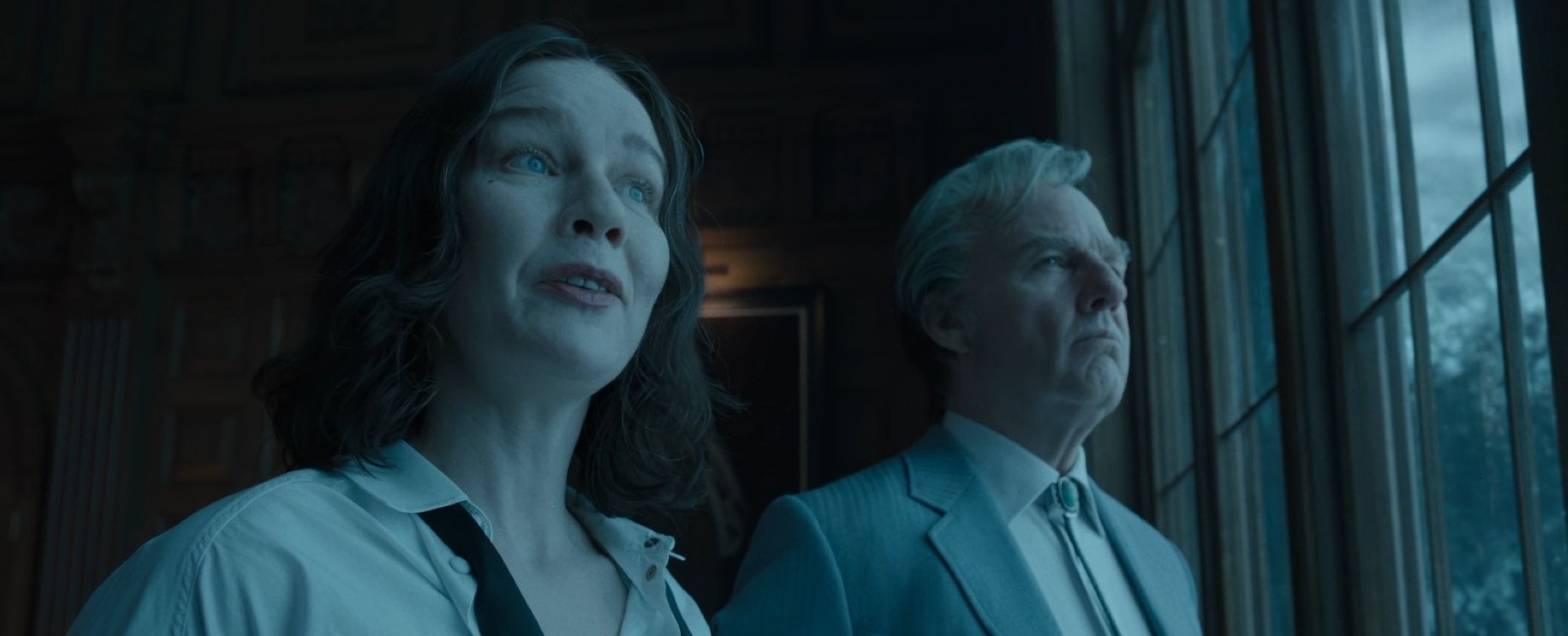
Now that it’s finally out in theaters, we at Awards Radar can finally reveal that the BiG tWiSt of Digger is that none of what you’ve seen in the trailers are actually “real” within the reality of the film. They’re all scenes from a play being rehearsed a quarter-century after the events the play is depicting on stage, and Tom Cruise isn’t actually the eponymous Digger Rockwell, but Curtis Markson, an actor who feels frustrated at having to portray his oil tycoon protagonist as a ridiculous one-note clown instead of the more layered and complex figure he feels the man was in real life. Not only that, but we see glimpses of the post-apocalyptic future he’s rehearsing this play in, and how things as simple as air travel have become acutely life-threatening endeavors. In between scenes, Curtis is frantically trying to re-establish contact with his daughter, who went missing after her scheduled flight to see the premiere got lost in a Category 6 tropical storm.
So Digger is not a satire of “elite hubris, government overreach, and manufactured consent” that I assumed it was when I previewed the movie last month, but a satire… of satire. It’s a post-modern examination of its own subgenre. And honestly, that’s fine! More than fine, in fact. I actually think there has never been a more apt time to release a comedy critiquing the state of political comedy and satire than now. I would be thrilled to see a movie taking the piss out of something like South Park, with its current retreat into cowardly hashtag resistance humor trying to lull us into forgetting the direct role the show’s earlier brand of “Ha ha nothing matters both sides suck equally turd sandwich versus giant douche amirite” Gen X libertarian cynicism set the stage for the state of affairs it’s pretending to decry now. I would be staunchly defending this movie as a misunderstood masterpiece if it honestly examined the elitist condescension that drives the contemporary “political satire” of creatives like Adam McKay and Lorne Michaels, and what effect that has on their audiences. The problem Digger runs into is that it fails at this. Because, in the real world, the chief complaint that an actor as apparently serious as Curtis would levy at a play like Fossil Fools (yes, really) is that it’s bad. When it’s not merely boring and dumb, the scenes of the play we’re privy to are actively unpleasant to watch.
But not only is this observation never made by any of the cast or crew, the Jesse Plemons character, after revealing himself to be Digger’s nephew Kenny Rockwell, asserts how vital this play is in a society that needs to mourn the world they lost through the satire it presents. He says, and I quote:
It’s funny and it’s scary and it’s stupid and it all makes no goddamn sense. But it happened!

But the play we’re watching is not funny. And it’s not even scary. It’s just tedious. And yet, in the curtain call dénouement, we are shown a packed theater of a jubilant audience cheering a triumphant-looking cast who just spent the past two hours mugging insufferably for us. The only possible interpretation we can take from this ending is either 1) Alejandro thinks his satire-within-a-satire is actually, like, good, or 2) he wants us to believe that people in the future will be idiots with a terrible sense of humor.
I can’t conclusively prove this, but based on the timeline of when he first conceived of this project back in 2015, spoke with Cruise about it in 2019, and formally announced production in early 2024, I have the sneaking suspicion that Alejandro was inspired to write his own comedy skewering elites who broke the world after seeing The Big Short, realized at some point that his script earnestly setting out to do this sucked, and then got his old Birdman crew back together to turn his original concept into a metacommentary on itself, eventually incorporating pieces of Don’t Look Up and Asteroid City into the script through its long creative gestation period. And obviously, there’s nothing wrong with taking inspiration from other movies while developing your own. Sirāt borrows heavily from Sorcerer and Mad Max: Fury Road and that movie is a full-bore masterpiece. But Sirāt also had a defined point of view and actually had something to say and wasn’t palpably insecure about itself.
The only complaints Digger can muster up against Fossil Fools are relatively minor aesthetic quibbles orthogonal to the play’s actual value as satire. Curtis is upset that the play doesn’t acknowledge how “nuanced” and “composed” the real Digger Rockwell was, and doesn’t understand why the President and the Vice President are onboard the same plane in one scene when that would never be allowed to happen in the real world. Are we really supposed to believe that Cruise’s experienced stage actor has never reconciled the concept of artistic license? Did Leonardo DiCaprio argue with Alejandro throughout production on The Revenant’s lack of nuance and historical accuracy? Was he arguing with the director over how the real Hugh Glass never had any sons (that we’re aware of, at least) and was only looking for the men who abandoned him to get his stuff back?

And why, exactly, is Curtis’ desire for a more humanistic portrayal of a man who, by all indications, turned the entire planet into a nightmarish hellscape such a major plot point? Now, okay, the steelmanned interpretation of this character trait is that it’s poking fun at a pretentious actor overthinking and overcomplicating someone who was not ever all that complicated. Maybe Curtis Markson is supposed to be the thespian personification of The Atlantic? Maybe the movie is not expecting us to sympathize with his frustrations, similarly to how the whole joke of Kirk Lazarus in Tropic Thunder wasn’t making fun of black people, it was making fun of movie stars who ostentatiously “disappear” into roles of marginalized demographics to appeal to Oscar voters? But I reject this reading for Digger because of how it goes out of its way to confirm that yes, Digger Rockwell was in fact a more complicated and nuanced person than the play portrays. I also reject this reading because of how it resolves that daughter subplot. As Curtis becomes increasingly panicked over the location of her, that’s when Kenny reveals himself to be the owner of a private intelligence/surveillance company and can track her down with just her phone number. And he does! He’s able to get her to the premiere safe and sound because of his Palantir-esque “We Can Track Down Anyone Anywhere In The World” corporation! Hooray for… nepo baby millionaire CEOs and their digital panopticons, I guess?
To lament on the lack of “nuance” in satires against rapacious elites at a time like this is pretty fucking galling, I have to say. That stance may have been defensible twenty, thirty years ago. But now? It is utterly out-of-step with observable reality. If there is one thing the post-COVID era should have exposed to everyone, it’s that the elites who are currently accelerating armageddon really are just a bunch of outwardly villainous circus clowns. People think I’m being facetious when I say that most of Silicon Valley these days is run by adherents of a sex cult that was formed out of a Harry Potter fan fiction, but it’s straightforwardly true. Here’s one of the world’s most powerful venture capitalists musing about how evil, is, like, sometimes good, when you think about it:
Here’s the richest man in the world launching into an embarrassing giggle fit over saying the word “shit” to Joe Rogan:
Oh hey, remember when we got some of the Epstein Files released to the public and we learned that a huge portion of the world’s wealthiest and most powerful titans of business, politics, and academia were all hanging out with the world’s most notorious child sex trafficker? And the worst consequences a tiny fraction of them have received so far is mild public embarrassment and career setbacks? Can anyone seriously deny that, if Digger Rockwell were a real person, he absolutely would have been raping trafficked girls over at Little Saint James? But, hey, our satires of these people lack nuance and really aren’t we part of the problem for laughing at how cartoonishly wicked and bizarre they are? I’m sick of being lectured to constantly search for the counter-intuitive complexity of situations that are not actually complex at all. These entirely comprehensible set of people and circumstances only “all makes no goddamned sense” if you deliberately set out to not make sense of them.
If Alejandro G. Iñárritu really wanted to satirize the state of satire these days, he would have turned his accusatory finger at himself and other out-of-touch Hollywood “satirists.” He would point out how movies like Don’t Look Up always seem to spread out their condemnations as they go on, settling on a diffuse “Fuck Everybody” message to avoid specifically blaming anyone for the absurd situation they’re satirizing. Curtis Markson would have objected to the negative portrayal of Digger’s half-sister Emma (in what may be the single worst performance of Sandra Hüller’s career, which truly breaks my heart to declare) and her green energy initiatives as tiresome reactionary centrist posturing. And, above all, he would have at least tried to speculate on what “contemporary” satire might even look like in a near future dealing with the aftermath of the worst consequences of climate inaction (because remember, Fossil Fools is a twenty year-old revival of a play in the universe of this film). Surely someone setting out to create a meta-commentary on satire would have noticed that satires serving as prescient warnings about a thing looming on the horizon like Network and RoboCop have remained in the public consciousness decades later while retrospective satires poking fun at things after the damage was already done like The TV Set and Vice have had virtually no cultural staying power, right? In fact, wouldn’t it have made more sense, and had been a more profound commentary on the importance of satire, for Fossil Fools to have been written and produced before Digger died, and had been criticized at the time for being too unfair and ridiculous in its portrayal of the self-centered tycoon and then decades later ended up being celebrated by future audiences who came to despise this man who really was every bit the cartoonishly evil villain the play insisted he was? Or, if Alejandro wanted to be cynical, he could throw a twist where the play about Digger paints an inaccurately nuanced and sympathetic portrait of Digger Rockwell, only to learn later that he was an evil clown no, this article is too long as it is, I’m not launching into a writing workshop on how to improve a movie two thousand words in…

All of these problems and failures to make any salient or profound thematic observations are downstream of the core issue that Alejandro just isn’t good at political satire. Did you know Michael McKean, Christopher Guest, and Harry Shearer are actually experienced and talented musicians? Jennifer Tilly would not have been as funny as she was in her send-up of bad acting in Bullets over Broadway if she herself wasn’t a great actress. You can’t examine or parody a thing you don’t understand, and watching Digger try to be “about” a satire that we’re told is beloved despite being painfully inept and unfunny, it struck me that not only does Alejandro not understand what makes good satire… I’m not even sure he understands what satire is.



Comments
Loading…