
 Maxance Vincent
It’s hard to discuss Prime Video’s The Lord of the Rings: The Rings of Power without giving anything away, and even harder when you know exactly what the third season of J.D. Payne and Patrick McKay’s ambitious retelling of J.R.R. Tolkien’s Second Age is tracking. What I can say from the outset, having screened the season’s first seven episodes in advance (only the finale has been hidden from critics), is that the series remains one of the most exceptional mythological tapestries we’ve seen on television. It might have had a rough start with a relatively middling (and ultimately forgettable) first season, but most of the table-setting happened during this run. The showrunners can finally tackle what matters most through meaningful dramatic (and cinematic) territories that, at times, rival Peter Jackson’s popular trilogy.
Don’t get me wrong, The Lord of the Rings: The Return of the King still reigns supreme, but this season has a set piece that ranks among the top three most jaw-dropping sequences this transmedia franchise has ever conceived. As the posters revealed, Sauron (Charlie Vickers) is hell-bent on forging the One Ring, but he struggles to do so after killing Celebrimbor (Charles Edwards) in season two. This season is set five years after the fall of Eregion and sees the Dark Lord retreating to Mordor in hopes of finding what he can to ensure the One Ring is successfully forged.
The ring will be able to control not only all of Middle-earth, but also the rings fabricated by Celebrimbor himself without Sauron’s influence, which were given to Gil-galad (Benjamin Walker), Círdan (Ben Daniels), and Galadriel (Morfydd Clark). It once again follows four parallel stories, with the Elves in Rivendell attempting to defeat the horde of Orcs and Nazgnagôl, the Númenorean resistance of the Faithful attempting to overthrow King Pharazôn’s (Trystan Gravelle) regime, Gandalf’s (Daniel Weyman) continued journey of self-discovery, and the arrival of King Durin’s (Owain Arthur) brother, Thrain (Eddie Marsan), in Khazad-dûm.
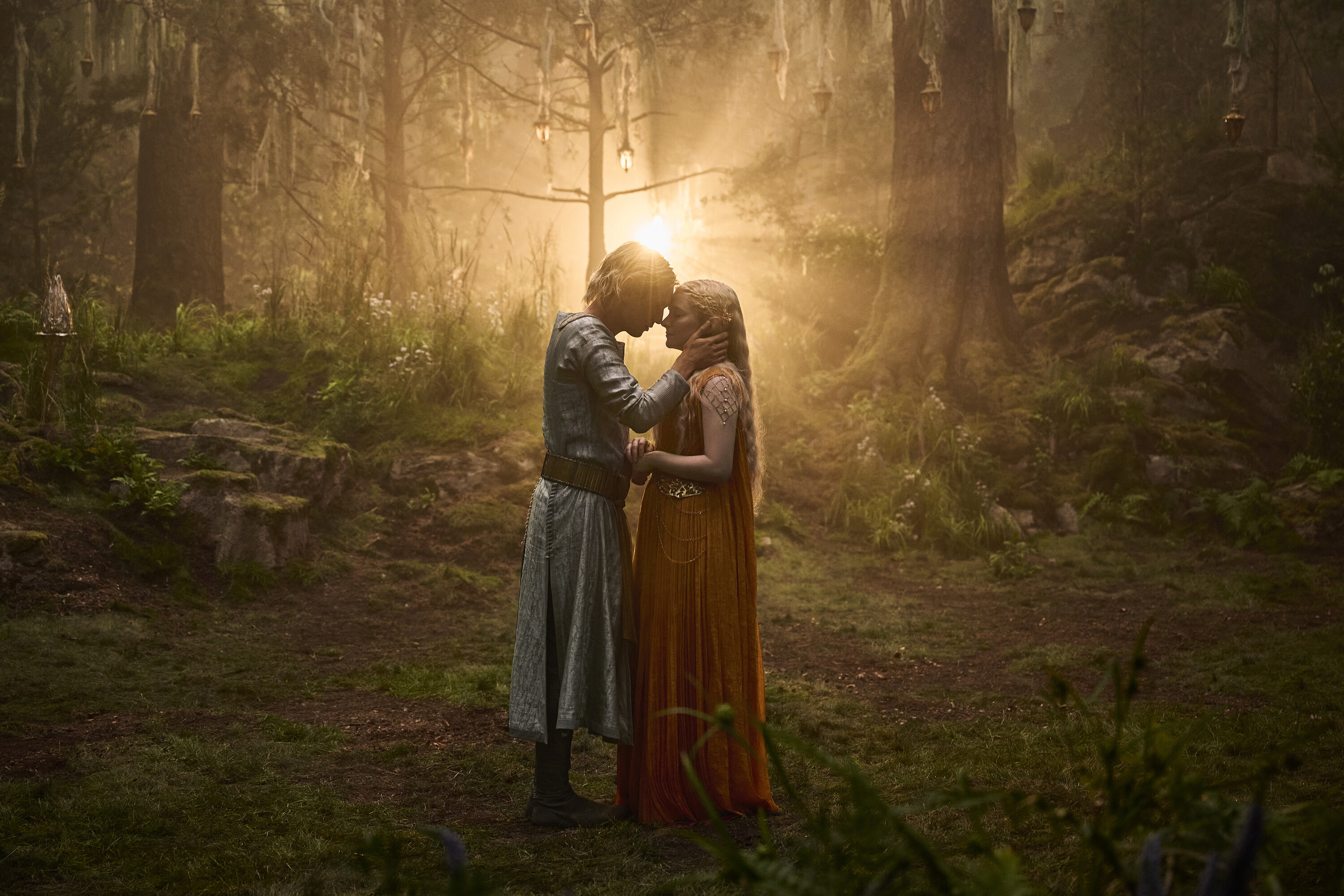
It looks as if factions in Númenor, Rhûn and Rivendell are looking to mount up an army to travel to Mordor, but some have taken risky – if not treacherous – sides. Most, if not all, of season three of The Rings of Power (the eighth episode remains to be seen) focuses on political allegiances forming to fight a common enemy. Gandalf is told early on, by way of Tom Bombadil (Rory Kinnear), that he needs to convince the Dark Wizard (Ciarán Hinds) to form an alliance with him, but he’s in cahoots with Sauron and his Nazgnagôl. The season also takes a much darker direction than the second, which already had its fair share of relatively shocking sequences as Sauron’s hold in Middle-earth became far more prevalent. It’s only natural that the series evolves this way, because Tolkien’s Second Age does not have a relatively positive conclusion, if one has read the texts.
It’s difficult to discuss this without revealing anything, but what I kept thinking while watching the third season of The Rings of Power was how terrifically written and superbly mounted each episode is. The overarching darkness of Sauron’s hold is immediately felt through the intricate, almost disturbing musical compositions of Bear McCreary, whose Nazgnagôl theme is, bar none, the highlight of a series filled with grandiose moments of pure cinema. Perhaps the photography is a bit murkier than in previous seasons, but when the action and drama hit, it almost doesn’t matter. Numerous setpieces remind you why Tolkien is possibly the greatest mythmaker who ever lived, one whose imagination will undoubtedly define the next century of modern-day mythopoeia. Adding layers to a text that is already dense seems daunting, and it almost felt as if Payne and McKay, on their first go-around, would blow such an opportunity.

Thankfully, this is no longer the case. The political drama is clear-cut and emotionally impactful; the characters are well-developed and genuinely emotive. I’ll admit I didn’t specifically care about the Númenoreans in the first season, but the third finally gives us something to chew on, especially with the characters of Eärendil (Ema Horvath), Elendil (Lloyd Owen), and Isildur (Maxim Baldry). The season also meaningfully develops elf Elrond (Robert Aramayo), in his relationship with Númenorean culture, but to say more would likely reveal the actor’s best turn as the character yet, which is released after his BAFTA win in Kirk Jones’ I Swear. One has developed a fond appreciation for an actor who knows how to capture new layers of a character, especially after critical information is given to the viewer that makes you repurpose how you initially perceived him in the show’s first two seasons.
Season three also adds layers to Galadriel by (finally) introducing her husband, Celeborn (Jamie Campbell Bower), into the mix. Details on his presence in the season will be kept under wraps, but one can’t overstate how incredible Campbell Bower is in the role. He shares a note-perfect sense of alchemy with Clark, who continues to bring great emotional complexity to her iteration of Galadriel, especially as Sauron’s hold becomes more pronounced and the fear he holds over all inhabitants of Middle-earth becomes palpable.
Speaking of, there probably isn’t a better actor to embody the deceitful nature of Sauron than Charlie Vickers. And the resulting tension you feel watching him on screen, at almost every turn, almost takes your breath away. If you weren’t fully into his portrayal of one of the most iconic villains in literature history, perhaps the show’s latter half, through a daring use of visual and thematic storytelling, will win you over and blow you away at the same time. There’s an aesthetic precision (and elegance) that has always been prevalent throughout the show’s first two seasons, which reaches its apotheosis during sequences of pure visual power. Jason Smith’s VFX work remains on top form, and the show’s cinematography finally starts to play with the frame.
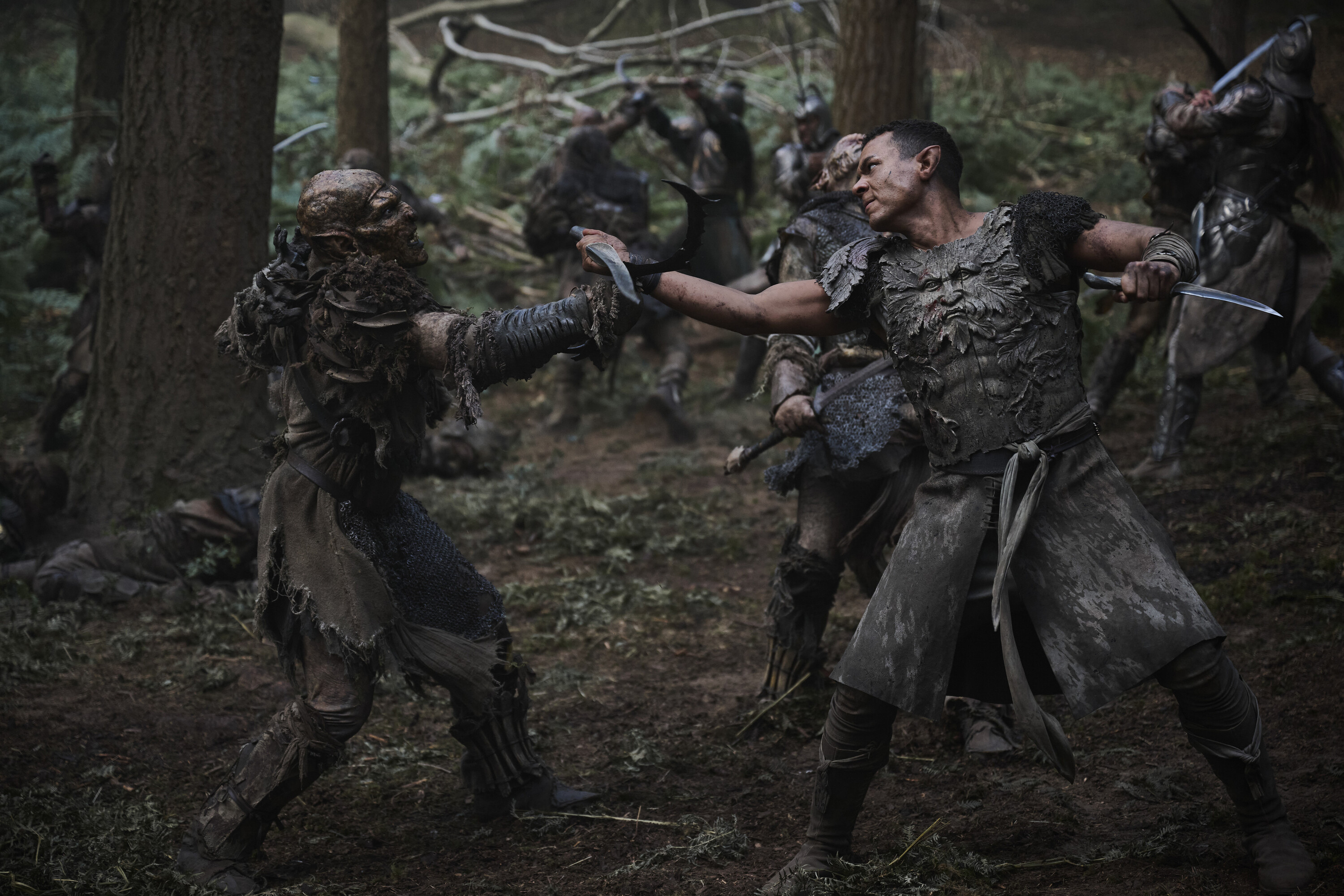
It’s stuff that only the cinema screens seem made of, but The Rings of Power’s cinematic quality makes it a must-watch. There’s no shortage of properly ambitious setpieces that will leave you stunned by the show’s ability to move you through the real, tangible power of images. There’s nothing more incredible than pure visual storytelling, and there’s no shortage of it in what is probably the best season of The Lord of the Rings: The Rings of Power I’ve seen so far. With one episode to go, it’s safe to say the showrunners have spectacularly bounced back from a rather cold first season and given us the Tolkien we know and love in ways once thought impossible to adapt cinematically. They’ve now adapted the Second Age three times and seem to get better at it at every turn. Here’s hoping the finale will be just as good, because this season of The Rings of Power is undoubtedly its most successful yet.
SCORE: ★★★1/2


Comments
Loading…