

 Robert Hamer
“Ṣirāṭ” is an Arabic word. It means “pathway” and in Islamic eschatology, it is the bridge above the fires of damnation that all souls must traverse after the Day of Judgment to reach Paradise. It is as narrow as a hair and as sharp as a sword. Divine intervention may help you cross this bridge… or it may ignore you to your fate.
After taking a few minutes to get my bearings and regain my sense of awareness after being utterly wrecked by Oliver Laxe’s Academy Award-nominated journey into Hell, I wondered what ultimate conclusion I should draw from this movie. Not to suggest Sirāt is confused or lacking in thematic ideas. Far from it — this is a film that brims with ideas about the present and the future of not just the Maghreb, but the entire world. It is a consummate achievement of marrying form to function, never calling explicit attention to its allegorical intent but always lacing it into every single one of its harrowing scenes and escalating tension. Rather, I pondered what I, personally, should take away from what I had just experienced. Especially now, of all times. Especially after some of the best films of last year left me with very different feelings about the same general anxieties on the state of things.
The setup is actually pretty simple: middle-aged Luis (Sergi López) and his son Esteban (Bruno Núñez Arjona) arrive at a rave in the southern Moroccan desert to search for his daughter, who they have not seen in months. The party is already raging, with an endless sea of partygoers losing themselves in Kangding Ray’s oppressive, assaulting, but weirdly mesmerizing diegetic score. Father and son push through the crowds, desperately trying to find someone, anyone, who can point them in the right direction; anyone who can keep their hope alive that she is out here somewhere amidst the endless sand and sweaty bodies and techno music. Eventually, they happen upon a small group of ravers who tell them there is another party deeper in the desert, and she might be there. While he considers this possibility, armed soldiers break up the rave, motivating the small group to escape in their vans, with father and son in hot pursuit.
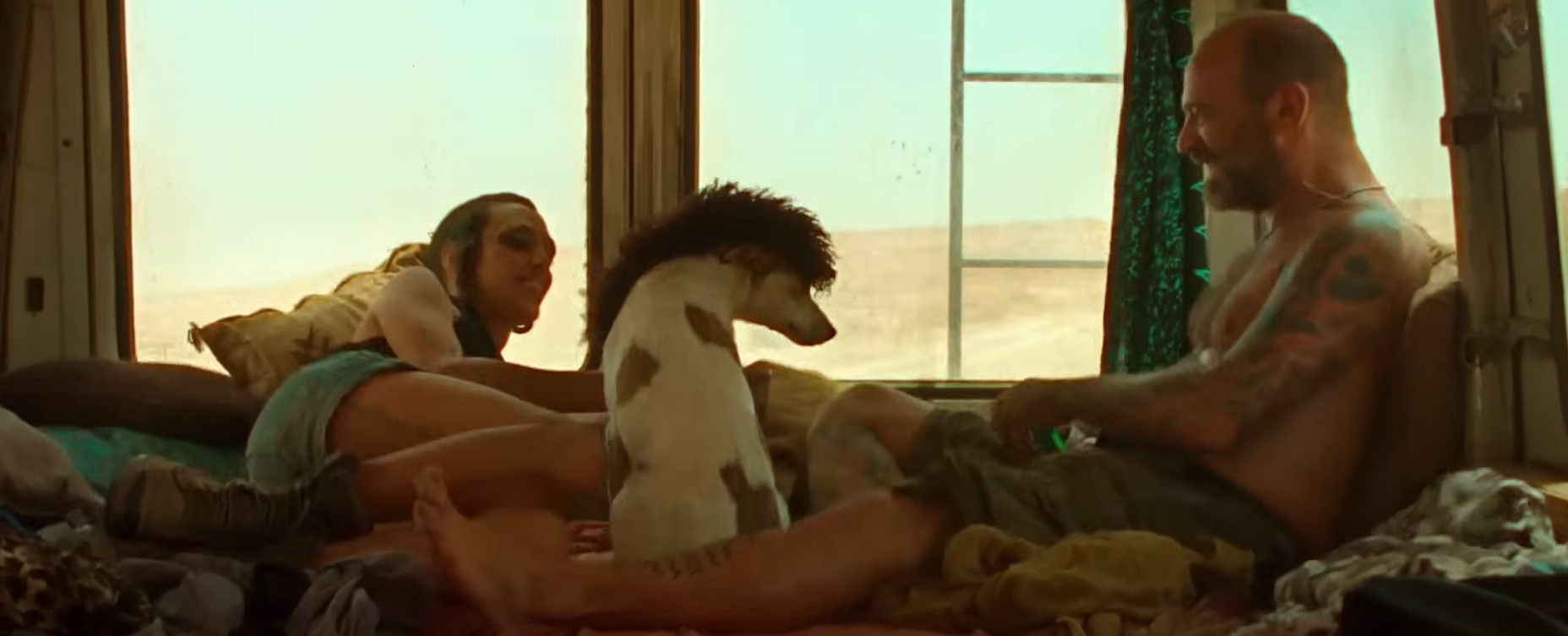
And that is when the nightmare begins. Because that is when these travelers encounter a series of escalating misfortunes and tragedies that only become more harrowing to watch. What keeps Sirāt from descending into tedious misery porn, aside from its masterful synthesis of sound and visuals to envelop you in its disorienting desert fever dream, is how thoughtfully the narrative builds its characters and thematic messaging through the action rather than exposition. This found family that Luis finds himself attached to in his odyssey never sits down for an explanation of their backstory. We’re simply shown their familial dynamics through their brief interactions, their expressions of warmth a humane respite in the storm of chaos surrounding them. This is also true of Luis and Esteban’s rapport; never foregrounded but always present.
But this isn’t just a personal story in an isolated environment. Far from it, war follows them everywhere they go. The travelers escape one ongoing (and, from radio broadcasts, escalating) conflict, only to find themselves imperiled by the remnants of a past one. The dangers of the natural world and the deadly threats coming from the “civilized” world falling apart around them bleed into each other, and just like with its character development, none of this is told to us explicitly. Much like George Miller’s Mad Max: Fury Road and William Friedkin’s Sorcerer, two oft-compared inspirations for this movie, the commentary on contemporary politics and society is laced throughout the film’s merciless build-up of intense setpieces. A masterclass of “Show, Don’t Tell.”
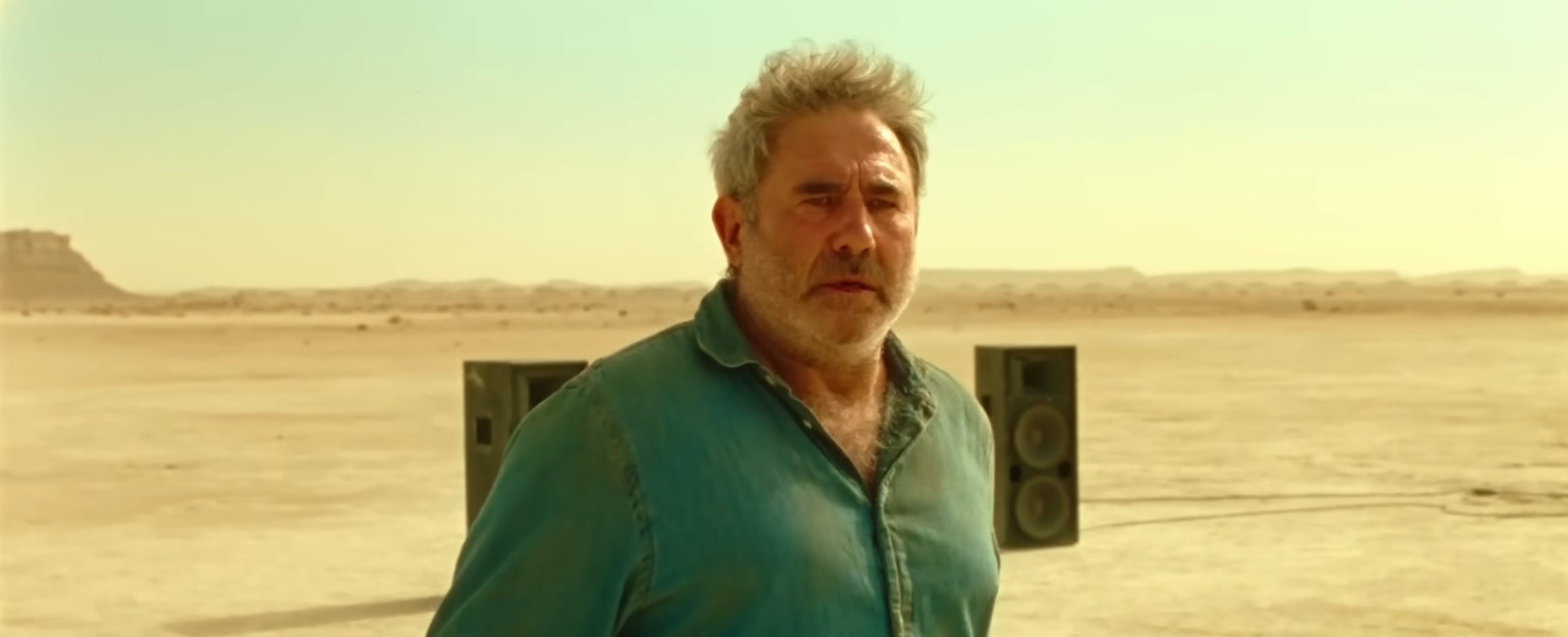
It is this expert use of visual storytelling and aural immersion (can you tell I want this movie to win Best Sound at the Oscars?) that leaves me unsure of what my final takeaway should be. There is a glimmer of hope at the very end, but highly uncertain, and so much pain and loss was endured to get to it. I am left questioning if their train ride will lead them to safety, or if Luis will ever find his daughter, or if what they experienced was the true “Ṣirāṭ” testing their faith. After all, the war they escaped didn’t end. How temporary is their salvation? Is salvation even something we should be looking for at this point? The natural world’s wrath and the escalating cruelty of modern man becoming one and the same has become so unthinkably terrifying to ponder that I feel a… kinship with those bodies writhing in the desert to the pulsating sounds of techno house music. Who wouldn’t want to lose themselves in the music and a crowd of strangers? What wouldn’t I do to reconnect with someone I know, even if I slowly realize I perhaps didn’t really know them as well as I thought I did?
But the lingering thought I’m left with is the feeling that wherever salvation may be, such a place may not be around for much longer. One day, we won’t be able to tell the difference between man-made horrors and naturally-occurring ones threatening our lives. The film ends with a small ray of hope, but unlike One Battle After Another or The Secret Agent, which both left me invigorated and re-inspired, this feels more fragile. More tenuous. I feel like Willa’s walk out that door at the very end of One Battle After Another signaled the messy, hard-fought, chaotic, but ultimately better future we could still have if we are humble and disciplined and selfless enough to work for it. But the train ride here feels like the false hope of a more horrifying future we may have already sealed ourselves to, instead. One that cannot be ignored, no matter how loud you turn up the music.
SCORE: ★★★★


Comments
Loading…