

 Maxance Vincent
Reed Van Dyk’s Atonement opens with the year’s most horrifying sequence. After defining the titular word in the film as “satisfaction or reparation for a wrong or injury” and “the exemplifying of human oneness with God,” Van Dyk sets the stage for what follows. He presents the Khatchaturians, living in Iraq at the height of the war in 2003. U.S. soldiers have taken over every part of the city the family lives in, which causes great fear and distress among its citizens. One of them even states bluntly, “We want to walk in the street without an American pointing a gun at us.”
This climate of fear permeates the entire sequence, especially when a bomb lands close to the home of the Khatchaturians, which causes the family to flee the scene. Unfortunately, they soon get caught in the crossfire, as a group of soldiers positioned on the rooftops believe the people in the car driving in the middle of an active shooting zone are terrorists. They don’t hesitate and shoot at the Khatchaturians, which causes Mariam’s (Hiam Abbass) husband and sons to lose their lives. Once the soldiers realize who they were immediately shooting at, many of them feel deep remorse and guilt, especially knowing that there was a baby in the car who was almost violently killed by their bullets.
Whenever cutting to the soldiers, Van Dyk never explicitly shows the “enemy” and instead focuses on the military who, believing their actions are benevolent and for the good of the United States, caused more harm than good. He then quickly introduces audiences to journalist Michael Reid (Kenneth Branagh), assigned to cover the war in Iraq, and interviews some of the soldiers who were there on that fateful day. Only one of them expresses guilt. The leader of the troupe, Lou D’Alessandro (Boyd Holbrook), doesn’t explicitly state it, but he doesn’t have time to process the images he’s exposed to daily until he likely returns to America after his service ends.
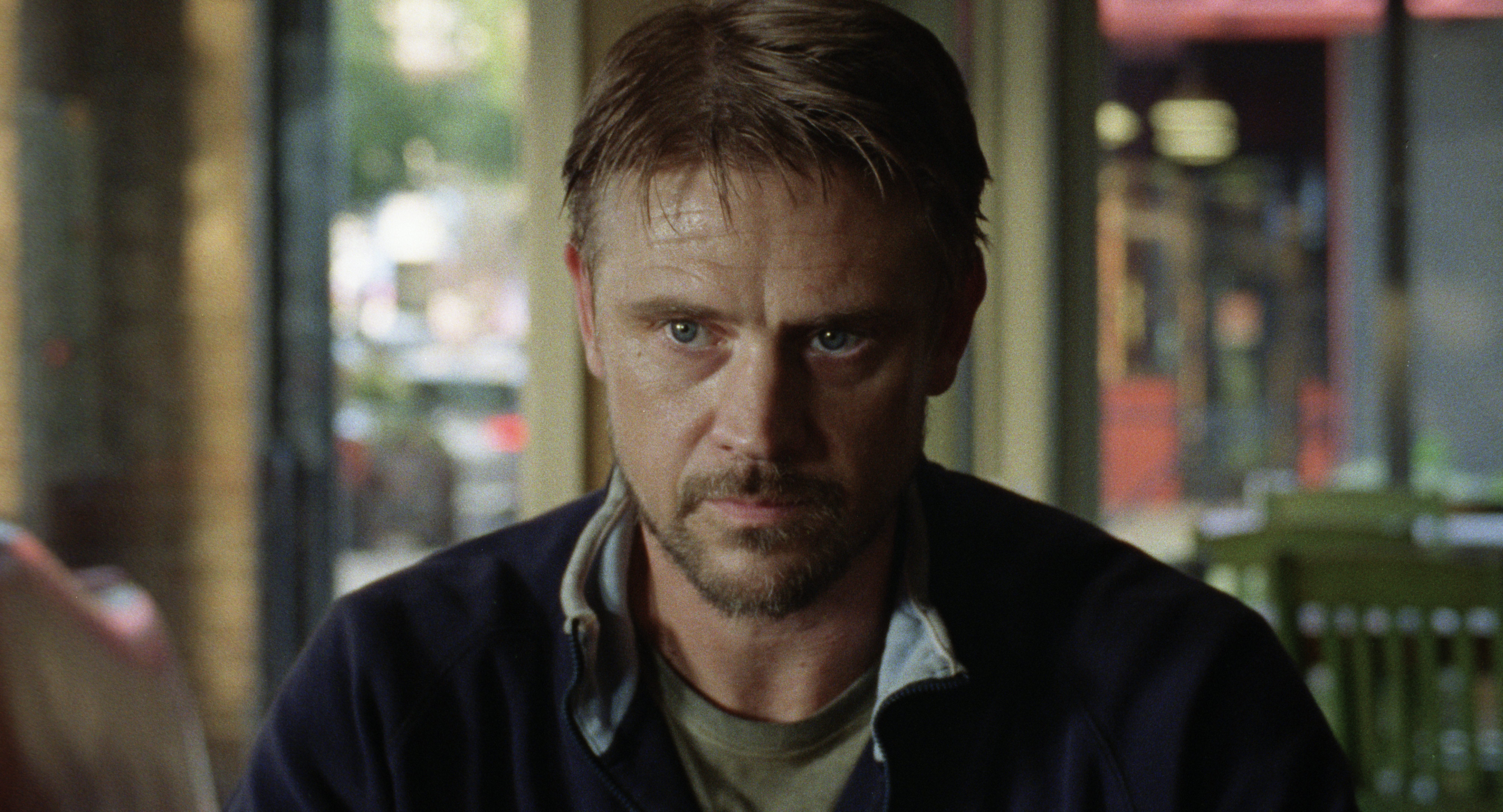
The first half-hour of Atonement is told through the perspective of the war’s victims, but Van Dyk shifts points of view three times, showcasing the subjective viewpoints of Mariam and Lou while also giving us a more objective account of the Iraq War through Kenneth Banagh’s journalist. The movie takes a different turn than we expect by cutting to Lou and showing who he’s become ten years after his dishonorable discharge from the military.
He works two jobs, in construction and in security, but mostly numbs himself from the perpetual pain he feels over the tragedy that happened with the Khatchaturians, which he directly caused. He’s simultaneously traumatized by what occurred in Iraq and feeling deep remorse for his shortsighted actions that have caused immense pain for a family he’s never communicated with after the incident but wishes to apologize to them, to not only to atone for his actions, but to heal and hope that a path for internal peace is still possible.
The film’s premise, aesthetics, and execution are pretty simple. Van Dyk recognizes he’s not doing anything new, but he compensates with total control over every aspect of the film. The opening scene is so precisely mounted that its emotional power hits you immediately, and so does the rest of the movie, as he showcases three distinct perspectives that unite the same story and build to an emotional wallop that examines the true cost of war in ways many Hollywood pictures refuse to. Have any of you seen David Ayer’s Heart of the Beast? It floats ideas on PTSD but never develops them, because that would mean talking about how the Iraq War was unjustified.
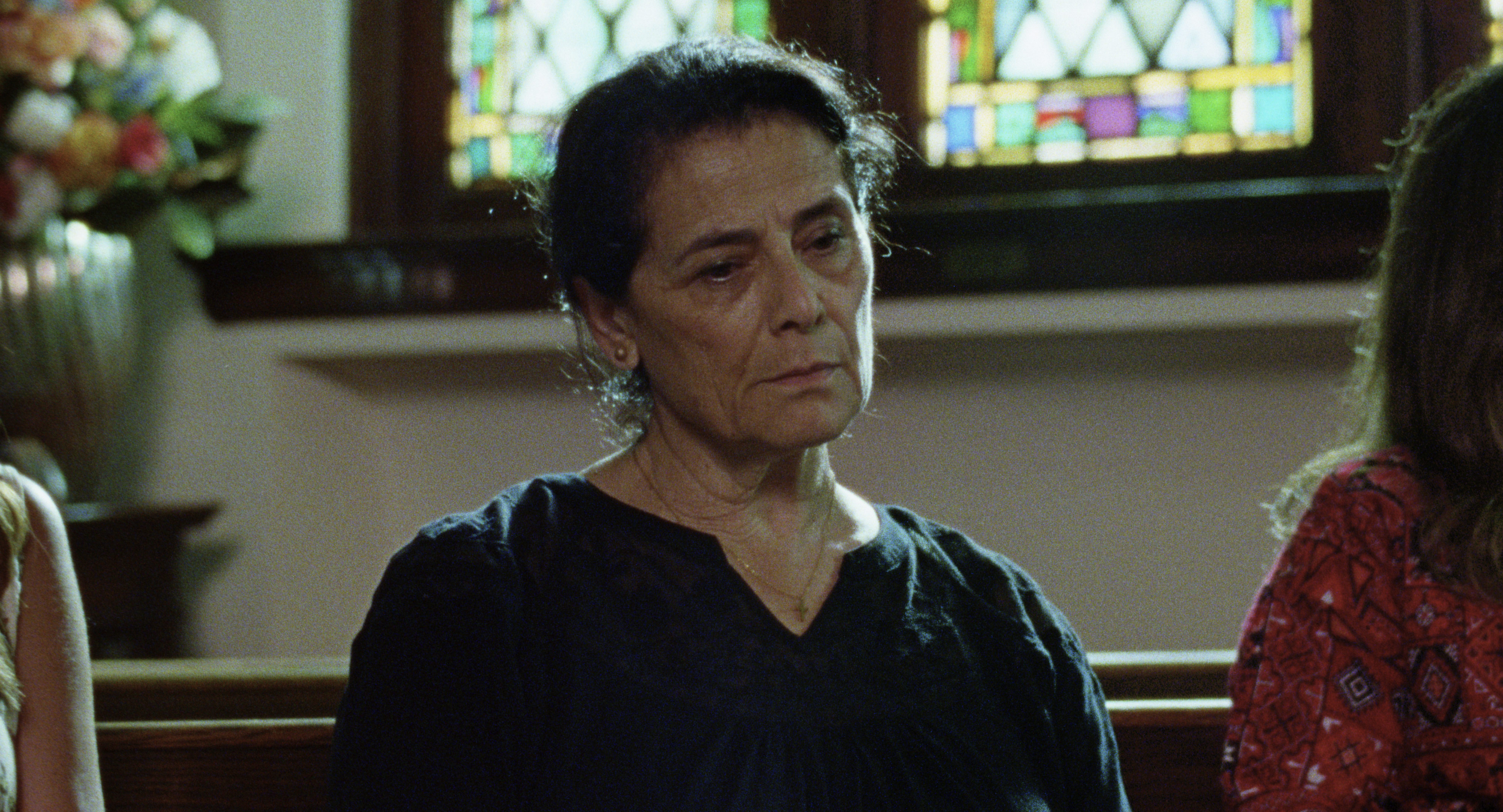
Van Dyk isn’t afraid of the blowback a film like Atonement could face. He shows exactly why the ultimate human toll of the war was never justified, and then takes a distance from such an event to illustrate how the victims of the war, alongside many of its perpetrators, are still hurting and have never been able to process what they’ve either seen or experienced. When Mariam eventually meets Lou, one of the surviving Khatchaturians, Van Dyk lingers on heavy emotions until the ex-soldier breaks down in tears and begs for the family’s forgiveness. Silence speaks louder than words, because both characters probably want to say things to each other but refuse to let their internal thoughts dictate what they ultimately say.
However, one line Mariam says defines the entire (devastating) back half of the picture, as Lou cries uncontrollably and releases most of his repressed emotions in front of her. As she looks at him, devastated, Mariam tells Lou, “We’ve cried out all of our tears. We have none left.” Hiam Abbass’s performance is immensely powerful, but you won’t realize how powerful it is until the scene where Lou meets the Khatchaturians and tries to mend the fractures and pain he’s caused. He recognizes he can’t fully remove what he’s caused from them, but perhaps a path to resolution is possible.

The reunion is the hopeful first step toward that resolution, but Van Dyk shows the pent-up emotions through Abbass’s character, who finally looks his perpetrator in the eye and holds back so much of what she wants to say. It’s even more painful to watch than the film’s opening scene, because Mariam’s eyes tell us everything we need to know. She can’t sleep at night. She still has visions of her husband and son being slain at the hands of the U.S. Army, which illegally occupied Iraq during a war that many experts believe violated international law. Atonement reflects, in all accounts (including an undeveloped but still pertinent journalistic viewpoint), the true human toll of war and how fractures can never fully heal when you’ve experienced unimaginable horrors that shift your perception of humanity and transform your mind forever.
Both Abbass and Holbrook express these emotions with such sincere intensity that it won’t take long for anyone to feel what they experience without the director having to constantly show what boils in their minds. The event itself was horrifying enough. What they experienced next was even more so. Could they find common ground? The film’s final scene certainly makes us think so, but everyone knows the road will be arduous, even if the fractures that have plagued both of their lives are beginning to mend…
SCORE: ★★★


Comments
Loading…