
 Jeff Heller
Season two of Netflix’s The Four Seasons sees the return of series stars Tina Fey, Colman Domingo, Will Forte, Marco Calvani, and Kerri Kenney-Silver,as their characters cope with a loss of their friend Nick (Steve Carell), and the bombshell news of Ginny’s (Erika Henningsen) pregnancy. Relationships and long-term marriages are put to the test as they deal with amplified midlife crises, changing dynamics, and new additions to the group.
The series is adaptation of the 1981 film of the same name, which was written and directed by Alan Alda, and starred Alda, Carol Burnett, Len Cariou, Sandy Dennis, Rita Moreno, Jack Weston, and Bess Armstrong.
We spoke with executive producers Lang Fisher and Tracey Wigfield about writing beyond the original film, shooting in Northern Italy, and channeling their inner Alan Alda.
Awards Radar: First of all, thanks for taking the time. Second, congratulations on season two.
Thank you.

Awards Radar: When did you know there would be a second season?
Lang Fisher: Like a month after the first one premiered. That’s usually when Netflix does it. They kind of look at their numbers for a month and then tell you.
Tracey Wigfield: And we didn’t get started earlier or anything because we kind of wanted to see how the first season played and what people were saying.
Awards Radar: Did you have any ideas for storylines for season two when you were working on season one?
Lang Fisher: Yeah, I think so. We knew we were ending on a large cliffhanger of Nick dying and Ginny being pregnant. So, we knew that was going to be a big part of it. And we had some ideas about the other folks, but mostly we knew that the launching place would be, what is this group like now that the person who seemed to be the nucleus of the group, the center of the group, is gone. So yeah, that’s kind of where we started.
Awards Radar: You were able to use the original film as kind of a guideline for the first season, but what was the process like moving these characters beyond the narrative of the first film?
Lang Fisher: Yeah, we definitely had more stuff to make up. Season one, certainly we were able to move beyond the movie because it’s just a two-hour movie, and it was exciting to get deeper into what’s going on with Anne and how does Lila really feel about this divorce and stuff. But it was pretty open season two, other than knowing Ginny’s pregnant and Nick has died.
But what we had going for us was that after a whole season, we knew these characters so much better. So, a lot of things based on what we had done season one sort of naturally revealed themselves. Like Jack and Kate having to overcome this little hurdle in their marriage, but now Jack is in a really dark place because of what happened to their friends.
So, for the two of them, it was like, oh, this is a season we can explore. What do you do when your partner is going through something hard, and maybe you are too, but how much room can you make for them and your own feelings about something like that? There are certain things that just kind of organically came up from what we did with season one. And we were really excited when we found the thing of Anne and Ginny having this really unlikely friendship and relationship when the two of them kind of needed each other. And I don’t think that was something we had in our minds at all in season one.
Awards Radar: Were there any moments that were W-W-A-A-D? What Would Alan Alda Do?
Tracey Wigfield: (laughing) Alan has been such a just lovely delight of a person and so supportive of us. And I think he’s just like happy that this movie that he wrote and directed and is beloved by him is living on because of it.
We all worked on 30 Rock, and we’ve been on much zanier shows. I think we are trying to stick as close to the original tone of the movie as we can. And sometimes we will veer a little close to 30 Rock and then have to pull it back. I guess that would be the closest thing to W-W-A-A-D.
Awards Radar: The episodes with the fall season take place on Thanksgiving during COVID, which, I’m not going to lie to you, brought up a lot of PTSD. But what was the decision behind making it take place during that era?
Tracey Wigfield: The main thing was we wanted to see Steve again. So, the idea of a flashback was something we were talking about kind of early on. At the end of the first Thanksgiving episode, we see this friend group kind of as fractured as they’ve ever been. Danny and Claude are moving away, and Jack is mad at everyone, and Jack and Kate aren’t doing great, and Ginny’s moving out. So, it was a nice idea to us to juxtapose, “Okay, what was the time they were the closest they’ve ever been?” COVID was horrible, and I totally understand when you’re saying it brought up PTSD. But I think for this group of people, it was also a time that was in some ways now, six years past, is nostalgic just for the fact that you were all so together, and the not being together really put into perspective how important these relationships are. So, it was kind of was born from that.
Awards Radar: This is obviously an ensemble series, but I thought Kerri owned this season. Was there a concerted effort to give her a little more to work with this season?
Lang Fisher: Yeah, I think so. Her character has just gone through so much. We have been fans of Kerri’s for such a long time, and in season one, we were just blown away by her acting chops, because we’ve known she’s like hilarious. I loved her on Reno 911, and Tracey and I were both huge fans of The State. So, we’ve followed her forever, but when we had her do some of these dramatic moments in season one, she was so incredible that we wanted to push that further and see what she could do.
And she just is so agile in terms of going from this emotionally focused, deep feeling performance, and then turning a comedic move on a dime. She’s just really fun to watch. So, yeah, I think we wanted to like let her stretch her wings a little bit.
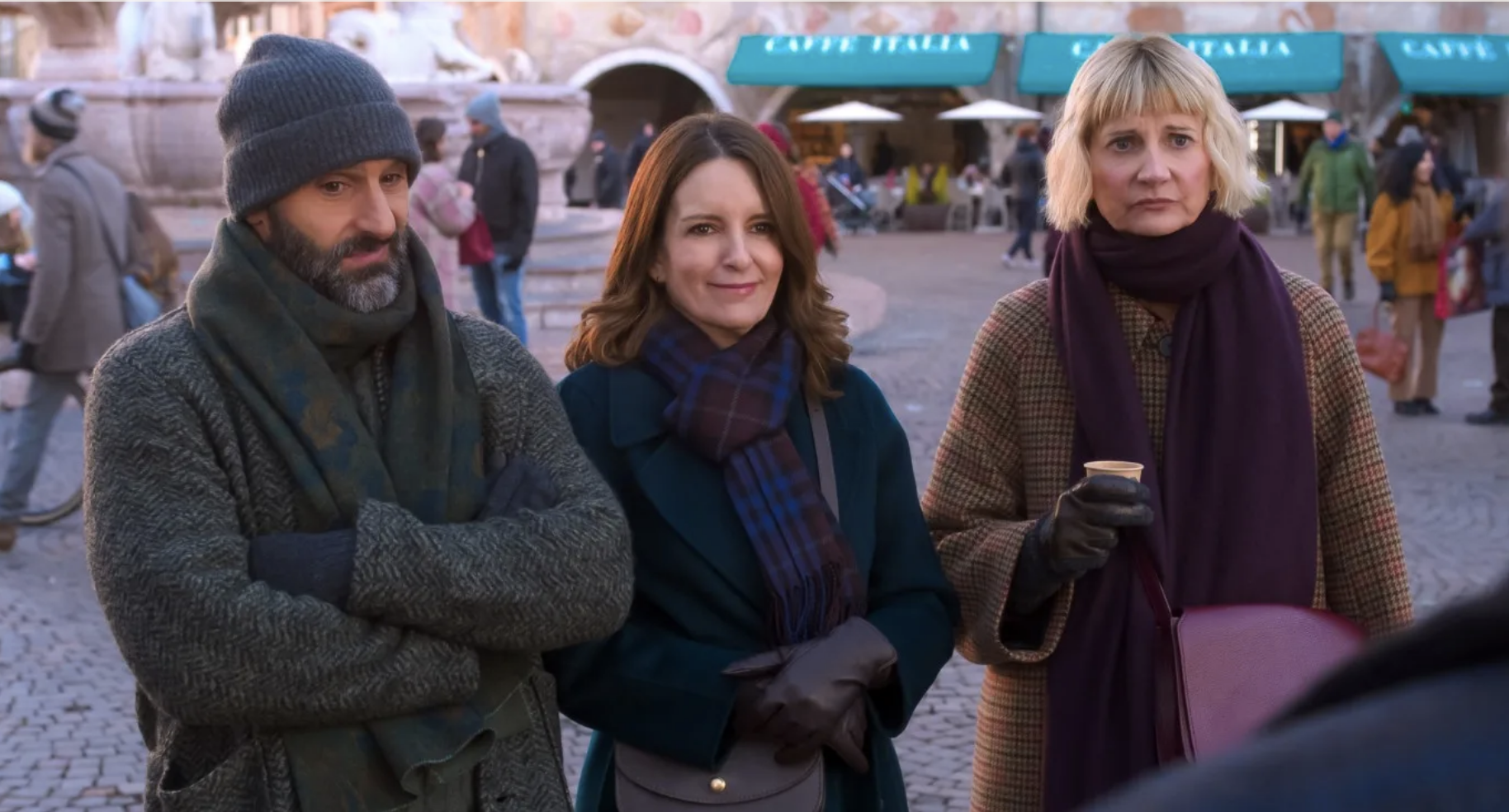
Awards Radar: I had the opportunity to speak with you both last year to discuss season one, and we talked about the locations. You shot most of season one in the Hudson Valley region, but you stepped up your game this season. Can you just talk about the locations this year?
Tracey Wigfield: We still were in the Hudson Valley for the Thanksgiving episodes, as well as a little further North for the spring episodes. We shot the mountain that they went up and down on Bear Mountain, so we were still in that same area. And then we went to the Jersey Shore for summer, which was a location move for our crew, but really, from the Hudson Valley is like a two-hour drive. It wasn’t so far. But then we all flew to Northern Italy, and we shot in Trento, which is about like an hour and a half North of Milan.
Awards Radar: How was shooting on location in Italy?
Lang Fisher: It was wonderful. The team we had also had done a bunch of other American productions like The White Lotus, and our line producer over there was the line producer on Conclave. They were pros. So, it was very easy to work over there.
Tracey Wigfield: The trick for us always is the weather, because we can’t just shoot all year long. In season one, we kind of started a little early, so when Lang was directing the skiing episodes, it was Steve Carell standing on a white blanket holding ski poles. And then this year, we started a little later, and Claude’s in a Speedo on the beach on the Jersey shore, and it’s 40 degrees. And we had rain delays and stuff in spring and summer. And so, the weather is always just part of this project.
Awards Radar: You mentioned Steve Carell returning. Was that story based on you just wanting to have him back, or did he come back based on the necessity of the storyline?
Lang Fisher: A little bit of both, because as soon as we killed him off, we wished we could bring him back. We love him. And he had such a nice time on the shoot, so I think he wanted to come back. So, it was partly, how do we have one more episode with Steve? It would be just so nice to have one more. And then a lot of the story this season is like, “What’s the group like now without him? And is it fractured, and are people going in their own directions?” So, it was helpful in showing how he was like the connective tissue of the group, and to remind us of how great he was at that.
Awards Radar: Speaking of appearances, you had a great guest appearance at the very end by David Tennant. I’m curious how that came about.
Well, because it’s Netflix and it’s streaming, we always try to do cliffhangers at the end of every episode, as well as season cliffhangers, to pull you to the next one. And so, we wanted to do a romantic cliffhanger that feels hopeful for Anne, just because after her hard year, it was nice to like to throw forward something for her. And Tina kept mentioning David Tennant’s name, that she was like, “It’s a guy who’s handsome and funny and like kind of like a David Tennant guy that you could imagine if we had a season three, he would be part of the group in a way.” We kept saying, “In our wildest dreams.” And we went out to him first, and he said, “Yes.”
Awards Radar: I’m sure you have ideas for season three, correct?
Lang Fisher: Yes, we do.
Awards Radar: Any themes that you want to explore that you didn’t get a chance to in season two?
Lang Fisher: I think, yes, one would certainly be, what is this new relationship of Anne’s? Who is this character, and how does he fit into the group? Everyone in our writer’s room is someone that we’ve known for a couple of decades and are also in long marriages, so it’s like, “What are you going through right now? Last year, writers were talking about having to take care of aging parents. So, it’s like, “What is happening in your life? What’s happening in your marriage?” That’s how we always approach it. What feels real to this age group, what would be fun to see this group do, and where do we want to see them go? So, we have some ideas.
Awards Radar: Well, I thank you again for taking the time. Congratulations again on the season, and good luck going forward.
Lang Fisher: Thank you so much, Jeff.
The Four Seasons is currently streaming on Netflix.


Comments
Loading…