

 Steven Prusakowski
For fans of The Pitt, one of the biggest questions heading into season two surrounded Dr. Frank Langdon (Patrick Ball). When viewers last saw him, Dr. Robby (Noah Wyley) had confronted Langdon about his addiction to painkillers, forcing him to face a reality he’d spent much of the season trying to hide, even from the viewers. It was a devastating moment, not simply because of what was revealed, but because it challenged everything the audience thought they knew about the character.
For many, Langdon wasn’t the version of addiction television and film has conditioned us to expect. He wasn’t stumbling through shifts or visibly falling apart, instead he looked and acted like he had everything under control, charming, funny and quite pleasant. The character’s addiction wasn’t presented as a twist or a plot device, it was just a human flaw in a person who seemed for the lack of a better word, perfect.
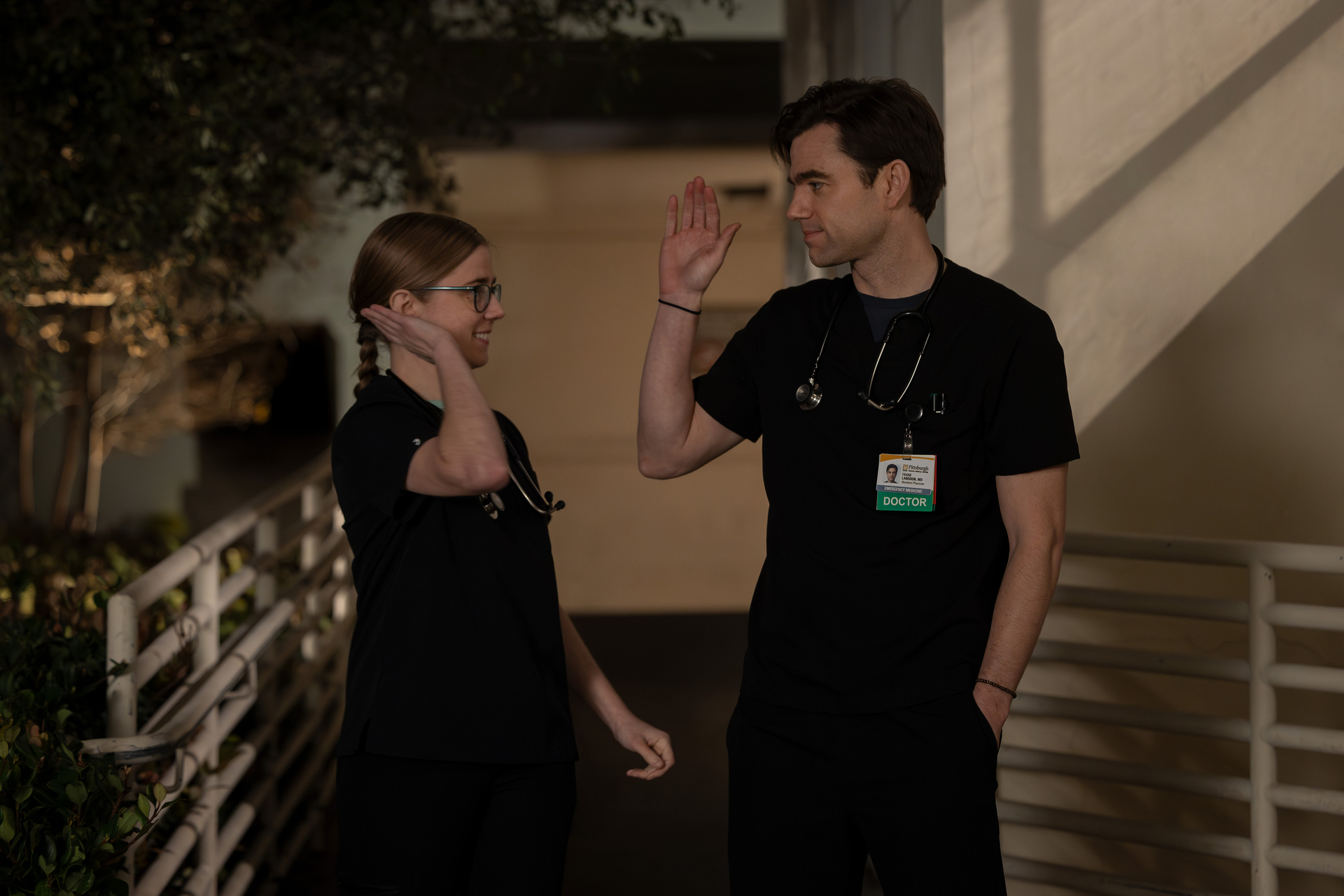
While the series takes place in a hospital, it is really a series about people and addiction is a human illness. As Ball shared during our conversation on TV Topics podcast, “I have spent quite a bit of my life knowing addicts and being in community with addicts and consider myself part of that community of addicts. I know most of the people that I know that struggle with this illness and addiction is an illness, look like you and me. They can be the person on the other side of the office who you make a bunch of assumptions that that person has it all figured out, whereas you don’t. That person across from you in the office may be going through a whole bunch of stuff that you don’t know about and may have to go sit in a church basement five times a week, just to be able to show up in the office as a sane safe human being.” (Watch the full conversation here.)
On season one of The Pitt, Patrick Ball delivers a compelling dual performance as Dr. Langdon. There is the ambitious, respected doctor he presents to his colleagues, and then there is the man secretly in a battle he does not even know he is fighting yet. Until confronted by Dr. Robby, it seems as if Langdon is in some form of denial. It is not until season two, that these two sides of him begin to merge as Langdon confronts the illness. Now, on his first day back on the ER floor after completing several months of rehab, Langdon must navigate the tension between his professional duties and his ongoing personal recovery facing those he had lied to. His work for first ever Emmy nomination for Outstanding Supporting Actor in a Drama Series.
Ironically, Ball’s own journey to this point mirrors the drive that defines his character. Before The Pitt, he spent years working in regional theater across the country, chasing a career that often felt just out of reach.
“I’d spent like the last 15 years of my life doing theater, doing regional theater all across the country and, you know, gigging out two, three months at a time, working for $700 or 800 a week. I’d sort of let that dream of being in movies and being on TV go and kind of made peace with what I was doing.”
After years of grinding through survival jobs and theater work, The Pitt became his breakout role. At the same time, Ball has also emerged as a standout on Broadway in the Tony-nominated production of Becky Shaw which was nominated for and won a Tony.
When Ball visited TV Topics, our conversation covered everything from favorite television series to the tremendous responsibility he felt portraying Langdon’s addiction story honestly. What I didn’t know going into the interview was how deeply personal the role would be for him. Throughout our discussion, Ball spoke candidly about recovery, self-reflection, and the opportunity to represent a community that is often misunderstood.
“I feel very lucky to be in this situation where I get to wake up every day and the only thing I have to do today is tell a story, and tell a story that I believe in and tell a story that has a purpose larger than itself but actually, in my opinion, it has a utility to society and and is raising awareness for a community that that I consider myself sort of like a periphery engaged member.”
Maybe I am oblivious, or maybe I am just too influenced by my own perceptions of the illness, but it took me until this statement before I realized Ball was sharing his illness with me. I heard the words, but they almost did not register at first. It was as if I was thinking, “Not him, he has it together. No way.” In reality, perhaps I was as conditioned as they come.
Ball continued, “It’s like the saying is like everyone’s a building burning. Everybody has something going on inside. Even the people in your life that you might only see at work. You go to the office and you only see this person at work. And from afar you can assume like oh this person is high functioning, but that person across from you has just as much going on with them. They just don’t wear it on the outside.”
Ball’s approach on Langdon’s addiction portrays the ripple effects addiction has on everyone surrounding him. Throughout the season, Langdon is forced to confront the damage he’s caused while learning to stop viewing himself as the center of every conflict.
The thorn in his side across both seasons has been Dr. Santos (Isa Briones – another wonderful TV Topics guest) and with good reason, after exposing Langdon’s substance abuse issue, Ball explained how easy it is for addicts to shift the blame to anyone besides themselves.
“In the front of his mind, he’s thinking, man, if it weren’t for that expletive at work, if it weren’t for Santos, my marriage would be a lot happier. I would be graduated from my residency,” explained Ball. “And then he does all of this work to say, ‘No, okay, she did not steal anything from me. You are an addict and you created the chaos of your own life and you have to take responsibility for that.'”
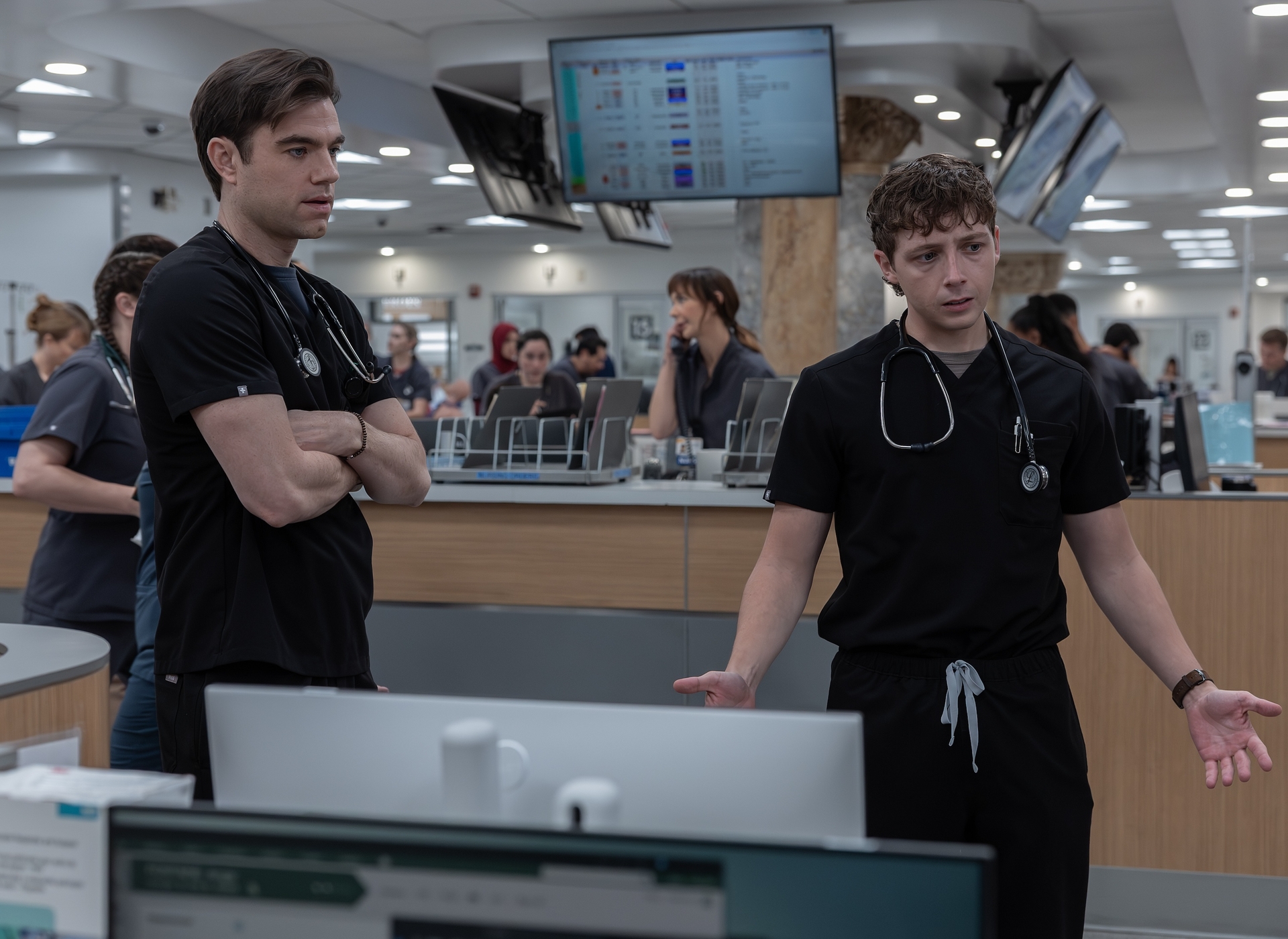
That accountability gradually extends to the people around him. Whether interacting with Whitaker (Gerran Howell) or Dr. Robby, Langdon slowly begins recognizing that everyone is carrying burdens of their own.
On his evolving relationship with Whitaker, Ball reflected how Langdon is out of line, “Langdon was trying to be a friend to Whitaker but maybe not fully seeing him or maybe casting himself as the presumed big brother… And then Whitaker checks him on that… realizing like, ‘Oh wait, maybe I was making that assumption… that was part of my sort of ego. That was part of how I was not a worker among workers. I was not one of many, but was actually on some level casting myself as the main character.’”
Similarly, his perspective on Dr. Robby changes as the season progresses. “Langdon is doing everything he can to put his best foot forward, but the fear and the resentment is still there,” said Ball. “As time goes on, he realizes, ‘Oh wait, actually Robbie is not simply here as a device for me to feel better, Robbie has his own battle that he’s fighting.”
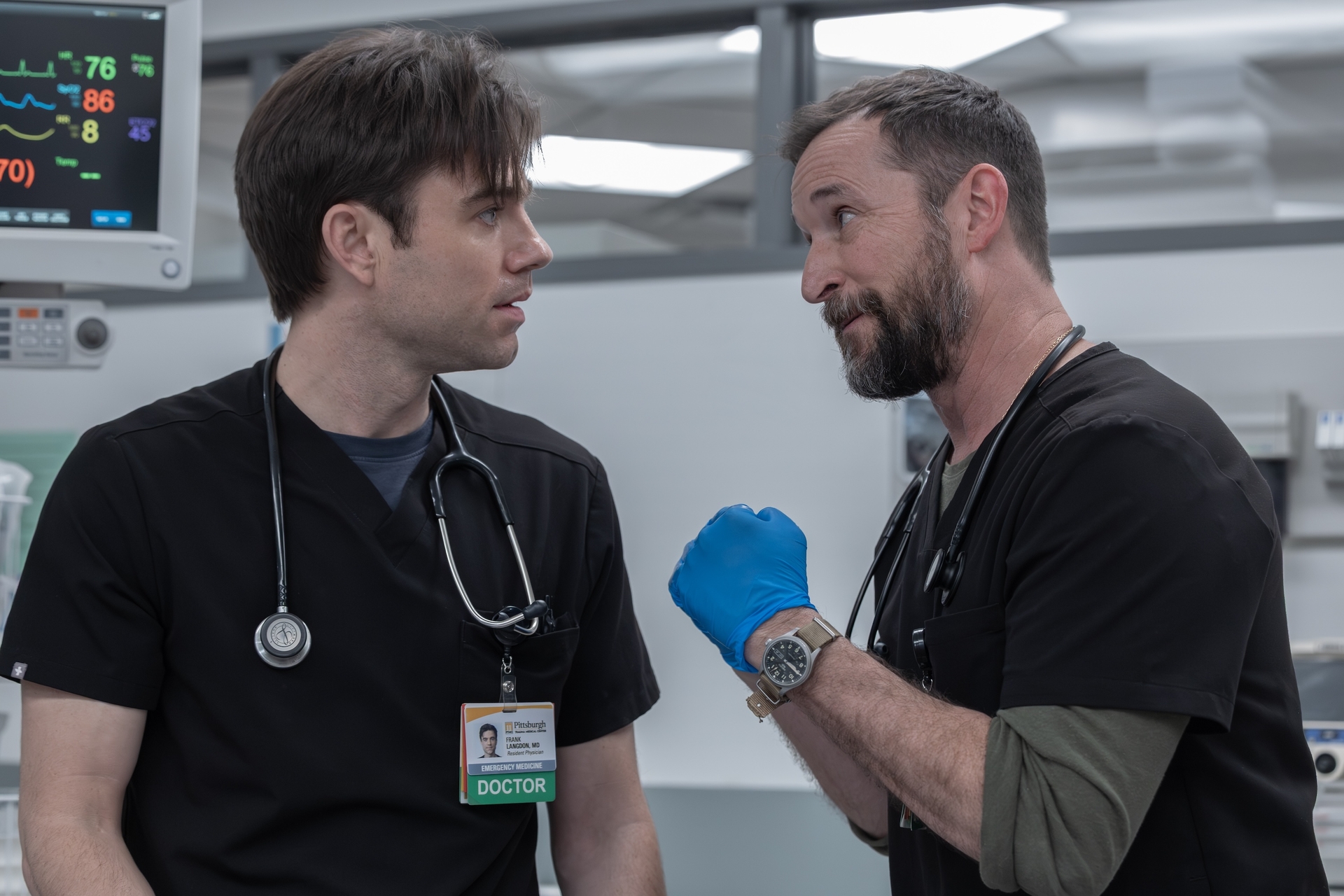
He continued, explaining how Langdon’s eyes begin to open to those around him. “I think over the course of the season, you see Langdon begin that process of thinking, ‘He’s actually not this parental figure that is only here to either punish or reward me, but he is a individuated human being that has problems of his own.'”
Perhaps the most moving part of our conversation came when Ball discussed how portraying Langdon has intersected with his own recovery journey. Rather than simply playing a role, he found himself revisiting difficult chapters of his life and gaining new understanding along the way.
“As somebody that has been an addict my whole life and has been in recovery for the last four years, to tell that story and to rewind to a previous part of this journey, to rewind to being in active addiction, to rewind to that first year out… it’s been a real process of self-learning in a way that I actually think has been really therapeutic.”
That level of authenticity is part of what elevates Ball’s work on The Pitt. He isn’t simply portraying addiction, he’s helping illuminate the realities behind it. If you watch back season one, astute viewers will notice actually signs of the addiction. “There were clues all right in front of my face all the way down the line,” revealed Ball.
Through Langdon, viewers see the struggle, the accountability, the setbacks, and the humanity that often remain invisible beneath a high-functioning exterior. Ball is brave enough to put himself back into those shoes knowing others may benefit from the sincerity of his performance. I found it truly inspiring.
While the conversation did get very serious, it was also full of levity when the conversation turned to television itself for the TV Topics portion. Ball proved to be a passionate fan with great taste in shows. He fondly recalled watching The West Wing over his father’s shoulder as a kid and regularly revisits Parks and Recreation with his girlfriend before bed. He’s also worked his way through every episode of The Office multiple times, loves Arrested Development, and is currently enjoying Dying for Sex and DTF St. Louis. Among his all-time favorites, he cites Breaking Bad, The Wire, and The Sopranos, though like many viewers, he’d happily take a do-over on the final season of Game of Thrones. He even got me to admit my own TV Topics Confession. (Watch or listen to find out what it is.)
For Ball, television remains both a passion and a profession. After years of wondering whether Hollywood would ever come calling, he’s now delivering one of the TV’s most memorable, impactful performances while telling a story that resonates far beyond the screen.
On behalf of me and many others, Thank you!


Comments
Loading…