

 Ayla Ruby
Emmy winner and Oscar-nominated production designer Gemma Jackson is no stranger to historical dramas. She sat down with us over Zoom and broke down how she brought late-19th-century America to life for the Netflix series Death by Lightning. Tasked with rebuilding key parts of DC, New York, and Ohio within the landlocked backdrop of Budapest, Jackson explains how they crafted everything from the sweeping grandeur of the White House to the grit of a local Ohio farmhouse, using research and more. She details the subtle visual cues that contrast the stability of James A. Garfield with the erratic, unhinged journey of Charles Guiteau, offering a fascinating peek into how textures, wallpapers, and scenic design help clue the audience in to character.
Ayla Ruby: Okay. Yeah. Well, I’m so very excited to chat. The show is brilliant and obviously, story and character, but just visually, it’s gorgeous. So this is wonderful.
Gemma Jackson: Thank you.
Ayla Ruby: Can you talk about what drew you to the project, your journey to Death by Lightning?
Gemma Jackson: Well, it’s a great story, which I’d never heard of before. And I particularly loved the parallel stories between Charles Guiteau and Garfield. And I thought that was a really interesting way of telling the story and also, exploring the world and all the different factions of society. If it had just been one or the other story, there would’ve been less choice as to which way you could go. Whereas this way, you could go rough and smart and posh. You could get a bit of everything in there.
So I love that. I thought they were really good scripts, really, really excellent scripts. So yeah, I guess that was really … I’d recently done a job in Hungary already. And so the fact that they want to do it there, although I thought it was completely barking mad. I mean, how … what were we going to do New York, Chicago, Washington and Ohio all in Budapest? I really-
Ayla Ruby: It worked.
Gemma Jackson: We did it. So the rest is history, as they say.
Ayla Ruby: I have so many questions about that. I also have a lot of questions about those parallel stories because that’s one of the most interesting things about this. But I’d love to know a little bit … okay, so you’re on board, you’ve read the scripts, you’ve signed the contract. What’s your process like for building this whole visual world of the story? Do you research? Do you go for books? Do you travel? You mentioned that you had to do it in Budapest, right?
Gemma Jackson: Yes. Yes. Well, obviously, I do a lot of research. I mean, you have to do that.
Ayla Ruby: Yeah.
Gemma Jackson: And I think you do a lot of research so you feel really confident in the period and with all the details. And then … and almost so much so, that you can put the stuff away and get on with it and make it your own because we’re in Budapest after all. So there’s got to be suspension or disbelief here and there.
Gemma Jackson: And I think one just wants to … Yeah, you throw it out at one point and then, you create the world that you want to create based on the world that you’ve got there to create it with, if you see what I mean. And then, there’s all these questions about, well, what are we going to build? What can we find that we can do things too? Sometimes it’s to do with the length of time you want something. Sometimes it’s just to do with the fact you’re never going to find, I don’t know, the crazy nightclub or something like that.
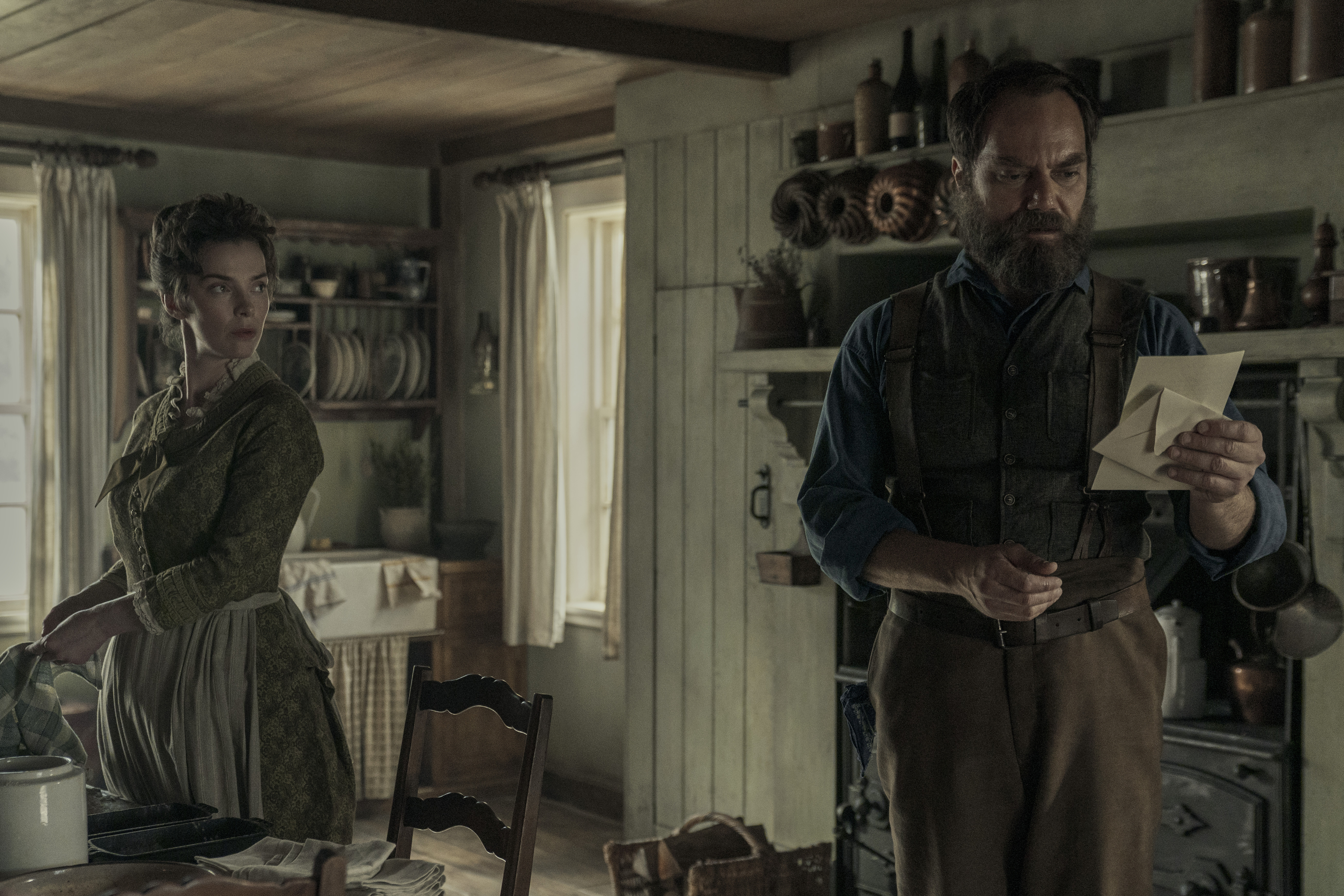
But at the same time, you have to build a White House yet again like everybody else has done. The kind of scale of it and the kind of beautiful layout and all the rest of it has to be built. The farmhouse didn’t exist, had to be built. Hungarian farmhouse and an Ohio farmhouse, they have absolutely no similarity whatsoever. So there were things that … And then, there were other things like Conklin’s place, for example, was just a rather dull rectangular room that we put some lovely columns into it.
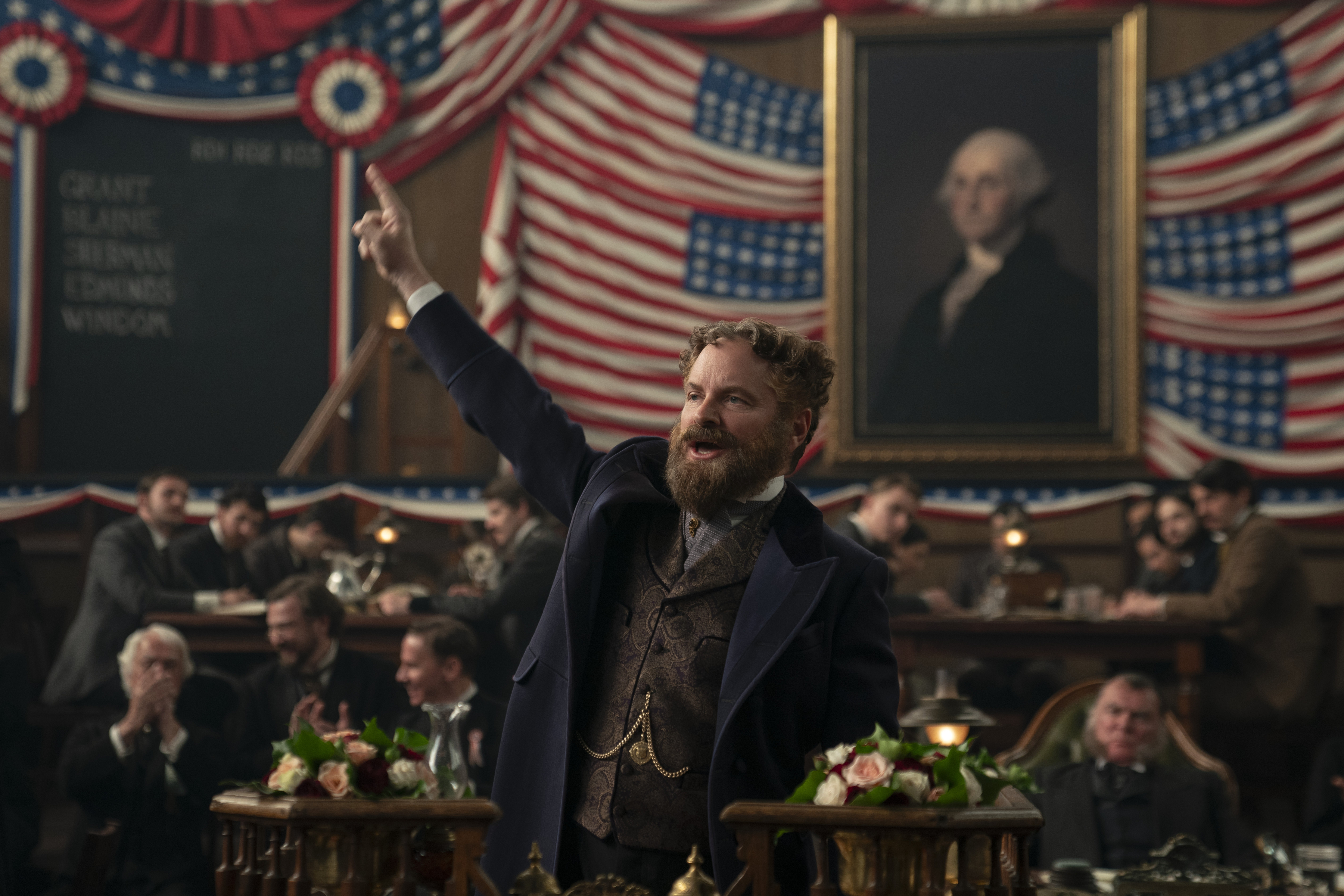
And gave it a bit of grandeur and some nice paper and a couple of beautiful fireplaces, and suddenly it had a bit of grandeur about it. So you have to just … I think it’s experience too, it’s learning what you can do quicker than you think it could do and what really, really has to be started from scratch. Obviously, the convention center, there was no way you’re going to walk into the … We did try. We looked at quite a few places.
Ayla Ruby: Really?
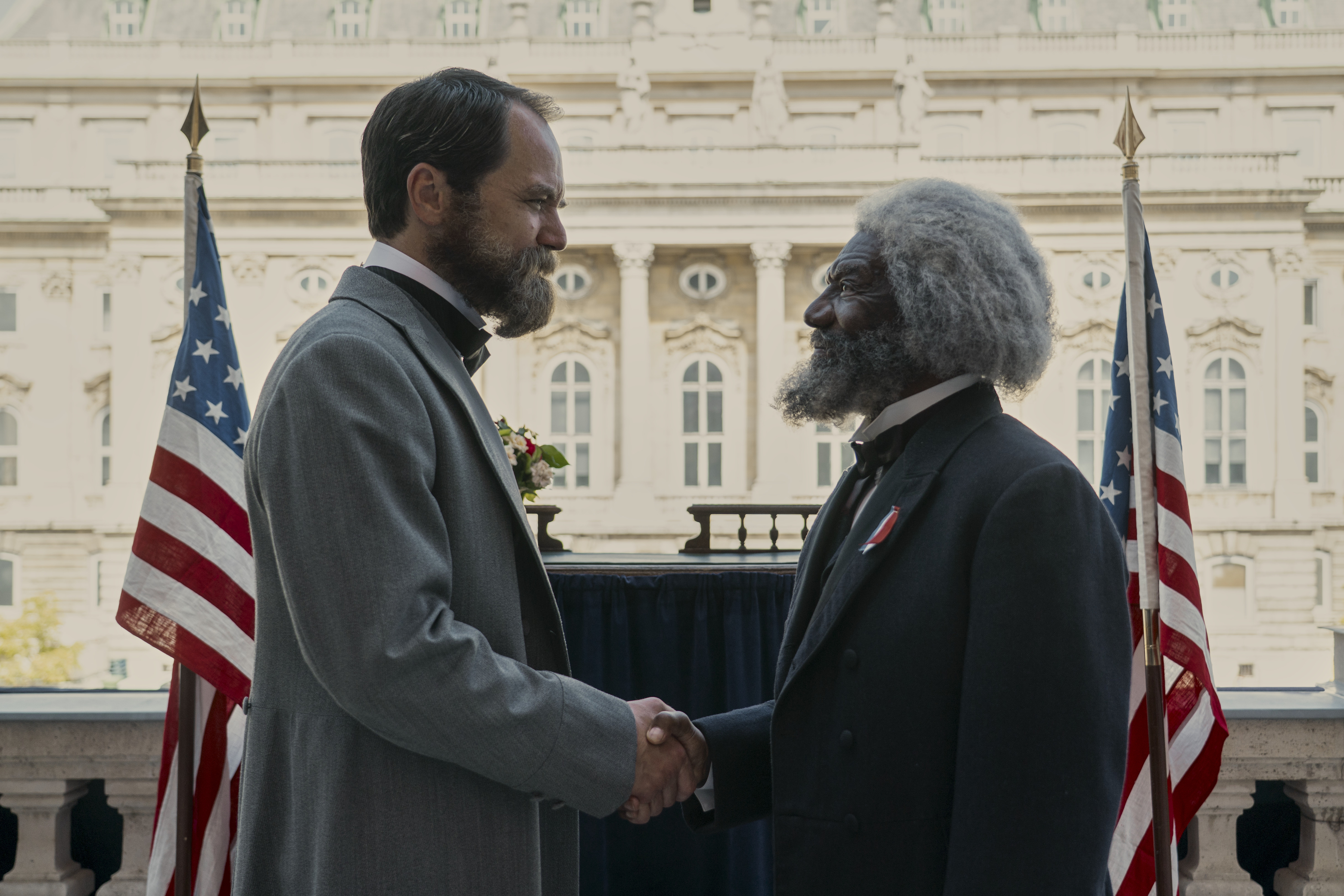
Gemma Jackson: Yeah. We went up into whatever the country just north is. I can’t think what it’s called right now. Anyway, we looked at a few kind of big, big market halls and that sort of stuff, but they were either really used too much for us to take over or they just weren’t big enough. And so, ultimately we built it on a stage and the actual place itself was much bigger than ours. I mean, if we had two sets of bleachers going up to the ceiling, there must have been five in the real place.
It was massive. How anybody heard each other is there’s a lovely old man in our … one who comes on the streets, “Can anybody feel a little breeze in here?” It’s like, for God’s sake. And I think one of the reason Garfield made that amazing speech and he projected his voice and he sort of took it by the neck. So I think there’s all that and you’re trying to show all those things. I mean, my job isn’t just literally build a pretty set and put people in it. I’m telling the story as well.
Ayla Ruby: Absolutely.
Gemma Jackson: We’re storytellers. So I’ve got to be giving information out all the time to help the actors, help the director tell the story in a visual way.
Ayla Ruby: Well, you mentioned Conklin’s little abode for lack of a better word. That informs so much about what we think of his character just viewing him. So it’s very different than Garfield’s farmhouse. It’s just like-
Gemma Jackson: Absolutely.
Ayla Ruby: It cue’s us in. It’s really cool.
Gemma Jackson: Yeah. No, I love things like that. I also get quite a buzz out of when you’re marching around the sort of backstreets of Budapest looking at empty [stuff] all places, that are really kind of … some that you can’t get up the stairs probably because people have gone through them and there’s a lot of empty property there and it’s in really bad condition. But when it isn’t and you’ve just given carte blanche, it’s amazing what you can do with some outrageous wallpaper.
And it’s really good timber framing and detailing and it’s very satisfying. It’s really great.
Ayla Ruby: Well, I actually want to ask about that because the thing that just stood out to me with this, and among the many things, there’s so many textures. You’ve got the wallpaper, there’s just a lot of paper it feels like too in the show, like the quill and the ink and the nib and stuff. And nobody has ink stains, which is funny to me. The grit and grime on the actors and the upholstery in the White House. Can you talk about texture and the choices there and how that …
Gemma Jackson: Well, yeah, of course. I mean, it’s absolutely 100% the job if you like.
Ayla Ruby: Yeah.
Gemma Jackson: I mean, it’s one thing is designing the architectural spaces, but the other thing is then filling them. And sometimes I do a little bit of teaching at the film school here in London and I often hear myself saying to the young designers, they’ve done these outrageously gorgeous spaces and this and that. I say, “But what happens here? Do people sit here, lie down, walk? Where’s … do they only like to fix things?” And when they’re training to design, they don’t always realize that that is as important where the lights are.
How are you going to get people and say, “Where are the windows, what’s coming in through the window?” All that really, really informs an audience and the actors as well. So textures and what have you. Well, I mean, that is very much in a way to do with the period. So you’re hunting for curtains and chair covers and all the rest of it. And obviously, having done one’s homework, you’re sort of into a certain sort of genre of what you’re looking for to dress all the different spaces.
And then, sometimes you want to have a bit of a sort of … I don’t know, give the audience a bit of a surprise or something or take them off so they’re not too comfortable with everything. You want to keep things kind of challenging sometimes. You don’t just want it to be sort of like, “Oh, lovely. Now, we’re going to … we’re here now.” You’re sort of want to, “Wow, that’s quite interesting,” without going to Conklin or I don’t know, suddenly the severity of the voting booth that had nothing in it.
The nightclub that had the outrageous Victorian cartoons on the walls, all those things, they’re all there for a reason, not just to shock you, but to keep you on your sort of, “Wow, They do that?” And they did. That was Thomas. I’m looking over there because I can’t see the book, but very famous Victorian cartoonist who … that came directly … yeah, I could find him for you, but I can’t think right now what his name is. So I didn’t just make it up as part of the church. And if you’re in a sort of bit of a dodgy dive in the docks, you’re going to get stuff like that.
Ayla Ruby: Yeah, that makes sense.
Gemma Jackson: Yeah.
Ayla Ruby: Okay. So back to the two men, the story is very much about them and how these parallels and how do you use your work to show that as Guiteau becomes more and more unhinged and Garfield is more unwavering, what’s the visual world of these two people?
Gemma Jackson:
Well, I think it’s in the script in a sense. I have to go with what I’ve been given because Garfield … Sorry, not Guiteau is sort of flitting from one restaurant, bar, whatever, whatever, but I don’t think they tell you a huge amount about him really, other than he likes a bit of comfort. His friend, the sort of prostitute, that’s fairly classic stuff really. In fact, you could hardly see anything. It was so dark up there. I think his sort of peripatetic nature is written into it.
And he’s skittering around from here to there and Garfield is like, “I’m going home and we’ve got to do it on my front lawn and that’s it.” And the whole way that Michael Shannon played, it was very strong and solid and unflinching, wasn’t it really? And sort of immovable almost. Whereas poor old Guiteau is sort of desperately, desperately trying to get attention and get somewhere in his sort of warped life and no chance of any stability anywhere.
And right at the very end when she says to him, “No one is going to remember you. You do realize that, don’t you?” In fact, when we read it, it didn’t quite come off like I thought it would, but that little poem he reads up on the scaffold, I thought we’d all be in floods of tears at that point, when I read it, because I thought it was really, really moving, but something had sort of slightly changed or I don’t know, it was kind of tragic but not in an emotional way maybe. I don’t know.
But maybe he was going from farmyard to ball, then he was in the White House. I mean, he was going … even though he ends up dead, I’m talking about Garfield, he was in the kind of accepted world of politics and presidentship, whereas the other guy is sort of ducking and diving really.
Ayla Ruby: So you mentioned the script and obviously there’s a lot of collaboration in general just with making any kind of art. What does collaboration look like for you on a project like that, be it with writers, producers or hair, makeup, costumes, what is that like for you?
Gemma Jackson: I think we all … It was a lovely team of people actually and Michael Wilkinson who did the costumes I’ve worked with before. So that’s great. I mean, A, we trust each other implicitly, but B, it was very easy to pop in and see him and vice versa and say, “Oh, I thought I’d do it this color and …” So that was really, really lovely and makeup and hair were just a delight and wasn’t an issue really. The director was … having chosen me, he was completely confident and really let me get on to quite a great extent.
The producer, Bernie Caulfield, who’s somebody I’d worked with before, I met her. She came into Game of Thrones on the second season and then, I did a series called The Nevers that didn’t do very well, but she was on that.
Ayla Ruby: I have the DVD or the Blu-ray over … behind me for that. That was was also beautiful.
Gemma Jackson: It was wild. I mean, we did some beautiful stuff on that, but it got stuck between various sad situations. Anyway, so I knew her and I knew that she trusted me, which is always nice when you’re in a situation where you feel comfortable to say what you think and there’s nothing worse, even though I’m pretty ancient now. There’s still time when you sort of feel like, “Oh, I don’t know if I can mention that.” So it’s nice to be in a situation where you could be outward and honest and say what you think and all that sort of thing.
So from that point of view, it was an absolute joy, really, really lovely. The DP was Adriano Goldman who had done The Crown and stuff like that. He was very nice and very sort of straightforward. There was no messing with us. We’re just … it was great.
Ayla Ruby: That’s wonderful. Okay. So you mentioned a little bit about the convention hall and making that. Was there anything that was the most challenging or maybe the most professionally gratifying thing to bring to life and pull off with the episodes?
Gemma Jackson: Well, I mean, the biggest challenge was being in Budapest for everything.
Ayla Ruby: Okay.
Gemma Jackson: So the only variation was in or out of the city, in a way. So that’s quite a challenge in itself. I think building the farmhouse was fabulous. I loved doing that. Absolutely loved it, but we did huge cornfields and kitchen gardens and all sorts that were really not seen, but they were there and I guess the actors felt good for them. I don’t know. That was a bit of a shame, but we did do the works there.
And it just was … And then the interior was built on the stage and they’ve got a really good scenic artist over there who did the most beautiful wraparound backing, scenic backing, which we took from the real place. So the two things just married beautifully. And in fact, in retrospect, we weren’t really quite sure why we didn’t do it all outside, but it just would’ve meant a more expensive structure and it would’ve been harder to float things and things like that.
So I suppose, it was probably most sensible doing it that way. But that was quite a thing to pull off actually. I mean, they all were in their own ways. The White House was massive and it couldn’t have been any bigger because the stage wasn’t … that was the biggest stage sort of thing. And to get the detail and the kind of elegance, that was something. But very nice crews over there, really nice crews. They really listen and as long as … I’m always there a lot.
I mean, I’m there all the time, I don’t wander off. I mean, I’m watching carefully, making sure that the textures are what I want, that they’ve understood the scale, that they’ve understood how the kind of moldings and all the rest of it is going to work and people are grateful for that in the end. And then, you all get on rather well because you’re all sort of in it together. So it was a huge job. I think the docks were quite hard because there’s very little … Obviously it’s landlocked country.
And so, we had this area where we did shoot it, which is where they’ve got sort of an interior which comes off the Danube where there are some boats and stuff and some warehouses and that’s where we did it. And then Rainer Gombos, who’s the really good visual effects, he did the lovely … I think he did it too much. People always do that. He put in eight ships where really … But it’s a terrible tendency.
They can’t quite control themselves, but it looked really believable, I think. I don’t know what you thought. Did you-
Ayla Ruby: I did too. I didn’t think there was not a dock there. What I thought too was interesting about that was that even though you’re only there for, what is it, a couple of minutes, it just adds to that world. It’s so important. And there’s so many other little places that as I was going through trying to prep for this that I wanted to ask about that feel like that too.
Gemma Jackson: Yeah. Yeah. I think that all those little bits really help tell the story, don’t they?
Ayla Ruby: Yeah.
Gemma Jackson: The sort of details. Yeah, I agree.
Ayla Ruby: Well, you mentioned the restaurant earlier too, that Guiteau liked to go to and that he eventually runs off from. That’s essential to knowing who he is and that whole-
Gemma Jackson: Yes. Yeah.
Ayla Ruby: That’s important.
Gemma Jackson: Yeah, I quite agree.
Ayla Ruby: So you talked about building the farmhouse. Can you talk about a little more about what went into your White House and how you created that, just that world?
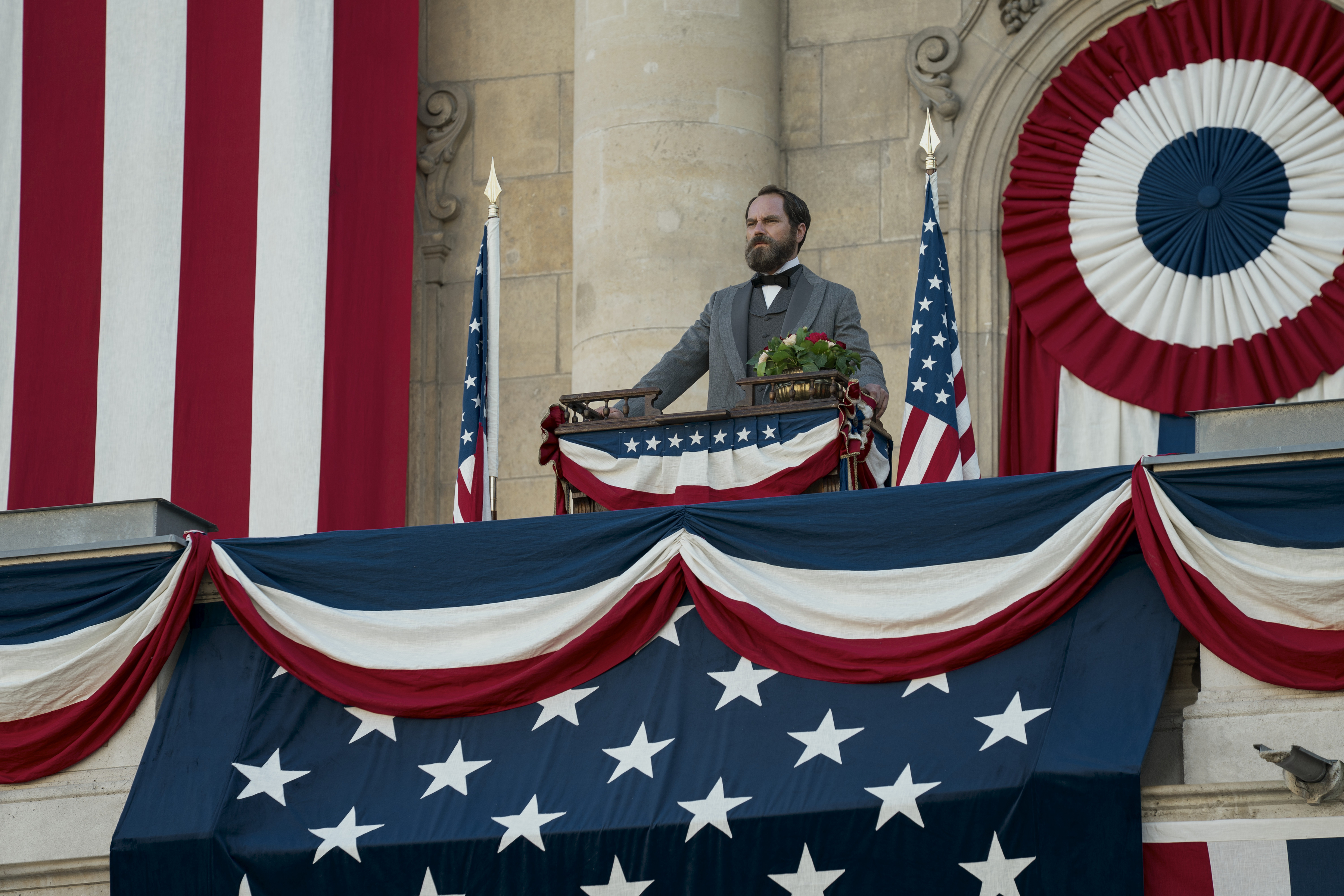
Gemma Jackson: Well, the White House was … As we all know, it’s been built more times than goodness … everyone’s done it, but we had a sort of layout that we wanted to really … Obviously, we had the original plans. We had to do quite a lot of stuff outside, as you know, having watched it. And that was mostly CG with a little bit of stuff from me, this height of steps and columns and things. But for us all, it was very important that you swung from the outside inside, and that there was the right proportions when you got there.
So more and more we had to build it. And then, more and more, the kind of story kind of helped with the layout as well. So when we brought Garfield back when he’d been shot, the whole idea of putting him in what was the library, which was later on the Oval Office, but at that point it was the library. I thought, I really … I sort of gunned for that because I thought to lug him all the way upstairs to his bedroom, there were too many people coming and going and it felt more sort of the president, even on his sick bed, being constantly people around and da, da, da.
And also there was the whole thing with the ice cooler and everything, that had to be able to come in. Yeah, so we put him down there and then, we had that gorgeous big broad hallway where people are up. And so, then we decided where to put their offices and how they … And I think it was sort of based on where the offices were, but with a bit of pinch of thought where we needed to-
Ayla Ruby: Yeah.
Gemma Jackson: And then just to give it a sense of a working place where you had Garfield, you had Arthur’s office and just basically making it live, I guess.
Ayla Ruby: Yeah, it comes across very well. It’s fabulous. Was there anything that … So in these other places, you’ve got the Garfield Farm, you’ve got the back rooms, you’ve got the White House, there’s also sometime spent in the jail in that final episode. Can you talk about … And I guess in the first episode too, right?
Gemma Jackson: A different jail.
Ayla Ruby: Yes, that’s right. Because he’s in front of the board and all of that. Can you talk about bringing those … how that came to life?
Gemma Jackson: Well, the first one was a location that somebody recommended to me to go and have a look at and I guess the location guy or something. And it seemed rather interesting. It was slightly more medieval feel to it, but we quite liked it, that it had that long, weird sort of tunnel going down to the entrance and there were quite a lot of elements that seemed rather useful and we wanted to have the parole meeting or whatever you want to call it. So we did quite a lot of work to that place, but it was all very subliminal.
We put a wooden floor in that room where he gets interviewed, which you wouldn’t really think about, but it was just dirt before that and it just needed that wooden floor just to up it slightly. It was pretty shitty, where he was with the rats and what have you, but it was supposed to be slightly possibly a bit theatrical just to really push it home sort of thing. And then, later on when he gets taken to prison, I think in a way it’s much more serious.
He’s really committed this other new crime, this murder, and he’s a complete fantasist. He has no idea. And so I think in a way, the prison needed to be more traditionally accurate at that point. I think if you’d put him into the first prison then I think it almost would’ve been … I don’t know, I can’t really explain quite, but I know I felt it was right to do it this way around.
Ayla Ruby: Okay.
Gemma Jackson: The practicality of the first one. We didn’t really know him and he was a vagabond and he was this and that, and he’d stolen his sister’s money, but now, he’s a murderer and he’s completely deranged. So I think you need to feel that he really is secure in this prison.
Ayla Ruby: There’s a different gravity to a situation, a different-
Gemma Jackson: I think so. Yes, exactly. That’s what it was. And hence, we built it.
Ayla Ruby: And I know we’re just about at time, but I wanted to know, is there anything else you want people to know about your work on the show or the show or anything that we haven’t talked about that you really should be known?
Gemma Jackson: No, I think all I would really say is that we had a really, really good crew on all fronts. I mean, really good painters, excellent painters, a wonderful construction team. All my art department, apart from the supervisor, were local art directors, drafts people, and it was just a really good team. You need a good team for a job like that. And I never ever thought, “Oh God, I wish I was back in London.” I never had that thought. I was really happy with everybody that I had.
Then Hannah, who was a set decorator who I took out there, she got on really well with her faction and they were really contributed hugely and we also worked with a local set decorator. And so, I think what’s important for everyone to know is that they were … it was a very talented bunch of people that I managed to get my hands on and they were just a joy to work with, real joy.
Ayla Ruby: That’s wonderful. And I think it comes through just with how lovely the work is. So again, kudos to you all. It’s wonderful.
Gemma Jackson: Thank you very much.


Comments
Loading…