

 Robert Hamer
Guten morgen, liebe leser! Today is the opening day of the 76th Berlin International Film Festival. I realized, at the dawn of this year’s festivities, that we are now just a little over a quarter of the way through the century. Which is a daunting prospect in general, but I also think this is an apt time to look back on these major international film festivals and reflect on what their idiosyncratic juries held up as the best among their official selections. So I decided to do just that for the top awardees of what are commonly agreed-upon as the “Big Three.” First up: Berlin, which awards the Golden Bear as their highest competitive honor. Later this year, I will post my personal rankings of the Cannes Film Festival’s Palme d’Or and the Venice Film Festival’s Golden Lion awardees from the last quarter-century.
Below, you will find my own rankings of the last twenty-seven Golden Bear winners (there was a tie for the top prize in 2002), a short explanation of my thoughts on each film, and, for my more perceptive readers, a little bonus opinion snuck into this list.
I’m curious to see who catches it first:

27) Intimacy — Not only is this is the worst winner of the Golden Bear in the 21st century, it’s one of the least-justifiable winners of a top prize in any international film festival I’ve ever seen. Not a minute of this is anything other than boring, unerotic, unedifying drivel.
26) Elite Squad — Pretty brazen how much of this just rips off City of God. Tries to straddle the line of semi-endorsing and semi-condemning the actions of the eponymous quasi-fascist police force and blows it. Wagner Moura, at least, is a compelling presence.
25) On the Adamant — I feel bad placing something with its heart in the right place so low, but at a certain point, Nicolas Philibert tips from restraint and empathy into meandering preciousness. There’s a noticeable lack of focus throughout, dulling the overall impact.
24) U-Carmen eKhayelitsha — I mostly enjoyed this, but I don’t know how much of that is just due to Georges Bizet’s opera. The new setting feels arbitrary, as Mark Dornford-May doesn’t meaningfully recontextualize Carmen’s themes to South Africa.
23) Grbavica: The Land of My Dreams — An otherwise tender portrayal of the lingering wounds that war inflicts on families and the drudgery of immediate postwar life in Sarajevo gets tripped up in plot developments that feel rather… soapy.
22) Child’s Pose — Luminița Gheorghiu is riveting as usual in a decent enough melodrama. But in the annals of the Romanian New Wave, it’s hardly essential viewing. Every camera operator was in desperate need of some chamomile tea.
21) Bad Luck Banging or Loony Porn — The first act is a knockout, then it shifts gears into a stranger and less discernible register. Then the finale sees Radu Jude turn into Adam McKay, clumsily strong-arming us into conclusions I was already inclined to agree with.
20) Alcarràs — An objectively well-directed movie, but I’m sick and tired of being expected to take a reactive hostility to technological progress and change without even a token effort from the film’s end to justify why the status quo should be preserved.
19) Touch Me Not — The originality of vision and creative risks are what make this worth seeing. What is ultimately an uneven but interesting audiovisual essay conveys, however awkwardly, a lot of compelling ideas about a myriad of hot-button issues.
18) The Milk of Sorrow — Why, yes, this title does portend a harrowing film. Muscle your way through its battering ram of an intro and some heavy-handed politics, though, and you’ll find a deftly controlled, visually severe display of magical realism.
17) There Is No Evil — Like most anthologies, the vignettes vary in quality. The second episode is the best, with the fourth being the weakest here. The moral dilemma Mohammad Rasoulof explores is an engaging one in this flawed but provocative polemic.
16) Honey — The ambition of a movie from a child’s perspective with long stretches of zero dialogue is undeniable. And Semih Kaplanoğlu largely succeeds at fulfilling his goals. I can’t help but feel like this would have worked better as a short film, though.
15) Head-On — Fatih Akin again displays his penchant for brewing poignant drama out of the intersection of different communities. As shamelessly melodramatic as Child’s Pose but there’s a conviction here that I find more engrossing.
14) Magnolia — You’re mad at me for not ranking this higher. I get it. There’s a lot to love here: the ambition, off-kilter craftsmanship, Tom Cruise and Philip Baker Hall. But there are some bum scenes, and Paul Thomas Anderson later admitted to its bloat.
13) Tuya’s Marriage — Avoids arthouse miserabilism through subtle humor, skillful cinematic storytelling authentically reflecting the unique landscapes of Mongolia, and an amazing lead actress. A strange levity emerges from a seemingly brutal plot.
12) Caesar Must Die — Another Golden Bear awardee recontextualizing a Western stage classic, this metatheatrical interpretation of William Shakespeare’s tragedy from inside the walls of the Rebibbia Prison is potent, thoughtful, and achingly human.
11) On Body and Soul — This ambitious semi-fantastical drama spins so many risky plates of tone, story, and cultural metacommentary that I was already primed to forgive its flaws. But then it steadily improves as it goes, ending on a high note.
10) Taxi — Not as prodigious as Jafar Panahi’s other two “It’s literally illegal for me to helm actual film productions so this is what I had to work with” guerilla projects, but it achieves the feat of thematically linking back to them in ways that uplift all three.
9) Synonyms — One of the nuttier movies ranked here, at least in terms of execution. A semi-comedic parody of French culture married to a character study about the struggles of an expat’s assimilation kept upending my expectations for where it would go.
8) Bloody Sunday — A sickening experience, as it should be. Paul Greengrass has made this film’s handheld camerawork, narrow focus, and sense of urgency his directorial signatures in the years since, but I’m not sure if he ever matched its righteous fury.
7) In This World — A docudrama about the refugee experience from an English filmmaker could have been an exploitative awards-baiting stunt, but Michael Winterbottom executes his vision with integrity and genuine moral clarity. Heck, it’s even more relevant now.
6) Black Coal, Thin Ice — As soul-rending as anything from the heyday of American film noirs. Its exemplary cinematography ends up being a perfect compliment to the necrotic atmosphere and moral rot driving this journey through the dark corners of mainland China.
5) Dreams (Sex Love) — Frequent voiceover narration, teenage infatuation, and heady discussions of literary merit can all be pitfalls in lesser hands, so it’s a minor miracle that this ends up a layered, profound drama about subjectivity and generational conflicts.
4) Fire at Sea — A highly engaging documentary showing the European refugee crisis through two unconventional but insightful and emotionally devastating perspectives. It helps us realize not just the existence of this crisis, but also how a crisis unfolds.
3) Dahomey — Berlin knows how to recognize great documentaries! Truly mind-blowing how many nuanced ideas about culture, repatriation, youth rebellion, and history Mati Diop packs into just 68 minutes, almost exclusively through cinematic language.
2) A Separation — One of the best-written dramas released in my lifetime. Raised the bar for morally complex interpersonal conflicts that double as critiques of the Iranian government’s injustices. The editing is exceptionally well-judged, the performances are all superb.
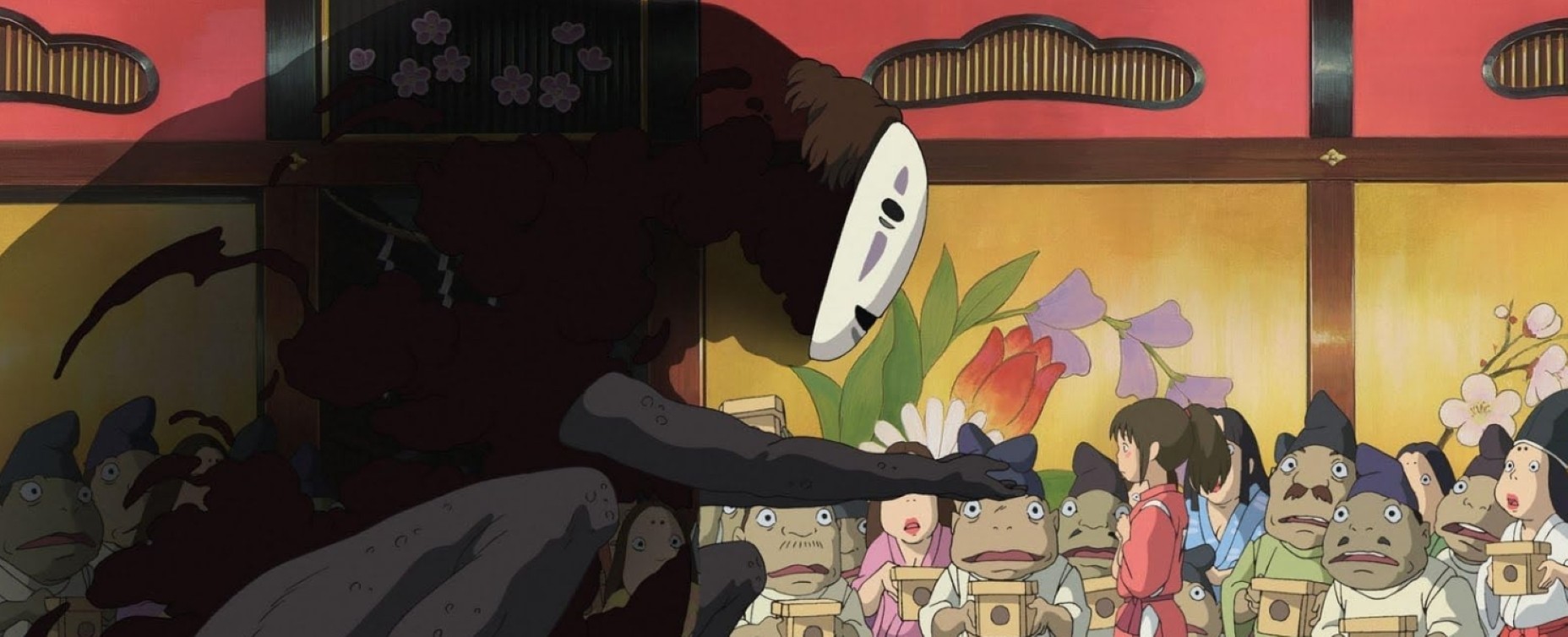
1) Spirited Away — One of the greatest animated movies ever made. Not only does it contain some of the most beautiful hand-drawn animation of the last twenty-five years, but also some of the most breathtakingly imaginative sequences of any feature produced under the leadership of the visionary Hayao Miyazaki. Such exquisite craftsmanship in the service of a sharply-observed, evocative fable about one girl coming into her own through that scary universal journey of growing from childhood to adolescence. Every character and setting is indelible. Its universal themes of love, responsibility, and courage are married to the unique aesthetics of Japan so successfully that I still recommend it to anyone who tells me they “hate all anime.” Such a consummate achievement made this my choice for the best Golden Bear winner of the 21st Century… so far.
What are your favorite winners of the Golden Bear from this century? Let us know in the comments.


Comments
Loading…