

I guess I have been ruminating on this for long enough. Okay, here we go… Osgood Perkins’ Longlegs is, so far, the most talked-about and popular horror movie of the year, with critics declaring it a masterpiece of the genre and a guaranteed classic. One of those critics being Awards Radar’s own Editor-in-Chief. In Joey Magidson’s glowing review, he raved:
Longlegs is a horror masterpiece. It’s not just a crowning achievement for the genre, it’s the best film of 2024 so far. I loved it from start to finish, even if it left me with a pounding heart. They so rarely make movies like this anymore, so it’s more than an instant horror classic, it’s something that I’ll never forget. I can’t recommend it highly enough. This is something special.
He later put out a Sunday Scaries piece joining many, many, many others in confidently portending the film would stand the test of time as a cinematic classic:
Longlegs is going to stand the test of time. An indie fright flick paying like a studio horror outing, it could very well be expanding the palate of audiences right now. Some may not jive with it, but as the years progress, folks are going to discover and re-discover it as a genre classic.
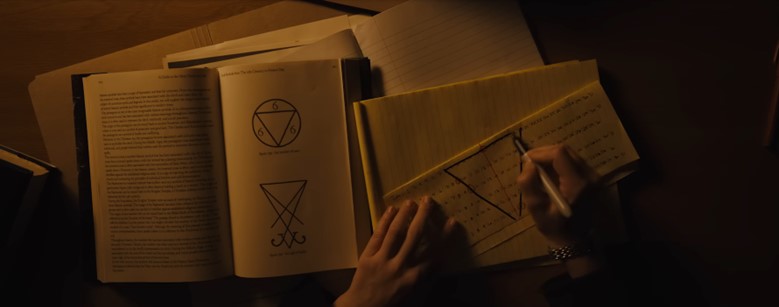
But after having sat with it for about a month, I have to ask… will they, though? Is this movie really a genre classic? Did it actually deserve its initial wave of glowing reviews? Or is Longlegs just another massively overhyped example of the overweening “elevated horror” that writes a bunch of highfalutin checks its execution as a feature film couldn’t cash? Is this something that will be held in the same esteem as The Silence of the Lambs, or even come close to that movie’s enduring culture cachet? I have my doubts.
I certainly wouldn’t argue that Longlegs is outright bad. It’s not like The Exorcist: Believer or Men, movies that the entire horror genre would be perfectly fine without. I was particularly impressed with Perkins’ ability to hotwire our own reactions to his imagery in the prologue. We open on that big bright wall of red for several minutes on end, burning into our retinas until a sudden smash cut to a desaturated winter landscape that looks “off” because of how our eyes are struggling to adjust to the dramatic shift in our visual points of reference. And then, to really throw us off, he introduces a cropped shot of Nicolas Cage’s obscured face as the titular killer, and in the split second we see him kneel down to show his entire face *BAM!* title card. Like an autostereogram that actually works.
That’s really cool! It’s exactly the kind of merciless audience manipulation that horror filmmakers should deploy more often! It’s not like it’s an across-the-board triumph of visual communication – it’s almost a little insulting to refer to so many conspicuous shots of President Bill Clinton’s official photo as the signifier of the time period the bulk of this movie takes place within – but still, Perkins for the most part impressively plays around with background movement, unsettling use of negative space, and prolonged silences to drive up our anxiety even when nothing is “happening” in that moment. But here’s the thing: those kinds of clever tricks can only take a movie so far. Much like Barbarian’s conceptually bold narrative reversals, unless you’re making something deliberately abstract to an almost alienating degree, you still need a satisfactory narrative with compelling characters to hang those tricks on, and I don’t know if Longlegs meets that burden, especially relative to the Oscar-winning classic it cannot help but invite comparisons to.
Lee Harker, for one thing, isn’t fleshed out to the same degree as Clarice Starling; if someone challenged me to the Red Letter Media test of characterization (“describe the character as if you were describing them to someone who never saw the movie without mentioning what they look like, what their professional occupation is, or their function in the story”), I could easily describe Clarice with those constraints, but I would struggle if asked to do the same for Lee, and Maika Monroe’s clenched approach to the character doesn’t give me a lot to work with. She’s… kind of reserved? Taciturn? Has a strained relationship with her mother? Behaves as if she’s really determined to catch the Longlegs killer? There just isn’t much to her, and her maybe-maybe-not psychic abilities feel like a cop-out Perkins added just in case he found himself stuck on how, exactly, Lee obtains critical information and when. Imagine if, instead of gathering clues and building a rapport with Hannibal Lecter, Clarice just had supernatural visions that showed her where Buffalo Bill was imprisoning his latest victim. Why would we even bother following the police procedural parts of The Silence of the Lambs if we know she can magic her way to the answer at any point Ted Tally felt like?
On the extreme opposite end of the spectrum is Longlegs himself, and he’s not only a bigger problem in my eyes, I would almost go as far as to say he is The Problem™ with this movie, since so many of my negative critiques of Longlegs are related to him in some way. He’s so clownish in his appearance, and so ostentatious in telegraphing how crrraaaaazy he is, that his decades-long success in avoiding arrest or even suspicion just makes the FBI look laughably incompetent (reaching their nadir of ineptitude when it seems to take almost a full minute for them to appropriately react to Longlegs pulling off his final grand gesture). He shrieks, he giggles uncontrollably, he mugs, and he breaks out into a hair metal falsetto singing voice in two different scenes. That Cage is one of the credited producers of the film makes me wonder if he was too powerful an authority on the set for anyone to set up some semblance of guardrails around where he could take Longlegs’ personality.
Which is especially weird since, in hindsight, his actual function in the story ends up being almost entirely superfluous. It’s kind of incredible how little he proactively drives the action of the story. By the time we get the climactic reveal about a major supporting character, the first thought that ran through my mind was, “Wait, why did we even bother with that guy if the tangible threat was always from this other character, instead?” I guess one could argue that his lack of function in the plot was intentional and part of a deliberate red herring, but shouldn’t something come of that misdirection? Can anyone say, with any real certainty, how Longlegs actually informs Lee’s character arc? What was the ideological conflict between the two of them? Do either of them even have an ideology outside of “Satan Bad” versus “Satan Good?”
That leaves us stranded with two main characters who have only a tenuous connection to each other as far as their development in the story is concerned, two actors who look like they’re performing for two entirely different movies, whose big confrontation ends with a sprint to a final act that feels like it’s paying off something that wasn’t actually set up in the first hour. Even with its immersive sound and unsettling mise en scène, I just don’t see future generations of cinephiles willfully overlooking these fairly major problems.
I especially don’t see it in light of even some fans acknowledging the silliness the final act devolves into. Some call it an out-of-nowhere disappointment while I would call it a natural consequence of modern filmmakers always feeling like they have to “solve” their plot mysteries for us with tedious worldbuilding mechanics. To the degree the over-literal and over-explained climax works at all, it works almost entirely due to the film reorienting its dramatic point of focus around Alicia Witt, who I would argue is the only member of the cast entirely succeeding in balancing the movie’s gonzo tonal impulses with its headier ambitions to explore spiritual paranoia and the progressively destructive myopia of modern parenting. I don’t know if that outright saves the movie in my eyes, but if this film does keep up its longevity past the hype cycle, I will contend she’ll deserve most of the credit for that.
Let me know if you’re on Joey’s side or mine regarding the future legacy of Longlegs in the comments.


Couldn’t agree more. You put into words exactly my thoughts.
No chance this movie is very remembered in 10 years
[…] I wasn’t as big a fan of that movie as Joey very much was, but this still looks really intriguing to me because of how different it […]