
 Joey Magidson
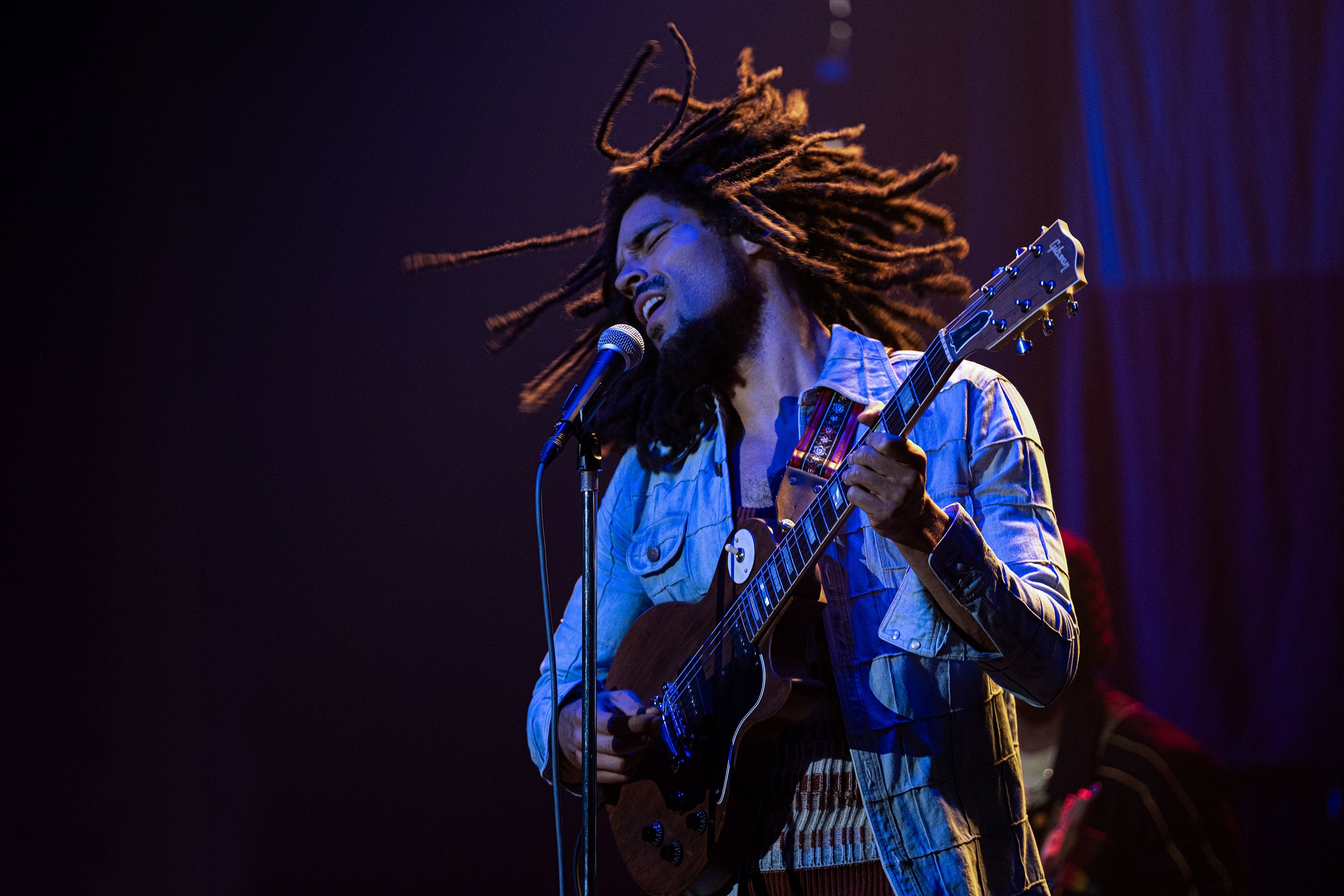
Biopics continue to be at an inflection point, cinematically. There’s less and less appetite, it seems, for the cradle to the grave biopic style. More and more, capturing a moment in time in the life of the figure is the way to go. Now, Bob Marley: One Love does go that route, but it can’t help veering off and being tempted by the other path. It’s a well acted film, with some nice cinematography, and of course good music, but it winds up never letting you gain a deeper understanding of Bob Marley, the activist and musician that it so worships.
Bob Marley: One Love is trying to be too many things, to the point where it ends up being really nothing at all. Between the almost fanatical worship that Marley is given (which isn’t necessarily an issue, but it keeps things more surface level than the movie would like, though considering this being a very much family approved production, perhaps that was always going to be the case), the ever changing scope, and the lack of focus, whatever you find most intriguing about this story, you’re bound to be left wanting more.

The film ostensibly centers on the lead up to, and aftermath of, the 1978 One Love Peace Concert organized in Jamaica by musician and activist Bob Marley (Kingsley Ben-Adir). We’re introduced to Bob already an icon, preparing to put on the concert, which everyone around him perceives to be an unnecessary risk. There’s an attack on his life, as well as extra danger beforehand, leading him to send his family to America and for him to head to the United Kingdom for a bit. There, a new sound would accompany a new record, one that he hopes has the power to actually bring about change and peace.
At the same time, the movie flashes back to Marley’s childhood, gets into his dealings with the record label, the crafting of his seminal Exodus album, as well as his relationship with Rita Marley (Lashana Lynch). Any of these plot threads, or even two of them, would have tied together nicely. However, the zig-zagging it does never lets you get comfortable with any thread, nor does it allow you to ever really get invested. You’re observing a lot, sure, but you’re never getting the how or the why of it all, sadly.

Kingsley Ben-Adir find a groove to his portrayal of Bob Marley, that much is undeniable. He captures internal turmoil very well, better than the screenplay he’s given, in fact. He also shines during the musical sequences, getting lost in the music. I do wish Lashana Lynch had more to do, but she’s a welcome presence and very warm. The scenes of Ben-Adir together with Lynch have a gentle romance to them that works. Supporting players include Michael Gandolfini, James Norton, Micheal Ward, and many more.
Filmmaker Reinaldo Marcus Green has made his fair share of biopics at this point, so he’s a fairly safe directorial choice. The issue here is all of the writers, who clearly seem to have had different types of movies in mind. The script is credited to Green, alongside Zach Baylin, Frank E. Flowers, and Terence Winter (the latter two getting Story By credits, suggesting their screenplay was a different one than the Baylin/Green draft). The weird mixture shows, as the film starts to pursue several different biopic avenues, but never really commits to one. There’s also present here the biopic sin of having the text on screen at the end be more interesting than some of what we’ve already been shown. Whenever a film does that, you wonder, why not just make that story instead? Now, the cinematography here by Robert Elswit is pretty good, so this is a nicely shot movie, but the writing is all over the place, which ends up being the main issue. The germ of a really strong idea is here, with Marley and the political strife of Jamaica, but you’re given nothing but the barest bones about it. It’s simply not enough.
Bob Marley: One Love has some great music and a nice performance at its core, but it’s not nearly enough to sustain interest for 100 minutes and change. The documentary Marley, though obviously going about things very differently, tells you so much more. This is, unfortunately, closer to a Bohemian Rhapsody situation (though a stronger work), in that it’s all surface level. In the end, there’s a reason why this was pushed from awards season last year to February of this year. It just doesn’t stack up. Bob’s message of love and unity still rings strongly to this day, I simply wish the film showcasing it was a bit better.
SCORE: ★★


Comments
Loading…