

 Niki Cruz
What makes awards season so exciting year after year is the potential to discover a strong filmmaking debut or a breakout performance. One of those discoveries this season was Writer/director A.V. Rockwell’s full-length feature debut, A Thousand and One.
A Thousand and One is a powerful story about a mother’s love for a son and finding resilience in the face of immeasurable challenges. From the start, Inez and Terry’s trajectories mirror each other, but Inez sees a way out for Terry and offers him a love and foundation she never had.
Inez (a breakout performance by Teyana Taylor) is a young woman who survived the broken foster care system at a young age, and so, as not to let history repeat itself, she decides to kidnap 6-year-old son Terry. Together, they forge a life as a family and create a home and a semblance of stability that works for them until the secret Inez is carrying ultimately blows up in their faces.
The engine that drives Rockwell’s film is her ability to tell Terry and Inez’s story by capturing the atmosphere of New York’s sociopolitical evolution and the tension the city endures under changing leadership. From Mayor Giuliani and later on Mayor Bloomberg, Rockwell shows how Black and brown communities are the ones hit hardest by police brutality, stop and frisk, and ultimately ushered out by gentrification.
It’s a film that deserves all the recognition this season. Awards Radar spoke to Director-writer and Queens native A.V. Rockwell about her journey with the film, her relationship with New York, and what inspired her to create A Thousand and One.
Niki Cruz: Congrats on all the love this film is receiving right now. From Sundance to Gotham awards and beyond.
A.V. Rockwell: Thank you. Yeah, it’s been really beautiful with just how people continue to show love and all these different ways that cement how much it’s resonated with them.
NC: Yeah. You create something like this because you want to say something significant, and then you go through the journey of financing and distribution, and now you’re in the awards discussion. The film has had such a life. How does that feel?
AR: It’s a long journey (Laughs), But I think one of the things that I move forward with as I come to towards the end of the journey with this movie, and I look forward to with the next one, is just to make sure that I’m enjoying all of it; enjoying the ride, the experience of it. I think I remain super centered on why I made this film and who I made it for, and everything else is just a bonus.
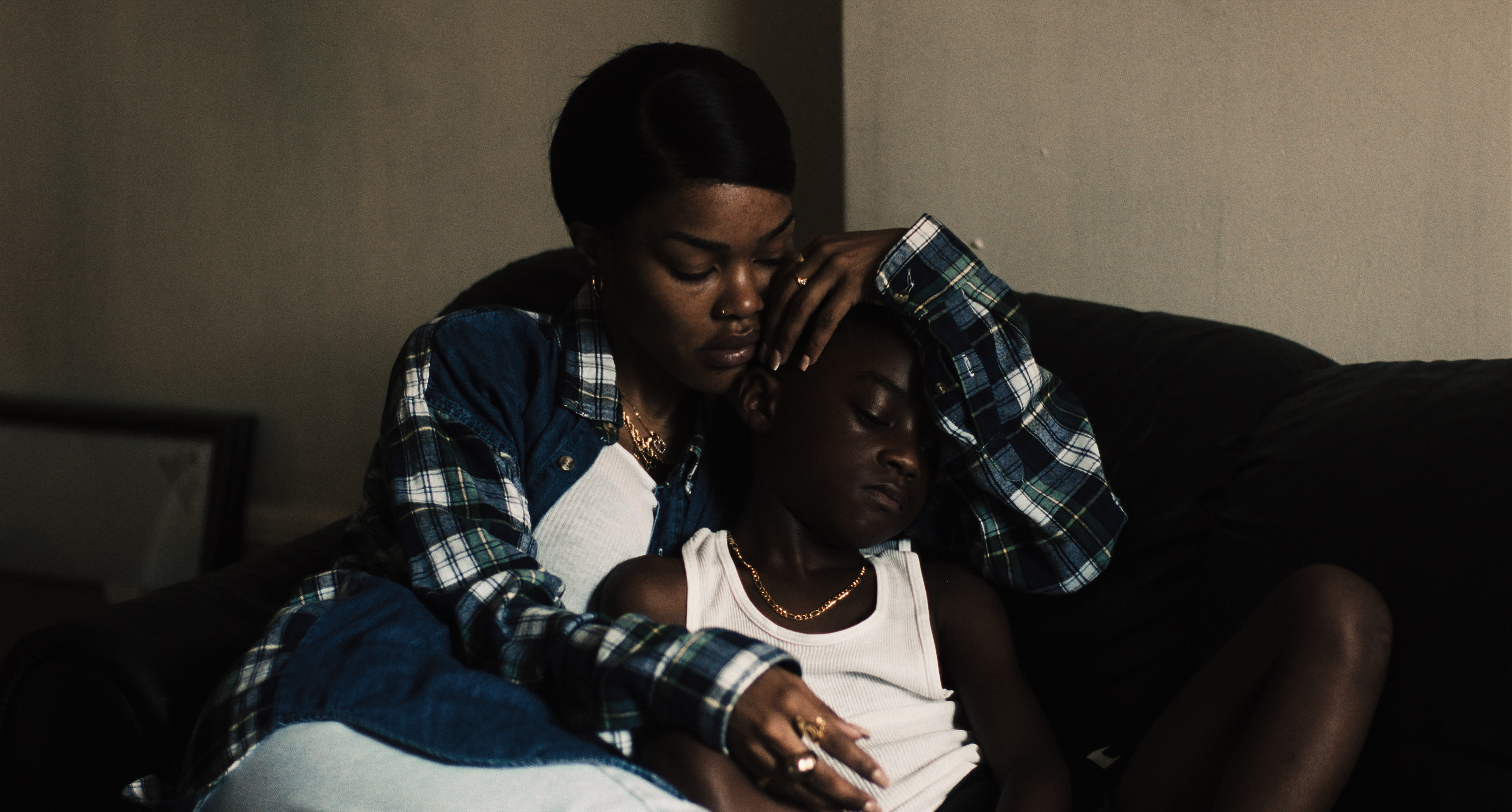
NC: It’s also been amazing to see Teyana Taylor’s trajectory over the last year. She’s the movie’s heart and has to carry it. She has to embody every human complexity and emotion imaginable. I was familiar with Tayana, but this is another level of visibility for her. The performance is just incredible.
AR: Thank you. It’s such a proud moment for me. As I was writing this role, and had no idea who I would give it to yet, I really did want to create this type of role for a Black woman actress to really elevate them and lift them up because it’s still a challenge in our industry, not only getting these stories told but just getting them represented in our full humanity, with three-dimensional characters. For Teyana, who, prior to this, people didn’t know what she was capable of, this is an opportunity to showcase her talent and range. That is something that will continue to open doors for her.
NC: You grew up in Queens. How did your time in Queens plant the seed for this film, and what you had to say as a filmmaker? Given this story, and as a New Yorker, I was very interested in hearing about that aspect.
AR: So much of the movie represents my journey as a New Yorker overall. The way Queens connects to it is the most personal of ways. When I think of Queens, I think of the relationships in the movie and certain themes, especially related to being a woman of color in New York. Themes like colorism and family dynamics — I come from a single-parent home, and my mom fought tooth and nail for everything. Everything that I am and I have the potential to become is largely a testament to how she fought for me. So those are things that I think about when I think of Queens and when I think of how my upbringing related to the characters and their experiences. I think that the deep love that I have for New York City in its entirety is really what I wanted to celebrate, as well as the pain of seeing that experience change and just getting a better sense of how people like me relate to the city.
NC: I was also raised by a single mother who also fought hard for me, and because of that, I was so struck by the mother and son bond in the film, especially the moments of joy, love, and that certain intimacy shared between them. How do you prepare to capture that specific relationship?
AR: It really comes down to how you connect to other people’s experiences. I just always tried to pull from a place that felt personal. Also, connecting with the men in my life and seeing how they relate to their moms, especially in those more challenging bonds. I tried to pull from the emotions and how I connected to their pain or connected to their joy, and the complexities of that dynamic and trying to relate to that and get other people to relate to that. I also had conversations with my actors before we began rolling to make sure they also created their own connections and bonds, and it was there. It was beautiful to see Teyana with each of the boys and how they related to each other.
NC: Within this mother and son story is the backdrop of New York. There’s a lot to love about New York, but then there are these horrific moments in culture and terrible policies that become a reality for many people living in New York. I loved how you used voiceovers for each shift and how that set the tone for the sociopolitical changes that led to things like stop and frisk and gentrification, and how you chose to show these harsh realities through the lives of Inez and Terry. How did you decide which years to include and what moments you wanted to exist in this film?
AR: The moments that I chose are real turning points. It was big events that I either remember experiencing from a child’s perspective or just me doing research for the film and mapping out what that era was like for Terry as a young boy. I asked what the benchmarks are for a kid like Terry? In 1994, when Giuliani came into office, there was a changing of the guard, and again when Bloomberg took over. I wanted to show Giuliani’s vision for the city- both in what it was and what it really wasn’t in practice. There was a lot to hope for, given his aspirations, and then there was the reality of how much that didn’t serve us.
Then you want to think of the police brutality cases of the late 90s, but I don’t want to show that on screen. Also, stop and frisk, which came about when Terry was becoming a young man, were things that would have really impacted him and heightened Inez’s fears about being able to keep him on track when he was constantly under threat. I just tried to be mindful of where he was in his journey, where the city was in its own journey, and how those two things would be unfolding in a contentious way. Even in 2001, when Bloomberg came into power, it was the same thing again, you know? Just somebody whose vision for the city sounded like it would continue to elevate everything that we’ve known New York to be about, but in practice, it just continued to evolve in a way that just made it harder and harder for this family to stay together and to find their own version of the American dream.
NC: Honestly, as I watched it, I was thinking about the policies then versus the policies now, and to a certain degree, we’re having the same conversation now. Everything is cyclical.
AR: Yeah, and that’s something that I thought a lot about, too. As we watched it at the Sundance premiere, I remembered how much generational cycles were a part of this journey with me, too, and for me wanting to tell this story because things are very cyclical. Within our community, there are generational cycles that we want to overcome. There are always new villains and new external obstacles that we’re fighting as a community. And so every time we start to rise above and overcome, there’s always some new tension that’s created.
NC: There’s always something new, unfortunately, but within that, there are moments of levity, and we see glimpses of joy and play in the film. And I think that’s also such a special thing about this film. How important was it to show those moments of joy?
AR: That’s the beauty of people having a life together. The joy they had is the beauty of what life can be when you don’t feel like you are constantly under that attack when you have moments to breathe. When that tension isn’t there. When you aren’t in the midst of that fight, life can be so beautiful, and our relationships can be so beautiful. Inez was healing herself as well, and during the periods where she didn’t have to fight, it gave her permission, finally, just to live and exist and to laugh and be silly and pour love into someone else.
A Thousand and One is now available to stream on Prime.
[This interview was edited for length and clarity]


Comments
Loading…