
 Shane Slater
One of the most striking films among this year’s Oscar contenders for Best Documentary Feature and Best International Feature is undoubtedly Asmae El Moudir’s The Mother of All Lies. Winner of the Un Certain Regard Best Director prize at Cannes, this probing documentary uncovers the personal and societal trauma of the 1981 Casablanca bread riots, when the strain of food prices prompted civil unrest and a violent response from authorities. During the film’s screening U.S. premiere at the DOC NYC film festival, Awards Radar chatted with El Moudir to discuss the making of the film, which uses miniatures to recreate silenced memories and personal testimonies to reveal harsh truths from this period.
Shane Slater: What made you decide to make this very personal story into a film?
Asmae El Moudir: I think many things pushed me to create the story. I wanted to have this interaction with my family and to show that mechanism of lies that grew up little by little in the house. But I discovered later that it was not only in the house, but in my whole neighborhood and my country. So I think that was the idea, just to have this question. How we can investigate stories when we don’t have any concrete or visual proof of what has happened.
SS: The miniatures was such a creative choice. Was it something that you and your father had done before?
AEM: My father was not alone, he was helped by lots of Moroccans in the construction. But it was his idea. because he’s a designer of everything. He restores walls, he builds house, he does everything by hand. And I never thought that my father, one day, will be with me in a film. But when I tried to film in some sets, it was forbidden to get authorization. So I told myself, I should find a solution to open doors, and not just stay standing up in front of closed doors. Then I came back to the idea of when I was a child, my father was creating things, for me and my sisters and brothers to play with.
SS: Your grandmother is such a key part of this story. How challenging was it to get her involved?
AEM: It was not easy. I tried years and years to bring her in. She doesn’t like pictures, she’s never been in a theater. It was a big challenge for me. And I’m so happy to able to convince her. Two days before going to Marrakech for the film, I told my grandma, “You should choose from these three Moroccan actors, and one of them will play you in the film.” And she didn’t do anything.
But after one day, she called me and said, “You think that woman will be me and will tell my own story?” I said, “Yes, I have no choice.” And she said “No, she cannot do it.” So she said “I will come, but I cannot guarantee I will stay.” And it was a big pressure. There were a lot of problems behind the scenes. But it’s a part of the process. It’s a part of my film.
SS: There’s a powerful monologue from your neighbor about his traumatic experiences. Did you know about his story before?
AEM: I didn’t know about his story. But I knew that he was in a jail and everything, but I never asked him to do it. It was a sequence in a collaboratory workshop. So I brough everybody there, just so we can talk freely. We will build sets, we will talk, we will destroy everything. And maybe we will come out from the workshop with the therapy and everybody going to be new, maybe. I’m not making cinema to resolve problems, but I provoke things with my film.
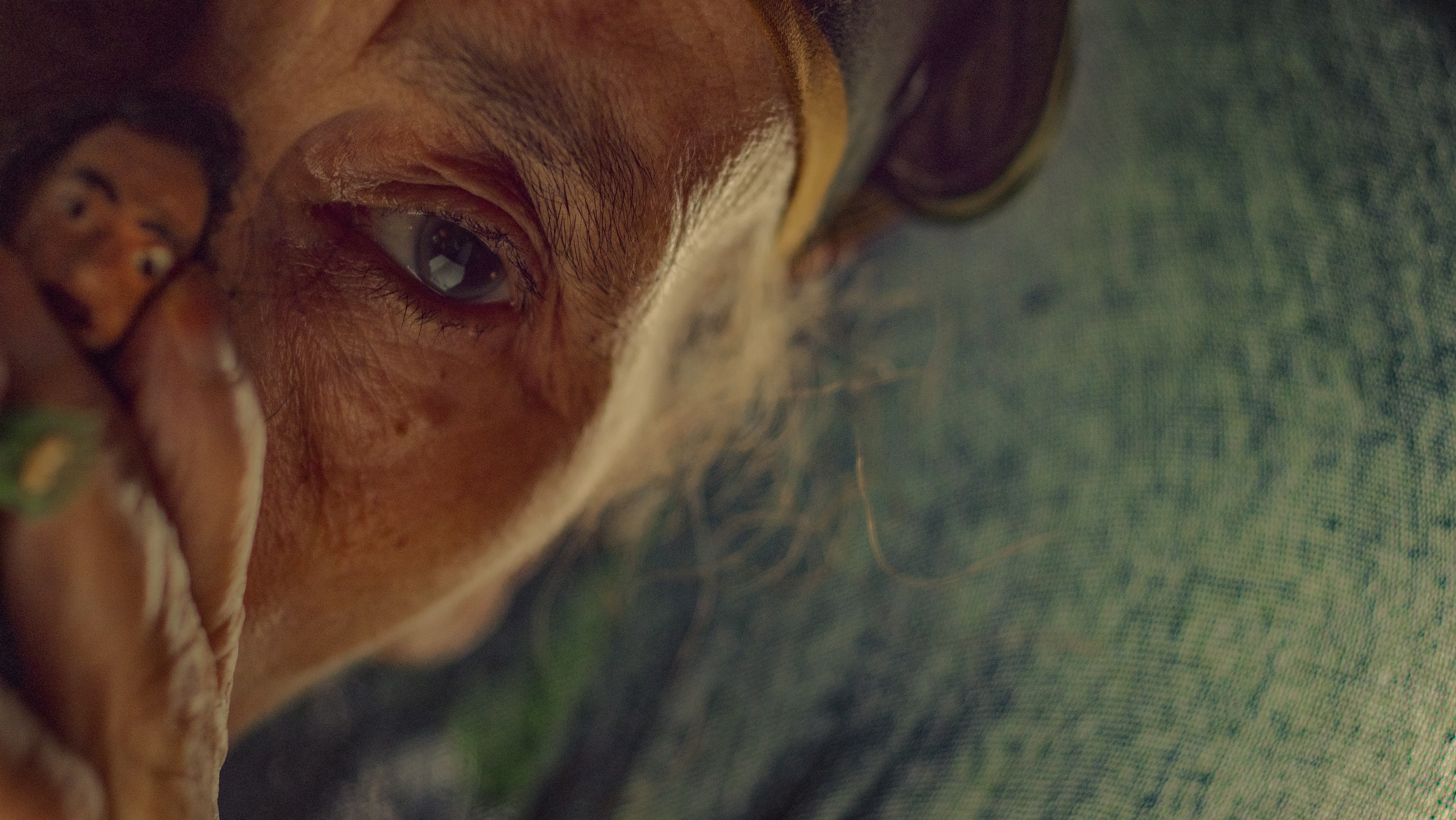
SS: In the film, your grandmother insists that you should call yourself a journalist and not a filmmaker. Does she see you as a filmmaker now?
AEM: I won the Best Director in Cannes. She was there and I told her, “Grandma, I’m a filmmaker!” And she said yes. But she was thinking that having a journalist in the family is like having a doctor or having a chief of police. Instead, having a filmmaker, it’s bad with cigarettes, alcohol, parties. Now she changed that idea because people came to her after the screening in Cannes. Everybody was happy, and people came to tell her she was great. She was waiting for this reaction from other people.
SS: Are the Bread Riots discussed a lot today in Morocco?
AEM: Nobody forgot about it because during the anniversary, people go out and talk about it. So, what has changed today is that we are having this kind of reconciliation with the past as a new generation. I can talk about the past clearly, I have no problem telling that we had this dark page from our past and we should keep it, not erase it. Because we also have good things in Morocco. So there is a some kind of reconciliation. Thanks to the king, we can talk today about the past. Identity comes from the past. We cannot erase the past even if it’s dark, even if it’s hard.
[This interview has been edited for length and clarity]


Comments
Loading…