
 Joey Magidson
We can get it out of the way up front. The Social Reckoning is not in the same league as The Social Network. The latter is a masterpiece, with not just some of Aaron Sorkin‘s best writing, but David Fincher‘s best directing as well. So, there’s no shame in this film not being on the level of that one. At the same time, considering it to be a companion piece more so than a sequel behooves it and you, as it sets expectations. This is a follow-up that’s covering new ground, reconsidering the subject matter of the first flick. Overall, the movie doesn’t have quite as much wit or the visual panache of the first one, but this time around, the darkness of where Facebook took us/is taking us lands like a sledgehammer.
The Social Reckoning is well written and well acted, while Sorkin competently stages it all. However, while comparing it to The Social Network is folly, it is noticeable how much Sorkin’s simpler direction supports his wonderful writing far less well than someone like Fincher did. Sorkin is always at his best when a director can add style and flourish to his prose. Here, he’s again directing his own material, with flatter visual results. Still, the words matter, and there are few better at it than Sorkin.
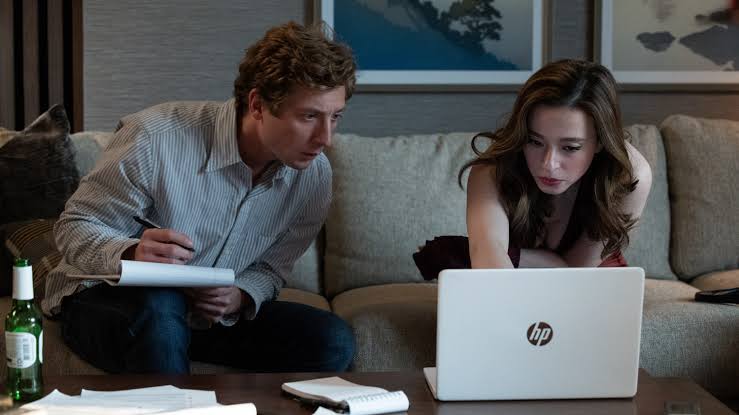
After a prologue that initially seems like it’s unrelated to the main story, we meet Frances Haugen (Mikey Madison), a young Facebook engineer who believes in the mission of the company, yet worries that the decision makers have lost sight of that. She sees overt radicalization happening on the social media platform, knows the company is doing nothing to stop it, and feels a sense of duty, mixed with guilt. Frances reaches out to Wall Street Journal investigative reporter Jeff Horwitz (Jeremy Allen White), who has just moved from the political beat in Washington to tech in California. He’s been poking around to see who at Facebook might talk, and when Frances responds, a hesitant conversation begins.
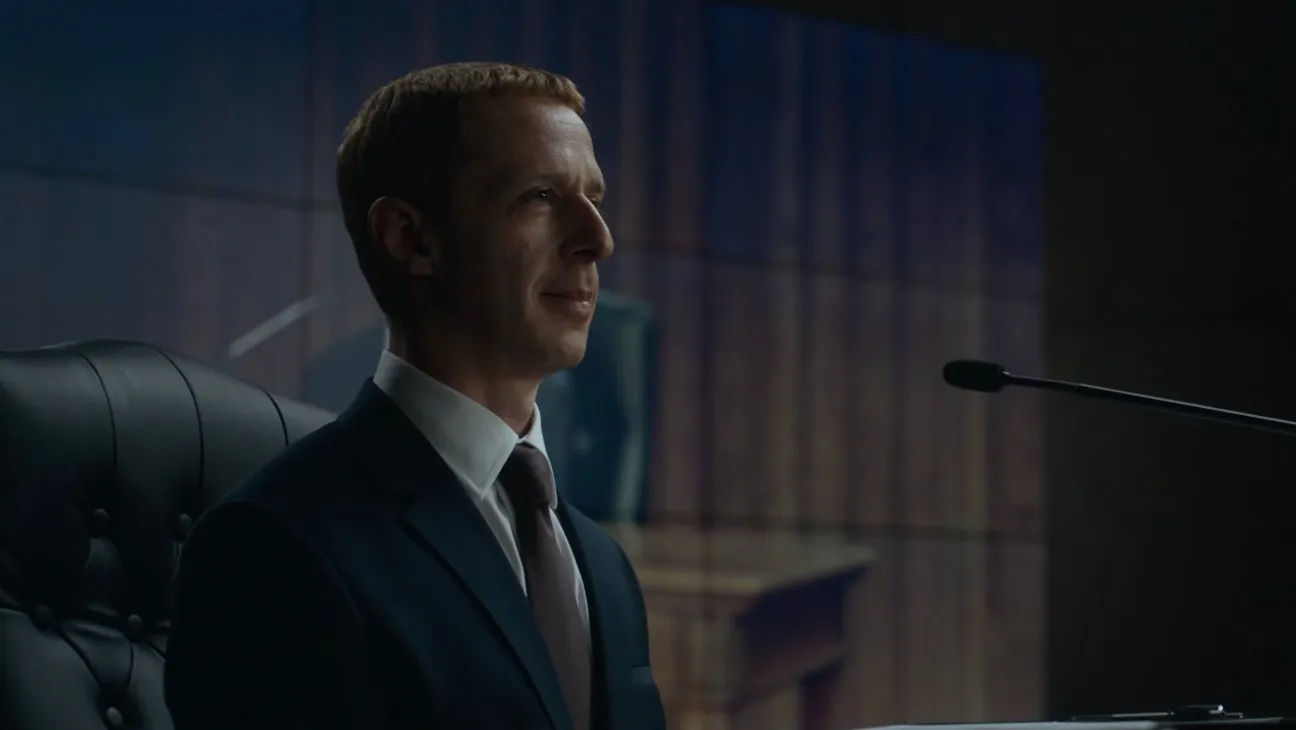
While Frances and Jeff begin to discuss what Facebook is up to, the narrative jumps back and forth a bit to also show us Mark Zuckerberg (Jeremy Strong) preparing to testify before Congress. He has a crisis manager (Wunmi Mosaku) helping to make him likable/answer the questions properly, while a former advisor (Bill Burr) lurks in the background, challenging him on what the company is up to. As we see more of Mark making his thoughts on Facebook censoring hate speech clear, Frances and Jeff work on what will ultimately lead to her becoming a whistleblower on Facebook’s darkest secrets.
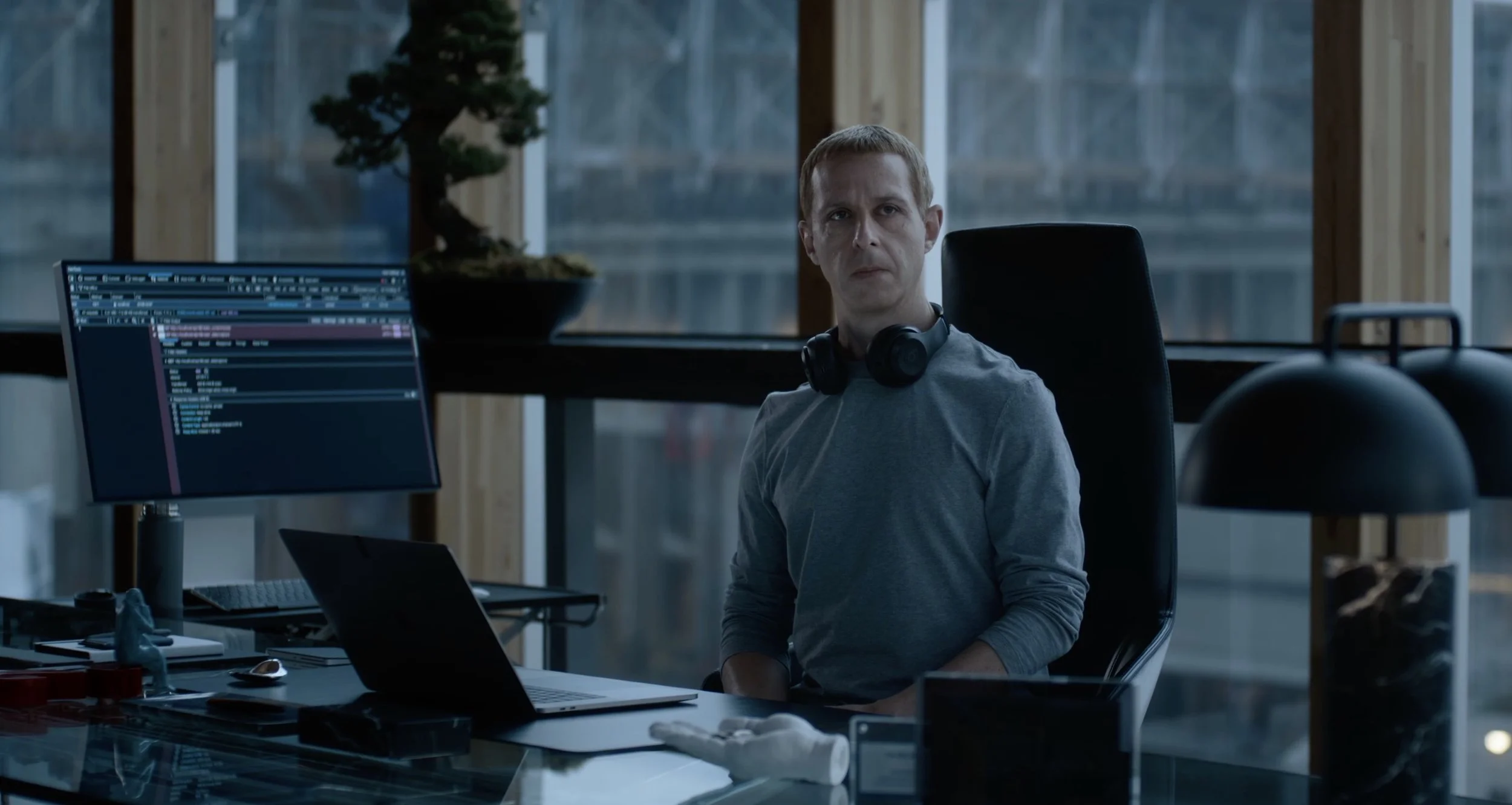
Jeremy Allen White, Mikey Madison, and Jeremy Strong are all doing good work, serving the material capably. Madison plays Frances very quiet, mostly coming alive when bantering with White’s Jeff. It’s miles away from her Oscar-winning turn in Anora. Madison is who we spend the most time with and who the emotional core of the film rests on. White is very much in comfortable territory, though with Sorkin dialogue at his disposal. Their almost brother/sister chemistry benefits the movie greatly. As for Strong, he’s very much a supporting player of the three, and he’s doing Zuckberg a bit mannered, but it’s still rather chilling work. This is a far different Zuck from the one Jesse Eisenberg was nominated for playing. Bill Burr is best amongst the rest of the supporting cast, going toe to toe with Strong, while Wunmi Mosaku is solid yet a bit wasted. Other supporting players here include a scene-stealing Betty Gilpin, alongside Gbenga Akinnagbe, Portia Doubleday, Patrick Fischler, Anna Lambe, Billy Magnussen, and more.
Writer/director Aaron Sorkin puts forth a screenplay worthy of companion piece status, though his direction leaves a bit to be desired. I’ve enjoyed his work behind the camera so far, and still think this is a good film, but this is the first time it felt like he’d have been better served as just the screenwriter. Sorkin the writer is a genius. Sorkin the director is, at best, solid. So, Sorkin the filmmaker comes off a touch uneven here. At the same time, his script does sing, especially in the occasional lighter moments, and his biggest narrative swing actually worked for me, even if it might prove divisive. The cinematography by Jeff Cronenweth and score by Alexandre Desplat are good, if echoes of what was done so brilliantly before.
The Social Reckoning is a less propulsive work than The Social Network, though this one feels more duty bound, given the approach taken last time around. The perception of Facebook has shifted, alongside us now knowing what we know. The events depicted in the film are part of that shift, which makes Sorkin tackling it in the first place rather interesting. He’s crafted a movie that won’t be considered an instant classic, but is another essential part of the conversation about where social media has gotten us.
SCORE: ★★★


Comments
Loading…