

 Steven Prusakowski
On the surface, MGM+’s American Hostage is a 1970s drama about two men from very different backgrounds whose fates become intertwined. A popular Indianapolis radio reporter Fred Heckman, played by Jon Hamm, and desperate hostage-taker Tony Kiritsis, played by Giovanni Ribisi, navigate the near-literal minefield of a tense hostage crisis live over the radio. While it captures the 1970s from top to bottom, once the surface is scratched the modern parallels are undeniable.
During my interview with the cast (Ribisi, Mireille Enos, Kristoffer Polaha) and team behind American Hostage, we discussed how while the technology, music, and fashions have changed, the deeper story about people who feel unheard by a system stacked against them, the media, and the fading American Dream persist.

What begins as a standoff quickly expands into something much more relatable even as the situation escalates. The series taps into a much bigger swath of the world, tackling many different facets of humanity, the era, journalism, and politics.
“I would argue that the architects of society in the 70s were pushing then where we are now. I mean, I think to see the struggles be the same is not like there was a pre-war America,” said Polaha. “It’s very interesting because it’s almost like we’re living in the same moment, but change is so exponential now – the rapidity – it’s hard to keep up, it’s changing so fast.”
The series producers (Shawn Ryan, Eileen Myers, and Adam Arkin, who also served as director) shared how their goal was to take it beyond just a story of two men on a phone and examine how their situation affected many, from their loved ones to the millions listening as it unfolded live.
“We knew that as compelling as Fred and Tony were, that it couldn’t just be a show about the two of them on the phone the entire time,” Ryan explained. “We were really interested in the ripple effects in their lives… getting into the humanity of Dick Hall (Polaha), the hostage… How was Fred’s wife (Enos) affected by all this? How was Dick’s wife (Kat Cunning) affected by all this? How would they react.”
Polaha described how the series and their performances added more depth, “We were all all trying to bring a full 360° view of who these people are because there aren’t black and whites and everybody’s got hopes and dreams – and how do those lives intersect, that’s where the drama comes in.” He continued, “I think that’s what this show is trying to highlight is again the idea of community and truth and feeling pressed upon – what do you do when you feel like you have no other recourse?”
“I think a lot of people thought of him (Tony) as a villain,” added Enos. “Then you cast Giovanni and it provides an opportunity for that human being to be seen in a more nuanced way and hopefully that translates out into the world.”
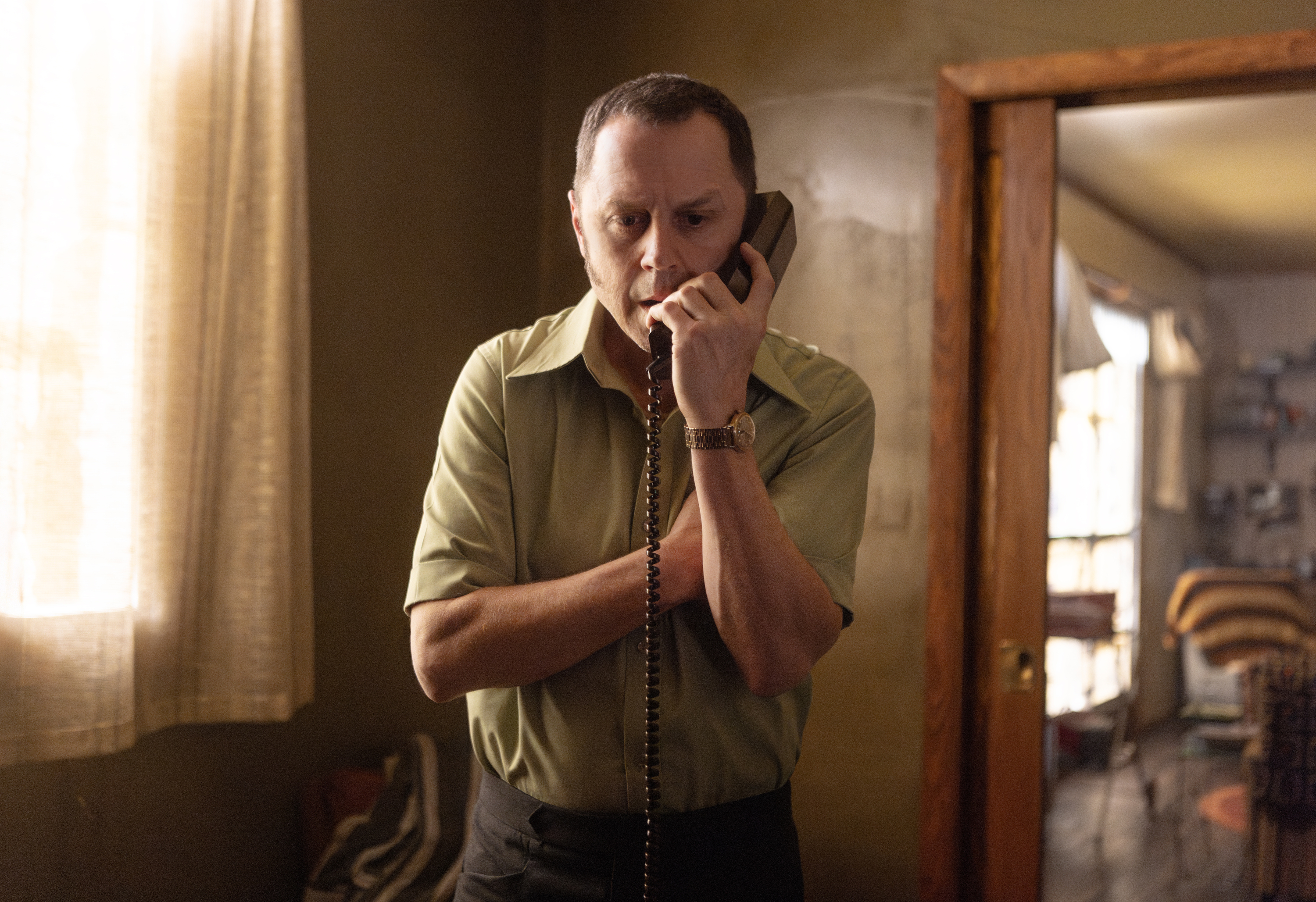
To keep the human element of the story as the core the production required a technical solution to overcome the a hurdle that allowed the connection between Hamm and Ribisi feel even more alive. The production built Tony’s apartment and the radio station on the same stage, separated only by a hallway, with a closed-circuit phone line and dual camera crews running simultaneously. To avoid this just becoming an isolated voice recording, everything was shot live.
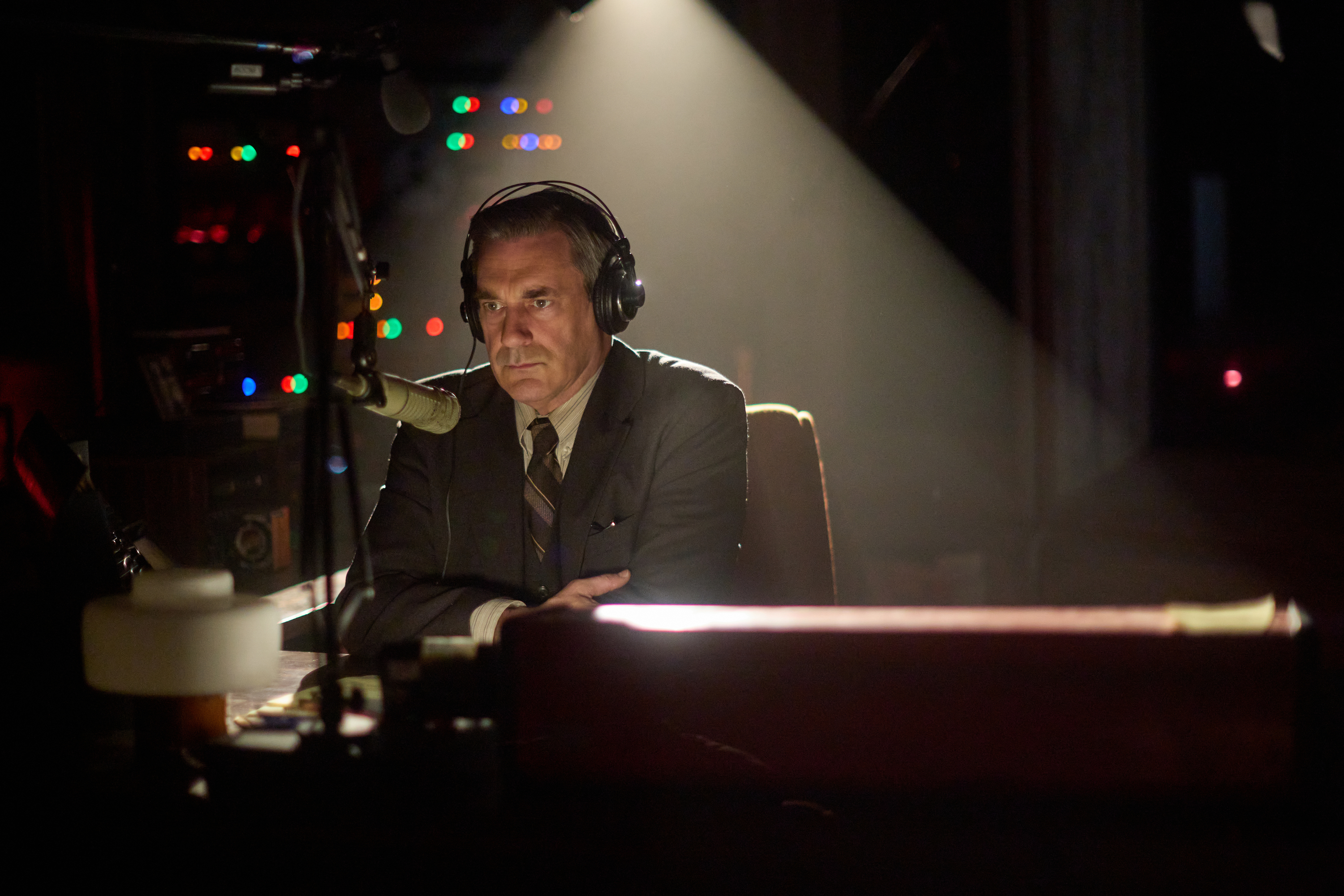
Ribisi described how recording those scenes kept him in sync with Jon Hamm, reacting to each other live. Even though they weren’t in the same room, their shared emotional energy made it feel as if they were. “We had two sets on the same stage with a closed circuit phone, Tony’s apartment and the radio station, which is like this architectural masterpiece that the production designers put together. And it was live.”
Credit: Steven Ackerman/MGM+/Sony Pictures Television
The series producers explained how important the creative solution ended up factoring into their performances. “With two camera crews working in both of those sets, everything we were doing was happening in real time and their connection as a result of doing that was very dynamic, very spontaneous,” shared Arkin. The solution keeps both the intensity of the situation and the human connection between the hostage, the hostage taker and their connection to the rest of the world.
You can watch the results of these creative production solutions and the stars’ performances in the clip provided by MGM+ below.
In a series that focuses on the human connection, when asked about what one thing the producers and cast would like to bring to today’s world, much of their answers had to do with connectivity or the decline of the modern world.
“Phones,” co-writer, co-showrunner Eileen Myers chose. “I miss phones and I feel really bad for a generation that will never know the pleasure of slamming down the phone on somebody because it’s amazing.” Arkin added a more serious response, “I miss the shared national experience – that everybody you knew was watching the thing you were watching at the exact same time you were watching it. And then you could talk about it the next day. I miss that.”
American Hostage is definitely a series viewers will be talking about the next day. New episodes of the 8-episode limited series premiere on MGM+ each Sunday.
Watch the full interviews and the trailer below.


Comments
Loading…