

 Maxance Vincent
At this point, there isn’t anything Tony Leung can’t do, and there isn’t a single performance in his illustrious filmography that’s a misstep, even if the film around him may not be as solid as his presence. Such is the case with Ildikó Enyedi’s Silent Friend, a decades-spanning epic that parallels two stories, one set in 2020, in which Dr. Tony Wong (Tony Leung Chiu-wai) is locked down at Marburg University during the onset of the COVID-19 pandemic.
Dr. Wong traveled from Hong Kong to Germany to complete his research on the neural activity of newborn babies, but his work was halted when classes were canceled, and all activities were suspended. Since he cannot return to Hong Kong due to the meteoric rise in COVID cases, Dr. Wong spends his days practicing Tai Chi and connecting with an old ginkgo tree that has been on the ground since the mid-1800s.
Dr. Wong also regularly communicates with French botanist Dr. Alice Sauvage (Léa Seydoux), who encourages him to perhaps rethink his study of babies and connect with the soul of the tree. This is where the movie will begin to flow between two time periods: 1908, when German scientist Grete (Luna Wedler) becomes Marburg University’s first female student, and 1972, when student Hannes (Enzo Brumm) develops an unlikely connection with a purple geranium.
These stories intersect as they all possess a connection with the ginkgo Dr. Wong has developed a close connection to, a tree that has seen history evolve and possesses a spirit of its own. Enyedi visualizes this through sequences in which we enter the tree’s perspective, as its roots retain the people who stood next to it or developed the same bond others did in the past. This thematic connection to the past and present, especially as Dr. Wong experiences a solitude he’s never felt and becomes one with nature, seems richly developed, but one still leaves Silent Friend with their heads scratching.
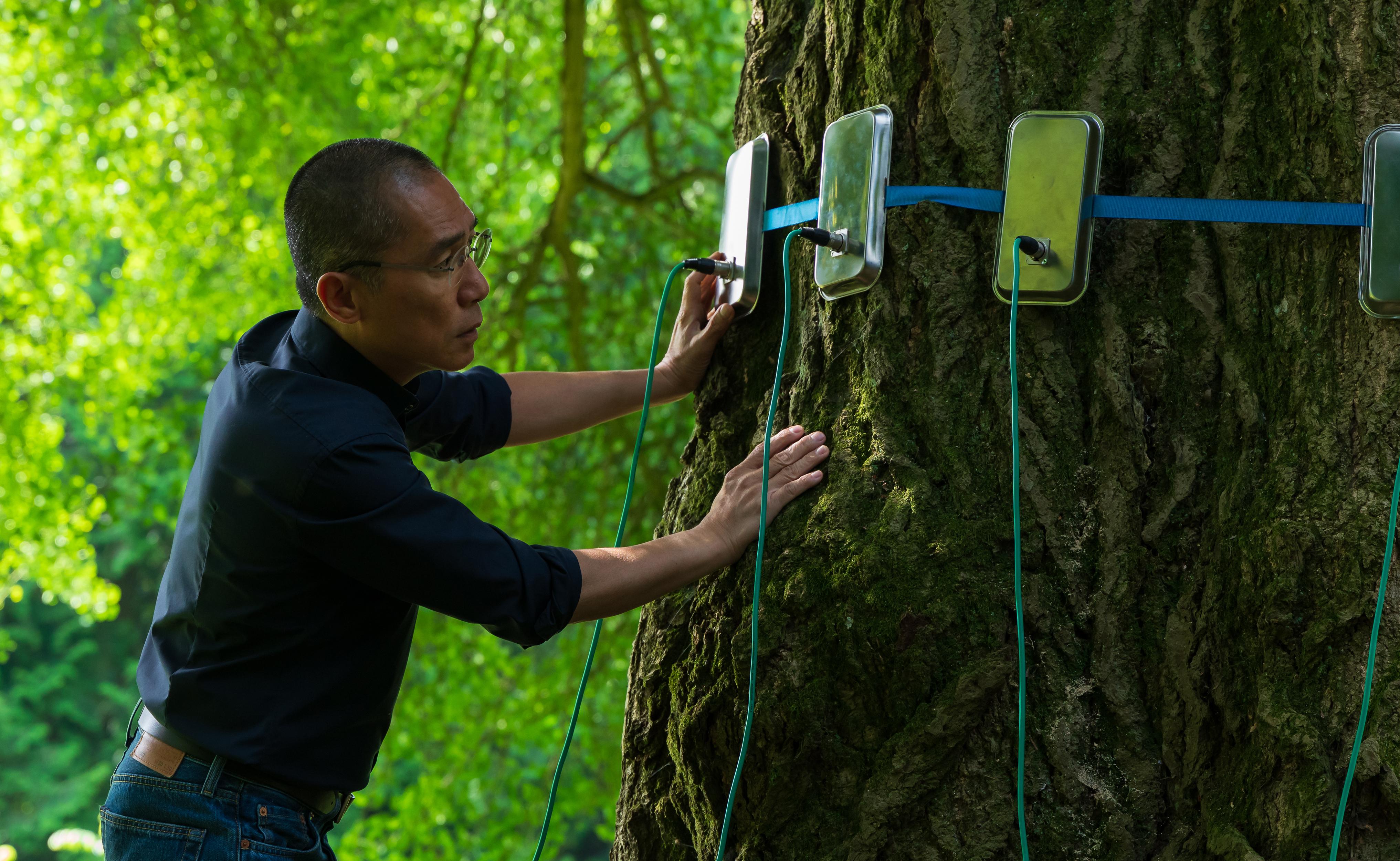
The movie works best when it sits with Dr. Wong, alone in the empty halls of a once-packed university, finding peace and solace amid a desolate world, rather than the back-and-forth between highly conventional stories set in the past that connect with our protagonist but feel limited in emotional impact. The visual language from cinematographer Gergely Pálos deftly envelops us in the respective time periods Enyedi tracks, from staggering black-and-white photography in the early 1900s to the emulsion of 16mm film during the peace & love era. It makes the digitized textures of 2020 feel cold and emotionally distant, but purposefully so, especially as second screens become intrinsic to our connection to other human beings, who need to stay six feet apart from one another if they are in the same room with themselves.
The real sequence of active humanity occurs near the end of the film’s 147-minute runtime, where the university’s security guard (Sylvester Groth) warms up to Dr. Wong after he explains his research and cooks him a meal. Moments like these, where we see how kind people are to each other, are more reflective of a time when empathy was of the utmost importance, which is why Silent Friend is worth watching. Clichéd flashbacks, with little to no tangible thematic urgency, stretch its runtime and bog down the pacing.
The film only livens up whenever Tony Leung is on screen, not because he’s particularly better than everyone, but because his character is the most interesting we follow out of the three. Grete’s introduction scene is fairly powerful, as Enyedi puts her in a difficult historical context and forces the protagonist to answer a series of sexist questions by her superiors, who are setting her up to fail, but the rest of her thematic journey isn’t as interesting as the scene where she surprises them at every turn and puts them in their place.
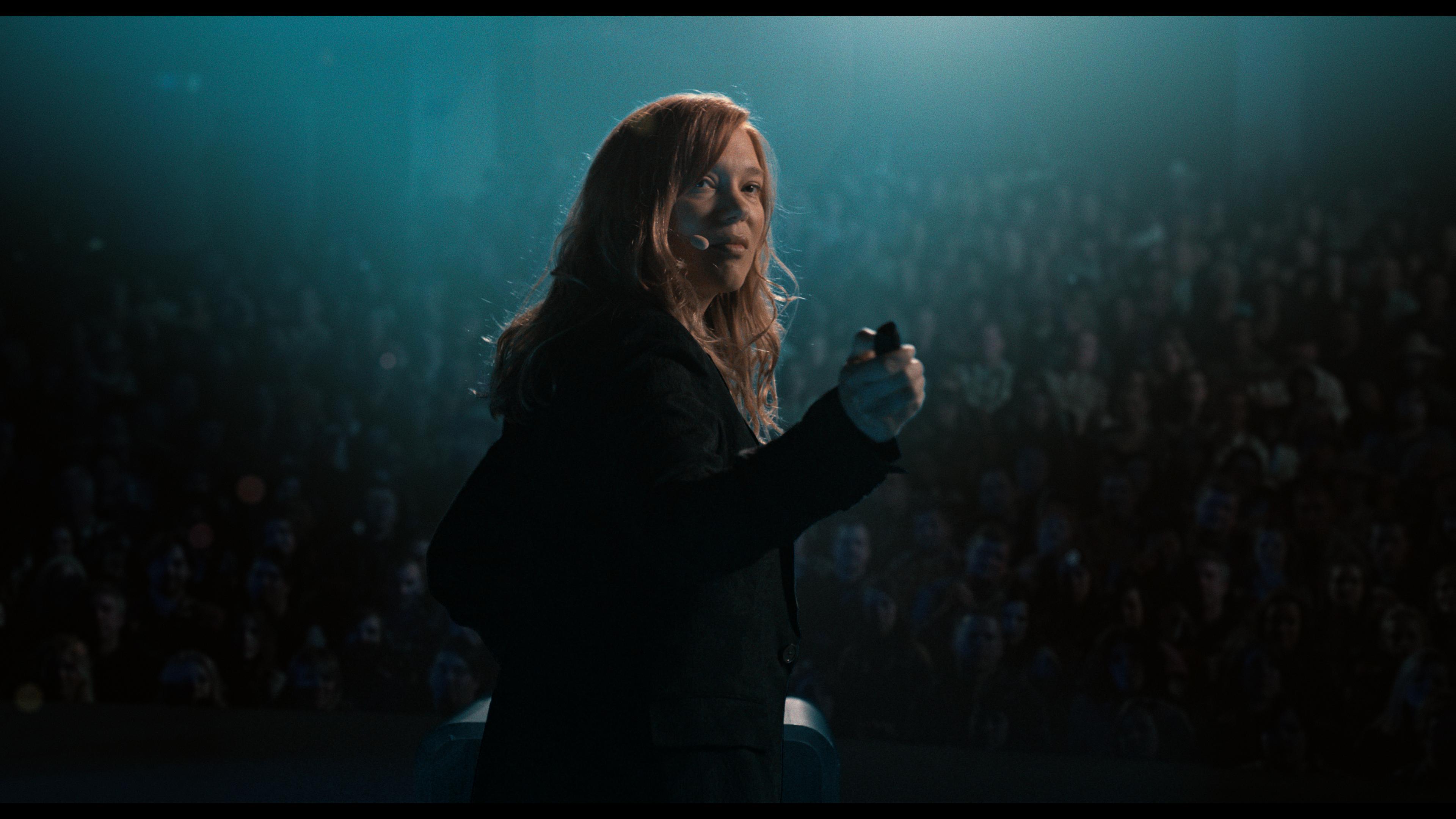
Hannes begins to open up when he literally connects the geranium to his fence, which opens as soon as it senses his presence, but that story ends on a relatively cold note. The only journey that has a clear, intriguing beginning, a middle, and a downright unexpected conclusion is Dr. Wong’s, whose connection to what he wants to understand but struggles to grasp is genuinely affecting. It helps that Leung knows how to channel complex emotions through a broad range of subtle inflections in his face (something he’s done well ever since he collaborated with John Woo on Bullet in the Head) that immediately makes us connect to his solitude, even if the film’s esoteric ending seems a bit too much.
That said, the images Enyedi visualizes are so powerful that one leaves the cinema with a sense of renewal, especially as Dr. Wong learns more about himself and humanity’s intrinsic nature. Whenever we spend time with him, the movie shines. Whenever Enyedi moves away from Dr. Wong and attempts to form two connective threads beyond the protagonist, the movie struggles to justify itself. Still, Enyedi has made worse films than this one, and Leung and Seydoux’s moving and soulful turns, alongside enrapturing tableaux, save this movie from being something far worse than you’d imagine. After all, we do need to touch some grass once in a while…
SCORE: ★★1/2


Comments
Loading…