

 Maxance Vincent
The opening scene of Ferine promises a ferocious cannibal horror film that felt bound to receive strong reactions from a nearly sold-out cinema during its international premiere at the Fantasia International Film Festival. Andrea Corsini’s feature debut, based on the 2019 short film of the same name (which also had a premiere at Fantasia and whose feature adaptation was made in part due to its involvement in the festival’s Frontières market), begins with a scene of pure, raw power, as our protagonist, Irene (Carolyn Bracken), has been involved in a tragic accident. A jaguar appears at the scene where her car crashed, and the rest of the sequence is so disturbing that no review should describe what the Montreal audience at the Cinéma du Musée had just witnessed.
Irene is permanently scarred by such an event, and, instead of talking about her grief, isolates herself inside her Brutalist-esque house and begins to experience primal, almost animalistic behavior that she can’t fully process. This behavior attracts the attention of an exotic animal trafficker named Dama (Caroline Goodall), who becomes drawn to Irene and decides to make her the jaguar she wanted to hold captive, but that escaped as a result of the accident that has transformed the protagonist into who she is now.
The ideas of a good picture are here and seem interesting, especially its aesthetics. Corsini holds a real sense of control in his picture and frequently cuts away from the violence, unlike Julia Ducournau’s Raw, which wasn’t afraid to hold nothing back in relation to Justine’s cannibalistic transformation. In Ferine, every time we think something genuinely gnarly is about to happen, Corsini never gives the audience permission to see it and transitions to the next scene, save for the opening, which is the inciting incident that causes this quasi-metamorphosis. These deliberate choices are intriguing, luring us into a movie that seems to be driven more by feelings and emotions than by structure, which is exacerbated by Bracken’s best-ever performance to date as a character of few words but (very) strong emotions.
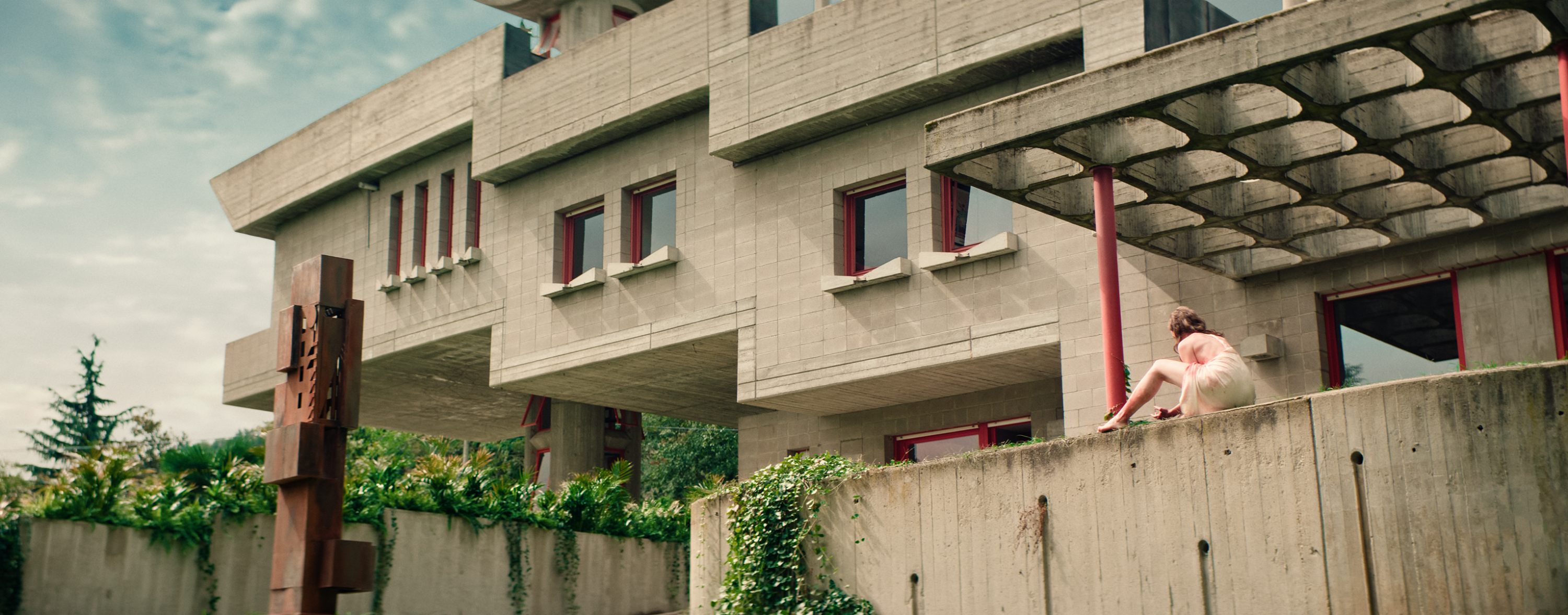
If you were impressed by her work in Damian McCarthy’s Oddity, you haven’t seen anything yet. This is such a difficult performance to pull off well, as most of it is reliant on your belief that Irene’s primal senses are “activated” by insurmountable grief. Yet, we immediately believe in the soul-shattering event that alters her psyche. It thus makes her transformation the central beating heart of Ferine and the primary reason the movie remains watchable, especially during scenes where the sound design never lets up and engulfs us in the protagonist’s tormented mind as she never sees the world the same way she did before.
During the film’s Q&A, journalist Michael Gingold asked Corsini if the name Irene was a reference to one of the protagonists of both Jacques Tourneur and Paul Schrader’s Cat People. While the filmmaker says it’s a complete coincidence, one can see the influence of Schrader’s film in the way Ferine is structured, though the movie’s first two halves are far more engaging than its final portion, where the evolution (or regression) of the character stops dead in its tracks and begins to run around in circles interminably.
Attempting to discuss this section without spoiling anything is difficult, but the bulk of Ferine’s climax involves Irene being a prisoner of Dama’s trafficking operation, and attempting to groom the child Irene takes a liking to. While it certainly has themes that are ripe for a deeper exploration of the protagonist’s newfound impulses, Corsini does nothing of note with them. He realizes the film is at an impasse as soon as it makes Irene prisoner, and the rest of the movie trudges along to an uneventful conclusion, where finally showing one act of violence would’ve led to a massive cathartic release. Yet this never happens, even when a patient is built up to a would-be moment of carnage.
Still, one has to give its flowers to Pino Donaggio’s note-perfect compositions, knowing exactly when to dial up tension and make us feel Irene’s primal transformations better than any other musical artist in the game. One can even rename this year’s edition of Fantasia the Pino Donaggio festival, as the Italian composer is having quite the comeback, with Ferine being one of two titles he composed being shown, alongside Nicolas Winding Refn’s Her Private Hell. If anything, it proves that Donaggio, currently working on a new movie with Brian De Palma, still has it, and that his knack for heartfelt, emotive compositions remains intact. That might be the biggest thing I take away from my experience watching Ferine. If anything, it made the trip to the cinema all the more special.
SCORE: ★★1/2


Comments
Loading…