

 Robert Hamer
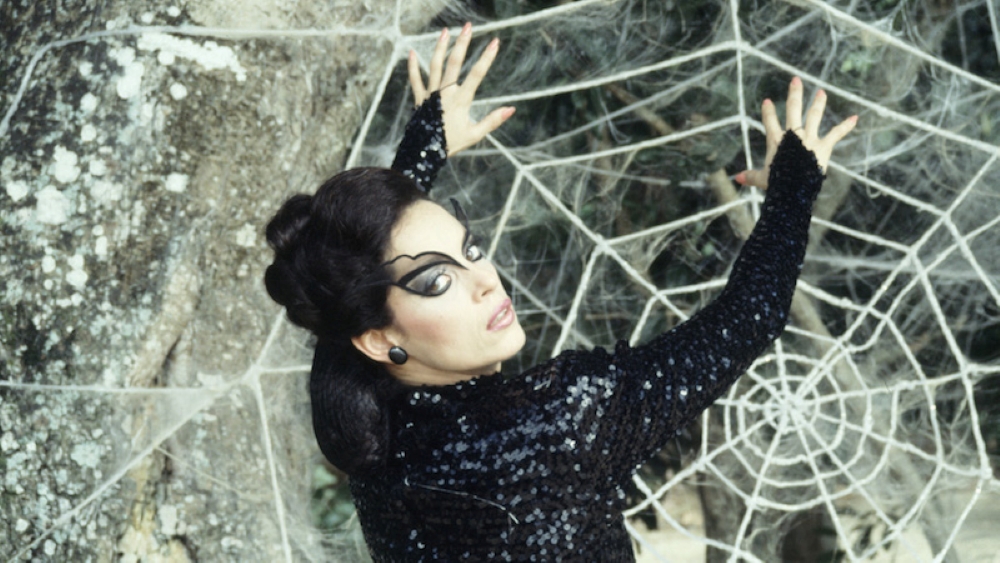
Once upon a time, in a tropical island far away, there lived a strange woman. She wore a long gown of black lamé that fit her like a glove. But the poor thing, she was caught in a giant spider web that grew out of her own body. One day, a shipwrecked man drifted onto the beach. She fed him and cared for his wounds. She nourished him with love and brought him back to life. When he awoke, he gazed up at the spider woman and saw a perfect teardrop slide from under her mask.
Escapism is an interesting thing to ponder. We throw that description around casually (and on the internet, often defensively), but we don’t really stop to think about what that means. If we watch a movie, or read a book, or play a video game as a form of escapism, that must mean we’re trying to escape from something else, right? It’s not exactly a coincidence that the word was first coined in the early 1930s, a time period that most people were very understandably desiring an escape away from. It’s not really all that surprising to see romantic comedies, Astaire/Rogers song-and-dance spectacles, and grandiloquent epics dominate the box office during the years immediately prior to and following a devastating economic downturn and nightmarish world war. Fast-forward to today, and it’s almost as if we’re obsessed with the opposite: grimdark stories of widespread collapse, monsters-as-analogies-for-societal-trauma, dystopia thrillers, and pessimistic outlooks on the future (there’s a reason why “doomscrolling” entered the popular lexicon in this decade).
If the apocalypse really is just around the corner, it’s not hard to imagine a return to desiring those more uncomplicated, glamourous stories that took our grandparents’ generation from their hardships, however briefly. Even hardass realist revolutionaries devoted to the here and now, like Valentin Arregui in Héctor Babenco’s groundbreaking film Kiss of the Spider Woman, can’t help but be swept up in the passion, suspense, and romance of an old-school melodrama… even when he knows it’s thinly-disguised fascist apologia.
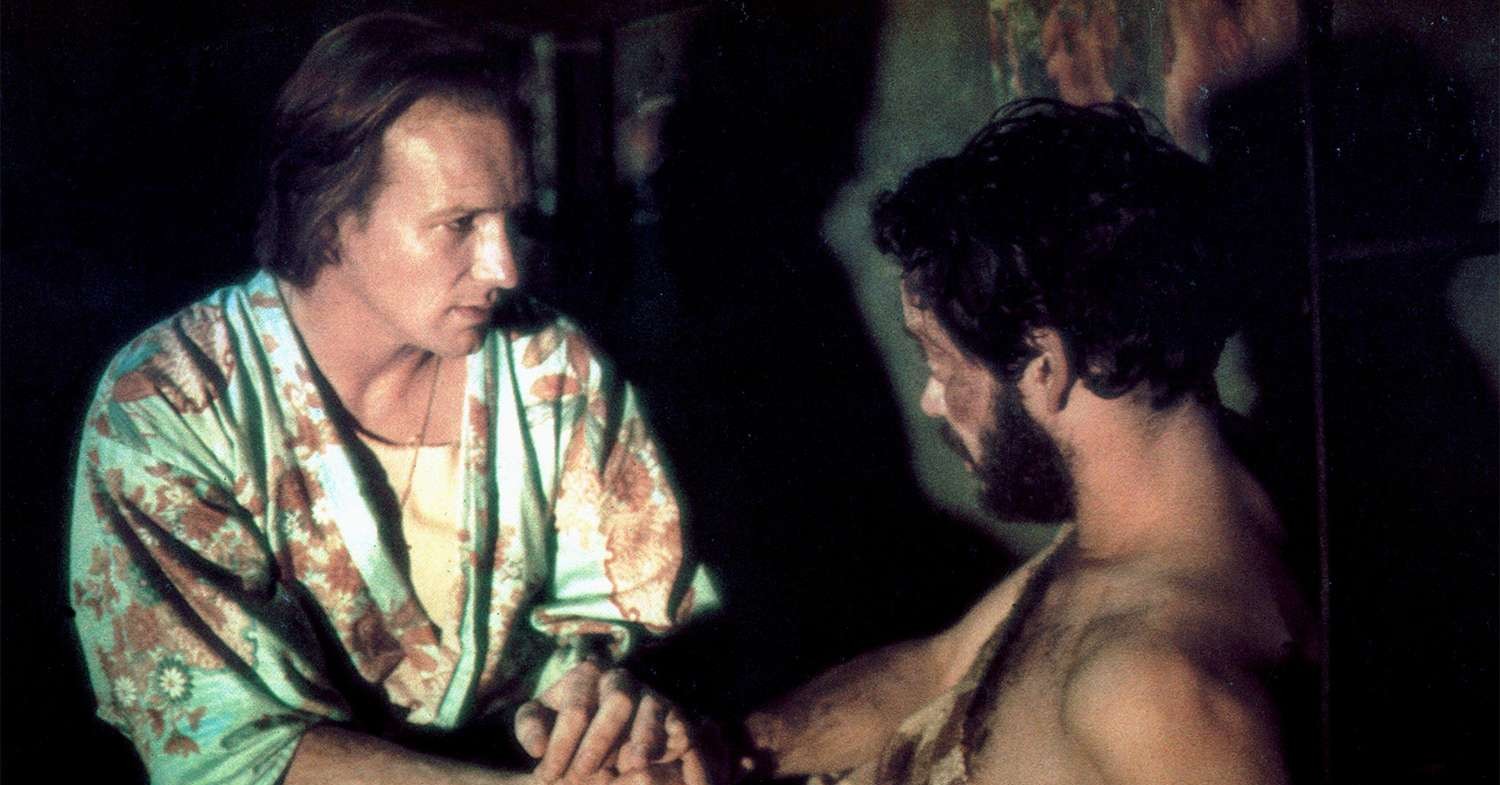
Watching the movie again, on the eve of its own musical remake making its commercial debut, was a striking experience. Obviously, not everything about it has aged gracefully – to address just one elephant in the room, William Hurt is not exactly the most convincing casting choice for a femme Latino gay man – but it would also be dishonest to brush aside just how radical a movie like this was in the 1980s. Homosexuality had only been out of the DSM for about a decade, and the AIDS epidemic was still being largely ignored by the medical establishment and the federal government. Accusing someone of homosexuality was still considered defamatory. And yet here was this independent film production showing two men kissing each other on screen (and having sex off-screen… again, things were very different forty years ago). That couldn’t have been easy to get financed. In fact, as the “making of” documentary Tangled Web shows, it was very, very difficult.
But it’s not just its frank sexuality that was bold for its time. Even more commendable is its unflinching depiction of authoritarianism, and just how much of a toll actual meaningful resistance exacts. Nowadays, something as mainstream as a Star Wars streaming show can dissect life under fascism and the myriad sacrifices anti-fascist movements have to make to overthrow them with surgical precision (and win Emmys for doing so), but in 1985, the United States was still actively supporting South American dictatorships. Mainstream audiences were not in the mood for harsh depictions of persecuted out-groups resisting tyranny with the little power they still possessed; they were flocking to theaters to see Sylvester Stallone win a do-over of the Vietnam War and punch a Russian guy so hard it convinces the entire Soviet Union to surrender.
The 1980s weren’t exactly the most adventurous decade for cinema, either, which makes it all the more remarkable to see one from that decade lean so hard into embedded stories with wildly different aesthetic registers. In between the harshness of Luis and Valentin’s cell is a lush, deliberately jejune meta-narrative that slowly reveals itself to be a mirror of the main plot (though that’s not made clear for quite a while). The movie also plays around with subjectivity and magical realism in a way that wasn’t very common in English-language cinema of the 80s. Now that I think about it, it’s not that much more common to see today. If the postwar order really does fall apart in the near future, and we soon find ourselves stripped of everything but our memories, will we look back on the big-budget spectacles of the recent past and pick apart their “plot holes” like we do on social media these days? Or will we cling for dear life to their epic imagery and action to keep us distracted from a harsher reality, “flaws” be damned?
I’d be remiss to not mention the acting, especially since that was probably what helped it become a sleeper hit and major awards contender (indeed, the first-ever independent production nominated for the Best Picture Academy Award) and I’m happy to say that the three central performances largely hold up. As… miscast as he was in hindsight, William Hurt is still affecting and sensitive as Luis Molina, and his trademark baritone voice was pretty ideal for a narrative that relies so heavily on his character’s voiceover narration. He’s probably my third-favorite Best Lead Actor winner of the 1980s, and I’m not sure if he even delivers the best performance by a leading man in this movie, since Raúl Juliá is also mesmerizing in a less “showy” role as the standoffish antifa political prisoner Valentin Arregui. To convincingly portray someone like Valentin as a man who would ever warm up to someone like Luis, much less grow to outright love him, couldn’t have been easy, but Juliá pulls it off while never breaking his intensity as a committed activist who sees his present circumstances as a necessary cross to bear.
Raúl Juliá was passed over for an Academy Award nomination, sadly, as was the legendary Brazilian actress Sônia Braga in the only role that crosses into all three different narrative settings of the movie: the real world, the lavish Nazi melodrama recounted by Luis, and finally, Valentin’s fantasies. She plays all three wildly different registers perfectly, and her being passed over from the Best Supporting Actress lineup that year remains, in my view, one of the worst omissions in that category’s history. Her performances drive at the heart of one of the film’s most profound observations – that the feeling of love, longing, and an enduring desire for freedom are as powerful and genuine and real no matter how they’re expressed.
It’s why the escapism of cheesy Hollywood romance captivates us just as much as a more grounded tale of two men in the most hellish place imaginable growing to love each other through their pain and persecution. The same feelings persist in all forms, and in every kind of person, from every walk of life, who is starved for them.


Comments
Loading…