

 Jeff Heller
Show business is in Cooper Koch’s blood. His twin brother, Payton, is an Emmy-nominated editor, known for shows such as Only Murders in the Building and American Horror Story, his grandfather, Hawk Koch, produced films such as Rosemary’s Baby, Chinatown, Heaven Can Wait, and Wayne’s World, and his great-grandfather, Howard W. Koch, was the president of the Academy of Motion Picture Arts and Sciences, as well as a director and producer, having worked on films like The Manchurian Candidate, The Odd Couple, and Airplane!.
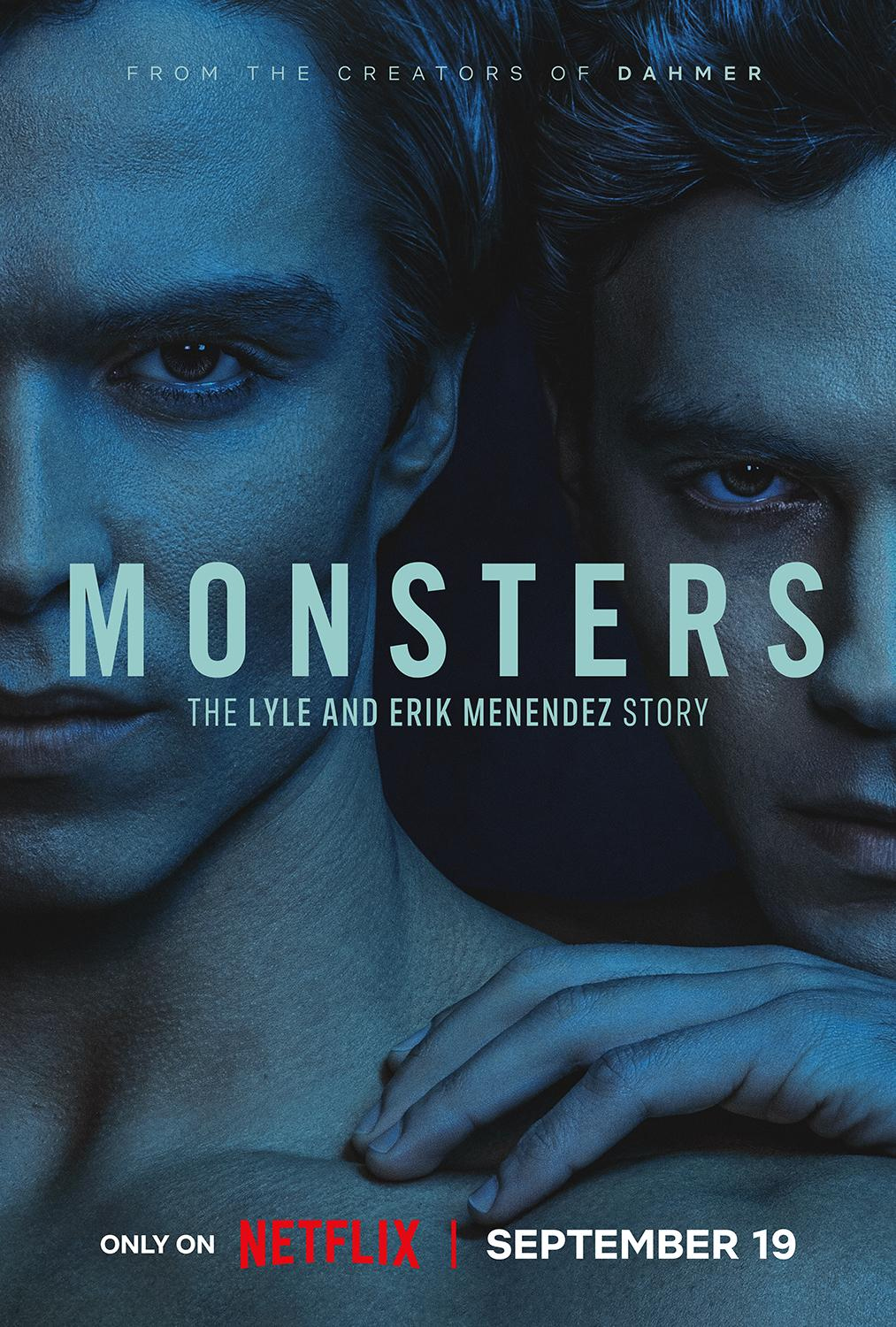
But Koch is not resting on his family’s laurels. Instead, he is turning heads with his emotionally intense and nuanced performance as Erik Menendez in the Netflix series Monsters: The Lyle and Erik Menendez Story. Koch’s performance has not only received universal praise from critics (and from the actual Lyle and Erik Menendez), but it also earned him a nomination for the Primetime Emmy Award for Outstanding Lead Actor in a Limited or Anthology Series or Movie.
We spoke with Koch about the challenges of bringing humanity to a person that the public has spent decades dissecting, the emotional and technical challenges behind the series’ most pivotal episode, “The Hurt Man,” and the responsibility he felt in giving a voice to survivors of abuse.

Let me first congratulate you on the Emmy nomination.
Thank you.
I’m curious what aspects of Erik that you found most interesting to explore.
Great question. I think, as always, you kind of step in and you try to find out the things that you understand in yourself or that you can relate to, and then the parts of you that are also very different. I think for me, the biggest one was shame, and how I could really understand how profound his shame was and how deep it was. I related to that from growing up and not wanting to be who I was. Obviously, I think a lot of that has healed for me at this point in my life, so in that sense, I don’t necessarily relate to that anymore, but I used to. I used to understand what that means and what that feels like, so I had to step back into that space.
What would you say the biggest challenges were to portray someone who’s been so publicly dissected already?
I guess just wanting the people that know him so well, to be like, “Oh, wow, this is right. He got it right.” I think the pressure of wanting to be as accurate and authentic to him as possible for them was the biggest challenge. And struggling with those pressures every day and just working constantly to be able to sound like him and move like him and even just possess his energy was tough, but also really rewarding. It was always on my mind to try to be him as perfectly as I could while also letting my own essence kind of filter through.
How much of that did you take from research versus what was in the script?
I mostly relied on research. I read the Robert Rand book, The Menendez Murders, as well as They Said We’d Never Make It, written by Erik’s wife, Tammi. And then I watched testimony on YouTube religiously. I think because the story is so public and it’s so well-known and there’s so much information, I sort of was like, “Okay, I’m going to go and take all of this and then I’m just going to let the script be the moments in the words that I choose to say in these captured moments.”
The Hurt Man is the standout episode of the series. Can you talk about preparing for that episode, both emotionally and technically?
Yeah. Emotionally, there was a lot of pressure. I think it was the big elephant in the room that everyone knew was coming when we were shooting, and we didn’t really talk much about it until it got really close. And so, I guess just dealing with the pressures of that, of knowing it’s coming, definitely took a toll emotionally. But then also on the other side, just the pressures of knowing that this is his moment, and he gets to really share what happened to him and his story, and just wanting to get that right again for him and for the people closest to him was definitely intense.
I guess in terms of technically, I got the script when I was cast in May, so I just read it every day, and I would write the entire thing out. I don’t know if I’ve talked about it, but after I was done trying to fall asleep to testimony, then I would try and fall asleep just reciting the script in my head. Every very night I would go to sleep just saying the words in my head. I broke it up into six different sections, so it was sort of like I made the script into chapters. I found where the moments would be right to have a change or a break or where it seems like, “Okay, we’re progressing into a new sort of moment or chapter,” which was really helpful in terms of like mapping it out. But then also, you get to the set and you kind of have to be so prepared and flexible. You don’t know what the situation is going to be or how it’s going to go or what it’s going to look like.
The camera was really loud, and we had to stop and start a couple of times. Also, I looked at the stills afterward, the first day of shooting the scene, and in the last shot, my face was sort of in profile. And I was like, “Oh shit, like that doesn’t really look cinematic.” You can’t really see my eyes. You can only see the side of my eye. So, I switched on the second day. I was like, “Okay, at the end, I know I need to angle my face here, and I can say my words sort of introspective here. And then at the end, all I have to do is really just move my eyes and then look to Leslie,” and that became so much more powerful. But it was so technical. I remember having that be a really interesting discovery and sort of learning how to wear two hats. I have to have my technical brain, and then I also have to have my actor brain.
People sort of took that moment and ran with it. They were like, “Well, he gave that last look. That means he was lying about the entire thing.” And really, that wasn’t it at all. I just need to look back at Leslie to be like, “Okay, any more questions? Are we done now?” It’s funny how things can be interpreted.

How did you approach a role like this to make it feel honest but not exploitative at the same time?
I never wanted to make anything exploitative. I always wanted to be really true and honest to whatever moment we were in. For example, I think the flashback with Javier and the foot cream was designed to show how the abuse wasn’t always physical or sexual, and that what comes before the physical or the sexual abuse is that sort of emotional abuse or verbal abuse. I think that scene was there to explore that and show how it leads to the physical or the sexual. His father is apparently actually being nice to him, and he’s in a way being sweet. For Erik, is this a time where he’s thinking, “He’s going to be nice to me. Finally, I’m getting the love and the care that he has given me sometimes but usually steals from me.” But then it shifts. I think that was why that scene was there to show how fast it can be taken away.
Can you talk about the relationship you and Nicholas Alexander Chavez built to try to portray this really complicated relationship between the brothers?
Nicholas and I spent so much time together, especially in prep. We rehearsed for two and a half weeks or so before we started shooting, and then when we started shooting, we were in almost every scene together. We were always at work together, had the same call times. We were always there. So, I think it was sort of an organic thing that formed just from spending so much time together and being these people who experienced something incredibly damaging in a way. You could almost see it as like fake trauma bonding.
So, we bonded very organically through the process of making the show. Luckily enough, we just had an innate chemistry, even from day one of our screen test, and then when we brought the characters together, they just sort of like clicked.
What are you hoping audiences took away from the series?
I binged the entire series in a movie theater with some friends and family. And after episode five, we took a break from the show. We went and had lunch, and I remember I had a few friends who were there who were really deeply affected by the episode because I think they had experienced physical or sexual abuse. I think it hit them in a different way, and while it was emotional and sort of difficult, I think also it allowed them to feel seen and to feel represented and to be sort of understood. So, I hope for all the people out there who have experienced their own forms of abuse, whatever it may be, that they felt seen and heard and understood in a different way today than maybe they would have been back in the time when this was happening.
I remember towards the end of shooting episode five, maybe it was the second day, and every time the camera got really close, I started to sort of feel like the point of the show wasn’t really necessarily about Erik or Lyle anymore. It became a much broader scope, and in a way. The camera started to become all of people, and I was doing this service and representing all of them and not just Erik and Lyle, which I think in turn did end up fueling my performance in a way. It moved me, and it made me feel like, “Wow, I’m talking to all of these people.” I found that to be really profound and powerful. I felt really lucky being able to be a voice for that community and all of those people.
Monsters: The Lyle and Erik Menendez Story is currently streaming on Netflix.


Comments
Loading…