

 Jeff Heller
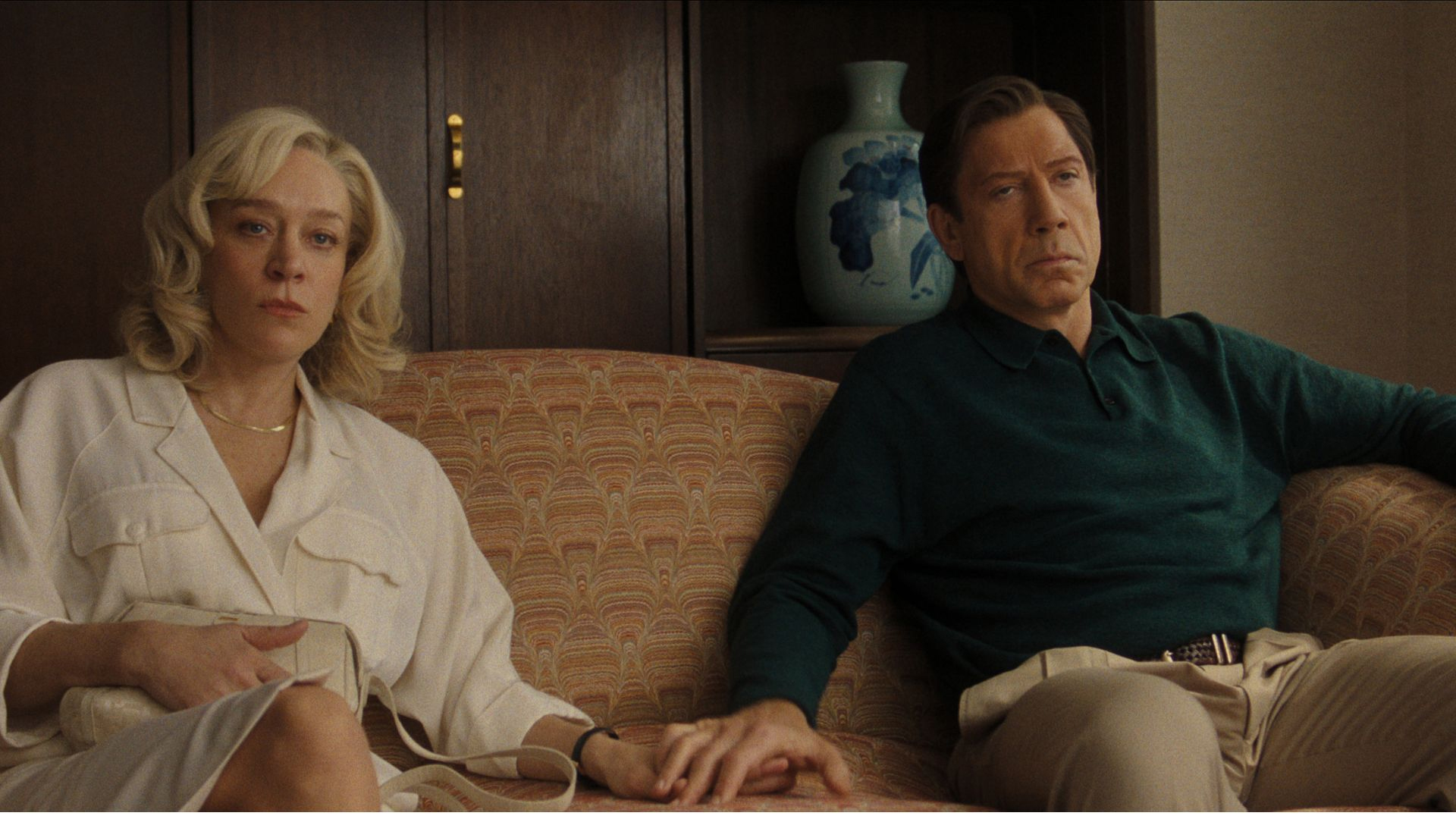
Chloë Sevigny has built a reputation for selecting complex and often challenging roles, from her breakthrough performance in Larry Clark’s Kids, to Vincent Gallo’s The Brown Bunny, to her Oscar-nominated performance in Boys Don’t Cry. With Netflix’s Monsters: The Lyle and Erik Menendez Story, she continues that trajectory, portraying Kitty Menendez, a figure at the center of one of the most scrutinized criminal cases in recent American history. Sevigny’s risk-taking has paid off, with the role earning her a Primetime Emmy Award nomination for Outstanding Supporting Actress in a Limited or Anthology Series or Movie.
The series, created by Ryan Murphy (Nip/Tuck, American Horror Story, American Crime Story) and Ian Brennan (Glee, Scream Queens, The Politician), presents key events of the murder of the parents of Lyle (Nicholas Alexander Chavez) and Eric (Coope Koch) Menendez through multiple perspectives and unreliable narrators, leaving the “truth” open to interpretation. This was not Sevigny’s first time working with Murphy, having previously appearing in American Horror Story: Asylum, American Horror Story: Hotel, and Feud: Capote vs. The Swans.
We spoke with Sevigny about her research that informed her portrayal of Kitty. Menendez, tackling such a dark and often disturbing subject matter, and filming intense and emotionally taxing scenes opposite Javier Bardem.
First of all, congratulations on the Emmy nomination. It was well deserved.
Thank you. I appreciate that.
I’d like to talk to start off with about your preparation for the role, because there was obviously a lot written about the family, by Dominic Dunne in particular, but was there a lot specifically about Kitty, or did you just rely on your own interpretation of the script?
There was not very much. I did read all the Dominic Dunne pieces for Vanity Fair, and there was a book that had a chapter on her, which was actually very helpful because it talked about her childhood and the abuse that her mother had suffered and the abuse in her household. So that was a kind of key to her. But even whatever glimpses I was able to ascertain about her real life weren’t that helpful because I had to shift to everyone’s interpretation of her. Each episode was from a different person’s perspective. As an actor, you want to find the truth of the character, but when the story is being told in the manner in which Brian decided to tell this, there isn’t one true truth. So, I had to be open to these interpretations.
I think it was more like trying to find something within each of those scripts. In the first episode, for instance, the kids are really painting her to be a real monster, which is the premise of the show, that everybody is the monster. The media is the monster, and Dominic’s the monster, and the kids are the monsters, and the parents are the monsters. So, within those scenes, I was having to come up with something to ground myself. As an actor who always wants to play a little more understated, there were things in this that were really scary for me, and I really had to push myself as an actor. It was really challenging. We had all of these brilliant directors, and you just knew that in their hands that it would work.
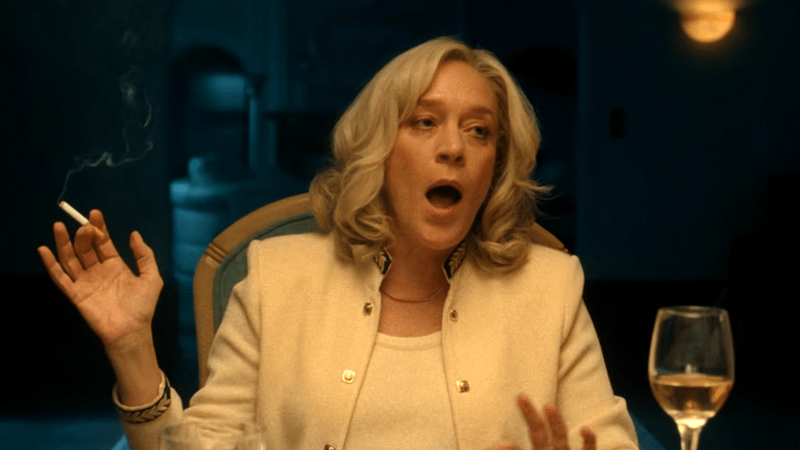
Am I correct in saying that the dinner table scene in the first episode, in which Kitty rips off Lyle’s toupee, was the first scene that you shot?
That was, yeah. I was very lucky to have Javier as a scene partner who plays intensity so well. It was very helpful. Everybody else just tries to match him.
Can you talk about just preparing for that scene? Because that’s an intense scene to shoot right out of the gate.
Well, the first couple of days on set, we actually rehearsed the murder sequence, and Ryan came to set, and he gave like a little spiel about the intent of the show and what he wanted to say. And then Javier and everybody else kind of spoke out about why they were interested in it. I think we were all very concerned with the boys and their level of comfort because they were really going out on a limb. This was a big leap for them. They’re unknowns for the most part, and what they’re having to play is so intense. We were just kind of like, “We’re here to serve you guys. So, we’re going to bring it as much as you want us to, and we’ll push you as hard as we can,” and they’re like, “We want it. Let’s do it. We’re game.” They were so excited. Javier really laid into those kids, screaming at their faces, spitting. And I was like, “Oh my God. Okay. Now it’s my turn.” I had to match it. You just imagine a woman who’s really in an unhappy household and an alcoholic, and a drug addict, and suffering so much herself. You can understand where that rage would come from.
The nature of the story is pretty disturbing. Was there any hesitation to take the role, or do you just trust Ryan at this point to know that it’s going to work?
When Ryan called me and offered me the role, I just trusted him. And then I read the script, and I was like, “Can we do this?” I remember calling him and talking about a few scenes, specifically ones that dealt more with Eric and Lyle’s children. I was reading those scripts and just crying my eyes out. I think just the whole investigation into abuse, which is rampant, is something that needs to be addressed, though it’s still taboo. Normalizing is a weird word, but maybe empowering people to seek help or recognizing that ‘this is wrong.’ And being a woman in this privileged household, who doesn’t know where to turn to.
There are obviously so many problems in the world right now, but this inherited abuse and cycles of abuse within families are a very hard thing to break. So, there were some things when they were little that the Kitty character is kind of like turning away from, and I was like, “Can we really show that?” And Ryan said, ‘Well, we’re only implying.” I was like, “Ah, it feels like a little more than implying.” I just didn’t know if it was necessary. I heard that Javier bumped up against some of the same things that I did. I think some things were removed because it was just a little too far there.
One of the hardest scenes I always say is one of the flashbacks to when they were younger, and Kitty’s walking down the hall, and she knows something’s going on on the other side of a locked door, and she just keeps walking. How mothers can allow that is beyond me. It was a really hard show to do. It was very emotional.
What’s your process like on set? Are you staying in character between the takes, or are you decompressing a little bit?
No, I’m decompressing. I became really close with Cooper [Koch] and Nicholas, and everybody was just really invested in the work, so there was just a lot of talking about the scripts. There was talk about the testimonies. We were all in our trailers watching the trial, which was hours and hours and hours. I was just kind of trying to stay immersed in the world and the time.
I’ve done my fair share of true crime, and I’m ready for a break. I mean, The Girl from Plainville almost killed me. Just playing a mother whose son had taken his life, and the emotional toll of that. You really do internalize it. Since Boys Don’t Cry, I think I’ve had trouble compartmentalizing.
Now I’m on the show Five Star Weekend with Jennifer Garner, Regina Hall, and Gemma Chan, and I was like, “Oh, this is why people do these lighthearted comedies.” We get to go to work and actually do really good acting, but also just have fun. You’re not tortured by the material.
Do you think audiences will have a different perspective of Kitty than they had going into the series?
I don’t know if people like really have much of a preconceived notion about her. I think it’s more about the boys. This case is hard because I feel, unlike Dahmer and Versace and those others, the boys were more maligned. The story of the victims is a tricky one for me.
Well, I know you’re very busy, but before I let you go, I wanted to say congratulations on 30 years for Kids.
I know. My goodness.
Can you talk briefly about the legacy of that film and what it means today?
It’s amazing the impact the movie has had, and how relevant it is, and how kids still watch it. All I ever dreamed of when I started off was to be a part of something that would have such an impact. I’m really grateful that the producers had real follow-through and helped me and Rosario [Dawson] and Justin [Pierce] and Leo [Fitzpatrick] find agents and managers. I think the argument about exploitation versus opportunity is really valid, and I think it’s the responsibility of the producers when you’re casting unknowns to really have some follow-through, and they really did. I remained friends with Larry for years after. I just I respect how they treated it, even though we didn’t get paid any money. I think I think I got paid fifteen hundred for the whole thing, and that’s it. But it gave me a career and which is priceless. I’m just proud.
Well, thank you for taking the time to speak with us. Congratulations again on the nomination, and good luck to you.
Thank you so much
Monsters: The Lyle and Erik Menendez Story is currently streaming on Netflix.


Comments
Loading…