
 Steven Prusakowski
In a world where the truth feels increasingly elusive, Netflix’s limited series, Zero Day arrives at a pivotal moment, reflecting the deep divides in society and the challenges we face in distinguishing fact from fiction. While the series centers around the effects of a cyberattack that disrupts the nation’s power grid and the ensuing chaos, it dives deeper into how easily truth can be manipulated, and the dangers that arise when society can no longer agrees on where the truth actually lies. The fact that the plot feels more timely than ever makes it all the more chilling.
Robert De Niro stars as former President George Mullen, who is brought back to lead a national task force after a cyberattack causes widespread havoc. The task force’s mission: to identify the source of the attack and prevent another from happening. But the series reveals that the threat is not just an elusive cyber attacker—it’s also the corrosive power of misinformation.

Mullen faces obstacles from extreme media narratives, conspiracy theorists, manipulative political rivals, his allies, and even his own deteriorating mental state, all of which blur the lines between truth and reality. In this complex web of deception and uncertainty, Zero Day raises questions about how we navigate a world where the truth is always in question.
Awards Radar spoke with the cast and team behind Zero Day, and one theme that connected all the conversations was how timely and relevant the series is to the current state of the world. (Watch all four interviews in their entirety below) Series co-showrunner and co-creator Eric Newman discussed developing Zero Day with co-creator/showrunner Noah Oppenheim, recalling how the series originated from a discussion between the two.
Newman shared how the conversation centered around “our relationship as a society with the truth and the fact is retreating into a state of alternate realities, presented facts and different conclusions and therefore different truths that, though mutually exclusive, have to coexist for us to continue to function as a civilization.”
As Oppenheim explained, the series tackles the complexity of an ever-changing landscape in a world where the truth shifts from person to person. “One of the themes of the show is the difference between facts and truth,” he explained. “First of all, there are outright lies, obviously, but there’s also a world in which there are a set of facts which people will look at and draw completely different conclusions from based on which facts they choose to prioritize, which facts they choose to omit.”
It doesn’t take a series like Zero Day to alert most people to the growing division in this country over the last decade. Lizzy Caplan, who plays President Mullen’s daughter, Alexandra, frequently engaged in conversations with the cast and crew — all with strong political opinions — about both the show and the state of the world.
Unlike in the past, where the issues themselves created the biggest divisions, Caplan shared that today the cause is something else. “What this show is raging against, and I think what a lot of people are raging against out in the world, is the divisiveness, is the fact that we can’t have these conversations,” Caplan explained. “So it’s not even about the issues necessarily at all. It’s just about how we can’t seem to talk to each other. We can’t even agree on what’s true and what’s not true.”
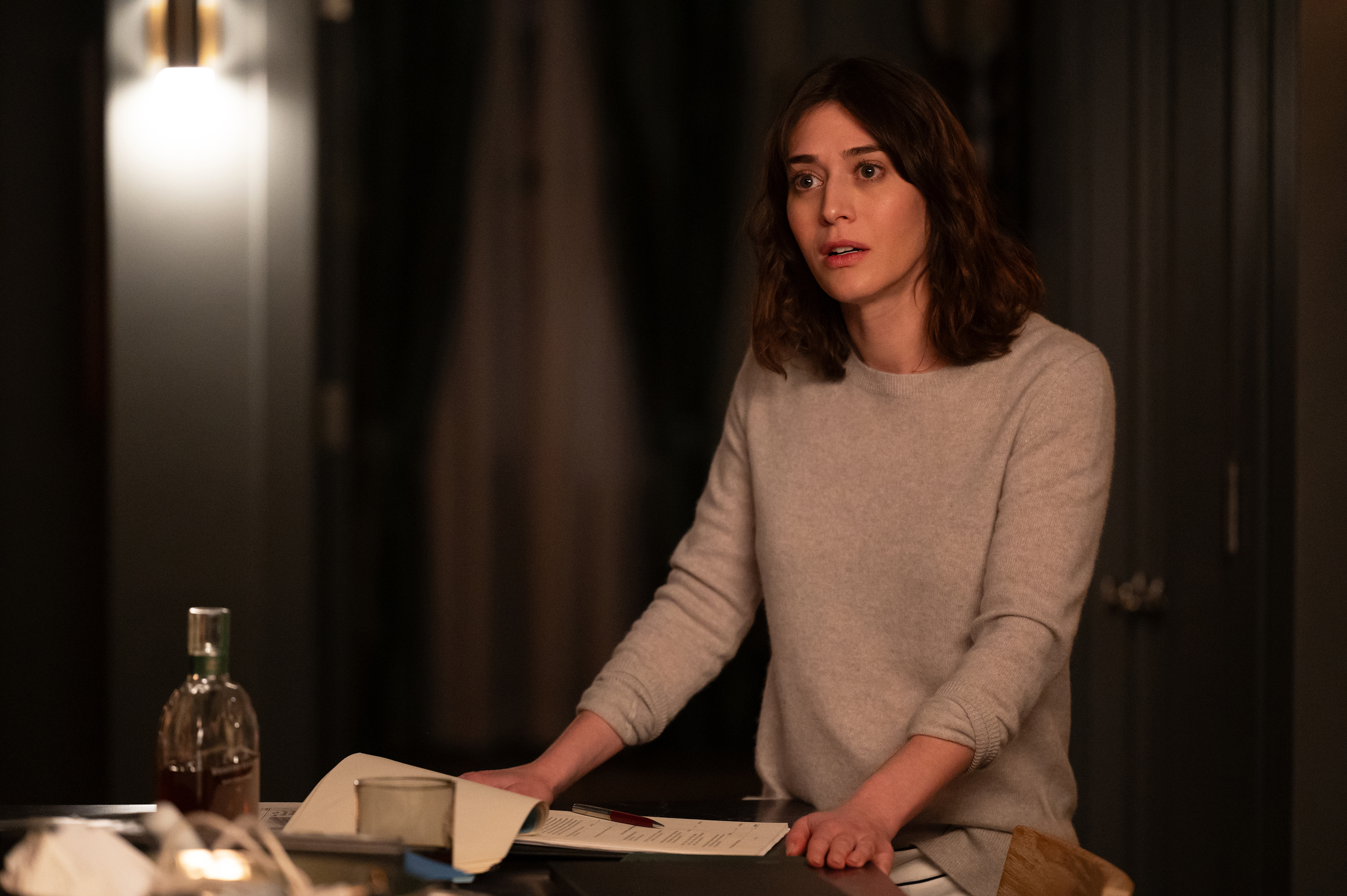
It can be tough to be hopeful when we are faced with the monumental task of recalibrating our communal mindsets to a shared truth, especially while deep fakes, media pundits, and politicians who care more about winning than democracy constantly clutter the waters. Not only tough, the outlook can seem downright grim. “We’re really broken,” Caplan conceded before sharing the good news: “But the good news is we’re so deep into the broken phase that’s gotta mean that the pendulum swing back to the other direction is closer than it was.”
Newman seems to agree, with an outlook that’s less cynical than how many people feel these days. “Even when confronting this challenge, even when you’re dealing with a really broken system and a fractured media landscape, every one of us does still have inside ourselves a moral compass, a voice that does tend to guide us towards the right thing,” said Newman.
“I think that by turning inwards, people every day when they walk out the door can make a series of decisions about how they treat their neighbors, their fellow citizens. And if we start listening to hopefully that voice and that, you know, that higher calling to behave with kindness, generosity, humility towards others, that maybe that’s the way we turn things around one person at a time. At least that’s our hope.”

Matthew Modine plays House Speaker Richard Dreyer, a relentless character who helps drives the series’ conspiratorial themes. Ironically, while his character may be tough to trust, it was Modine who shared some of the most uplifting insights to the current world situation through a lesson his mom taught him about the monsters that hide in the dark.
“In this confusing time in this period of darkness where there’s uncertainty,” shared Modine, “it’s citizens as part of this great experiment of American democracy to remember that we have to reach for the light switch – that we always have to put the light on To make the monsters go away we can’t allow the fear to take us over because fear is a powerful weapon.”
“At the end of the day, that’s what the show is about… it’s all about the fear, but you have to find the light you have to find the path,” said director Lesli Linka Glatter.
Zero Day is streaming in its entirely exclusively on Netflix. Watch my interviews with the cast and team behind the series below.


Comments
Loading…