

 Shane Slater
While Emilia Peréz made a strong showing on the recently announced Oscar shortlists, another Zoe Saldaña-starrer also solidified its case for Academy recognition for Best Live Action Short Film. Inspired by the lives of the inmates in the Giudecca women’s prison in Venice, Marco Perego directs Saldaña in Dovecote as one such inmate making an emotional departure. Immersing viewers with graceful long takes and minimal dialogue, the film is a poignant and empathetic examination of freedom and humanity. Following its inclusion on the Oscar shortlist, Awards Radar recently spoke with director Marco Perego about its themes and dazzling filmmaking approach.
Shane Slater: What was the genesis of this film?
Marco Perego: I was invited to be part of the Venice Biennale by Chiara Parisi and Bruno Racine. And the pavilion was inside the women’s prison. They asked the artists to collaborate directly or indirectly with the inmates. I decided to make this film with the inmates and it was a very special experience. We were able to shoot inside the prison. It was such an incredible experience, because every night these women were giving us letters and poems to explain how they were really feeling, from a vulnerable human place. And out of that, Alexander Dinelaris and I created Dovecote.
SS: So the cast includes those inmates?
MP: Everybody was in the film. There were only four actors – Zoe Saldaña, Marcello Fonte, Marilena Anniballi and Gaia Scodellaro. The majority of the women are inmates. Also, the guard is also from the institution. And the question that came up a lot when I went to interview them was, “What is freedom?” And I think Alex and I, when we wrote this piece, there was a question about freedom. Is freedom inside or outside? And we discovered it was more about the sense of a community. When people see you and you belong somewhere, you feel free. You feel like you completely belong.
SS: What was it like working with them, considering how technical this film is with the long takes and minimal dialogue?
MP: It was not very easy. It was very challenging, but very beautiful in a way. We approached this in two different ways – from the story, and from the direction. We started with the question of the freedom and the resilience of these amazing women. What he did was, when you watch the structure of the film, there is something new he did. In the classic way, when you write a film, in the second act, your character has lost everthing. But Alex wrote it from a place where he sent out the protagonist with the joy and then another person comes in, Gaia. And that’s when everything is lost. There is a cycle for all these women.
And from the directing perspective, the approach was that it’s really about whether freedom is outside or inside. That’s the question that was in my mind a lot. So outside, we shot everything in a “magic hour” blue, and the frame is very 4:3, very square. And it’s cutting all the time, like life, you know?
But inside, it’s one long take, and the frame is very big, and the camera never stops because it’s a sense of community, a sense of freedom. Inside is black or white, but the question is whether this is really how people see, or is it actually the opposite? So inside actually is the real freedom. Because for the majority of these women, they tell you that freedom is more inside than outside, because inside they belong and outside, sometimes they feel completely invisible. When we finished the film, they were very touched and very proud.
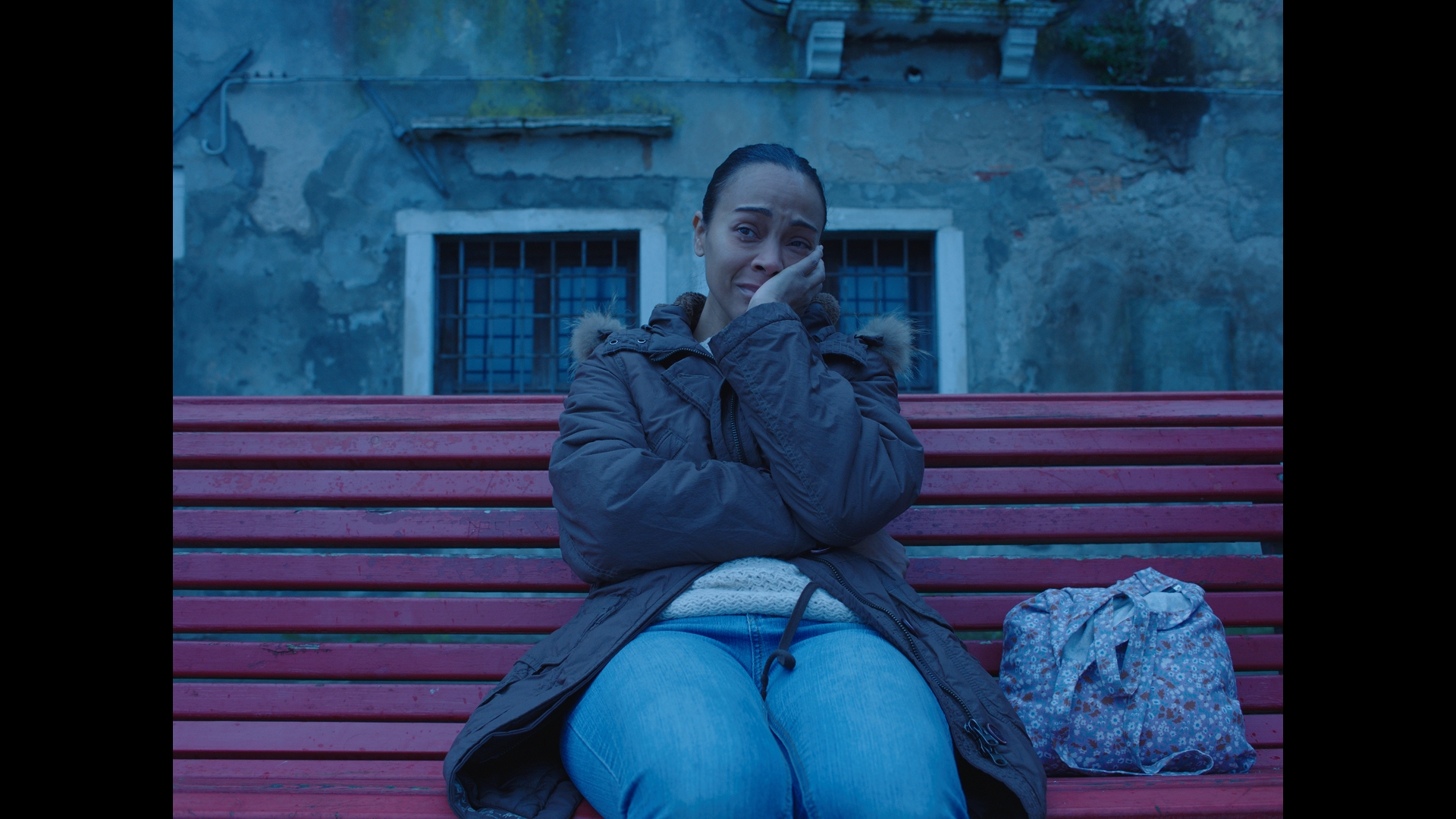
SS: Zoe’s performance really conveyed a history with these women. What was it like crafting the character and the story behind those interactions?
MP: That’s such a good question. We met them. I met them before Zoe, 3 or 4 times. And then we met them together. The challenge was, how honest can we be with them, you know? And to make a portrait that was not what everybody expected about prison and women. It was about the dignity and humanity inside, and these women are incredible. Venice is a very incredible city full of tourists and everything. And in this place, Giudecca, there is a women prison. And what I think is interesting is you go to this fancy hotel, and the bed linen and everything is cleaned by these women inside the prison. And we tried to understand how honest we can be about this and the sense that they created a community. And that’s the portrait we created together.
SS: The film feels very free-flowing. Was there much improvisation?
MP: It was free-flowing, but Alex wrote it. I was very lucky to write with somebody like Alex. He’s a great writer, like Birdman and all these great movies. When you have that type of structure, there is a grounding piece, you know? And the structure gave me the opportunity to go and make cinema.
But it’s more like a portrait of these women.Like, all the women in the corridor, they represent all the women that are in this type of facility. And they say, “Look at me in the eyes. Look at me. I’m here.” You know, we have a sense of perception about human behavior in a certain way. And I think the idea was to portray a new way to see really inside the vulnerability of all these women. The pain and the fragility. That’s what was very interesting. Not just making a film, but making something deep on a human level.
[This interview has been edited for length and clarity]


Comments
Loading…