

 Maxance Vincent
The Grand Prix Winner at this year’s Cannes Film Festival, All We Imagine as Light, is the first Indian film since Shaji N. Karun’s Swaham to have been selected to play at La Croisette and compete for the Palme d’Or. Not only that, but it’s also the first Indian film to be directed by a woman to bestow such an honor. Directed with a poetic lens by Payal Kapadia, the Malayalam/Hindi-language film is a patient, calculated outlook on three women who learn to reconnect with their inner selves as they leave Mumbai to spend time in a faraway beach town.
At Cannes, the film won the Grand Prix and garnered significant attention in the festival sphere, with many critics clamoring for India to select it as their official submission for the Best International Film Oscar. And yet, predictably, they went with a more commercial, safer choice: Kiran Rao’s Laapataa Ladies. Of course, one understands that with Aamir Khan as an executive producer and Yash Raj Films distributing the Netflix Original, the pick is more conventional than Payal Kapadia’s quasi-experimental, social realist drama.
While I have not personally seen Laapataa Ladies and have heard good-to-bad things from the people who did, the decision to select the film over All We Imagine as Light seems pretty baffling, as one is sweeping the festival and awards circles, while the other is barely getting traction. However, when one reads the (all-male, by the way) jury citation from the Film Federation of India to justify its choice, it seems relatively clear that the decision was more politically motivated than artistically, stating that “Indian women are a strange mixture of submission and dominance.” and that Laapataa Ladies “shows you that women can happily desire to be homemakers as well as rebel and entrepreneurially inclined.”
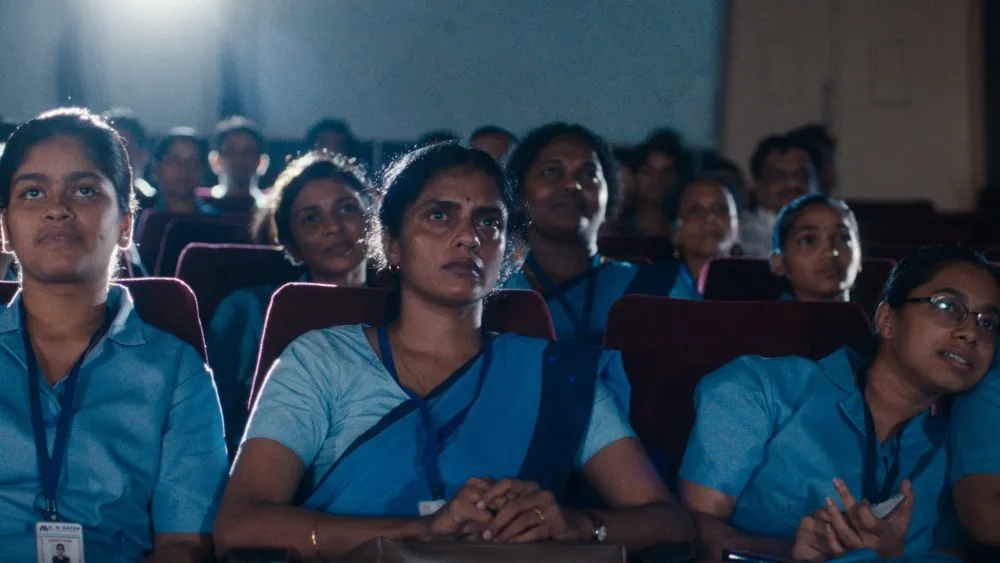
This feels like a pretty reductive way to look at how women are treated on screen, especially when female filmmakers have reclaimed their stories and depicted empowering narratives in cinema and television over the years. Of course, with Payal Kapadia being vehemently anti-Narendra Modi and BJP, as shown in her documentary A Night of Knowing Nothing, there’s, unfortunately, no chance that the film would’ve ever been selected, even with the critical acclaim it has received in film festivals worldwide.
And it doesn’t take long for audiences to know that All We Imagine as Light not only breaks the regressive tropes that Laapataa Ladies seems to perpetuate but delivers a narrative where women take control of the paths they want to take, away from the shackles that have prevented them from doing so. This shift occurs twofold but is told through subtle metaphors. The first involves nurse Prabha (Kani Kusruti) receiving a rice cooker from Germany from her husband, whom we eventually learn was the product of an arranged marriage. She doesn’t love him, nor does she possess any emotional feelings about him.
Here, the rice cooker acts as the most significant sign of submission, and she believes she must stay loyal, even if it has been over a year since they have seen each other or even communicated. Slowly, and with her colleague Anu (Divya Prabha) and friend Parvaty (Chhaya Kadam), they will learn more about themselves and realize what’s most important in life. That’s where the second shift begins, through a mystical finale where the characters become one with the enveloping nature and take action on fixing their lives and the narrative that has sadly troubled and boxed them in for so long.
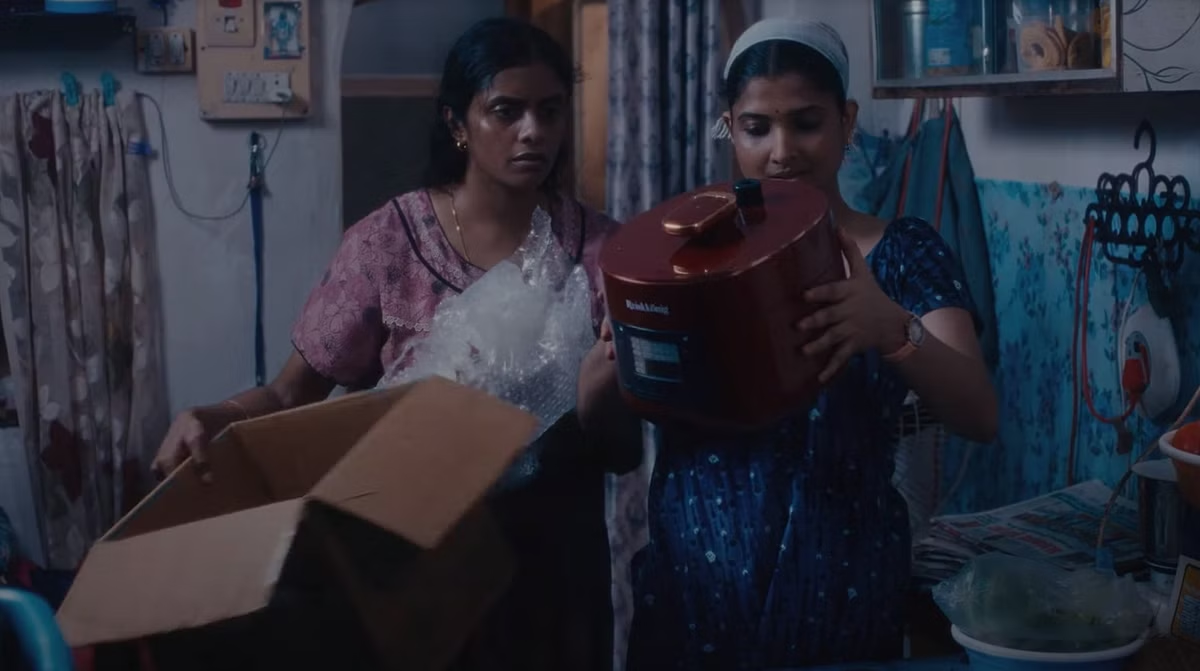
All We Imagine as Light may take a while to get going. To be honest, the movie’s first section, while beautifully shot, is relatively cold. It’s an unfortunate victim of a methodical structure Kapadia introduces to us (text messages shown as large title cards on the screen, phone screenshots presented as slide shows, etc.) that hampers some of the connection the audience may begin to experience with its characters. But that doesn’t mean the movie isn’t full of life.
At every turn, Kapadia and cinematographer Ranabir Das fill the screen with impeccable images that reclaim how Mumbai has been depicted in Indian cinema over the years. Not only is most of the movie set at night, which allows Kapadia to create images of pure, naturalistic beauty (the lights make the streets blue, and the rain reverberates on the streets like a reflection), but the language is frequently immersive, from the over-the-shoulder, handheld close-ups to the hushed dialogues that eventually become a part of its meditative sound design.
All We Imagine as Light is a movie about feelings represented through sheer visual/aural poetry. As a Malayalam film, it seems so far removed from the mythmaking of mass spectacles. But it’s why this film is so special to watch, even if Kapadia bathes in magical realism during its conclusion. It’s there where the movie also becomes far more compelling than its cold and distant opening section introduced because the characters are fully formed and begin to become more than the ideals that have controlled their lives up until now.
This is all realized by three emotionally towering performances from Krusuti, Prabha, and Kadam, who quietly devastate you when the movie reaches its soulful final shot. During the opening section, the trio of women imbue a quiet fierceness that isn’t perceptible in their longing expressions but begins to blossom as they relearn to be alive. It’s fairly subtle and will only reward patient viewers who look at how Kapadia frames its actors during the Mumbai scenes and contrasts their posture, facial expressions, and demeanor as soon as they leave.
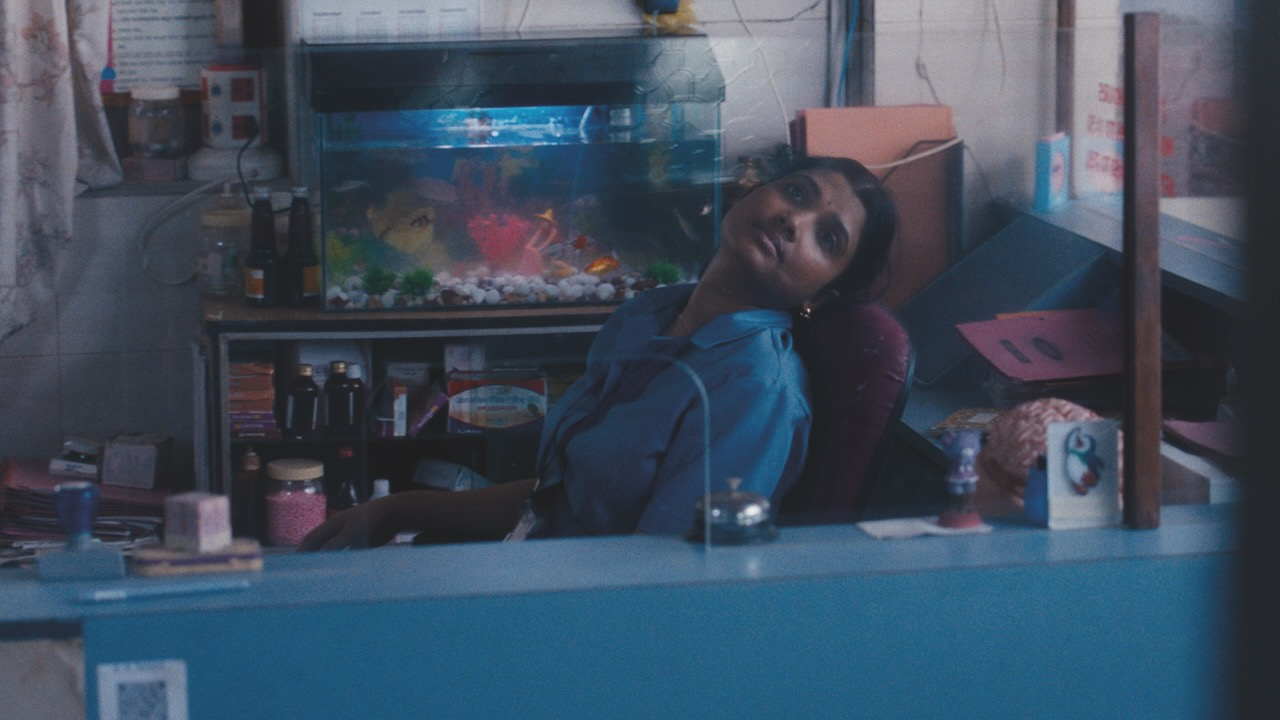
While most mainstream Indian cinema nowadays is characterized by its in-your-face, maximalist, unsubtle nature, Kapadia’s cinematic language seems inspired by the Malayalam work of G. Aravindan, who pioneered parallel cinema within the industry. In a film like Kummatty, for example, the entire story is told through a metaphorical lens. The audience is forced to look at the images and be familiar with the story he depicts to extract meaning. The same can be said for All We Imagine as Light, though there are two ways to approach the movie.
The first is to look at the images and not pay attention to their rich dialogues. The cinematography is so potent that meaning can be uncovered by the slightest change in an actor’s facial expression and the color palette that imbues its striking landscapes. The other is to listen to the movie without paying attention to the images. Both are valid ways to approach All We Imagine as Light, and the two will likely lead to entirely different conclusions. But as a whole, it’s a movie that deftly gives women more than what the Film Federation deems them as and paves them a new way forward within Indian cinema. It will hopefully signal a shift in how they are depicted on screen. The battle seems to be relatively uphill. However, with everyone on Payal Kapadia’s side, it may be much easier than it looks to be.
SCORE: ★★★1/2


[…] Awards Radar gav betyget 3,5 stjärnor (Awards Radar) […]