

 Red Broadwell
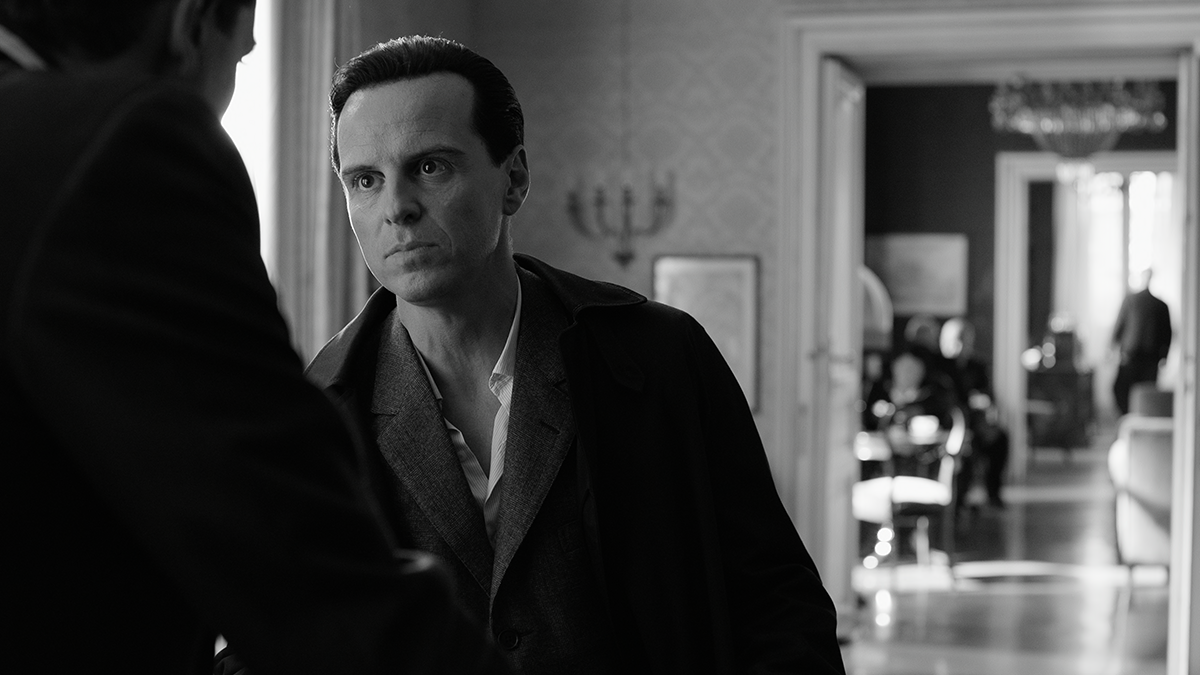
Netflix’s Ripley seeks to expand upon the story of Tom Ripley’s descent into lies, deceit, and homoerotic madness. As the first serialized adaptation of Patricia Highsmith‘s novel, the cast and crew had significantly more time to explore the intricacies of Tom Ripley (Andrew Scott), his relationship to Dickie Greenleaf (Johnnie Flynn), and the ever-changing circumstances of his deception. A big part of this is the costuming lead by Giovanni Casalnuovo and Maurizio Millenotti. Their work is an integral piece to selling Tom Ripley’s descent into the world of the wealthy.
Below is our interview with Casalnuovo and Millenotti where we discuss their approach to the show’s many costumes, costuming for black and white, and their favorite pieces.
How exactly did you both go about designing the look of Ripley’s costumes?
For Ripley, we embarked on a collaborative process. First, we met with director Steve Zaillian to
discuss the overall visual tone of the series. This helped us understand the world Ripley would inhabit. Then, we dove into our usual research phase, but with a twist – unearthing never-before-
published photographic materials. This unique resource provided a wealth of inspiration for crafting a look for Ripley that felt both authentic and fresh.
During pre-production, how did you decide how you wanted to stray from the original source
material or any previous adaptation?
During pre-production, we collaborated closely with the director, production designer, and
cinematographer to ensure Ripley’s visual identity stood apart from any previous adaptations. Our
daily meetings at Cinecittà were instrumental in this process. We’d present our design ideas, delve
into the details of each costume, and refine them based on the director’s vision. This collaborative
approach ensured a cohesive look for the series that both honored the source material and offered
a fresh perspective.
Since Ripley is the first serialized adaptation of the original Highsmith novel, did you find
more freedom in having more screen time to flesh out Ripley, Greenleaf, etc through
costuming?
Absolutely! The eight-episode format provided a unique opportunity to tell the characters’ stories
through costume in a way that wouldn’t be possible in a film. This extended screen time allowed us
to depict Ripley, Greenleaf, and others’ journeys in a nuanced way.
How did the show being in black and white affect your vision(s) for how each character
should look?
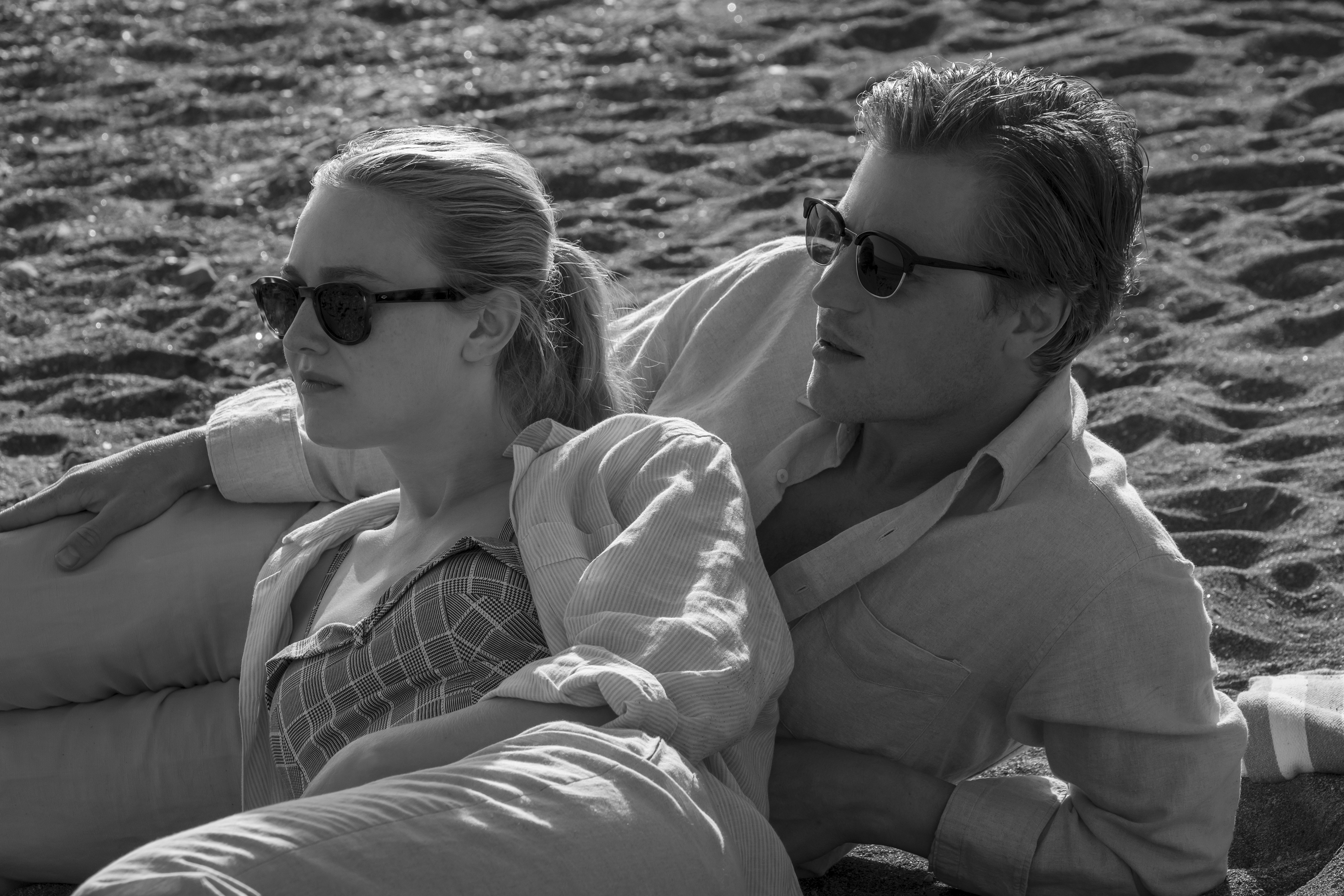
Black and white cinematography was scary at the begging but soon it presented a unique
opportunity. Color wasn’t an option, so we focused on bold patterns, contrasting textures, and
unique silhouettes to distinguish characters and create visual interest. For instance, translating
colorful elements like Tom Ripley’s beachwear required creative problem-solving with bold
patterns or textures.
Were there specific textures you tended to gravitate towards for each character?
Absolutely! Since color was absent, texture became a crucial tool for defining each character. We
explored a range of fabrics in black, white, and various shades of gray, aiming to achieve a similar
level of distinction as color would have offered. While contemporary costume design often relies
heavily on color, we drew inspiration from the masters of black and white cinema like Adrian,
Orry-Kelly, Edith Head and other great designers of the black & white era. Their use of
contrasting textures to sculpt character is something we very much wanted to achieve.
What was your favorite piece you designed for the show?
While every costume tells a story, Tom Ripley’s wardrobe from New York to Venice holds a special
place in our heart. Each piece reflects a stage in his journey – the initial anonymity in New York, the emulation of Dickie Greenleaf’s wealthy lifestyle, and ultimately, the emergence of Tom’s own
distinct identity. It’s incredibly rewarding to see the audience pick up on these subtle details, and
the positive feedback is a testament to the power of costume storytelling.
What was your favorite piece that your creative partner designed?
This is a tough one! We work so collaboratively that there’s no single piece designed solely by one
of us. Every costume is the result of our combined vision. We take an idea, discuss it thoroughly,
and refine it together. This constant back-and-forth not only leads to improvements but also fosters
a unique design identity for the project.


Comments
Loading…