

 Steven Prusakowski
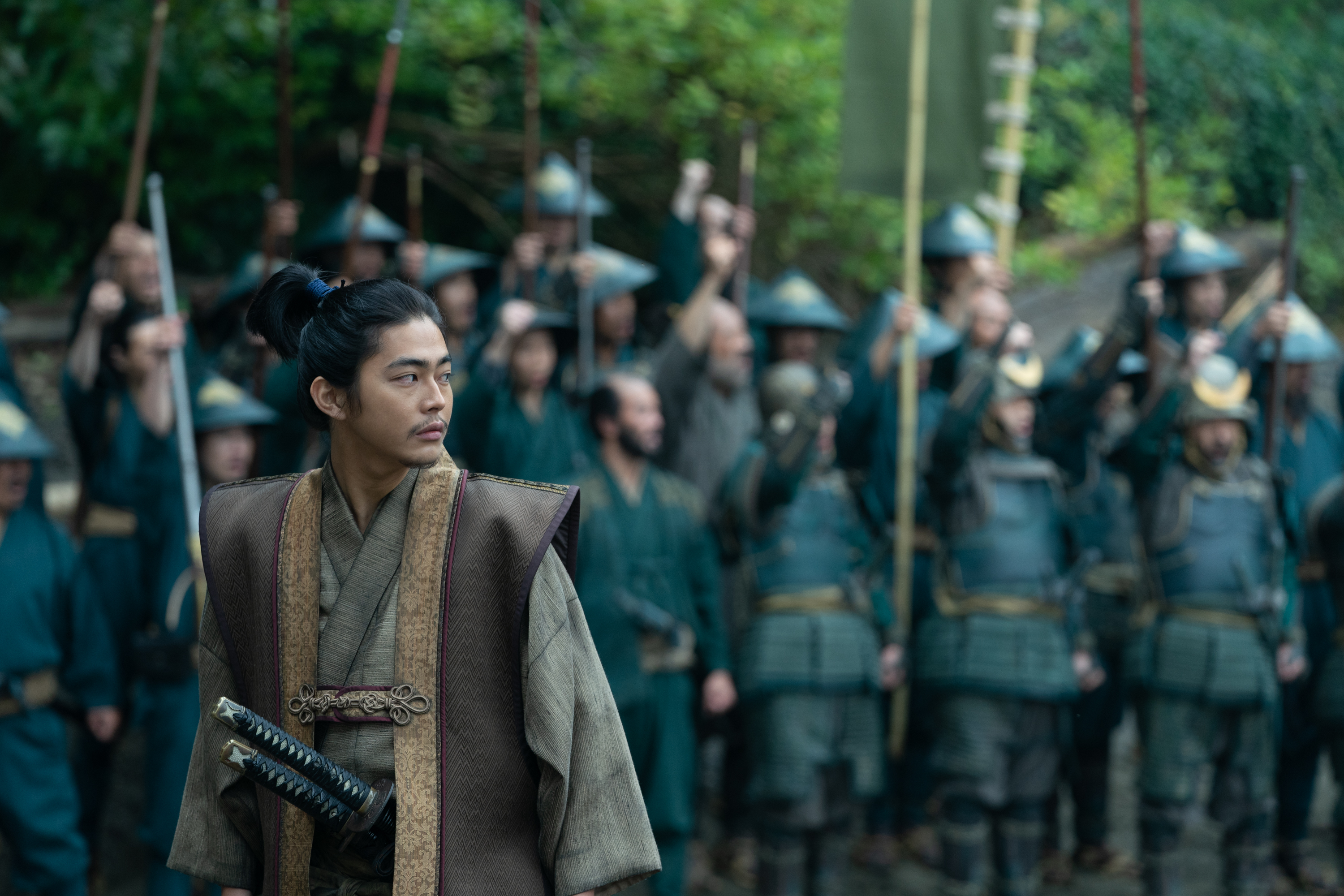
When telling the story of feuding war lords in 17th-century feudal Japan for FX’s Shōgun the number one goal in mind was authenticity. Visual Effects Supervisor Michael Cliett had his work cut out for him, but thanks to extensive research, and a “research bible” spanning 900-pages every aspect of the show’s depiction was guided when designing the historical drama.
From architecture to army makeup, with meticulous attention to historical accuracy and cultural respect delivered a television event the likes have not been seen in ages. Unlike the original 1980s version of the telling of the James Clavell novel, this retelling included Japanese advisors and historians who contributed every detail along the way.
Cliett sat down with Awards Radar to discuss all the work that went into the series. If you were blown away by the series itself, it becomes even more impressive when you learn all the care to create the immersive seamless and authentic visual effects. You can read excerpts from our conversation below or listen to it in its entirety.
Where does this massive undertaking all begin.
Michael Cliett: We were going to be shooting the entire show, all 10 episodes in British Columbia, Canada, and creating 21st century or turning 21st century British Columbia into 17th century feudal Japan.
There was obviously going to be a large VFX element involved in that, especially because we couldn’t build, you know, these entire castles, these cities, this whole world that doesn’t even exist anymore. So whether it was pretty much no matter where we shot, we were going to have to, we were going to have to do it to some extent. So, you know, that’s what we set out to do was, was, you know, to create, you know, the visual effects were to be in service of the story, to be seamless, you know, to be immersive, to enable our audience, to help enable our audience to be completely immersed in the story and the world of the show.
And so in order to do that, we needed the visual effects, like I said, to be seamless. We also wanted them to be authentic. We wanted the world to be as authentic and as accurate as possible, as historically accurate as possible.
So, you know, an immense amount of research went into everything, every single pixel you see on the screen, just a ton of research was put into it. You know, by the time day one of shooting rolled around, we had a 900 page, what we called a research Bible, where we had accumulated, you know, just exorbitant amounts of research around every kind of topic you could imagine with 1600 Japan. So we had that to go off of.
And, you know, we had lots of historians, lots of advisors, what have you. But again, like the care and the research that went into building the historically accurate structures that haven’t stood for hundreds of years, the layout of Osaka, the layout of Edo, you know, these places that actually existed and actually getting that accurate, getting it correct, great care was taken into all of that. And then everything beyond the world building aspect, you know, we did a lot of violence.
You know, there’s no shortage of violence. The visual effects had a heavy hand in. We did, you know, the army, the army makeup, but that was also a lot of research went into the makeup of the army, the different factions, how they would walk, how they would be, you know, how they would be organized.
So can you break down that 900-page binder a little bit?
Michael Cliett: Well, we went, you know, it was, it was, it was costumes. It was, it was the, it was the overall dress of, of the people. It was the organization of the cities from the merchant districts to the samurai districts, to the castles, to, you know, how everything was, was, was actually organized.
It was, it was down, it was the tea ceremonies, you know, how that took, people study their entire lives to the art of serving tea. It’s a big deal. It’s, it’s, it was the gestures, the samurai, how everybody, you know, the, the, the various actions that, that might like every, for every gesture there is, it all, it has meaning behind it.
The smallest little things in Japanese culture have meaning, but it was the naval aspect. You know, there were, we had ships, we had boats. It was really figuring out the, the, the right boats to build both practically, because we built all our little boats practically, but then the big ships, we did all those in visual effects with, with practical isolated portions of them.
But it was, it was doing all of, all of that. I mean, basically you name it, you know. It’s the one thing we didn’t do correctly that we couldn’t do because of production. Most people in 1600 Japan did not wear shoes.

But then when you watch it and you, you know, that your hands must be involved in just about every single, or your, your teams involved with just about every single frame based on what you’re saying, because you know, there’s so much, you know, when you say authentic, it shows up on screen. You, you know, there’s never a moment when you’re thinking about the background, you’re thinking about effects, you’re just watching, you’re so into the characters and that’s how you know, you did it well, because you’re not saying, oh, that was CGI or that was this, or, you know, or this was wrong and pull you out of the moment. You get to stay in the story.
Michael Cliett: So that’s the greatest compliment. Like, even if the, even if the visual effects are good, I don’t want people, I don’t want the audience to be thinking about, wow, that’s a great visual effect that they, that they did there.
Not when you’re watching the show, we just want you to be immersed in the story. And if that’s the case, then fantastic. Like even the earthquake, the earthquake sequence at the end of episode five, I’ve had a lot of people circle back to me, like once they’ve actually watched it, well, surely that was a lot of visual effects, but you know, they weren’t thinking about it when they were watching it.
They’re like, wait, but that didn’t, that couldn’t have really had, how did you guys do that? And yeah, of course it was all, I mean, you know, we had a practical location and, and, and everything beyond our practical location, you know, from our, our immediate practical location became a full 3D environment for the earthquake. So that was how we, and even like some of the ground underneath our actor’s feet, we did a, we did a landslide simulation or had ground collapse underneath Toranaga. Like that was all, you know, done.
None of that was done practically, obviously we did all of that in visual. But again, like that’s a good example of, you know, people weren’t even thinking about the fact that even though it’s, it’s obvious when you think about it, that it has to be visual effects, but it, people weren’t thinking about that while they were watching it. And I think, that again, is that a testament to our goal of wanting everything to be as real as possible.
And like the first step of the earthquake was we did have a real mountain adjacent to our real location. And we did drone photography of that mountain. Like we took hundreds and hundreds of pictures, maybe thousands of of that, of that mountain with a drone and we took height and elevation data.
And then we actually built a digital replica of that, of that mountain that was adjacent right there, that that would collapse. And we, so it was an exact replica of, of our actual practical set or of our actual practical mountain that existed right there that then we use to collapse down and everything. And that, that, that helped in the landslide simulation to ensure having all that information, having all that survey data helped ensure that the landslide would behave accurately to the scale of our actual practical location.
We approached everything like that, but at the end of episode four with Josen and his men getting shot by the chain shot cannons, we did so many simulations on the physics of all of that and how it happened. We shot the chains through actual digital versions of the people that had the mass and the makeup of a real human inside the digital programs we use. And we did actual real simulations to see, well, this is what’s going to happen if you fire two cannonballs tied together with the chain, almost at the speed of sound going through human beings, this is what happens.
And, and so it’s real, like what you see is actually what would happen. People would just be obliterated because the cannonballs tied together with chains, those are weapons used for, for naval combat. They’re meant to destroy a ship’s hull. So imagine what happens if that goes through people.
One of my favorite scenes was the ship race through the rain and waves.
We were shooting in the middle of a parking lot in our back lot. Um, and we surrounded it with, you know, the whole thing was surrounded by blue screens, 40 feet tall. It was all shot in that parking lot. So all of the water was CG the whole environment, the whole Osaka Bay environment was CG.
And even, yeah, everything was, was, uh, was a simulator. And we, we scanned all of our actors for that. So all of our, all of our main cast was, was scanned for that.
So we were able to then, you know, for the full CG shots, for the wider shots, when you see the two boats together, when you’re not on the boats themselves, and even some of the shots when we’re on the black ship and we see the galley over there with Blackthorn on the galley, some of those are full CG, um, looking over there because we had a full CG version of the galley and we wanted the galley there and we didn’t necessarily have the coverage. So we, we added Blackthorn and the galley and full CG, but, you know, we had our cast as full digital doubles. Uh, so everybody on each boat was, was, was full digital doubles, um, for some of those wider shots.
Shōgun, which was recently announced to be renewed an unexpected second season, is streaming on Hulu. Learn much more about the racing ship scene and other secrets behind the making of Shōgun in the full audio interview above.


Comments
Loading…