

 Emilia Yu
Directed and adapted for television by Lulu Wang, Expats is a limited drama series centered around a tragic disappearance that intertwines the lives of three women expatriates living in Hong Kong. Like Wang’s breakout feature, The Farewell [link], the show explores themes of grief, womanhood, and being far from home, this time told over the course of six lengthy, thoughtful episodes. The story has plenty of room to breathe, with every character given their own dimensionality and grace to be complex, flawed, funny, human.
But initially, Wang wasn’t sure she would be afforded the freedom to carry out her version of this story. Approached by series star, executive producer, and Hollywood A-lister Nicole Kidman to direct, Wang had reservations about working with this level of star power and prestige.
“I think I was worried about not being able to cast it the way that I wanted to cast it. Oftentimes, when we get to certain roles where there’s not large enough ‘names,’ then you’re asked to compromise on their background and ethnicity. I wanted to make sure we were really casting authentically for who was best for the role, and not just based on a name. Then also being able to fill out the crew behind the camera with the team that I worked with on The Farewell, and being able to bring my collaborators,” Wang explains.
“When you work with someone as established and incredible as Nicole Kidman, I think there are expectations that you have to work at this different level, which means you have to hire people with different types of resumes. And that’s just not what I wanted to do.”
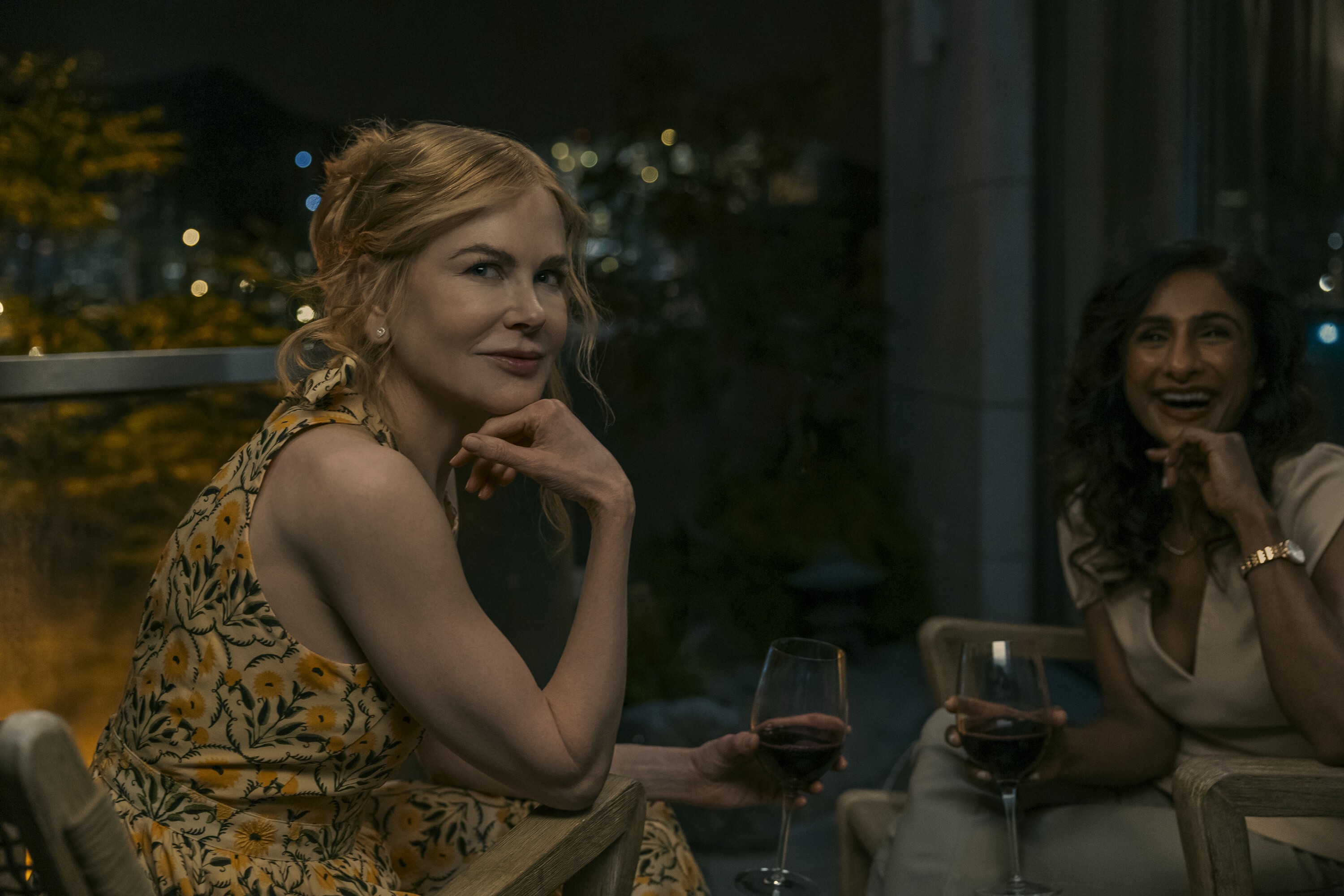
Wang eventually agreed to direct after being assured she would not be forced to compromise on her vision, producing a layered and compelling ensemble of characters all entangled in the series’ main conflict – the disappearance of Maragaret’s (Nicole Kidman) youngest child. Expats begins a year after the incident with Margaret desperately searching for any sign of what happened to her son, her friend and neighbor Hilary (Sarayu Blue) struggling with issues of infidelity and infertility in her marriage, and Mercy (Ji-young Yoo) reeling from guilt at the damage her impulsive decisions have caused.
Expats tempts us to judge these characters, but resists taking sides, something Wang was intentional about.
“Sarayu specifically has gotten a lot of messages about some of her choices [as Hilary]…people have told me a lot about Mercy, and feeling so angry with her, but then also realizing she’s a kid, and being internally conflicted in whether or not they should be as angry with her. And that was the whole intention of the show.”

Although Expats presents in trailers or even in its opening episodes as a mystery thriller, the series is not interested in answering questions, mirroring many real-life tragedies, including Wang’s own.
“The core of the story was about ambiguous loss, and we were writing a lot of this through the pandemic,” explains Wang. “I had just made this movie, The Farewell, about my grandmother, and everyone knew about what had happened to her, and what my family was doing. But then in real life, she was still dying, and I couldn’t go see her….People are always asking me, so did she know? And then what happened?”
“Movies end,” Wang continues, “and you kind of get this ending. But, life just keeps going. We often have to deal with not really knowing, not being able to say goodbye, not having clarity. And I think that is the hardest thing for human beings. What is so tragic about the story is, how do you deal with grief when you don’t know what happened? How do you wake up every day? How do you sleep every night, not knowing? And that is truly a nightmare.”
But the show does not wallow in its own tragedy, steering us through a range of perspectives—even departing from the main characters almost entirely for one feature-length episode in what may be the show’s best episode)—and showcasing Wang’s particular brand of almost-absurd humor.
“I just didn’t want it to be one tone. It was important to me that we do have these moments of ‘is this really my life’ and absurdity? I think that Hilary brings that, those surprises in the tone, shifts. Even in…one of our darkest sequences and darkest episodes…I wanted to have Hilary and her mother (Sudha Bhuchar) in the elevator as a balance. I guess as a child of immigrants, and coming from a culture that has experienced so much suffering, I find people to be that much more funny—they’ll say something, and you can hurt each other, but then you’re on to the next thing.”

Wang reflects on her work in general, “The absurdity of just humans in general, is something that I always want to look at. We’re very subjective, and we’re with the character, and we deeply feel the drama. But then the camera pulls out, and it’s kind of objective. You see this human creature in an environment being very human…What I want always in my work is that people are laughing through the tears, and then crying through their laughter.”
Wang’s hope for audiences to laugh through their tears is mirrored in some of her own writing experiences for Expats. She describes the writer’s room when they wrote episode four, “Mainland.”
“We all laughed and cried at the same time a lot together while drinking boba tea,” Wang laughs. “Grissomra and Santu were incredibly courageous to put her own story and those specific conversations and dialogues into the series…You have all of the nuances of Brinder, and this character of being so brutal, and being so unapologetically herself. She’s always going to say exactly what is on her mind and doesn’t really think about how that affects Hilary. So there’s something kind of toxic there, but also something really refreshing about her honesty. And I think that’s what’s funny about it. That’s why people laugh.”
An intense and often dark show, Expats captures a full range of human emotion and experience, counterbalancing heavy subject matter with a hearty dose of humor and ultimately leaving us with a powerful message of resilience.
“It was really important to me that it wasn’t driven by that plot, but instead by a message of resilience for everybody who might be, as they say, the resident of grief and loss, and holding on to these wounds day to day.”


Comments
Loading…