

 Jeff Heller
For more than two decades, David Kashevaroff has worked behind the scenes as an editor on film and television projects ranging from Project Runway and Top Chef to the horror series Them. In 2022, he began a creative partnership with director Ti West, co-editing the slasher film X. The two have reunited for Ebenezer, a Gothic reimagining of Charles Dickens’ A Christmas Carol, starring Johnny Depp as the infamous Ebenezer Scrooge. The film, which currently holds an 89% audience score on Rotten Tomatoes’ Popcornmeter, also features Ian McKellen, Rupert Grint, Sam Claflin, Daisy Ridley, and Andrea Riseborough.
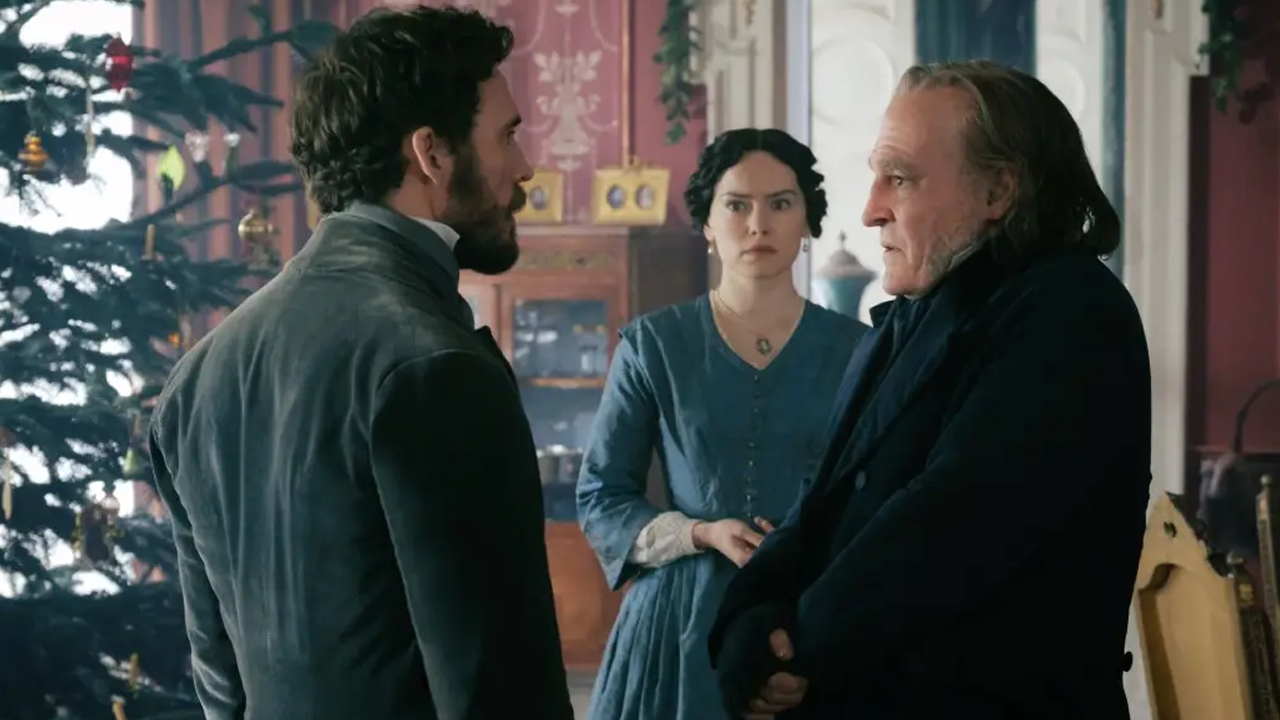
We spoke with Kashevaroff about his collaborative editing process with West, finding the emotional balance in Depp’s performance, and the role editing plays in delivering an effective jump scare.
I’d like to start with your working relationship with Ti West. You first worked together on X in 2022. How did you get involved in that project?
I worked on an Amazon Prime show called Them on season one, and Ti was a director on that season. He directed the finale episode. This happened during COVID. I wasn’t editing his episode, but during COVID, everything got shut down, and I ended up taking in the season on my own and recutting stuff. All of a sudden, we had all this extra time. His episode got shut down with four more days left of shooting. So eventually, I ended up taking over and sort of recutting his episode. And then he had four more days of shooting. So, we worked together a little bit on those four days with new dailies coming in. We didn’t even work in person together. We just sort of talked on the phone, we exchanged notes back and forth, and we moved on.
And then several months later, he reached out and called me. He’s like, “Hey, I’ve got this script called X that I’m doing with A24. We’re shooting in New Zealand. It would be great if you could come on and do it with me.” Because, if you don’t know, Ti’s always edited his own movies. So, he brought me in on X. Part of that was because there was a wind of Pearl being a thing. He had this idea for Pearl, and he pitched it to A24, and they said, “We’re like, we’re into it. We’ll see how the shooting on X goes.” That went well, so I was able to jump into that relationship with Ti because of back-to-back features that he was doing and help relieve some of the pressure of doing basically two movies at once. He shot Pearl three weeks later after X, so I was able to keep working on X while he was shooting Pearl.
You edit together, which is a unique dynamic. Can you just talk about that working relationship you have as co-editors?
Yeah, it’s unique in that there are a lot of projects where there are multiple editors, but this is a case where the director himself is an editor, and I am also an editor, so it lends itself to experimentation. Ti will have something in his mind of what he wants when he shoots a scene, and early on, when I was putting together scenes, I’d show him stuff, but he would also say, “Look, I’m not going to note you too much because I just don’t know what you’re going to do,” and to me, that’s an advantage because I can then see the footage in a different way and a different way the scene can be structured or the performance can be put together. And I think that carries on through the whole process, the surprise element of it.
We would share sequences. I’d cut a scene, and I’d be like, “Here you go. Take a look.” He’d take a look, and sometimes he’d give me notes. He’d be like, “Like, this is great. I would change this and this and this.” Sometimes, he’d just take it, and I wouldn’t hear from him for a day. And then he’d knock on my door and be like, “Hey, I’ve got that sequence back for you to look at, and then I would take a look at it, and he would make changes without telling me about any of them. So, then I’m surprised at what I’m seeing. “Oh, I didn’t expect that. Oh, that’s really cool. That makes me think of something else,” because we both know the footage so well. I’m like, “Oh, there’s that other part in that other performance that would go great here.”
So, the element of surprise was the biggest advantage in all of this, I think. And also, the fact of doing a movie like this in nine months from shooting to finishing is a huge task. So having two people who really know the movie well is necessary.
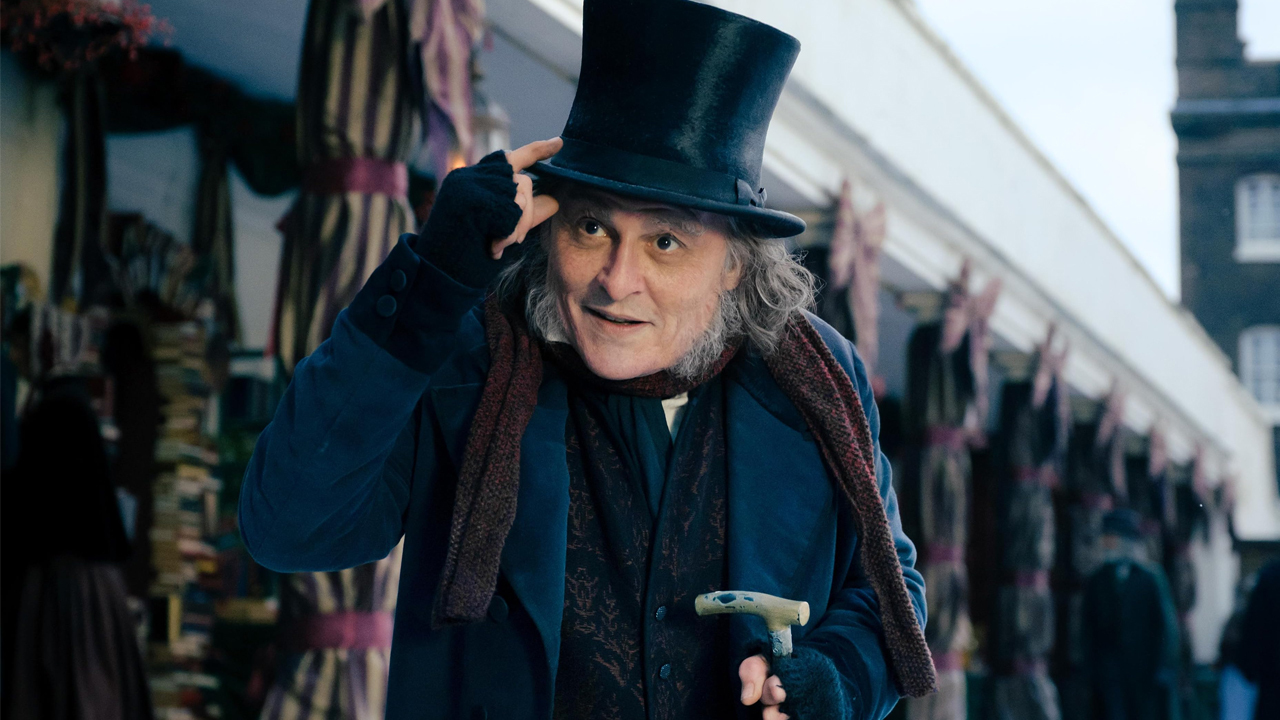
The number of takes you have to work with is obviously solely dependent on the director. But here you have the director working with you as a co-editor. Does he give you a lot to work with, or is he pretty focused on exactly what he wants when he’s shooting?
Ti knows what he wants. The only times he shoots a lot of takes are when there’s a complicated camera move, and there’s a lot of things going on. Like the opening shot of the movie, I forget how many takes, but there were a lot of takes just because there’s a lot going on. There’s a big drop down, a wraparound into the window, Johnny’s first line. So those are the only times. Otherwise, it’s two, three, four, or five takes. Typically, not more than that. He was telling stories of how even Johnny knows when he’s got it. When he nails a take, Ti might be like, “Oh, let’s try to do another,” and he would tell me that Johnny would be like, ‘No, you got it on that one. That’s the one.” And he would be right most of the time.
Speaking of Johnny Depp, he’s known for bringing a lot of personality and physicality to his roles and his characters. Was there anything particular challenging or opportunistic in working with Johnny’s performance in the editing room?
I think the most challenging thing with Johnny is the amount he gives you. There’s so much, and there’s such a great variation that you have so many things to play with. So, the biggest challenge, and I kind of realized this in hindsight with Ti, was to really ground Johnny. The first pass of the movie, the director’s cut, was just making him like, we needed to connect to his emotional core; his story, where the pain is, what’s hurting him, so that we could be empathetic to him. He’s mean, and he’s cruel, but there’s also something there behind all of that that we get to see. And Johnny does a wonderful job of that.
And then the other side of that is that he can be incredibly funny at any moment in the movie. So, then once we know we have the emotional core to the movie, we’re able to pepper in a bit more comedy, some more lightheartedness, some more quips from him, something a little more cutting that’s also funny. We are able to balance out his performance that way.
The visits from the spirits are obviously central to the story. Did you approach editing those sequences differently than some of the more grounded scenes?
Not particularly. I think once the movie was all together and we knew what his relationship really was with each ghost, then we kind of fine-tuned to that. Like the instance of his relationship with the ghost of Christmas past. He’s very flippant and expresses his anger, his distrust, and his disagreement with how she sees things. He’s pushing back a lot. We realize that that’s sort of their relationship, so we are able to take out some of the dialogue to make it a little bit harsher. And then in the next relationship with the ghost of Christmas present, that’s a little more of a buddy cop relationship. You can see where, all of a sudden, it feels to me like the roles are reversed. The ghost is the angry one, and Johnny’s kind of trying to find his place in all of that. He’s still pushing back a little bit, but surprised by how he’s reacting to the things that he’s being shown. So, it’s just a matter of finding the movie in all of it. As it’s put together and over the months of editing, we realize what the scene needs, what the relationship needs, and we fine tune to that. So, there wasn’t, I wouldn’t say there was a particular approach.
Can you talk about jump scares? There’s a handful of jump scares in this film.
Were you surprised by them?
Oh, yeah, they were very effective. From an editing standpoint, what makes an effective jump scare?
For me, I guess I would have to say it’s the time you spend time under tension leading up to a jump scare. The first jump scare in the movie, I believe, is the carriage passing behind him. What’s fun about this movie is, because it’s A Christmas Carol, you’re expecting A Christmas Carol, and you’re getting that up to a certain point, with some dark tones to it. But I think that first scare, no one’s really expecting that kind of movie out of this. So, it’s really effective. You’ve had several dialogue scenes. You’ve had an opening title sequence. You have a funeral, a scene at the graveyard. You have a few more office scenes. And then you end up in this, which is a very well-known scene if you’ve seen the story before. When the doorknocker changes from the doorknocker to Jacob Marley, you know what’s going to happen.
So, I think the advantageous thing about that is you’re expecting a certain scene to go a certain way. And then that happens. I think something that works in that particular scene is the sound sort of bleeds out. The ring that falls out of the mouth, and it bounces off the doorknob and onto the concrete, and everything sort of fades away. And we’ve been in the scene with wind and music for this whole time. And then we just sort of carve out this natural space for Ebenezer to be in, where he’s like, “What is going on?” Where the whole audience is also hopefully thinking that. And then all of a sudden out of nowhere, a carriage goes by and jolts everybody. And it also lets them know that this is the kind of movie you’re in.
You’ve worked on a few horror projects in the past. What makes this different than some of the other projects you’ve worked on?
Well, it’s a Christmas movie. Who knows when I’ll ever get to work on a Christmas movie again. I was so excited to do this project because this is a once-in-a-lifetime opportunity, because I love Christmas movies, and I love horror movies, and this is this great combination of the two. But it’s unique to me, in the way that I like my horror movies, because I’m able to relate to Scrooge in this movie. Even though he’s cruel and mean and awful, there’s something underneath that allows me to empathize with him. And I think if I can get the audience and myself into that space, then it’s really effective, because the scares seem scary. I care for him. And at the end of the movie, there’s this great relief where now I’m really attached to Ebenezer, and I see what he’s been through, and I see the pain that he’s been through. When the clouds finally lift at the end of the movie, I feel a great sense of relief. And even though he’s not fixed, I see this progress that he’s made. That’s what I gravitate towards. There are other movies that feel like that. I did a movie before this called Lurker, and there was this character in there that was also like that, where they’re just doing awful things, but you can see something behind that. And that’s what I really appreciate about this particular version of Ebenezer. You really get to see a little bit more behind the curtain.
Were there any surprises in the editing process that made you view the film differently than what you and Ti maybe envisioned going into it?
The biggest surprise for me was the Silent Night sequence. It’s just in the script as everybody starts singing “Silent Night,” and the prisoners join in. I didn’t know what to think of that. When we first put the scene together, it felt very Ti West. It just sort of creeped in out of nowhere. And you’re just all of a sudden in the middle of this choir of people singing a song. It’s very emotional. And then you start traveling around to the different characters in the movie. That, to me, was a surprise. He did something similar in X, where they’re sitting around talking, and all of a sudden, they’re playing “Landslide” on the guitar, and you’re seeing all these characters around the room. It just sort of comes from out of nowhere, but yet, at the same time, it feels so natural to the movie.
You can watch our full interview with David Kashevaroff below.
Ebenezer is currently playing in theaters nationwide.


Comments
Loading…