

 Sophia Soto
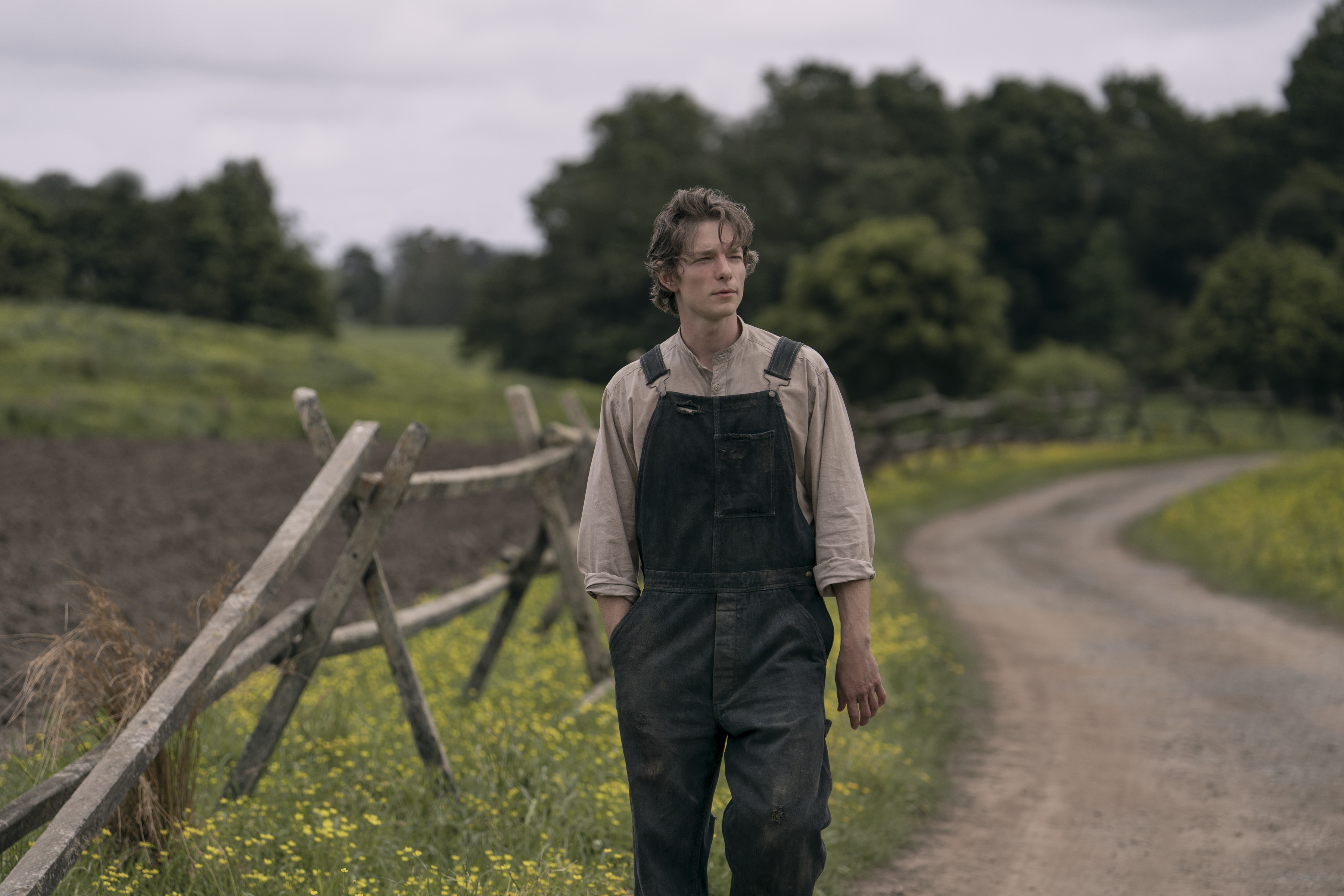
Mike Faist gives a phenomenal performance as Charles Trask in East of Eden, a modern interpretation of John Steinbeck’s novel from Zoe Kazan (who Joey spoke to here). While it was previously adapted into a movie by Elia Kazan in 1955, the television format allows for deeper exploration into multiple generations of the Trask family, as well as Cathy Ames, the story’s antihero.
Read Awards Radar’s full interview with the actor below, where we discuss his character’s most significant scenes, Charles’ fate, being inspired by those who came before him, and more.
What do you think the TV show format adds for this new generation who might not know the original story, and why do you think East of Eden has inspired two different adaptations?
Mike Faist: Man, well, I guess to answer your first question, what is it about long-form TV that is beneficial for this particular story? I think it is simply that: it’s longer. So you’re able to explore more. You’re able to go into more depth. This is a seven-part miniseries, which ends up being maybe six and a half hours, seven hours of actual watching, and if you could break that up for an audience, that’s obviously a lot more than a two and a half hour film, where you sit there, [and watch it] right there. The other thing is you’re able to jump right into people’s homes where they are and reach out to them there, so that’s the thing. In regard to what makes this particular story feel as if it needs to be told over and over again is probably because it’s good. But I think that there’s something probably true in just the sense that it’s honest, and I think when things are honest and universal, people do feel the need of what is it about it? It’s probably a question that is the reason why you make it. You probably make the thing to try to figure out the answer to the question, I would assume. I know that’s the case for me whenever I choose a project. Whenever I choose a project of any sort, I always have more questions than I have answers, in the hopes of maybe figuring out what those answers are. I usually rarely succeed, I would say. If anything, I end up with more questions.
That’s a good thing, though. At least for me, as an audience member, I understand that very deeply, because when I finish, I want to be talking about the project even more than when I started it. It’s really amazing to have questions after, and I think it’s incredible that one book now has a film and show adaptation to complete all three mediums.
I mean, listen, I moved to New York when I was 17, to become an actor. Elia Kazan’s film, East of Eden, with James Dean, was something that was very influential for me. And so, at least for me, being able to be a part of this, it really is a pinch-me moment. I feel very lucky to have been asked to be a part of it, and I feel lucky that people are responding to it the way that they have been.
Yeah, and I know you probably haven’t thought about this too much, but just like you said, that film was influential for you, and now your performance in this show can be so influential for the next generation of actors growing up as well.
Maybe that’s true. All I can say is that I’m looking at the people that came before me, and I think that’s true. I think that’s true with probably Florence [Pugh]. I think that’s probably true with Hoon [Lee] and Zoe. We constantly are revisiting the people who inspired us. I know I am. I’m always rewatching and revisiting the people who influenced me, and I’m always just trying to figure out, man, how did they do it?
While he is given the chance to join his father in Washington, Charles decides the time for that has passed. Why do you think he stuck with farming rather than jumping at the chance to earn his father’s love in that moment, like he had been doing for so much of his life?
That’s probably a really good question. I don’t know. To be honest with you, I think that there’s probably two things. I mean, so much time has passed. It’s probably that. On one hand, there’s probably this aspect with Charles that feels excited and happy that his dad finally asked him, and then, on the other hand, there’s probably this bone to pick that says, why now? What’s different now? Also, on another practical level, he’s just older. He is older. The time for that had probably passed. He’s not a kid anymore, young enough to be able to go off and fight in a war and do those things. It’s an interesting question, and I think that it’s a really complicated answer that you probably can’t sum up into just one reason as to what that is. It’s probably a much more nuanced, complicated answer for Charles himself.
Yeah, because he lived so much of his life on that farm, too. I feel like that maybe changed his perspective a little bit from when we last saw him.
Maybe. Yeah, and I think living on that farm, for me, the thing that really jumped out, the thing that I really sympathize and empathize with Charles [on] was this idea of carrying around a shame and being banished to kind of live with that shame. In the book, he talks about carrying these ghosts that haunt him, and we symbolize that a little bit. It’s in the book, but with the rocking chair moving on its own. I think Cathy talks about that a bit as well: these kinds of looming figures that you can never escape. I think that is something that Charles is wrestling with, this idea of this belief of badness that exists within him. Maybe he’s afraid that if he were to go and join, maybe he doesn’t want that part to come back, because of what existed when he did this act against his brother. So yeah, it’s a very good question. I don’t have a very good answer for it.
You did have a very good answer, and I like what you said about how he views himself. I spoke with Joseph Zada, and I said it would have been really amazing to have a scene between Charles and Caleb, to see kind of one generation helping the next and realizing that you’re not as bad as you view yourself. Do you think he would have repeated his father’s mistakes the same way Adam did if he had the chance to parent those children, or would his childhood have kind of made him more careful?
Part of the thing that makes Charles wonderful as well is that you’ll never get to know because of the path that isn’t taken, because of where his story ends. I think those are the things, too, that I also was drawn to when I said yes to the role is that there was so much ambiguity and so many things that were not able to be answered. I think that was the thing that made me emotionally feel for him, as well, is that we would never get to know the what-ifs, and that’s a really beautiful thing too about this novel is the cards that were dealt, and then the choices that we have in front of us within that, and what path do we take?
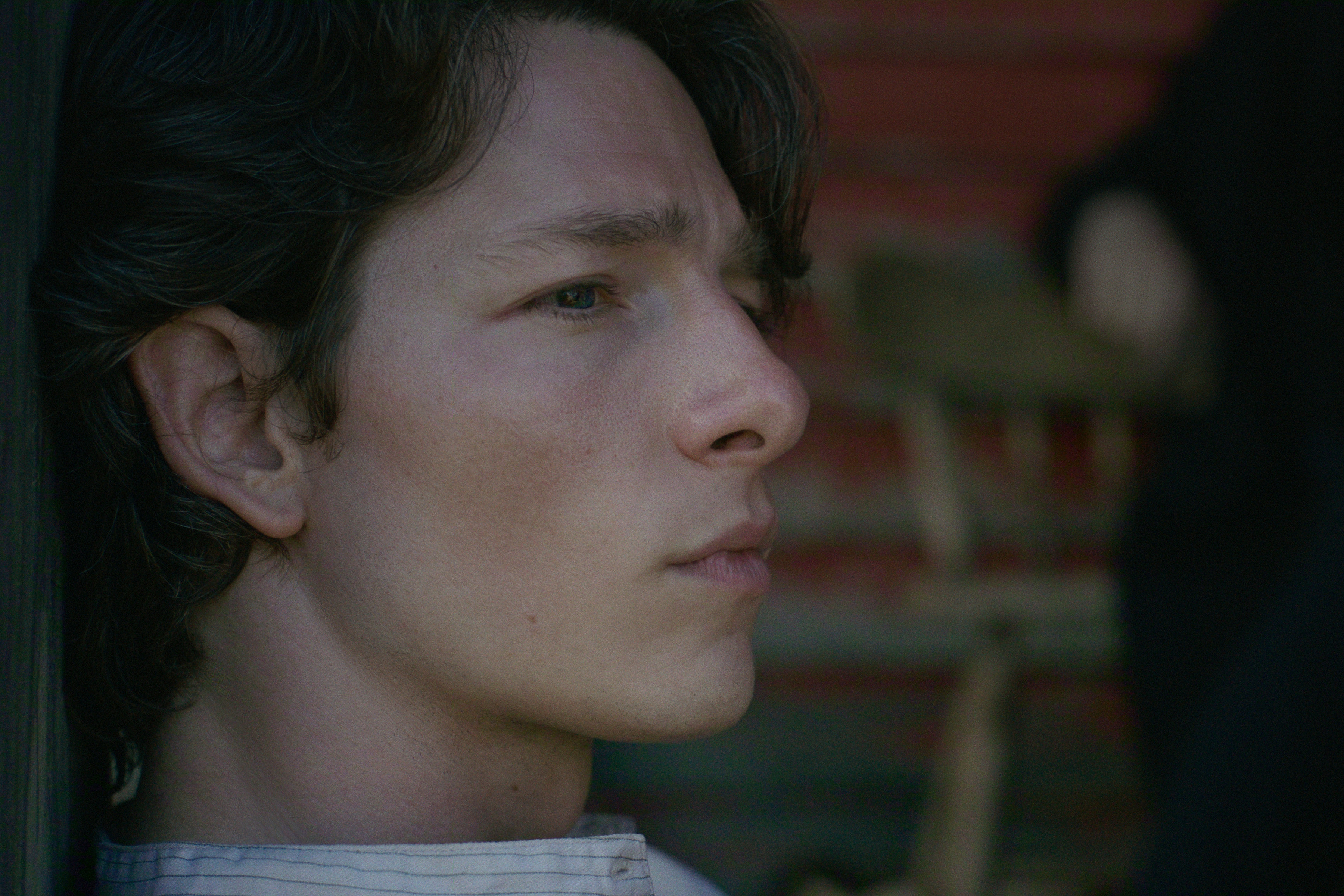
I want to talk to you about the letter he writes to Adam. At one point, he says that their father damned them to the wrong fates. How long do you think that haunted him while he was alone on the farm, and when do you think he accepted his fate, if he did at all?
It’s a good question. I mean, obviously, once he heard the news that Adam was going to be the one to go off to war and that he would be the one that stays to tend to the farm, he has an emotional reaction and creates this act of violence against his brother. So, the grieving process has already started immediately right there, right? Then, after he does this act of violence, he’s left to himself with his thoughts for years. And so, he’s had nothing but time and space to process and to live with it. To live with that shame. I don’t know if he was ever able to accept how he feels about himself. I’m not sure about that. But certainly, he had to come to terms quickly about [what happened]. I mean, he ends up very much turning that farm into a very productive one. He puts his energy into it. He puts all of his energy into it. He puts any amount of money that he ends up making from the farm right back into it. He doesn’t tend to himself, but he tends to the farm, and I think that ended up probably being something very productive for him.
And by the time Adam does return, their father has died. With Charles facing that alone, how do you think that affected him over time, especially when he later finds out that his father lied about when he was discharged?
These are very good questions. I love this. You’re really asking a lot of great questions about this character. It’s wonderful.
Thank you! I try to make sure they’re new questions for you. I know you’ve talked about this series with so many people.
Well, it’s funny because no one actually asks questions necessarily about the character themselves. I think they always ask questions about your process as an actor or something like that, and those are things that you’re not too interested in. At least for me, I’m actually not very interested in revealing any sort of process. I don’t want to talk [about it] because I think it’s very easy, as an actor, to, I don’t know — it’s hard [to explain]. It’s a silly thing what we do. You’re having to trick yourself into thinking what’s happening is happening, so you can be present, feel, let go, and do the thing, and very rarely do you get the actual time to just talk about the character itself and kind of muse on that unless you’re doing dramaturgical work, getting ready for the role. It’s wonderful. And so, I thank you for that. Genuinely, it’s really, really nice. It’s lovely.
That’s who I am. I love the characters.
Yeah, I do too. That’s why we do what we do. To sit here with you and hear your musings or hear your questions about this, it’s like, well, I think at the end of the day, it’s really a testament to the writing and what Steinbeck did. But then a further testament to the execution of this whole team, Garth [Davis] and Laure [de Clermont-Tonnerre] in terms of the actual directing, and then Zoe in terms of her adapting and making sure that the adaptation really carries forward into today and continuing the story that she’s trying to tell narratively. I mean, it’s just such a monumental effort from a large group of people in terms of what we’re trying to accomplish and do.
How do you think Charles felt being left behind by his brother? I feel like he really needed his brother back, and when he left [again], I can’t imagine how he felt in that moment.
I think it’s a twofold thing. On the one hand, obviously, we see Charles so upset that his brother is being favored. We see this act of violence that Charles commits against his brother. There’s such a yearning for some sort of reparation between the brothers, at least from Charles’ end. I think Adam is maybe a bit more skeptical and reserved in his reluctance in terms of how much he’s willing to let back in. But Charles really does, I think, try and want to mend that relationship. It’s interesting, we don’t see this at all within the film, but in the book, Adam and Charles will have these bouts. Adam will say, “Okay, well, I have to leave now.” He’ll get upset, and he’ll say, “I’m leaving now,” and he’ll wander the world for a few months at a time. Then, he’ll always come back to the farm, and Charles just remains stable for him. He remains constant for him. I think when Cathy comes into their lives, he realizes that he can no longer be the constant that Adam actually needs, and probably vice versa. I think there’s probably an aspect to maybe part of Charles’ purpose, at least how he felt, was to try to win this person over, and when that objective was taken away, by Cathy or by Adam choosing to leave, however you want it to say, maybe it ended Charles’ own purpose for what he sensed in his own life. In which case, maybe his own purpose then was to try to just forgive himself. I don’t know if he ever got there. I’ll be honest.
I hope he did. My heart went out to Charles, so I really do hope he found some sort of peace. I think one of the standout moments for you, even though it was a small scene, was in episode three, where Charles breaks down and throws the woman he was with out of his room. Can you tell me what it was like filming that kind of wave of emotion for him and why it was so pivotal to show?
It was one of those funny things because it’s an intimacy scene, and you have the scene partner that you’re working with. She was wonderful. We met beforehand, and we kind of talked about this, and the scene again was written one sort of way, and I remember her and I, we chatted about what could possibly happen within the scene. I think through just kind of being alive and present, the both of us, that’s what ended up coming was what she was able to bring within the scene and what I was responding to, and vice versa. It’s this kind of thing, there’s something that’s written on the page, and you prepare that, and then you, ultimately, allow for the unexpected to come in, and then there’s two living, breathing people in the thing, and what are they going to do? You listen and respond, and it was really wonderful to work with her because what we ended up accomplishing was something that was honest and alive. Every step of the way with this project, it just felt like a real gift as an actor to have these moments of allowing honesty into the room.
You later appear as a ghost to Cathy. Did you approach those scenes any differently since he was technically in her head?
You know, it’s funny. I don’t know if I did on a conscious level, that’s for sure, but I remember after we shot the first scene, Florence said to me, I love how Charles is now kind of like a Cheshire Cat. I thought that was really funny, her saying that, because when we start her episode, Cathy’s episode, she talks about Alice going down the rabbit hole, and we show this little girl being lured into the woods and Alice going down the rabbit hole. Alice is a huge part of Cathy’s own narrative journey, and I found it interesting that she would say that. That he was kind of this figure for her, this Cheshire figure for her, of this person that’s being able to be a friend, but also not. Someone you can’t fully trust, but you do, and someone she does confide in, ultimately, at the end of the day, at this point in time in her life. It wasn’t on a conscious level; I wasn’t actively thinking I need to do this. But it makes sense what this figure ultimately ends up representing for her and how that comes across. I found that to be really interesting.
All episodes of East of Eden are streaming on Netflix.


Comments
Loading…