

 Maxance Vincent
The grind doesn’t stop for Guy Ritchie. He’s already on his third project this year, with a fourth coming our way late this month. Is he on autopilot? Does he still care about his art? Has he been making the same stuff for a while? Let’s set the record straight: someone “on autopilot” couldn’t have made a masterpiece like Wrath of Man, and a filmmaker who no longer cares about his art certainly couldn’t have brought the second season of The Gentlemen to life. While Ritchie only directed three of the eight episodes of this latest endeavor in the world of the British underbelly (the other five are credited to either Eran Creevy or Nick Rowland), make no mistake: his imprint is all over this thrilling and audacious continuation of his underappreciated 2020 feature film.
Ritchie wrote (or co-wrote) all eight episodes and continues to find new – and exciting – ways to visually depict the descent into criminality of protagonist Eddie Horniman (Theo James), who has now fully learned the ropes of the weed empire and wants to expand it further. With the aid of his business partner, Susie Glass (Kaya Scodelario), the two travel to Italy to bring their operation to a potential new investor, crime boss Marco Moretti (Sergio Castellitto). At the same time, the British government is set to vote on a bill to decriminalize marijuana, with Susie’s father, Bobby (Ray Winstone), pulling the strings within his jail cell to have the legislature killed.
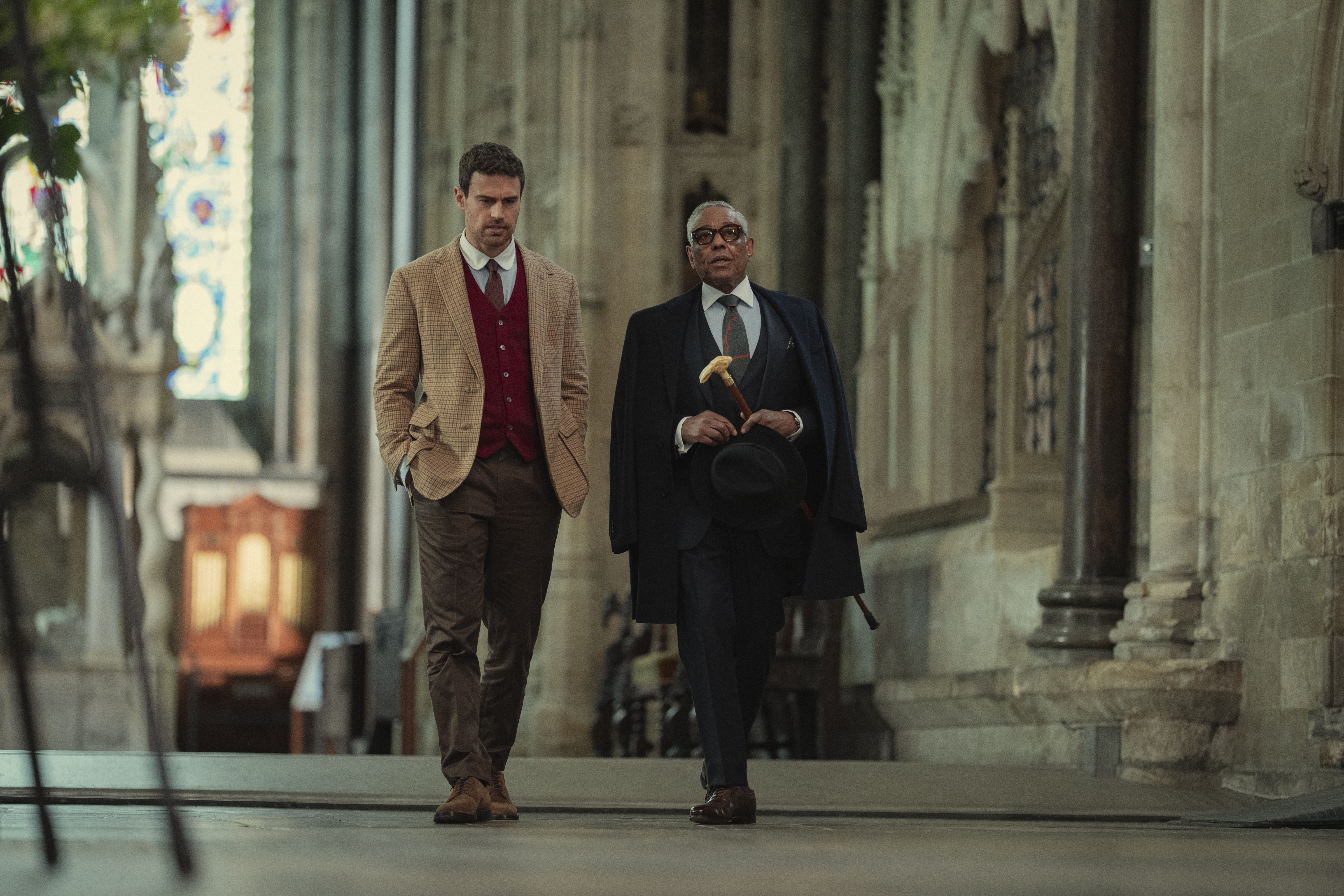
Eddie is not so keen on the idea and attempts to lure Lord Hawthorne (Hugh Bonneville) into ensuring the bill passes, as it will yield greater financial returns for all families. In typical Ritchie fashion, these two narrative arcs will inevitably intersect, and it’s at that moment where season two of The Gentlemen becomes the best thing he’s crafted since the aforementioned Wrath of Man. While the first season was a thoughtful expansion of the world he had built in his film of the same name, season two complicates many of the core character relationships introduced two years ago and actively deepens our perception of both Eddie and Susie.
By inverting the Biblical stories of Jacob and Esau and positioning Eddie’s arc as that of a prophet, Ritchie and his team of writers push the characters into frequently uncomfortable territory until they reach a pivotal (read: painful) breaking point. It’s hard to discuss such a thematic throughline without spoiling a single thing, especially in its jaw-dropping back half, but what you immediately need to know is that the second season of The Gentlemen is a massive step above the first. We know the characters and the world they operate in. What happens when that world gets turned (even more) upside-down and Eddie is pushed past his breaking point?
Some might think Ritchie is taking a rather cruel approach to attachable (although criminal) protagonists, especially given the lighter nature of the film and the first season. But it’s precisely why this season works – it doesn’t care if you personally attached yourself to Eddie or Susie. You will feel some distance between your relationship with the characters as they reach this pivotal turn and make decisions that could seal their fates for future seasons to come. You might even question why you even liked them in the first place, given their endeavors, and won’t hesitate to make irredeemable decisions to keep their place in the criminal hierarchy. Some of it is satisfying, especially in its latter half, but most of it will make your jaw drop in total bewilderment. How can they do this? Why would they do this?
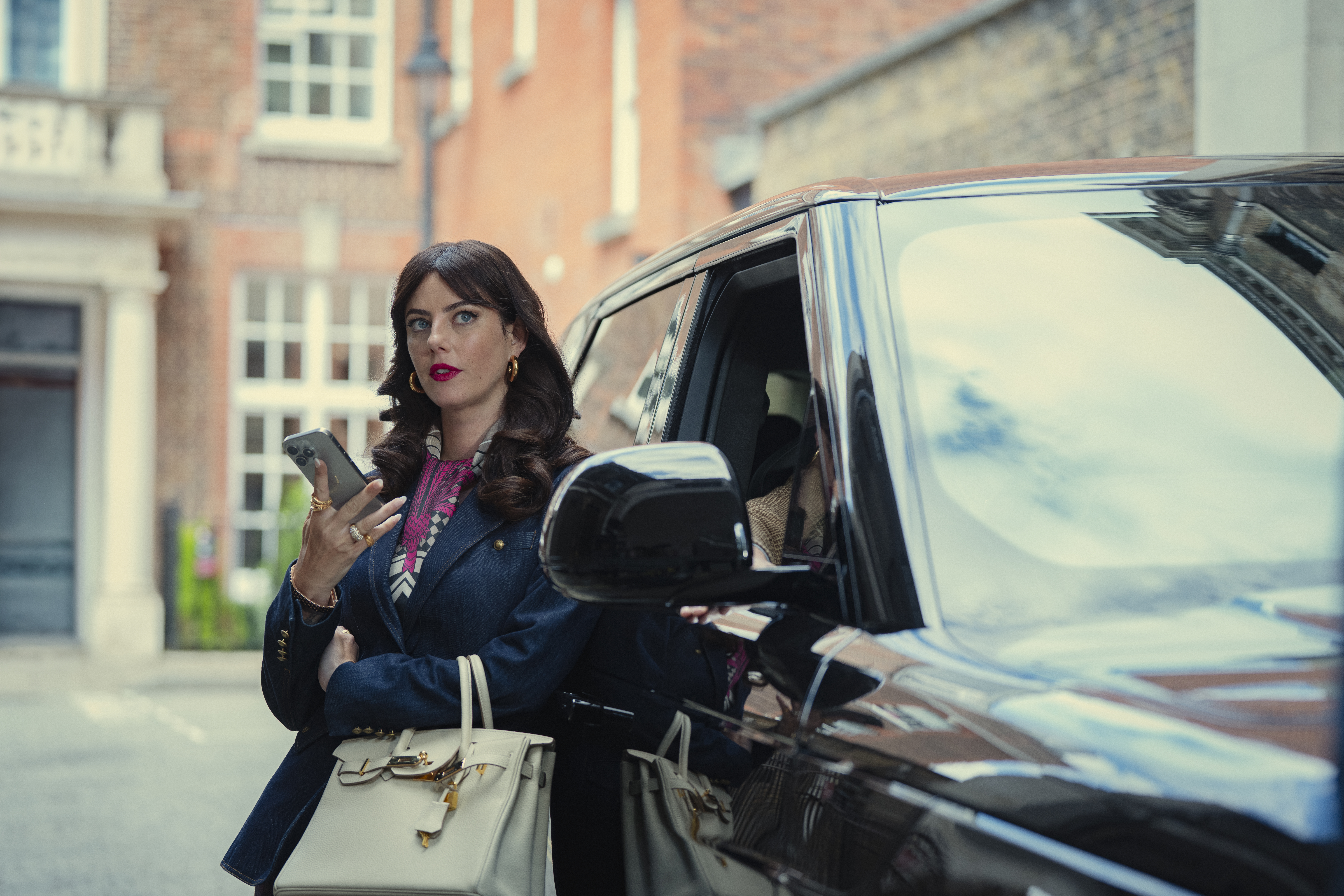
According to Ritchie, they’re monsters whose true nature is lurking deep inside them, waiting to come out at the right opportunity. These facets of the protagonists might not appear clearly at first (although they were hinted at in season one), but begin to appear directly in our faces as the juxtapositions that alluded to a shift in Eddie’s internal and external states of mind come to life. The reckoning that ultimately unfolds as he battles his perceived enemies (and, most strikingly, himself) is thoughtfully developed, with James giving the best performance of his entire career.
Astute viewers will notice that Ritchie undoubtedly borrows from Ian Fleming’s oeuvre for a moment that sets the rest of the season in motion, but it’s crucial for him to have done so when it completely reframes who Eddie is — and how he will be ultimately perceived by us – as season two unravels. Without giving anything away,, there’s a clear contrast between who Eddie was at the start of the season, looking to expand his empire with Susie while weeding out enemies who attempt to disturb their business, and who he ultimately becomes by the time the season reaches its halfway point. The monster was always there, but it needed a slight push to come out at the forefront.
Scodelario also continues to give genuinely impassioned (also career-best) work as Susie, especially as allegiances begin to shift and new relationships form. Paired together, the actors are completely in control of how they want the audience to perceive them at any given moment. You can’t read Susie’s next move. And you can’t guess what boils inside Eddie’s mind, as much as Ritchie will internally (or, more aptly, metaphorically) represent what he most desires in his life. It’s a life full of deceit and trickery, one that brings him only more pain and misery, illustrated by a last act so demented it almost defies any form of categorization. It’s stuff that only Ritchie knows how to bring to life, and twist, until we’ve reached a psychological state that we didn’t think was fully possible. I’d be remiss not to shout out Vinnie Jones, whose performance as Geoffrey Seacombe is a high point of the season, though to say more would rob you of the genre pleasures conceived in season two’s best episode.
The technical craft of the series is also immaculately conceived. Loulou Bontemps continues to outdo herself in the costume department, crafting a bevy of detailed outfits that add so much depth to the characters. The costumes themselves tell their own story and expand our understanding of the protagonists as they operate in a world where rules don’t necessarily apply. Mark Patten and Stephen Murphy’s photography frequently creates luxuriant tableaux and deftly responds to the challenge of a more poetic visual style than the fast-paced freneticism for which Ritchie is best known. His approach here is slower and yields more absorbing images than his usual fare. That doesn’t sound like an artist on autopilot, and when you reach eventual match-cuts and transitions that repurpose Ritchie’s visual style in ways he hasn’t previously treated, you might fall in love with the filmmaker’s eye again.

Of course, no great Guy Ritchie project is complete without the incredible music of Chris Benstead, who expands upon the motifs he introduced in the first season and composes patterns that are bound to linger in your mind, just as The Gentlemen is designed. The season is light on action and broad theatrics until the last half, where we’re reminded why Ritchie is in a league above his contemporaries when given the task of coming up with tactile gunfights. When they happen, they’re far more emotionally involving than we think because the season took its time to establish rock-solid relationships and fully-formed characters that we ultimately care about, no matter how monstrous they eventually become.
If this season is any indication, things will only get darker with an already-confirmed season three poised to, according to Ritchie himself, “push the boundaries of [the show] further.” The boundaries were barely pushed in this audacious season. If they’re going to be pushed further, and if its (astonishing) final scene is any indication of what’s going to come next in the stories of Eddie Horniman and Susie Glass, the best is yet to come.
SCORE: ★★★1/2


Comments
Loading…