

 Niki Cruz
There’s something so undeniably striking about Grace Gummer’s performance as Caroline Kennedy in FX’s Love Story. It’s a performance that could’ve easily been an imitation, but instead, Gummer leads with humanity.
“All I wanted was to do her justice, to honor her, and to play her with as much compassion and heart and warmth as possible. The love here was very important to me in this greater love story,” says Gummer.
The actress, whose breakout role was in the 2014 show The Newsroom, is less interested in the external aspects of Caroline Kennedy and more in the qualities that make her human — her strength in the face of ongoing tragedy and her warmth as a sister and mother. Her approach to character study ignites curiosity, bringing forth a necessary vulnerability and an openness ready for discovery, and it’s those qualities that make Grace Gummer a standout in Love Story.
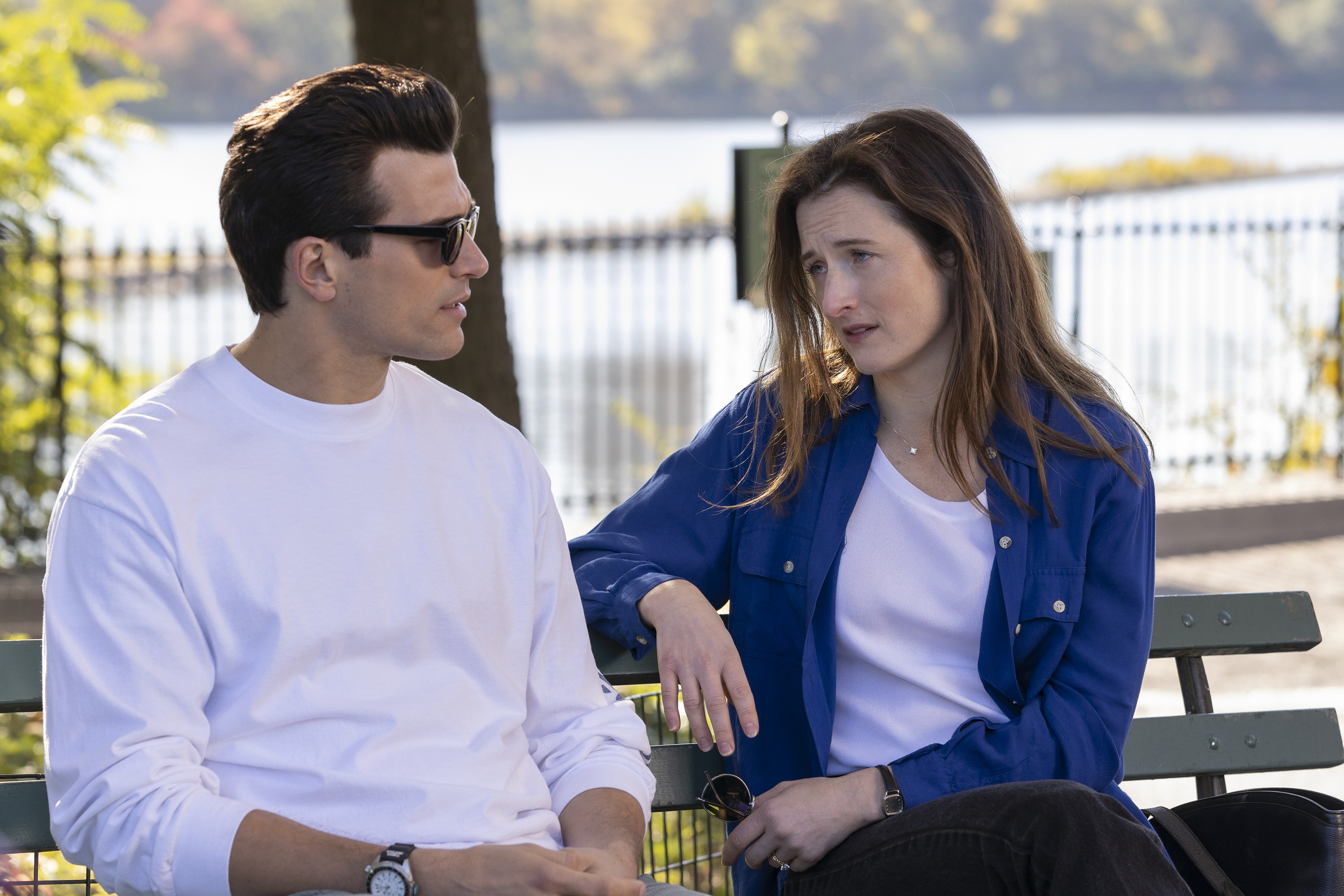
In the nine-episode limited series, we see Caroline Kennedy deal with unimaginable loss and grieve not one death, but two. First, her mother, Jackie, and later on her brother JFK Jr. Not only is she losing her only sibling, but also a connection to the only person who shares a unique tragedy of losing both parents. We see glimpses of her going through the stages of grief, from rage to devastation, to bargaining and utter denial. It’s a performance that strips away the iconography of the public figure and cuts to the core of the universal experience of grief, touching audiences.
As an actress, Gummer is in search of a tactile experience, using her body as an instrument in her performance, which ultimately leads to the element of surprise. One of the bigger scenes she shares with co-star Constance Zimmer, which sees Caroline Kennedy and Ann Marie Messina (Carolyn and Lauren Bessette’s mother) at a long table, confronting each other amid their individual grief. By the end of that scene, they’ve closed the gap at the table and are holding hands. It’s a long, gut-wrenching scene that’s a master class in acting. The decision to hold hands was not scripted and came from a place of discovery.
“As an actor, I’m very much in my body. There’s only so much you can prep before being physically close to somebody and exchanging words, especially something so intimate. Part of what I love about being an actor is the surprising things that come along that you can’t predict, or the things that change in the moment, that make it sparkly and magical. I felt that with everyone in this show, but especially Constance.”
Gummer recalls a similar anecdote about the first scene she filmed with Paul Anthony Kelly (JFK Jr), at Jackie Kennedy’s funeral, and the choice she made between takes that opened their connection.
“I just hugged him, and we held each other for a solid minute. It became the baseline that we had to go off of to do the scene together. I rely on physicality a lot to sail me through, especially when it’s difficult.” She continues, “You really have to convince yourself that you are someone else, and that you have lived through something and have shared moments with someone you barely know. So, in order to convince yourself of that, there are just certain touchstones for me as an actor that I really think are essential and important.”
Grace Gummer sat down with Awards Radar’s Niki Cruz to talk about embodying the essence of Caroline Kennedy, the lessons she’s learned, and her process as an actress.
You’ve been a working actress for years and years. What does getting this role mean to you? Has it all led up to this point?
GG: I feel like everything in my life has primed me for this moment to play a woman like Caroline with integrity, dignity, class, and formidability. I feel like everything in my life so far has led up to this perfect moment where I can portray this woman loving and losing almost everything that she holds dear to her. This part asked a lot of me. It asked to give my entire heart, soul, and body to it, and I feel really proud of it.
We’ve talked about her strength and fortitude, and how she meets grief with grace, but I’m wondering: did you know, at the time you were auditioning, the qualities that would feel familiar to you about her?
GG: I can relate to her on a lot of levels. For one, growing up in the spotlight. My childhood was nowhere near the Kennedys or the kind of spotlight they were under, but I can relate to being a very private person and feeling like people think they know who you are. Beyond that, I read a couple of biographies about her, and I read a New Yorker article that really captured how it felt to be in a room with her.
I really relied on the script and the words that were written. [Creator] Connor Hines wrote as we were going, so I felt like there was this sort of beautiful dialogue between the acting and the writing. He was informed by what we were all doing, and so I had a little bit of an idea of what was in store, but nowhere near what was about to be asked of me, especially in the finale.
I found her layers very interesting — she has an enormous amount of strength because of what she’s endured, she has a tough exterior too, but a warmth on the inside. I love how we see all those layers in the relationship she has with Carolyn Bessette. There’s a progression to the relationship that she has with her future sister-in-law. How was it playing out that balance with Sarah Pidgeon?
GG: I love how Caroline sort of figures out that they are in a similar boat, where she can relate to her in terms of being famous. Once she learns that Carolyn also has an allergy towards the invasion and the obsession over her life from the public, she can allow trust and be really happy for her brother.
It felt like two sides of the story coming together. I just love how Caroline went from being rightfully so very protective of her brother and wary of all these other women, and wary of Carolyn at the beginning, to respecting her as a woman. Carolyn refused his engagement, and I think that really won her respect. It was really interesting to have these worlds collide and work with Sarah, too. She’s the real deal.
The scenes you had with Paul, who portrayed JFK Jr. are fantastic. There are so many layers to that sibling relationship because they’ve been through so much together. They have a unique experience they went through, which is the loss of their parents. For the most part, in the series, Caroline is the woman who pushes him and calls him out. I heard Paul had 3 weeks to prepare for the role. So, how did you develop that sibling dynamic with him?
GG: Paul and I first met early on when I was shooting All’s Fair, and we were both at a studio in LA. I saw him doing his hair and makeup tests in a tiny office room with Sarah, and he looked completely different. I saw him from afar, and I was like, “Hey, brother,” and he was like, “Hey, sis!” and all of a sudden we had this shorthand with each other, and this really silly childish rapport that is in me already. It was really sweet, because this was essentially his first big job, and I’ve been working for a long time, so it was nice to feel like I could, as a big sister, take him under my wing, and watch him grow and be.
You go through the stages of grief. That scene, after her brother passes, when Caroline is in the kitchen and she can’t bear to leave. It’s almost like she’s bargaining for a different truth, a different reality. She’s in this in-between where anything feels possible. It’s heartbreaking to watch. How did you approach that scene?
GG: It’s so true. She’s bargaining for a different reality, and she’s in denial. What I realized from filming that was she’s completely on her own. It makes me want to cry thinking about it. She’s not only on her own in her own family — she’s lost her parents, she’s lost her only sibling — in that scene, there’s no one else that feels that specific pain, and there never will be. I already had so much to call on because of the way it was beautifully written. There were beats that went from a complete emptiness and hopelessness to panic to rage to disbelief. It’s a hard place to go to, but I had time.
I worked with the director Anthony [Hemingway] on The Newsroom, on American Horror Story Freak Show, and on All’s Fair, so it was the fourth time working with him. I felt so supported, believed in, and trusted. Because of that, I was able to let myself go and be completely vulnerable and see what emerged. I was surprised by what I was capable of.

Another standout scene is the one you share with Constance Zimmer, who plays Ann, Carolyn, and Lauren Bessette’s mother. Here are these two women who are worlds apart, who couldn’t be more different, and they come together through grief. The scene really comes out of a confrontation at first. I love that it starts off with them at this long table, and then it ends with them holding hands. How was it to share that space with Constance, especially since you two worked together all those years ago on The Newsroom?
GG: It was really beautiful to share that space with her and to feel supported by such an incredible actor. We were given the time, the space, and the peace to play with it and to live in it. I think what’s so beautiful about that scene is that it starts with them sitting at opposite ends of the table, with an ocean between them, and then they hold hands, which wasn’t scripted. It was something we both felt compelled to do. We weren’t sure whether it would end up in the show, but again, like you said, it’s these two women who think they have nothing in common relating to each other.
That scene represents the character of Caroline really beautifully. There are these waves of grief that just keep crashing down on her, but it won’t bring her down. There’s this formidability and this forbearance in her that I just revere, and honestly wish I had more of in my life. That scene was incredibly difficult, but we left nothing on the table. [Executive Producer] Ryan Murphy called me afterward and made sure to tell me that not a single minute was cut, and he was really proud of me, so that meant a lot.
We’ve talked about her formidable presence. Are there any lessons you’ve personally taken away from embodying the essence of someone like this?
GG: That’s a great question. I really do think her forbearance, strength, and wisdom garnered through unthinkable tragedy are beyond admirable. As a sister, wife, and mother, I think she’s incredible, and I’ll take so much of her strength with me throughout my life.
On the other side of all these long days — holding all of these emotions in your body — because the body does keep the score, it doesn’t forget — at the end of this process, you have awards recognition. At the end of the day, how does that feel?
GG: You’re right, your body doesn’t know the difference. You can put your body through hell, and your body believes you’re in a state of fight or flight. I had to do a lot of work to not only warm myself up and get to the place where I can access those feelings, but I had to work to come down from that, otherwise I would bring those feelings home, and I never want to do that. Meditation and body work are important to me.
Now, being on the other side of it, I’m so proud of what we all did together, and I’m so proud of myself. I’ve been given this opportunity at this specific moment in my life, and I really feel like it was my job to carry it. I’m so grateful, and it’s surreal to walk down the street and have somebody tell me how I’ve ripped their heart open. It’s the ultimate compliment.
Lastly, you just turned 40 in May, and so have I. It can be a big age that can invite a lot of introspection and maybe a little existentialism. What does this next chapter look like for you?
GG: I have arrived. I’m so happy to be 40. I feel like I’m exactly where I want to be. Coming off the heels of this show I’m filled with joy and compassion for myself. I’m filled with confidence for what’s next, and I’m also really happy in my life. I think 40 is good.
Grace Gummer is up for consideration for Best Supporting Actress in a Limited Series or TV Movie. You can currently stream Love Story: John F. Kennedy Jr. & Carolyn Bessette on Hulu.


Comments
Loading…