
 Steven Prusakowski
Where a man’s journey begins does not always predict where it will lead. For Diego Calva, the actor who first landed on many people’s radars with his breakout performance as Manny in Damien Chazelle’s Babylon and recently earned rave reviews at Cannes for Club Kid, few would have guessed it all started with cartoons.
During our conversation on the TV Topics podcast, the actor proudly declared with a smile, “Ren and Stimpy changed my life.” At just six years old, he discovered the irreverent, adult-focused cartoon series, which opened the door to more mature animation. That quickly progressed to Japanese anime like Evangelion, then to Korean cinema, and eventually to The Sopranos and Better Call Saul. Who would have thought the gross-out adventures of a cartoon cat and dog would be what got the ball rolling for a career that now appears poised to explode.
(Warning: Spoilers ahead)
The same principle applies to Theodore “Teddy” Dos Santos, the complex character Calva plays in Prime Video’s The Night Manager. Revealed as the illegitimate son of powerful arms dealer Richard Roper (Hugh Laurie) and raised in a monastery for much of his childhood, Teddy enters the story carrying deep, hidden wounds that make him susceptible. It is the weakness that Jonathan Pine (Tom Hiddleston), the undercover operative working to dismantle Roper’s empire, and Roxana (Camila Morrone), the woman Teddy becomes increasingly drawn to, ultimately use against him.
Where others might label the Colombian arms dealer a villain, Calva sees a deeply damaged man driven by an unfillable void, a hunger for acceptance, love, and recognition that shapes every ruthless choice.
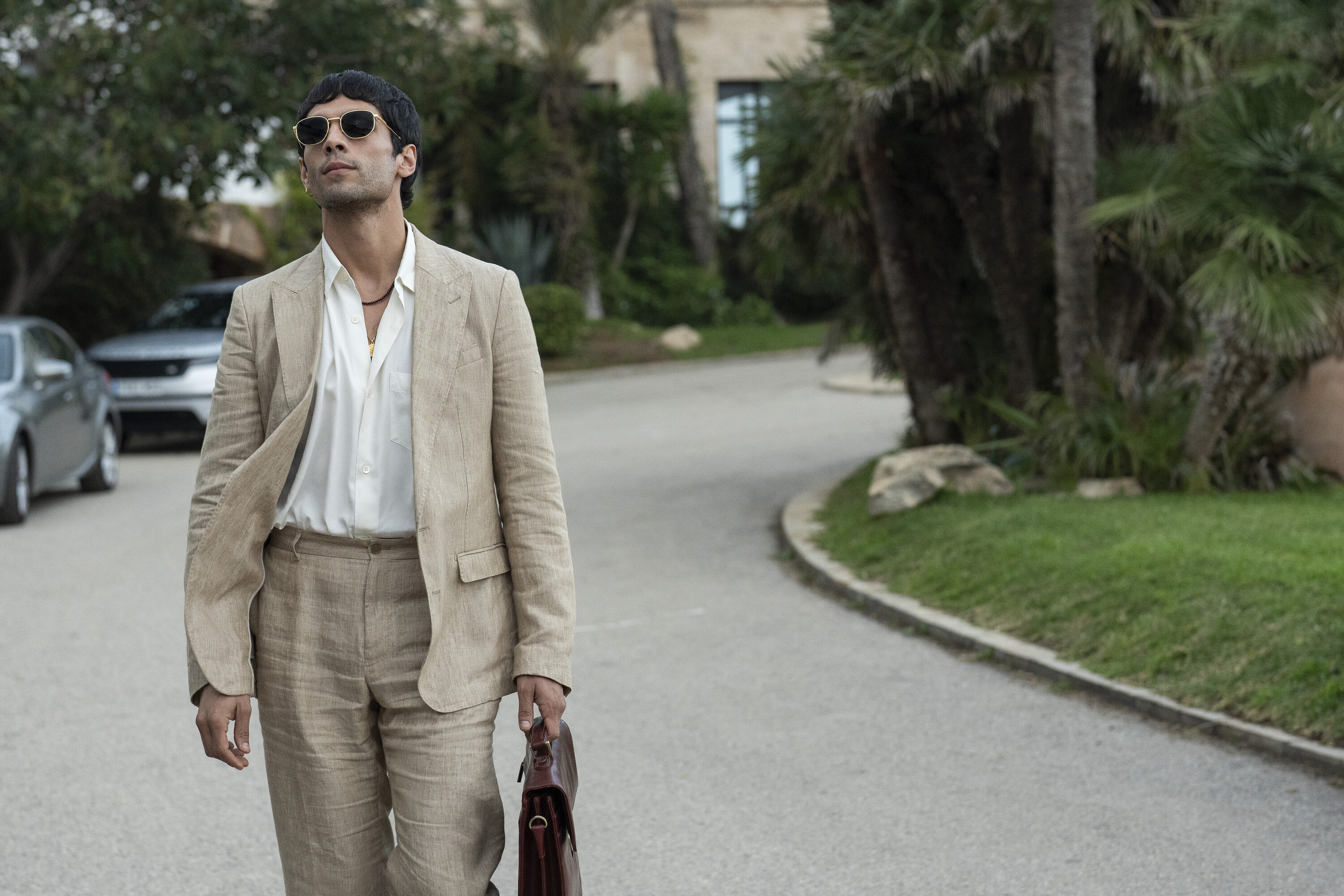
“I don’t see Teddy as the villain, but neither as the victim, he’s not the victim. If he’s a victim, he’s a victim of his own actions, and I think in the last episode he kind of knows his destiny, he accepts his destiny and he’s actually feeling some kind of release, of peace finally,” shared Calva.
“People’s reaction to Teddy, like every person that came to me and said how sad it is to see Teddy’s destiny or how close they feel to the character. How they really, really, really kind of care about him and for him and voting for him, that’s something special and I think that’s a challenge when you’re playing the bad guy, try to, people fall in love with you or being magnetic or being someone you want to work with.”
This perspective became the foundation of Calva’s performance. Rather than playing surface-level menace, he explored the wounded human beneath the violence. What drew him to the role in the first place was the opportunity to create something far more complex than the typical one-note bad guy.
“I think the opportunity of creating this character and trying to avoid all the glitches. I think we all have seen this Mexican Narco, this Colombian drug dealer, this like one dimensional villain. But with Teddy, I found the space to create a character that is more human, that is more vulnerable, that is more even sexually loaded, even more violent in the most seductive way I could say. So I think that was one of the reasons, the opportunity of creating a special and unique character,” explained Calva,
To unlock Teddy, Calva did something unique in his process, he started with the inner child. “Something really important for me, I think every character comes to you in a different way. To find Teddy or when I was looking for Teddy, searching, doing all the research, I found first his inner children, if that makes sense – his thoughts when he’s a kid and when I saw that vulnerability and when I met young Teddy, then I found Teddy,” shared the actor. “It was a different process that with the rest of my characters, I mostly find them or found them during the present of the story and not in the past. And in this case, it was completely during the past when the trauma was created.”
Once he connected with that wounded boy, everything else clicked into place, including the brutality of the adult Teddy and his use of self harm to help him feel. Calva never struggled to justify the violence because he understood its true source.
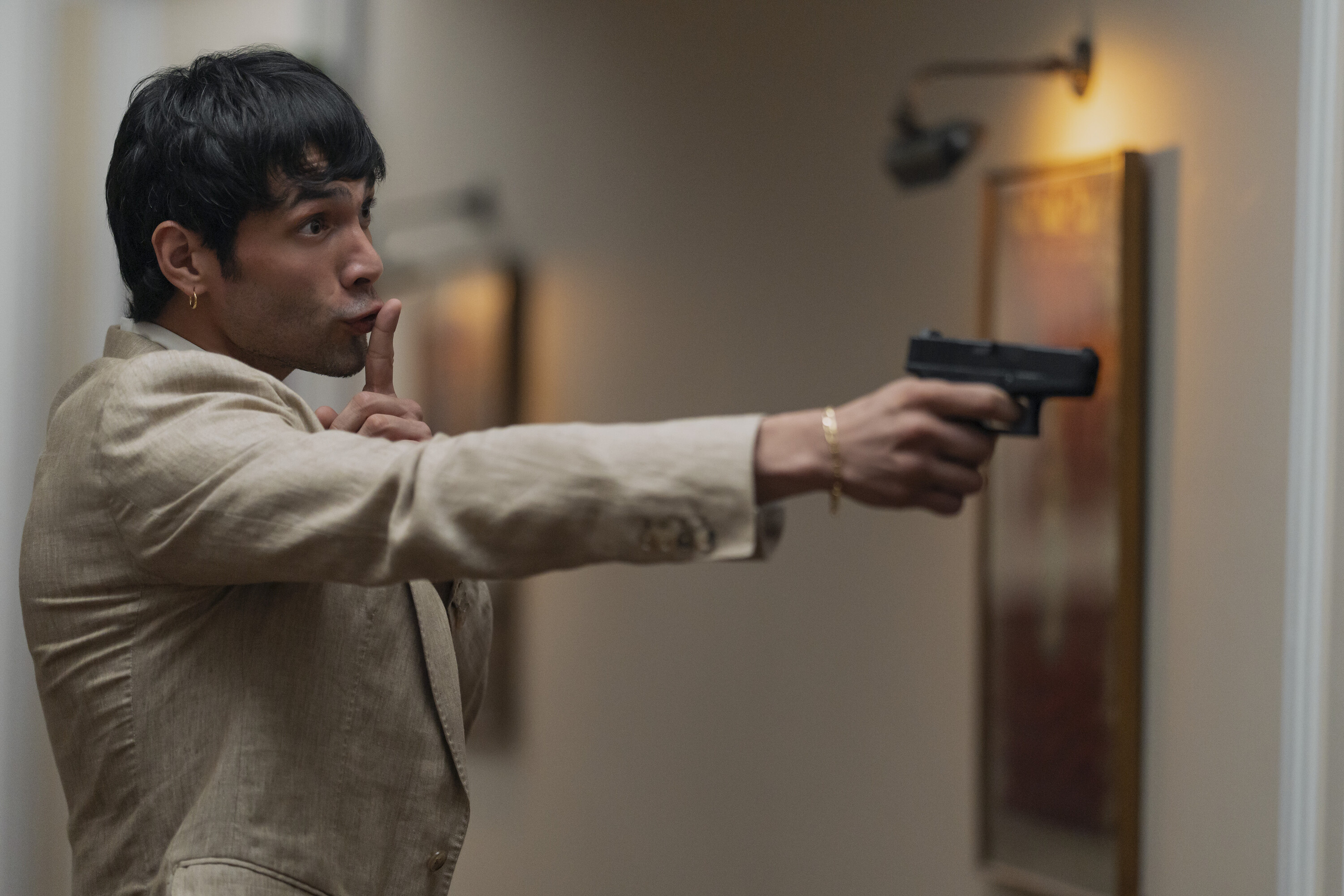
“I played violent characters in a couple of shows and that violence stays with you for a while sometimes. But with Teddy, I fully understood every day, every time, why – like, his reasons. It’s like when you’re watching The Godfather and you’re seeing Michael Corleone doing these terrible acts, but you understand that he’s protecting his family. You’re kind of rooting for him,” confessed Calva. “With Teddy, the challenge was never to understand him, because I fully understood the reasons. So every violent act or every moment of like physicality, it was once again coming from a vulnerable place. Everything, at least with Teddy, everything goes to the same spot with this trauma situation, with this void that is never going to be filled by love.”
In the series’ unforgettably steamy three-way tango sequence between Calva, Morrone, and Hiddleston, directed by Georgi Banks-Davies, Teddy’s protective mask drops exposing weaknesses previously unshared ready to be manipulated. While the scene is filled with sexual tension and shifting power dynamics, perhaps Pine and Francesca both recognize Teddy’s desperation, and are using that vulnerability as a way in. Who is in control is tough to decide, is one of them manipulating the others or are they all lost in the surrender of the moment?

“I think for acting, for being able to explore, to be brave, but also to be weak, it’s way more complicated and you need to be way more brave for being weak, you know, and vulnerable and surrender to something. And that’s a dancing scene that is loaded with so many different layers, so charged,” explained Calva. “Sexuality is a weapon in that scene, but at the same time, for a moment, all the masks came off and everyone is just being there for real. You just need trust your partners, your colleagues, and your director. In this profession, I like to think that they pay me for being curious.”
It’s the same instinct that later allowed him to find Teddy’s inner child and transform a ruthless arms dealer into a magnetically tragic figure viewers couldn’t help but care about. In Calva’s hands, Teddy isn’t simply a villain, nor is he a victim. He is a man chasing love, acceptance, and identity through all the wrong avenues, convinced that power can fill a wound that never truly heals.
That contradiction is what makes his portrayal so heartbreaking. When the violence and intimidation subside, what remains is a damaged boy trapped inside a dangerous man, still searching for something he was never able to find. A journey that started, strangely enough, with a cartoon.
Keep up to date with all the latest TV Topics action on Instagram at @TV_Topics.


Comments
Loading…