
 Steven Prusakowski
It is funny how often we judge a book by its cover, consciously or subconsciously. It happens. When the screeners for DTF: St. Louis arrived in my inbox, I hate to admit it, but I judged the book by its cover (more specifically the title) and immediately deleted the email. Somehow the series was not on my radar, and when I saw the title I figured it was some sort of exposé docuseries about modern dating in Missouri. Sorry, but not my cup of tea.
Not long after, I heard about a new series on HBO starring three of my favorite actors, Linda Cardellini, Jason Bateman, and David Harbour. It was DTF St. Louis. Hear this cast was attached, I immediately fished the screener email out of the trash, started watching, and ended up devouring the four episodes provided in a single sitting.
I coincidentally learned the series I initially judged by its cover is actually a series about a trio of people whose surface appearances and “normal” exteriors mask deeper complexities, quirks, pain, and needs.
The seven-episode HBO limited series is the unique type of show that no cover could sell it appropriately. It is a genre-defying tale that is part dark comedy, part mystery, part human drama that explores this theme of deceptive facades. Created, written, and directed by Steven Conrad, the show takes a seemingly familiar premise about lonely, middle-aged suburbanites trying out the hookup app, DTF St. Louis, in an attempt to shake off the malaise of daily life.
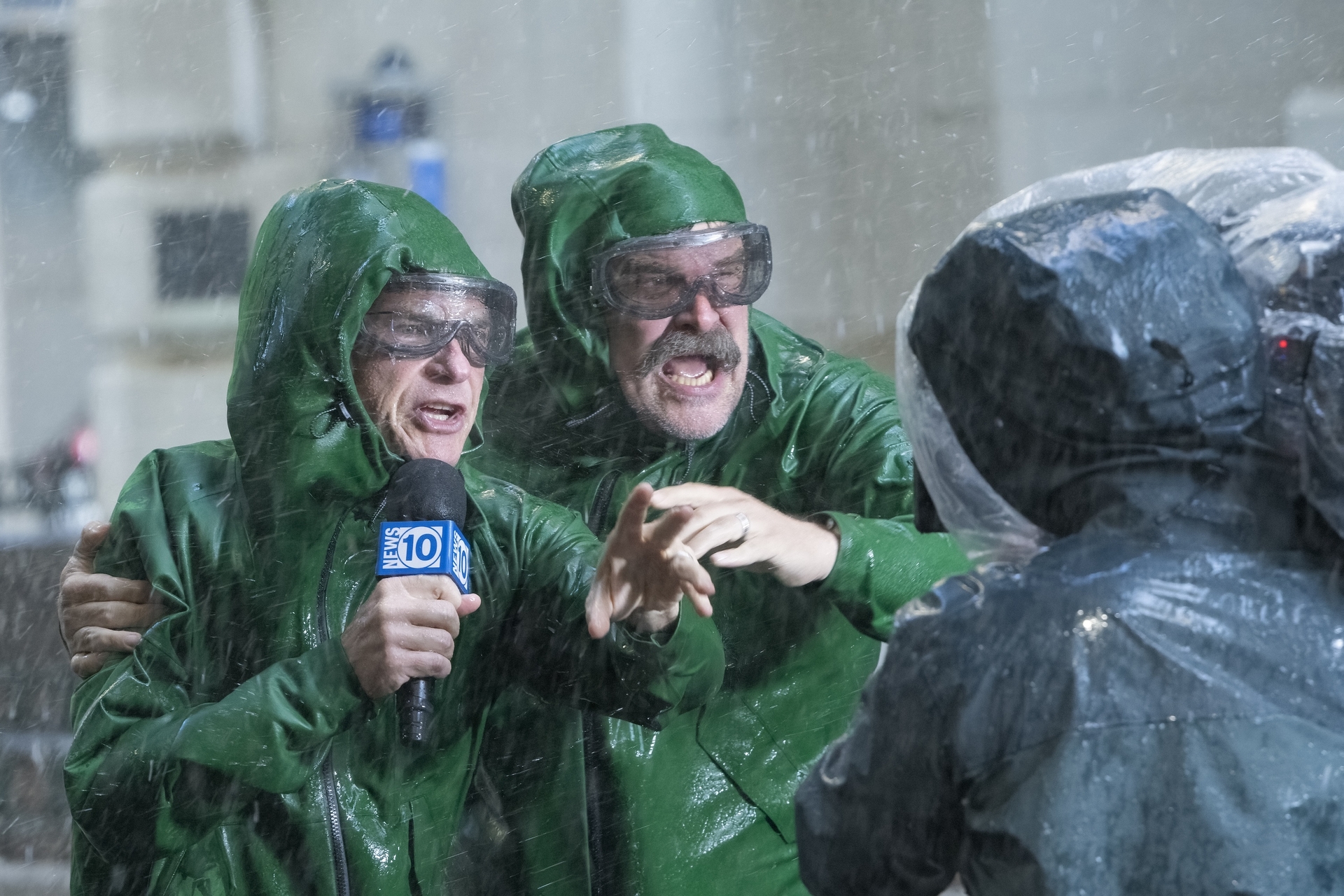
The story centers on weatherman Clark (Bateman), American Sign Language (ASL) interpreter Floyd (Harbour), and Floyd’s wife (and part-time umpire) Carol (Cardellini). Their stagnant marriages and quiet desperation collide when Clark and Floyd hit it off after working together on the coverage of a big storm, with Floyd serving as Clark’s sign language interpreter. What begins as a budding friendship where the two let down their usual guards becomes an exploration of modern sexual norms as well as a slow-burn suburban noir (spoiler ahead) after Floyd’s sudden and mysterious death.
If you know this cast, do not expect the norm; they all put on their most mundane selves on display. These are not the coolest people in the room as they often play, there is a sadness to each. Bateman’s Clark projects confidence on the outside as a local weatherman, but he’s no quick-talking, charmer here – instead he’s an swkward rider of a three-wheel recumbent bike, frustrated by marital rut, who turns to the DTF app in search of fulfillment.
Cardellini, who as an actress always radiates and fills any screen she graces. As Carol she behind her content suburbanite shell is an exhausted woman trying to make family ends meet, longing for attention. She is reduced to putting aside any ounce of fashionable attire and pride aside for the most sexless outfit possible: a bulky, shapeless umpire uniform.
And do not waste your time looking for the buff Harbour who leads the charge on secret government labs a la Stranger Things. For DTF he is overweight and directionless, with aw-shucks energy that is welcoming and a touch pathetic. At the same time there is a beautiful warmth to Floyd. It comes out most when he is ASL interpreting live music with a genuine passion knowing it is his job to convey the soul of the music for those who cannot hear it.
The story is told with non-linear braiding of timelines that force viewers to learn about each of the trio in similar fashion to assembling a puzzle where you do not have the box art to guide you. We start with the three characters and then slowly fill in and connect pieces that gradually tell the story from all different corners of the puzzle. Some of it is handled through conversations between the trio, through flashback memories, and also from an outside perspective via investigations into Floyd’s death.
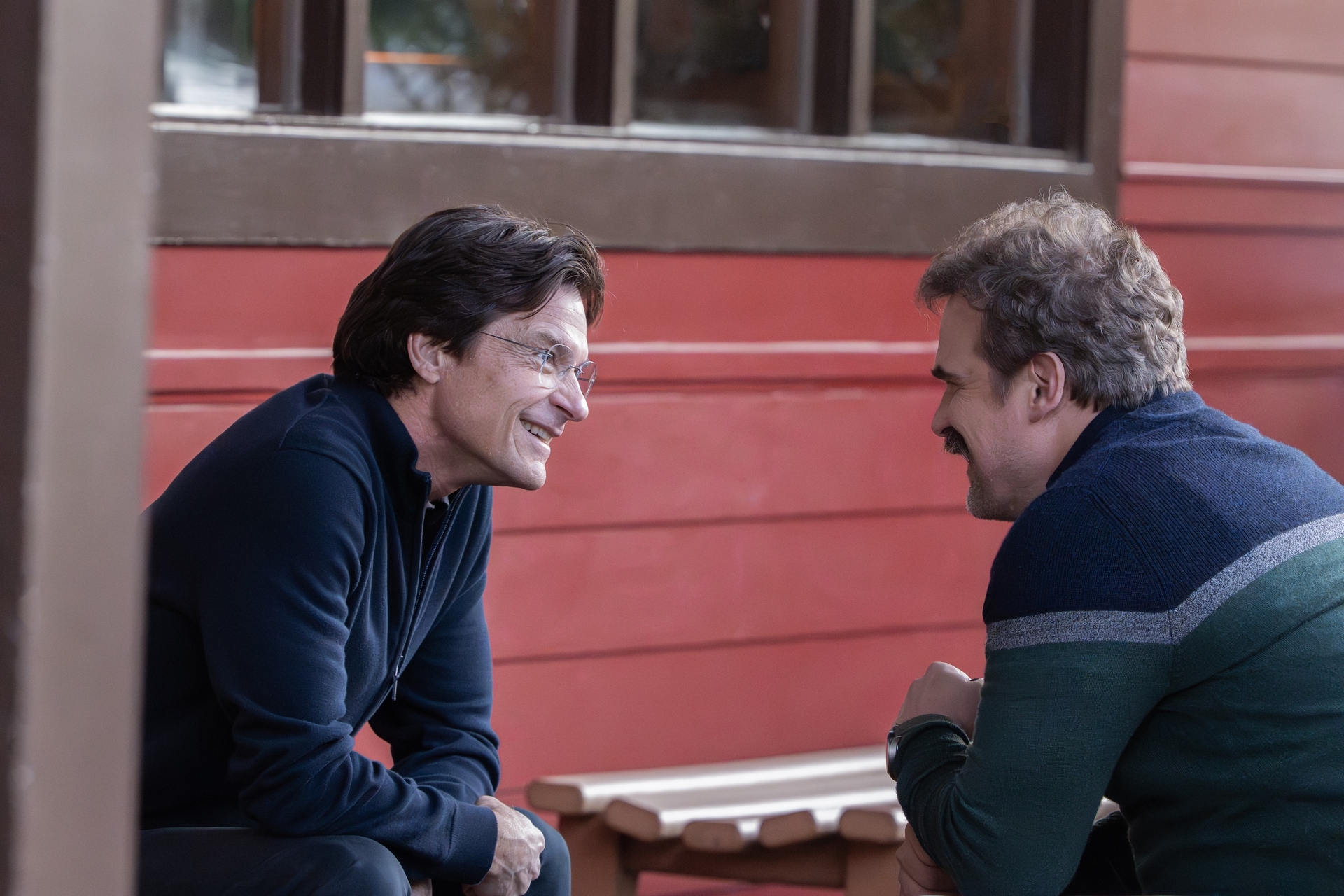
As the pieces come together, the reveals are not so much shocking as they are disheartening, each one exposing more and more about these broken people searching for a way to keep afloat in life. Once you reach a certain age, much of the spark and fun disappears, replaced by bills, health issues, more bills, and cynicism. All are getting by, but none of them have joy in their lives, something they supplement with an array of relationships, sexual, kinky and even a bromance. Through each other they learn more about themselves.
On the case are homicide detectives played by the always reliable Richard Jenkins and Joy Sunday, who share their own amusing chemistry consisting of a silent rivalry as well as generational differences are on display and they butt heads as well as collaborate on filling in some of the missing puzzle pieces. Jenkins’ deadpan delivery is a perfect fit for a man who leans on lazy assumptions yet uncovers the mundane truths. Also popping up is Peter Sarsgaard who factors into the mystery in unexpected ways.

As layers are peeled back, injecting more suspicion and menace into the mystery, one of the many qualities that makes this series unique is how even as it centers around a murder, the emotional focus is on the timeless themes of loneliness, regret, and desperation that often exist slightly beneath the exterior the character exudes.
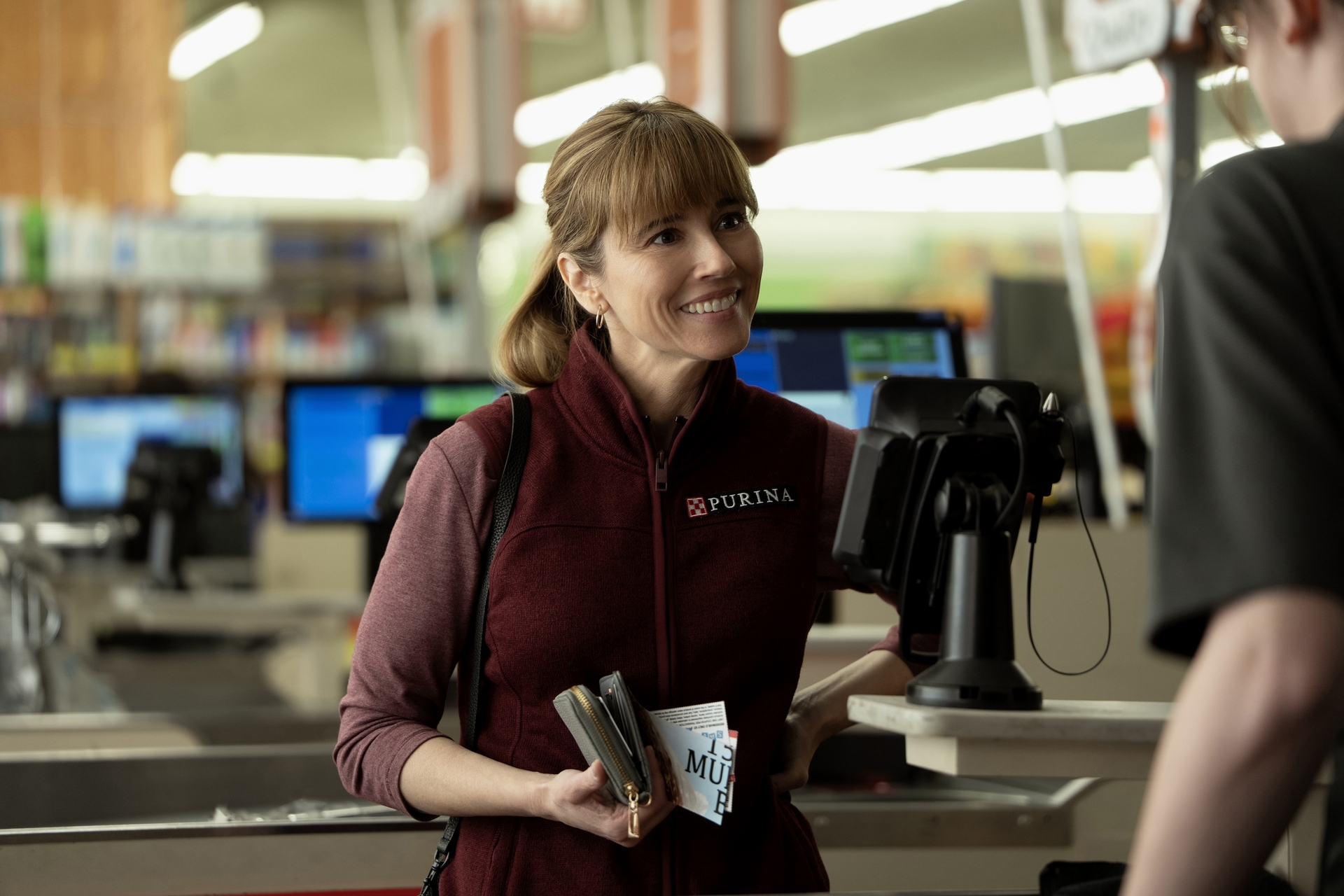
The trio of Bateman, Cardellini, and Harbour are at their best in often muted, vulnerable roles that push them out of their comfort zones, in ways that are both exhilarating, inspiring, sexy, and cringy. Cardellini’s Carol gets more interesting as each episode passes, a combination of dominant and recessive traits that reveal how complicated she is, even if she is often reduced to an underappreciated spouse/mother role in her daily life.
The series is relatable, intriguing, moving, and, like life, awkward and unpredictable. Four episodes in, I’m not sure where the remaining three will take me, but I’m fully invested. Even though we know Floyd dies and I’m curious how, I’m more rooting for him to pass with some pride, integrity, and authenticity in the relationships he cherished. If his life ends in a web of lies, even if he unaware of the reality of the situation, that would make the loss even more heartbreaking.
DTF St. Louis is not the type of series you walk away from upbeat; it is grounded, steeped in melancholy and the mundane, yet at the same time it has moments of sharp wit and unexpected tenderness that keep it palatable. It tells a very human story, and does not avoid the unattractive, layered truths that make up who we are.
Watching it reminded me of the meme warning us not to judge others because we don’t know the pain each of us carries. Conrad surprises us again and again, turning quiet absurdities into sudden hilarity and delivering gut punches of varying kinds that land with real emotional weight. The desaturated colors—often complemented and contrasted by well-timed needle drops help maintain the show’s offbeat tone, bolstering the smart dialogue to set the overall mood.
I’m not sure what to expect from the remaining three episodes, but I need real closure for this tangled, unorthodox love triangle. It feels unlikely we’ll get a conventional feel-good ending, especially since one vertex of the triangle is already deceased, but maybe it will deliver kind of conclusion that finds the glimmer of hope behind the gloom, one that simply lets you trudge through another day – no bells or whistles, just quiet resignation.
Don’t judge this one by its cover. Dive in.
SCORE: ★★★★ out of 5 stars
DTF St. Louis premieres tonight March 1 on HBO and HBO Max with weekly episodes dropping each Sunday into April


Halfway through the second episode and Cardellini is blowing the roof off of the joint.