

 Steven Prusakowski
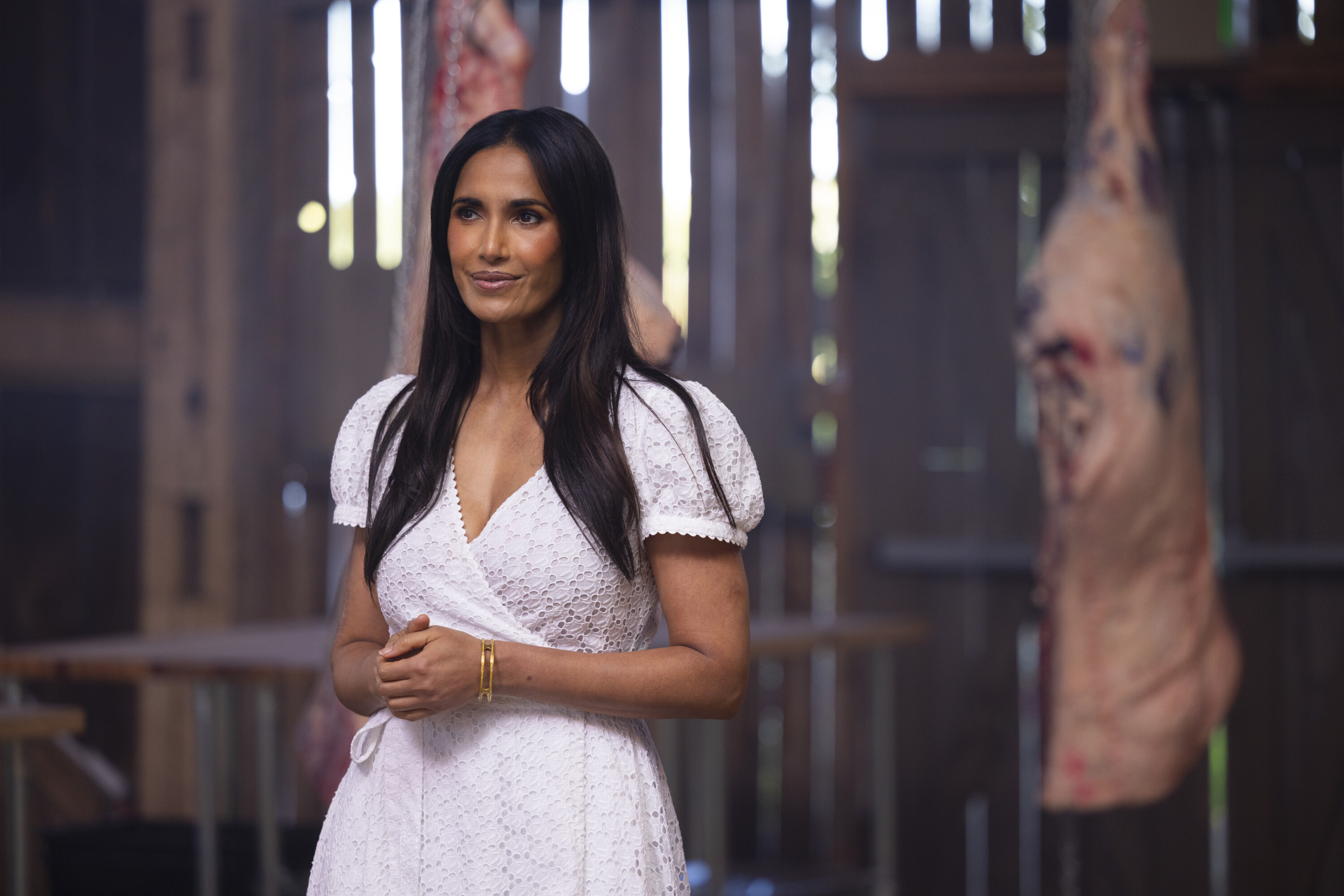
Culinary television royalty Padma Lakshmi has spent decades shaping how people view food and culture. With her refined palate and supertaster credentials, she brings unmatched expertise to every project. For America’s Culinary Cup, she surrounds herself with top chefs and judges while keeping the highest standards and the focus on the food.
Lakshmi challenges elite chefs to compete for a $1 million prize, the largest in culinary competition history. Built around the ‘10 Commandments’ of fine dining, the series cuts manufactured drama to spotlight craftsmanship and excellence, letting the food stay in the spotlight.
Awards Radar had the opportunity to speak with Padma Lakshmi about her unique approach for the series, the origins of the 10 Commandments, her supertaster abilities, hopes for a second season, and much more. (Watch the video interview at the bottom of the article.

Padma Lakshmi: Look at that. All right, you can always call us back. I’m around.
Steven Prusakowski: Okay. All right. I’m taking myself off video and audio. If you need anything, let me know. All right.
Padma Lakshmi: This is the video is not going to be published anywhere. Right? My hair is doing.
Steven Prusakowski: I mean, we don’t have to I I’d be up with mine, but it’s fine by you. We’ll discuss later. So thank you for doing this today.
Padma Lakshmi: My pleasure.
Steven Prusakowski: I enjoyed watching it and digging into the competition. It gets it doesn’t get too fierce. This is one of the things it’s it stays professional. It stays very human and focused on the food, which is not something that you get in a lot of TV these days. It’s a lot of it. How do we increase the drama? We’re here. If you’re a foodie, you came for the food, you’re going to get the food.
Padma Lakshmi: And if you’re not, hopefully you’ll become one. it’s really about the skill of the chefs and the respect for what they’re doing. And, if I was going to create another show in an already very crowded landscape, I wanted to zig when everyone was zagging. So it was a risk, but one that was calculated. And I think one that paid off as far as we’re concerned, it’s nice.
Steven Prusakowski: Yeah, it’s great, because as you’re working your way down, that you still have that human connection that’s there, but it’s not it’s not fabricated. It’s not trying to create a villain. It’s not trying to find a moment that is going to be buzzy. The buzz is about the food. The buzz is about whose restaurant do you want to sit at essentially?
Padma Lakshmi: It is. And it was actually quite fun to make it because, we took the pressure off of manufacturing any of that kind of reality show drama, because those were the aspects of it that always bothered me. And so, there are a lot of changes from other shows that you don’t even maybe notice as a viewer, from watching at home, but behind the camera make, meaningful differences for all of us. Not only the people making the show, but the contestants, especially competing in them, we didn’t sequester the competitors at all. We don’t, they can have their families with them if they want. They can go out to dinner if they want. We’re not keeping them in one house altogether, living on top of each other. We’re not taking away their cell phones. Obviously, they can’t have their phones with them when they’re cooking. But really, that I think also makes a difference because we wanted to treat them human beings. We want to treat them with respect and also support them in something very challenging that they’re doing. And in front of national and national audience, we want to make sure that any star athlete, they’re rested. They’re in a good mindset. They’ve got their game head on. They have everything they need to excel. So if they don’t excel, it’s on them. it’s not because we threw any obstacles into their path.
Steven Prusakowski: Yeah, because this is important to them. This is their lives. I know there’s a prize. But at the same time, even more important is you want to walk off. And when people see you say, oh, you were there and, I really liked your work. They’re excited about you not, you became a villain or they make you look poorly by the port through the edit. this is at the end of the day, they still have to go back to work. They still have to be a chef.
Padma Lakshmi: And a very high level, high caliber chef. I mean, a million dollars, once you get there and you start competing, you’re kind of competing against yourself and making sure you did your best and and you’re looking around at the company that’s to the left and right of you. And and you want to you want to put your best foot forward. But a million dollars brings a lot of people through that door that may not necessarily be interested in competing on television. A million dollars is a big motivator and very thankful, to CBS that they said yes. And then we wound up getting sponsorship, of course, from Dawn, which was an even more lovely surprise. But I’m very thankful that we were able to pull it off because it’s the biggest culinary prize in history. double what the next purse is.
Steven Prusakowski: After watching all I all I use is Dawn and my dishes have never been cleaner.
Padma Lakshmi: So Is that true? I’m so glad.
Steven Prusakowski: Actually, I think it is true. I’ll have to go look. It’s the blue. So it’s pretty certain it’s Dawn.
Padma Lakshmi: It’s good stuff. Honestly, I use it and have used it for years. And so I’m, I’m very glad that they came in as our sponsor because it was so easy and natural for me to be Don, dishwashing liquid, I love that spray bottle.
Steven Prusakowski: It’s a lot of fun when you’re I mean, it’s a lot easier to do your job when you’re actually happy with what you’re doing instead of having to make, brand C.
Padma Lakshmi: You’re telling me.
Steven Prusakowski: So what another thing I liked about the series is the way they shot the food. And they did a really great job. you must have put a lot of time and had a really good team of people to get in there and to see the textures to see everything about it as if you’re sitting it’s sitting in front of you. It definitely made me hungry numerous times.
Padma Lakshmi: Oh, good. Thank you for saying that. Because, I fretted a lot about that. Obviously, we want the show to look different from any other show. So we also took a big risk on the set and what the set is. And so, you don’t also have chefs running. I mean, you do to the pantry, but not they all have their stoves at their counters, six burners. Everyone has their burners. They have an oven. They have six feet by three feet of counter space. they’re getting ingredients and stuff, but it’s not the stoves are way across the kitchen. They have to go chopping in their station. And so, for us, it was really impossible to do anything but focus on the food. And that’s what I wanted. I wanted to take away at every turn. Our decisions were based on what serves the food, what supports the chef, what is about the purity of fine dining and just cross our fingers again, hope that that would be enough. And that was done with as much reverence for the craft of cooking. Then they wouldn’t need all those manufactured, gimmicks or, pushing people to react in a way that isn’t humane.
Steven Prusakowski: And besides that one spill, I don’t know, maybe there were more, but the one spill where he saved the six plates, it was pretty, pretty stress free. It wasn’t pushing and shoving. It was, again, it was focusing on their craft.
Padma Lakshmi: That was incredible. I mean, I, when I saw that, I was wow, it just shows you how much they care about the end result, ?
Steven Prusakowski: So what about the 10 commandments? I mean, they’re fun, but are those something when did those get into, put into play? I was expecting something biblical, thou shall not, and you’re going to have this really strict rule, do not use my name in vain.
Padma Lakshmi: No, I mean, look, those are just, those came in early and here’s why. I didn’t also want to do a predictable show. I wanted to do a show that kept not only the competitors guessing, but the audience guessing. And if you look at most reality competition shows, they’re pretty formatted, right? There’s a mystery box of ingredients every episode, or there’s a small challenge, a big challenge, or there’s levels or whatever. So once you watch one or two episodes, you pretty much know how it’s going to go. I wanted this to be about the principles of fine dining and being a renowned chef and what you would need to master in order to be considered that. And so we, I pulled a lot of opinions from chefs I admire and respect around the world, as well as my producers and of course, CBS and everybody. We came up with a list of what we thought were really 10 very important principles of cooking. And it’s just a shorthand. There’s an alliteration, of course, they’re just culinary commandments. I’m not Christian. But, everyone knows what that means, and so it has everything to do with what you need to master to be a great chef. You either know how to cook meat or you don’t. You either know how to butcher and carve it or you don’t. You either know how to treat vegetables the way they need to be treated or you don’t. You either know how to make a great sauce and a balanced sauce or you don’t. There’s nowhere to hide. And in a way, that’s a more accurate test of the chef’s mettle and the chef’s skills than saying, just cook with these weird ingredients. And what that did also was in a way give them all the freedom in the world to cook whatever they wanted. So you’ll never hear a chef on our show saying, oh, I didn’t really get to cook my food. They’ve been cooking their own food the whole time. Michael and Diana Diablo, who were Mexican chefs, cooked their own food. In fact, showed us wonderful versions of mother sauces that were even decolonized. And we got to talk about that in the show. Beverly cooked Korean food. Keith cooked soul food. Katie cooked her Spanish food that’s in her wheelhouse. Buddha and Matt did mostly I would say, French leaning or at least, French forward food. And even Chris, though he’s kind of jumping all over the map of flavors, he still is cooking from his own heritage, as is the winner, Cara. And so that was a great bet that paid off as well. We gave the chefs a lot of autonomy. All we were asking is show us your best dish in this category.
Steven Prusakowski: Yeah, and they were able to. I’m sorry, go ahead.
Padma Lakshmi: That’s it. Show us what you can do.
Steven Prusakowski: Yeah, they were able to interpret what the commandments were and bring themselves into it, which is good. It’s not just, you said, a restriction, but more actually just a pathway to head down the path and lead us where you want to lead us. So will those evolve at all during season two or can they expect the same commandments?
Padma Lakshmi: I mean, I think we’re not sure, first of all, if we have a season two yet. I really am hoping we get a green light. So I’m also hoping we get an Emmy nomination. I think that will help push CBS to give us, we just went off of the air a few weeks ago. And as there’s a lot going on over there. But I think we would probably keep the principles pretty much the same, because if you’re calling something, the most important principles are the culinary commandments, right? You want to keep them. At least I haven’t changed my mind in the last year about what those are. But I think we would definitely change all of the challenges that tested for those principles. one thing I loved that we were able to accomplish is that no two episodes were the same at all. there was no format, I said. So that would still remain the same. The principles of fine dining are the same, but how do you test for them and how do you keep the chefs guessing as well as the audience, riveted and on their toes? That will be the challenge. I also think it’s nice that you have a point system and it’s very fair and everyone sees what the scores are, including me at the same time. So it gives the audience a feeling of it being a little bit more empirically fair and level.
Steven Prusakowski: Yeah, I the board. I the, people are talking about the anxiety the sound creates. And I could see that, but you’re watching, anticipating, waiting for those numbers to stop. And then, you’re waiting for a train and oh, no, is it going to be delayed? And oh, it’s not delayed. I’m on time, same with them. Do I have the score I was hoping for? And oh, crap, it didn’t or it did. And I can see that, the tension every time those numbers were ticking. So, just kind of a nice ad.
Padma Lakshmi: It’s informative. It’s also much more informative because it’s not about just, okay, you won, you go home. It’s you won, but you were so close. It’s only four points or, she swept the floor with you or whatever it is. It’s also much more thorough and informative and nuanced.
Steven Prusakowski: So I know you’re a super taster. And I was wondering when I hear that, is that a blessing or a curse? can you eat a bag of Doritos or a street dog?
Padma Lakshmi: Or are you no, I don’t eat too many Doritos, although I will steal one or two from my daughter sometimes. And I can hear her crunching in her bedroom. I eat street dogs, but very barely as well, because I’m trying not to eat too much red meat on my own time when I’m not working. But, I’m a child who grew up in New York City. So I’m used to that. I think being a super taster is more about just being able to taste the nuances of flavors and having additional taste buds that are more sensitive than other people. It’s a dog that can hear whistles that humans can’t, ? So I honestly didn’t know it was a real thing until, I guess, a decade ago or a dozen years ago when I went to the science lab at the Seattle Science Center. And this lady performed this test on me and told me I, I thought it was kind of an urban legend, but it’s not. It’s a real scientific thing. And, in hindsight, it makes sense why I’ve fallen into the career I have now, for the last 20 years. But if you would have told me that this would have been my life when I was, just getting out of college, out of theater school, I would have been really? So.
Steven Prusakowski: That’s crazy where the world takes you. And you’re also a good cook yourself. So does being surrounded day in and day out by great chefs and all this great food make you want to cook more? Or does it kind of make you, want to go out to eat?
Padma Lakshmi: It doesn’t make me want to go out to eat because, eating at work makes me feel I have had a tasting menu every day that we’re filming. And so you do kind of just get really full of food. So, so not going out to eat, but it actually does make me want to cook. I can tell you, I love a lot of the flavors and cuisines that Chris Morgan used in his cooking from Iranian food to all the kinds of Middle Eastern food to Jamaican food. And I was inspired by a lot of what the chefs did. For instance, I really loved his miso glazed cabbage, the blackened cabbage. I thought, oh, that’s really easy. I can make that at home. And I have. And I think he made an apricot chutney in the finale as a tribute to his mom who had passed away because they always made that. And, I remembered a sauce that I made, which was really strange, but delicious with apricots and tomato. And so I went back to making that and I just reduced it more so it would be really concentrated a chutney. It wasn’t at all probably, with the same ingredients that he made, of course, but it was definitely inspired by that. Yeah.
Steven Prusakowski: So as a parent, I cook at home as well. Do you dread or do you the question, what’s for dinner?
Padma Lakshmi: She I wish she would ask me what’s for dinner more. My daughter is very independent. And so a lot of times I will have planned a meal because if I ask her what she wants for dinner, she’ll be I don’t know. I don’t know. Just I don’t know. No one wants to make that decision.
Steven Prusakowski: Yeah, that’s always the problem.
Padma Lakshmi: Yeah. And you’re just sitting there OK. And most of us, I mean, I’ve written more than one cookbook, the last of which came out just this fall of all these immigrant recipes called Padmasa American. And I still struggle with, OK, what the heck are we going to make for dinner? And for most of us, I think we have a rotation of eight to 10 recipes that we kind of cycle through. there’s noodles or taco night. There’s rice and lentils. There’s some kind of roast chicken. Maybe there’s, some skirt steak with some potatoes. And there’s.
Steven Prusakowski: It’d be great if they had a cookbook or something, an app on your phone where you can say, hey, what? And pick the chef and look at some of their recipes and see what they’re doing. that would be great.
Padma Lakshmi: Yeah, I mean, hey, if we get a second and a third season, I would love to do that. I mean, I wrote the foreword for the Quickfire cookbook, when they published it for Top Chef. And I think it would be a great, it would be a great, it would be a great, it would be a great, it would be a great, it would be a great, it would be a great, it would be a great, it would be a great, it would be a great, it would be a great, it would be a great, it would be a great, it would be a great, it would be a great, it would be a great, it would be a great, it would be a great, it would be a great, it would be a great, it would be a great, it would be a great, it would be a great, it would be a great, it would be a great, it would be a great, it would be a great, it would be a great, it would be a great, it would be a great, it would be a great, it would be a great, it would be a great, it would be a great, it would be a great, it would be a great, it would be a great, it would be a great, it would be a great, it would be a great, it would be a great, it would be a great, it would be a great, it would on the show and they do feel they are part of another family now that they have this community that they created together and that they all have gone through this very special thing that nobody else knows what it’s feel to go through, what it feels to go through. And so I know that I, at least the women on the show have told me that they all have a text chain and they talk almost every day on there.
Steven Prusakowski: So I’m gonna wrap it up, but if season two happens or when it happens, do you have some things in mind? Do you have anything that you’re gonna change that you said, well, I’d to do this a little different or bring this to the table. I liked the theatrics. I liked the garden of good and evil. That was fun.
Padma Lakshmi: I mean, a first show we’re always trying different things and seeing, first season show is always a little mixed bag because you’re finding your own voice. You’re finding the ethos and the character of the show. And so I liked those theatrics, but I think one thing I would do differently is I would, that molecular gastronomy challenge, instead of five hours, I would do three. And here’s why, it was really hard to fit everything in so that the audience could follow along as to why the chefs had the scores they did, but it was very difficult to cut together because it’s a 42 minute show, it’s on network television. So you don’t have any leeway. You can buy a few seconds here and there from ad sales, but it was tough. And I would rather do less dishes, but go even deeper into the food. So for me, I always when a show gives me a little bit of a takeaway and especially in that episode, even for me, I’m not a chef, I’m a home cook. I mean, the show is clearly my love letter to chefs and designed for them. But I would to delve deeper and ask the chefs what their thinking was on that and really explain the techniques and why they work or why they don’t work when we see them, not used correctly. And so the audience at home can have a little bit more explanation to digest that stuff. So I think just leaving time to work that in would be important for me going forward.
Steven Prusakowski: Well, I really enjoyed the series or the show. I enjoyed the food. I enjoyed the people. I enjoyed that it had such a high bar and it wasn’t, it didn’t leave you feeling ever bad for somebody other than the fact that you’d to see them all succeed. But it was never oh, sometimes you watch some of these reality shows and you walk away with a bad taste in your mouth. And on a cooking show, that’s a terrible thing. So thank you so much.
Padma Lakshmi: Well said.
Steven Prusakowski: Thank you for your time.
Padma Lakshmi: Really wanted that to be the case. So I very much appreciate you saying that. we took a very risky bet, even with the set. It’s very simple. It’s very Spartan. It’s very high end, but there’s not a lot of colored lights or blinking neon or, chachis on the walls. But I wanted it to be a very nice space where the chefs could focus. And so I’m glad you said that because that’s what the goal was. And it’s lovely to hear feedback now, that the show’s off air. I’m just, we did a four-year consideration event for the Emmys a couple of weeks ago. And it was really nice also to show it to people who are peers in the industry and hear what they think. Because you never know, you’re so deep into doing it. And it’s nice now that I can finally share it and have people tell me all the things they noticed.
Steven Prusakowski: Well, thanks for your time today. And I’m looking forward to another course. Have a great day.
Padma Lakshmi: Thank you. Thank you, Steve.
Steven Prusakowski: I enjoy the puns.
Padma Lakshmi: They’re good, they’re cute. It’s hard not to say them. I do it too when I’m sad. I’m well, we can, sample it. But yeah, we puns too. We don’t mean to always, but they wind up tumbling out of one’s mouth.
Steven Prusakowski: They’re a good thing. All right. Have a great day.
America’s Culinary Cup streams on Paramount+.


Comments
Loading…