

 Cory Stillman
Classical guitarist Christina Sandsengen has been composing expansive and romantic tunes for over a decade. Having performed at festivals and taught masterclasses around the world, it was only a matter of time until Sandsengen’s work was recognized by The Recording Academy. Finally, her 2025 album Tombeaux has garnered a Grammy nomination for Best Classical Compendium, and the album’s producer Shaun Drew sat down with Awards Radar to dive into the creative process behind this haunting ode to grief and loss.
“The album is a series of musical homages Christina wrote for her lost loved ones. Christina has already faced losses of all her family members that were very dear to her, so the compositions are highly personal to the artist,” says Drew. “As a listener, I can feel the emotion and the weight in every note that Christina performs.”
Of course, as a producer, Drew provided a creative direction that further elevated Sandsengen’s textured compositions. A composer in his own right, Drew worked with his close friend and collaborator to record Tombeaux in an Oslo mausoleum, allowing the creative duo to capture a thematically relevant sense of reverb and decay.
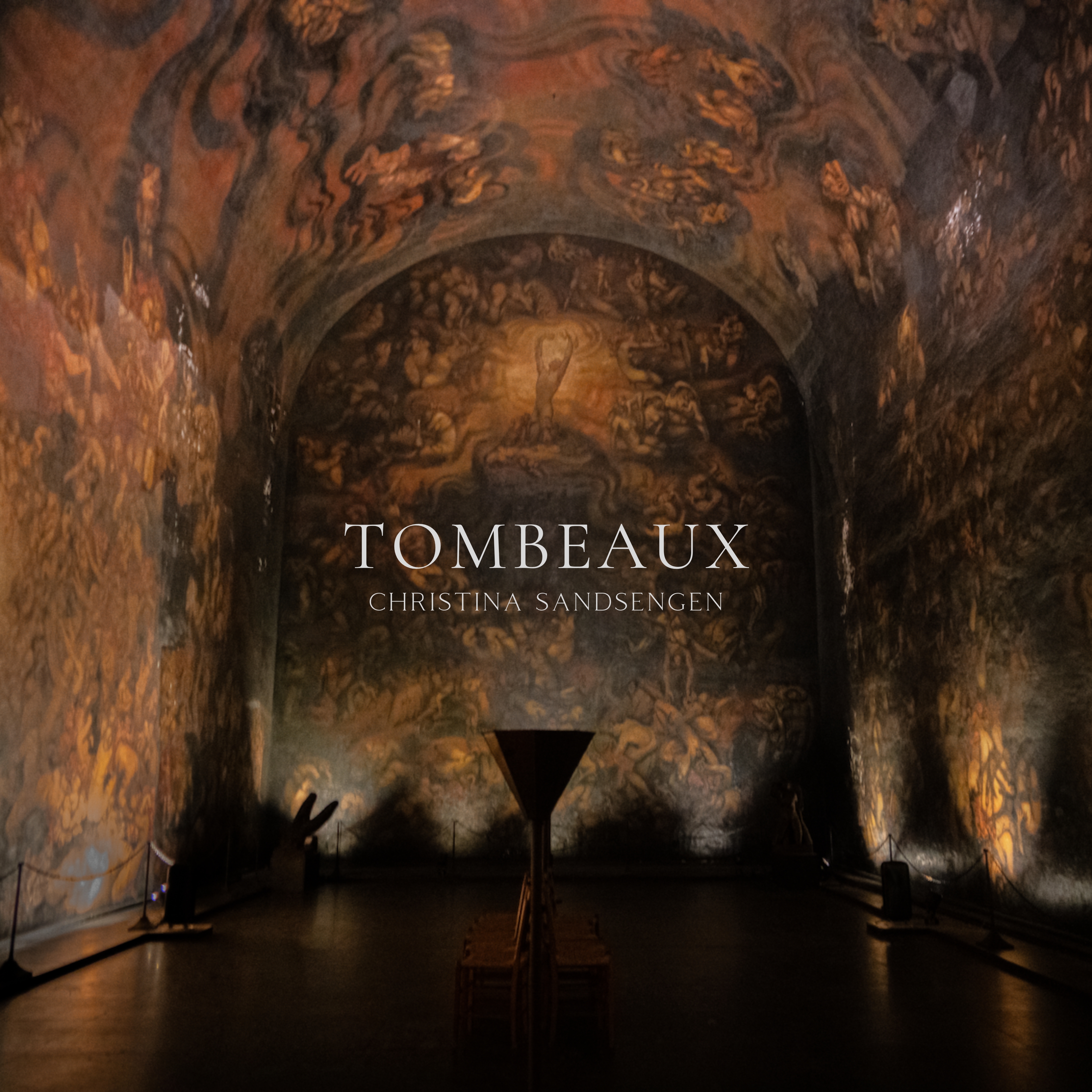
“The goal was to treat the recording process as capturing a dialogue between the performer, her instrument, and the room itself,” says Drew.
The decision to record the album in a mausoleum is almost certainly Tombeaux‘s greatest differentiator, and Drew is excited about the ways in which the recording process may help the album transcend its core audience.
“It was a bold decision sonically, which paid off in terms of creating an atmospheric and emotional expression. This contemporary approach and immersive sound signature can help Christina’s music reach a wider audience, for instance, branching out to include not only classical but also New Age and film music audiences.”
Audiophiles and cinephiles alike can find something to appreciate in Drew and Sandsengen’s work. Check out our full conversation with Shaun Drew below!
Congratulations on your GRAMMY® nomination! What does this recognition from the Recording Academy mean to you personally as a producer working in the classical space?
Thank you so much–it’s a very exciting time, both for Christina and for me, as first-time nominees. It is a definite milestone to be recognized by peers as a contender for the industry’s highest honor in our field. It helps provide a sense of validation for having chosen this long, winding, and often uncertain path of working in music.
What initially drew you to Tombeaux as a project, and how did you envision shaping its sonic identity as a producer?
I’ve been friends with Christina for some years, and I’ve been a fan of her work from the first listen; we met through the Recording Academy in Los Angeles. I have such great respect and admiration for Christina as a person, and also as an artist and composer. Naturally, I was ecstatic to get a call from Christina asking me to help her bring Tombeaux to fruition. I knew right away that this was going to be a very special project because it deals with themes of grief, love, and loss. The album is a series of musical homages Christina wrote for her lost loved ones. Christina has already faced losses of all her family members that were very dear to her, so the compositions are highly personal to the artist. As a listener, I can feel the emotion and the weight in every note that Christina performs. The way she plays the guitar provides a real sense of authenticity and of timelessness. Christina chose to record this album in Emanuel Vigeland’s mausoleum in Oslo, Norway. The location is, of course, thematically aligned with the subject matter. It also gave us a chance to capture a unique, atmospheric sound signature. The hall has an extremely long natural reverb decay time of around 15-20 seconds. The goal was to treat the recording process as capturing a dialogue between the performer, her instrument, and the room itself.
Tombeaux has an emotional and almost architectural musical design. How did you approach translating Christina’s compositional vision into a fully realized recording?
We used many microphones to capture the instrument and the rich sound of the mausoleum. This way, we had options and were able to blend the elements to taste in post-production, at my studio in Los Angeles. During the first run-through of the album at the location, Christina ended up making some minor compositional changes here and there, due to the extended reverb time of the hall, which was causing some notes to clash. Allowing individual notes to breathe and allowing the cavernous space to fill with the sound was far more important than “getting all the notes in” as originally written. So where there was any doubt, Christina would opt to remove notes, rather than leaving them in.
How would you describe your collaborative dynamic with Christina throughout the project?
We are completely comfortable working together, a process that was enhanced by our friendship. For this album, we knew that we wanted to create an album that captured the emotion and the reverence of the subject matter, and that conveyed as closely as possible the actual sound of Christina’s guitar as it sounded in the mausoleum. As a producer, I am generally relied upon by artists to provide honest feedback on what I see as the best approach to any musical quandary; at the same time, on an artist-driven project such as this, I tend to defer to the artist for the final say on matters as needed. I also find that providing multiple options on an approach can be a useful way to uncover the best solution.
Classical production often requires both precision and emotional sensitivity. How did you capture the subtleties of Christina’s writing while ensuring the recording felt contemporary and immersive?
The key was for Christina to take as much time as she felt each note needed in the space, before moving on to the next musical phrase or idea. With the mausoleum as an integral part of the sound, I think we really distinguished this album from other classical guitar records. It was a bold decision sonically, which paid off in terms of creating an atmospheric and emotional expression. This contemporary approach and immersive sound signature can help Christina’s music reach a wider audience, for instance, branching out to include not only classical but also New Age and film music audiences.
Were there any challenges that you had to overcome in bringing Tombeaux to life?
For the engineer, once the mics were in place, it was mostly a matter of keeping out of the way, keeping quiet, and allowing Christina to completely focus on her playing. Any errant sounds or stray notes would mean having to wait for the reverb to completely die down before Christina could continue with another take, so having patience in dealing with the live reverb time was a bigger requirement than for other projects.
How do you see Tombeaux fitting into the broader evolution of contemporary classical music?
This album is very much a part of this broader evolution in its exploration of deeply personal, extra-musical themes and connections. Its highly tonal, minimalist approach, and heavy reliance on the recording environment all make this an instant classic within the genre.
What does this nomination represent for you in terms of your growth or identity as a producer?
There’s a feeling that all the years I’ve spent honing my skills and craft are paying off in the sense of industry recognition. It is definitely a special moment. It feels as if the sacrifices that I have made and the risks I’ve taken over the years in furtherance of my music career have not all been in vain. As with all major life milestones, it comes tinged with a degree of sadness–over those who are no longer here to celebrate the moment with me. I feel that this project is a natural extension of my sensibilities as a producer and composer–so much so that it sits very comfortably alongside my own most personal musical works. I am so proud to be a part of this album, and I’m absolutely thrilled to be a part of Christina’s first GRAMMY® nomination as an artist and composer!


Comments
Loading…