

 Maxance Vincent
Fool me once, shame on you. Fool me twice, shame on me. Fool me three times, shame on both of us.
The third attempt at reimagining Peyo’s The Smurfs for the big screen had the potential to finally give us the cinematic transposition these iconic characters deserve. You would think that after two live-action/animated hybrid disasters, the next installments would go back to the drawing board and go back to the essence of what its Belgian creator envisioned when visualizing the world of Smurfs Village. Sadly, Smurfs: The Lost Village was a massive disappointment, even if it was an entirely animated adventure that stayed closely within the core of Peyo’s artistry. With Paramount now having acquired the rights to this massively popular IP, there was finally hope that someone – anyone – would finally get this world right and do Peyo justice. Unfortunately, today is not that day.
Simply titled Smurfs, the Chris Miller-directed film, which had a special screening at this year’s Fantasia International Film Festival under the “My First Fantasia” section, immediately dazzles us with its vivid and expressive animation. If anything, Miller understands how the bevy of blue humanoid creatures who live in Smurfs Village should look and operate. One would think that with such striking animation, writer Pam Brady would give this relatively simple story the treatment it finally deserves, introducing children to a universe filled with boundless imagination, magic, and wonder.
Sadly, this is yet another Smurfs film that attempts to rely on far too many dated pop-culture references and memes, rather than actively celebrating Peyo’s work or creating a succession of comedic situations akin to the purely visual creations one would find in his comics. Yes, the story itself is fairly pedestrian, but that’s not something that’s usually a concern, since most of the Smurfs stories Peyo wrote have an equally simple premise.
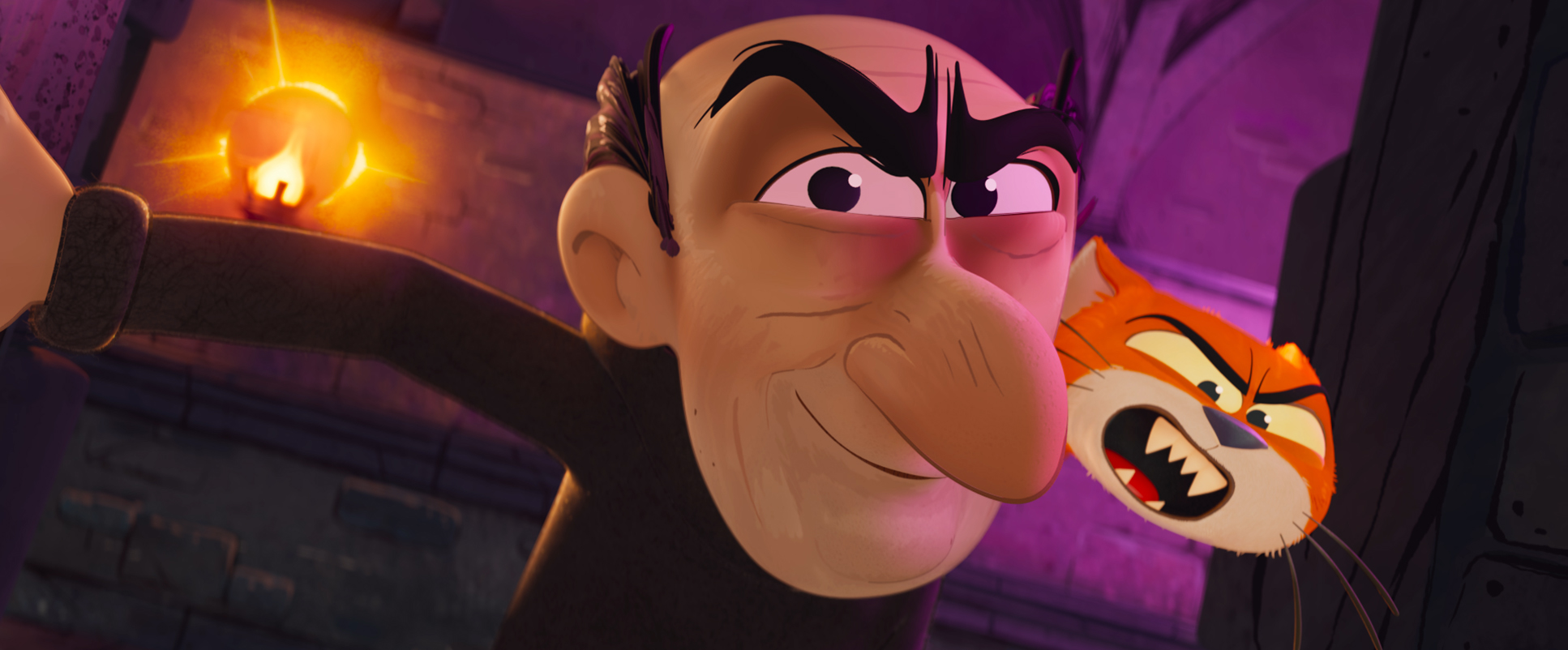
In the case of this movie, Papa Smurf (John Goodman) gets kidnapped by brothers Gargamel (JP Karliak) and Razamel (also voiced by JP Karliak), after “No Name Smurf” (James Corden) accidentally reveals the location of Smurfs Village to the wizards. Once the unnamed Smurf is introduced, one who thinks he doesn’t have an identity and purpose, compared to the likes of Hefty Smurf (Alex Winter), Vanity Smurf (Maya Erskine), and Brainy Smurf (Xolo Maridueña), who each have distinctive traits, it’s easy for us to know where this entire thing is going. However, it doesn’t necessarily matter. Peyo made the stories simple and filled them with enough striking images that would immediately forgive him for being this risk-free. After all, these are tales destined for children.
With Smurfette (Rihanna), No Name, and a group of Smurfs travel far and wide in search of Papa Smurf’s brother, Ken (Nick Offerman), who becomes the only person who can help them defeat both Gargamel and Razamel. In moments where the Smurfs are in their village, the movie does capture the essence of the original source material, but it quickly decides to (once again) take the titular characters away from that environment and into…the real world.
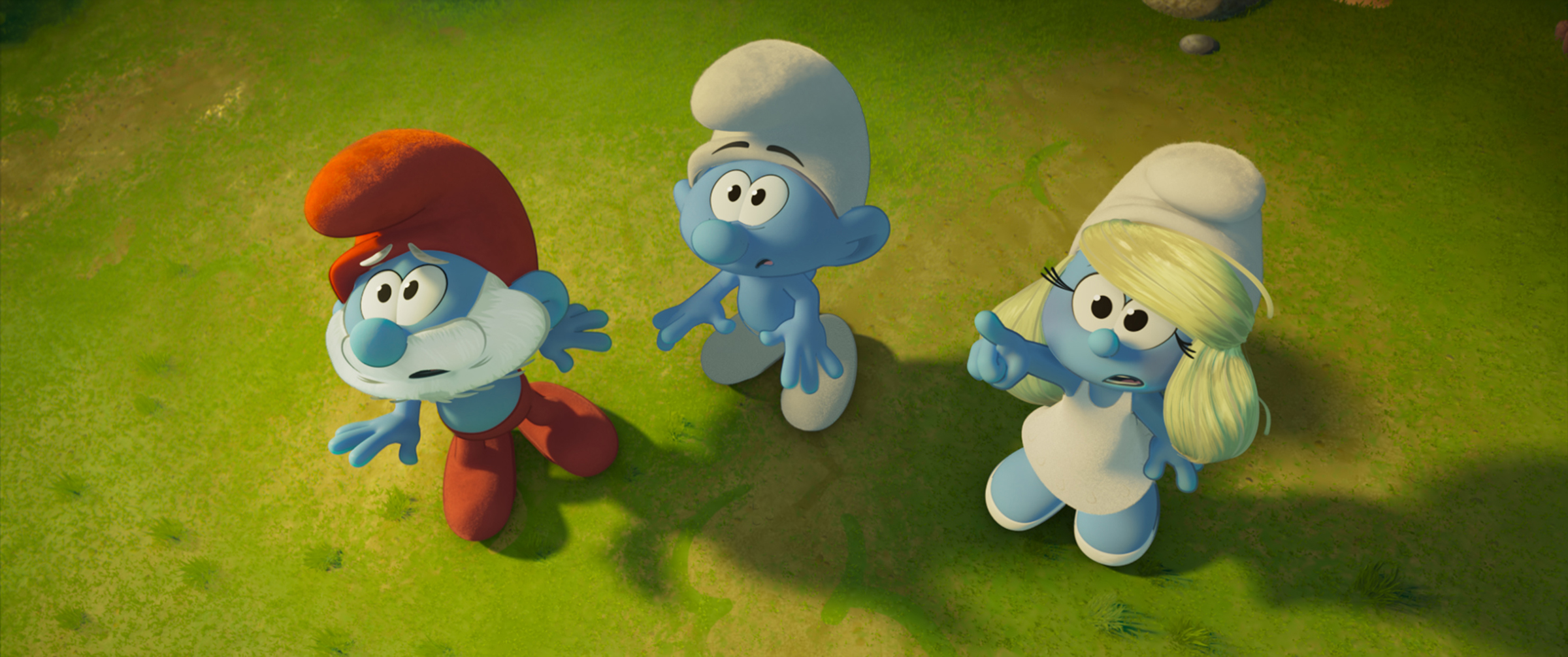
Yes, why not do the exact same thing that failed to resonate with audiences twice before on the big screen? To its credit, there’s at least no egregious human/smurf relationship being formed here. The real world serves as a backdrop for the Smurfs to embark on a series of misadventures within an environment that’s (extremely) larger-than-life. Cinematographer Peter Lyons Collister’s camera always stays on the level of the characters and turns the humans into unseen background characters. They’re essentially obstacles of sorts for the Smurfs to walk past. It feels more like another world for the filmmaker to play in, and less like the way Raja Gosnell destroyed Peyo’s essence in his 2011 adaptation of the work and its 2013 sequel, which were both critically reviled.
But that doesn’t stop Miller from bathing in a few pop culture references, including staging an entire sequence inside a night club, where Rihanna’s “Please Don’t Stop the Music” blares on the dancefloor. The movie then becomes a commercial for the singer/songwriter’s music, beyond the original songs she wrote for the film. Some of her most significant hits play in some key sequences, including the aforementioned club scene, where it almost acts as an excuse for Rihanna to cross-promote her work. That itself is pretty egregious, as if Rihanna needed more vehicles to promote her (already) popular music, and leaves a sour taste in the mouth when the film continues and the artist begins to sing their original songs, through musical numbers staged with the quality of a Vevo music video.
That said, she brings a good amount of heart to her portrayal of Smurfette. The character has a much more compelling narrative arc than how she was treated in the Gosnell films (where Katy Perry voiced her) and The Lost Village (where Demi Lovato lent her talents). Yet, she’s the only performer with a role sizeable enough for the audience to latch onto, while other star-studded talents, including Kurt Russell, Jimmy Kimmel, Sandra Oh, Hannah Waddingham, and Octavia Spencer, all have blink and you’ll miss it bit parts that unfortunately add nothing to the film at hand.
The story is also terribly overstuffed. At 92 minutes, there are far too many things going on, and for it to be this breezy, speeding through everything at a mile-a-minute pace without any moments where the audience can sit with the characters and understand their motivations to defeat the wizards and rescue Papa Smurf. We can’t form a connection with any of the distinctive Smurfs on screen, because they’re barely in the movie. It mostly focuses on Smurfette and No Name, but their alchemy is nonexistent, even during a garish scene where Corden, who is not a seasoned singer compared to Rihanna, has to express his feelings through songs in the Australian Outback, while Kangaroos join in on the choir. It needs to be seen to be believed, but Peyo is most definitely rolling in his grave.
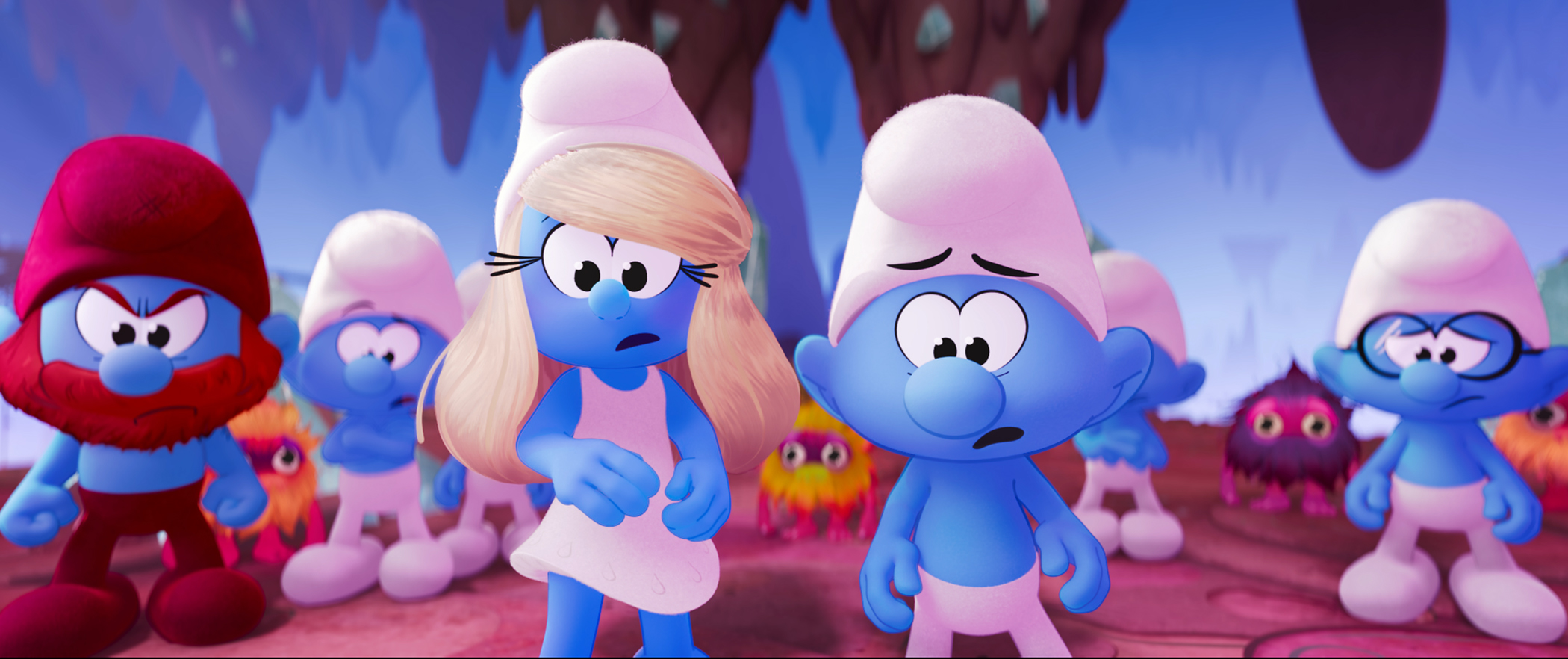
As breezy as it is, Smurfs also feels weirdly overlong, especially during its endless climax that continues to find new ways to stretch the film’s paper-thin story, particularly during a moment where Smurfette, No Name, and Razamel travel through the “multiverse” and different styles of animation are exposed. Without giving anything away, it’s by far the film’s most creative – and visually dazzling – sequence, one that made the audience erupt in thunderous applause and laughter, compared to the rest of the movie, which received little to no attention from big and small viewers alike.
In contrast, the short film that played beforehand, Order Up: A SpongeBob SquarePants Short, received more significant reactions from the crowd in two minutes than the 92-minute feature that followed it. And while I haven’t been on the SpongeBob bandwagon for ages, the entirely dialogue-free short felt like the classic days when Stephen Hillenburg’s cartoon made us start the day with a good dose of laughter before we were off to school. For two joyful minutes, I felt like a kid again.
When I watched Smurfs, I felt the opposite, after coming to the realization that no one in Hollywood seems to take Peyo’s work seriously and give these characters the big-screen adaptation they deserve. They’re enthralling on their own two (small) feet. Once someone gets this, we may get something of value from them. Until then, it’s better to let them rest for a while and try again in seven years.
SCORE: ★★


Comments
Loading…