
 Cory Stillman
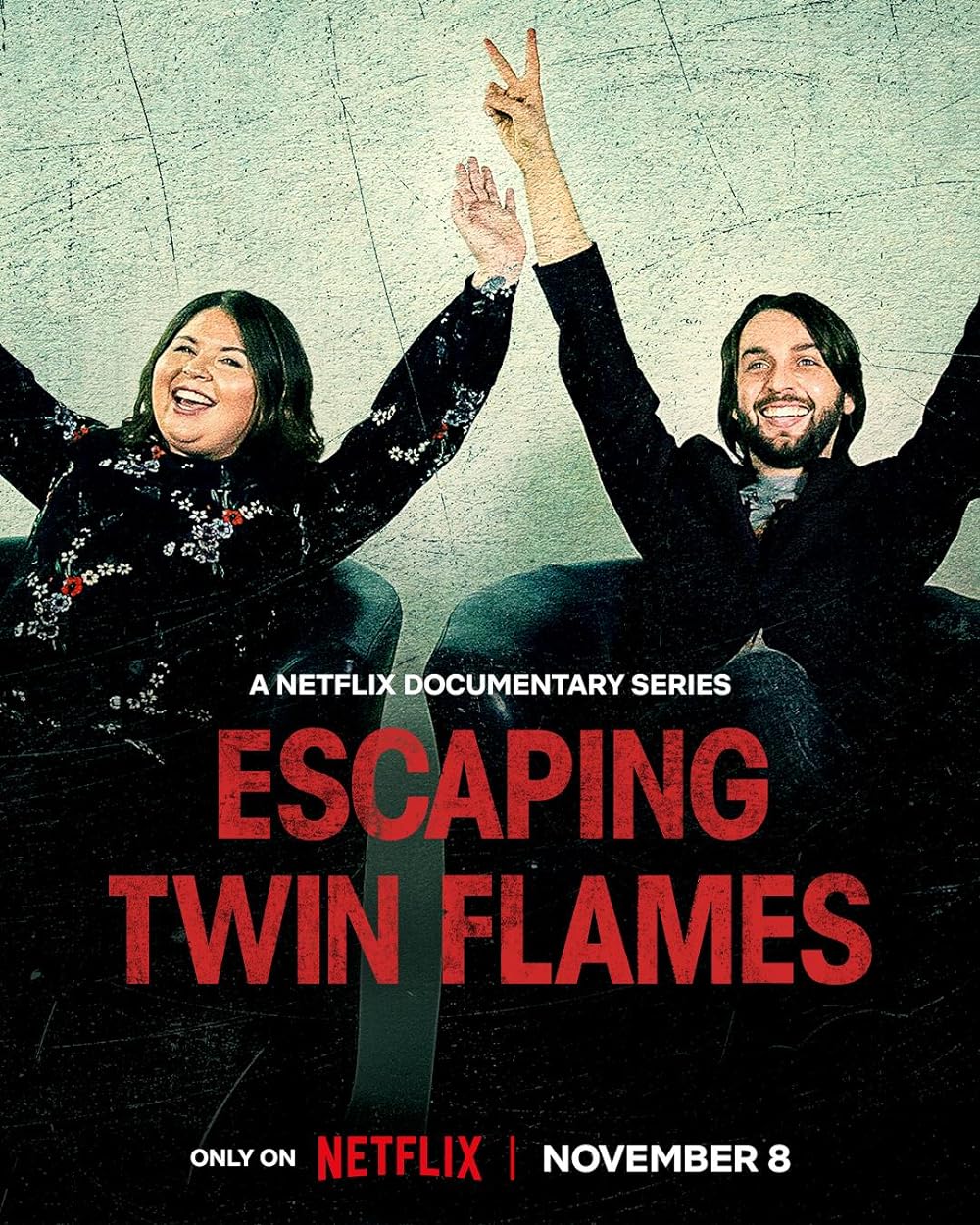
True crime remains as influential as ever, but the genre’s enduring popularity is just one of the many reasons that Escaping Twin Flames became one of the most popular shows on Netflix in 2023. Awards Radar sat down with executive producer Inbal B. Lessner, ACE and the rest of her Emmy-nominated editing team to discuss the show’s breakout success, as well as its long-term impact.
“We ended up with a wonderful team who prioritized ethics and authenticity above all, and still crafted a compelling show, full of plot twists, humor, tension and drama,” says Lessner of assembling the talented group of editors, which includes Mimi Wilcox, Troy Takaki, ACE, Kevin Hibbard, and Martin Biehn, who served as lead editor on the Emmy-nominated series finale “Up In Flames.”
Indeed, Lessner’s emphasis on ethics and authenticity is notable amidst a true crime landscape that can often feel exploitative or insincere. Alongside director and co-creator Cecilia Peck, Lessner developed a trauma-informed framework for Escaping Twin Flames, ensuring the show approached its subject matter with particular sensitivity.
“I believe that any activism in this space has to be done responsibly. We want to help the survivors regain agency over their stories, to help them expose the truth and to stop the ongoing abuse, but we don’t want to cause them any further harm, even inadvertently,” explains Lessner. “As an EP/Editor, I helped to implement our trauma-informed approach across the board – providing a safe environment and mental health support to the contributors on the screen, before, during and after filming, as well as to the field and post crew behind the scenes. The goal was to create a show that would propel viewers to pressure the authorities to take action and to investigate Twin Flames Universe. “
By doubling as both activism and infotainment, Escaping Twin Flames took on considerable responsibility, made all the more impressive by its surge in streaming popularity.
“That level of visibility is an uncommon experience and NEVER a given,” says Biehn. “So to be associated with a show that so many people connected with, that has gotten so much recognition, and a show that has the potential to actually improve the world and help people avoid situations like this? I couldn’t be more proud.”
The Escaping Twin Flames editing team is a fascinating bunch, with prior credits ranging from Let Us Prey to Living Undocumented to Seduced: Inside the NXIVM Cult. Mimi Wilcox is even a documentary filmmaker herself! These wide-ranging experiences in documentary storytelling and beyond uniquely prepared the editors to approach the complex subject matter in Escaping Twin Flames with genuine curiosity and care, treating it as so much more than typical “true crime” fodder.
“The task is not to take these survivors’ experiences and make them fit inside a box we already have in mind,” says Wilcox. “It’s to listen to what they have to say, take it in and understand how it expands or alters our understanding of that framework, even when it might make us uncomfortable. I think that is especially important as we see a proliferation of cult and true crime shows. We can’t start thinking there’s one formula that fits each one, because in fact these stories and experiences are unique and we have to go in with humility about what we don’t know.”
Check out our full conversation with the Escaping Twin Flames editors below!
Hey everyone! I want to start with Inbal – how did you go about assembling this talented team of editors on Escaping Twin Flames?
IBL: Hiring the editors is the best part of my job as an EP/Showrunner! I actually had not worked with any of our Escaping Twin Flames editors before. I was looking for editors who were excellent at their craft, and could also connect to the story with deep empathy. It was important that they are team players, who did not get too precious about ‘owning’ their scenes, but appreciated the value of collaboration, as we had about 4 months to edit what is essentially a 3-hour film! I was very happy when both our director Cecilia Peck and Netflix approved the editors I selected. We ended up with a wonderful team who prioritized ethics and authenticity above all, and still crafted a compelling show, full of plot twists, humor, tension and drama.
Could the rest of you tell us a little bit about your creative backgrounds and what drew you to Escaping Twin Flames?
MW: My journey into film was a bit unconventional. I studied Economics and Russian in college, but found I spent all my time with the student filmmaking group. I eventually took an internship with the wonderful Kartemquin Films in Chicago, which solidified my love of documentary filmmaking grounded in ethics. In my journey as an editor I’ve been drawn to stories that focus on gender and sexuality, first with Kartemquin Films where I co-edited Maria Finitzo’s The Dilemma of Desire — still one of my very favorite projects; more recently I worked with the brilliant folks at Multitude Films on their Queer Futures series, editing Twiggy Pucci Garçon’s beautiful film MnM. I also had a background in cult series. When I started on Escaping Twin Flames I was just coming off of editing the amazing Sharon Liese’s series Let Us Prey. I learned so much working on that show, particularly from Sharon and from fellow editor Miki Milmore. Working with Miki taught me so much about story structure and pacing that I brought to Escaping Twin Flames. I feel really lucky to be working on projects like this that reflect my passions and my values, and I hope to continue to work on projects that delve into gender, sexuality, queerness and women’s experiences in the world.
KH: I have been editing for nearly two decades on a variety of shows. Spanning from live television to unscripted reality to documentaries. Without a doubt, docs are my true love. Crafting a narrative out of interviews and archival is challenging but at the same time, oh so rewarding. Because docs can give a voice to the voiceless, expose injustices, and most importantly, explore who we are as a society. I’ve cut several documentaries about cult survivors and the thing that drew me to Escaping Twin Flames was hearing that this was one of the first times a cult was specifically online. And in today’s world, that scared the shit out of me. I saw the gross manipulations being done to these members and knew that this documentary had to be told now.
MB: I was drawn to Escaping Twin Flames because it sounded like an interesting story and a real challenge. What could be better? Background wise, I’ve been taking things apart and putting them back together since I was old enough to handle tools. Tinkering with tape recorders and pinhole cameras and the like from an early age. I started with film in New York doing set work and quickly transitioned to post sound, doing sound design and foley work for a number of little films. I eventually transitioned into picture cutting during the WGA strike in 2007 when the demand went through the roof, and I found my real love of documentary shortly after. I’ve been picture cutting for a while now in a variety of styles and genres and I find the narrative complexity of cutting documentary combined with its need for ethics and integrity to be incredibly rewarding work. That potential was the initial draw to Escaping Twin Flames. Then realizing that I had the opportunity to work with such accomplished filmmakers as Cecilia Peck and Inbal Lessner on a found-footage cult documentary? I was in for sure.
I understand each of you tracked an individual character or storyline as part of your work on the show. How did you negotiate the balance between these various threads in the edit?
IBL: Years ago I was an additional editor on a Davis Guggenheim film called Teach, where we divided the different parallel storylines between a few editors, so each of us could become an expert on one of the four teachers featured, watch all the footage and distill it to several scenes that would paint a full character arc, and then the lead editor, Greg Finton, weaved them together. That’s where I got the idea, and I realized it was the only way to tackle the Twin Flames series on such a compressed schedule, and still do justice to the material. I wish it was as simple as it sounds. I relied on our hard-working story and archival team (Zoe Vock, Kaitlin McLaughlin, Morgan Poferl, Jesse Hart, Nadine Bedrossian and Avery Fox,) to review footage, pull selects, and to collect the most relevant photos and documents to support each of the stories. I was reviewing their selections before they were passed on to the editors so that I knew exactly what was going on in each edit bay and how each scene should play out and fit into the big picture. We had 4 main storylines but only 3 editors on the team, so I helped edit the 4th storyline of the family members – the three moms plus Paula, who’s trying to extract her twin sister from the group. Once we had these arcs charted, we switched to having each editor be in charge of one episode, and that’s where we started finding the balance between the stories, when was the right moment to introduce someone new, and how often they had to reappear to maintain the audience’s emotional investment in them. It was a tightrope act, and we went through many different iterations of the structure until we felt that we got it right. In the end, once all editors wrapped and were sadly no longer available, Troy Takaki joined me for the final picture lock pass and we made sure it all felt cohesive.
KH: Zoe Vock, who was my excellent story producer, and I originally worked on Keely’s arc. We knew that she would be our entry point into this world. In so much that she would be like us, an innocent person just looking for love and we stumble across a community that guaranteed we would find our perfect other. And through Keely’s journey in Twin Flames Universe, we began to shape Episode 1 and the visual style of that online world. From joining the forums to being in a zoom classroom to meeting up in person, Keely was the backbone in telling this story. And then her sister, Marlee, agreed to do an interview late in the edit process and that reshaped the narrative completely. Essentially we now could track two people in the cult who were on different paths; Keely unwittingly becoming a CEO and enforcer and Marlee being trapped in a relationship that the leaders of TFU devised. Now along with our other amazing survivors who were willing to tell their stories, we as a team were able to present the audience a very clear picture of how harmful this cult really is.
MW: When the edit began, the work was fairly straightforward. We had our own characters and we worked on building their arcs in tandem with the archival story of Twin Flames. But as we progressed and began shaping the episodes themselves, that’s when the real complex collaboration came into play. Each of us oversaw an episode, and as the story evolved, we often found ourselves passing scenes off to each other. For example, I had started out working on Elle’s arc. But as I came to focus on episode 2, Elle’s introduction shifted to episode 1, and I found myself working extensively on Marlee’s storyline – which Kevin had first tackled. I think what made that approach work was the trust between all of us as editors. Each editor was so skilled and we had spent so much time as a full team discussing the show that I think we were all aligned in our approaches. I always knew that if I was handing a scene off to another editor that they would improve upon it in the context of their episode. When I received a scene from another editor, I was inspired by their work and excited to build upon it. I think it brought the best work out of all of us.
MB: Because at its heart, this is a found-footage documentary, a lot of this edit was trial and error, not only trying to figure out “how” to tell a story with the multitude of characters and the staggering amounts of archival but figuring out how to stack the episodes so that the characters’ experiences reflected each other, accentuating the emotion and ultimately building something that is both true and more than the sum of its parts.
For a long time Mimi and I were swapping beats and characters, notably Angie, Shanise and the Moms, trying to find the right balance of tension, timing and emotion to provide a strong thematic roadmap that would carry viewers over from Episode 2 to 3.
Martin – you served as lead editor on the Emmy-nominated third episode “Up In Flames.” What are you most proud of as it relates to the series finale?
MB: I’m proud that it resonates with people the way it has. I’m proud to think that my storytelling and craft might have something to do with that and I’m certainly proud that this team might get some much deserved recognition. I’ve been around long enough to understand how rare it is for something to capture people’s attention. Especially if that attention is deserved. The series was the #1 show on Netflix for 5 days (not just documentaries, all shows!) That level of visibility is an uncommon experience and NEVER a given. So to be associated with a show that so many people connected with, that has gotten so much recognition, and a show that has the potential to actually improve the world and help people avoid situations like this? I couldn’t be more proud. These are the exact reasons why I got into documentary and to get any recognition for my craft? Gravy.
Mimi – as a documentary filmmaker yourself, how did you navigate the various ethical concerns in cutting together the stories of real-life survivors?
MW: I’ve always been drawn to projects that are unafraid to grapple with complex ethical challenges, and my first conversations with Inbal and Cecilia about this project made it clear to me both that this was a series with some profound moral questions, and that this was a team that was up to the task of tackling them gracefully. When I first set out to make my film Bad Hostage, I had a completely different idea of what the film would be. Once I started doing interviews, I realized that my understanding of the story wasn’t quite right, and I had to adapt and really listen to what I was being told. Beginning any new project, it’s so important to take stock of your own preconceived notions. You can’t pretend they’re not there, but you can flag for yourself what they are and intentionally account for them as you listen to the stories being told. Of course as filmmakers, as editors, as storytellers, we are putting all of this footage into a framework to tell the most compelling story. But the task is not to take these survivors’ experiences and make them fit inside a box we already have in mind. It’s to listen to what they have to say, take it in and understand how it expands or alters our understanding of that framework, even when it might make us uncomfortable. I think that is especially important as we see a proliferation of cult and true crime shows. We can’t start thinking there’s one formula that fits each one, because in fact these stories and experiences are unique and we have to go in with humility about what we don’t know. So as editors on Escaping Twin Flames, we really took care to listen to the TFU members and survivors — both the ones who participated in the series, and those who appeared only in archival. They are the experts on their own experiences and it was critical not to make assumptions about those experiences. And I will say that we also benefited from listening hard to Jeff and Shaleia, where by catching their slips and considering the layers of their statements we came to understand the depth of their cruelty and the intricacies of their scam. That’s what it took to make Escaping Twin Flames shine, and that is a lesson I have learned in my own filmmaking as well.
Kevin – you have worked on several iconic documentaries and reality programs throughout your career, including Living Undocumented, Indian Matchmaking, and Leah Remini: Scientology and the Aftermath. What have been your favorite projects to work on, and how have they prepared you for your work on Escaping Twin Flames?
KH: I’ve always loved editing projects that explore the human spirit in all of us. What makes us who we are, the good and the bad, the triumphs and the failures, and all the shades of gray in between. It’s how I connect to whatever the subject matter may be. I look for that anchor of humanity. For instance, you look at a series like Living Undocumented, you see people striving to find a home in this world, or Indian Matchmaking; you see people trying to find love in their community, or Leah Remini: Scientology and the Aftermath; you see people who were indoctrinated and now struggle greatly with the injustices they experienced. I may not have gone through any of those specific experiences but I could empathize greatly with those stories and that is what enables me to tell each project with sensitivity and care.
Which leads me right into Escaping Twin Flames. Here you had a group of people willing to do anything possible to obtain their true love. And that desire led them to be manipulated, abused, put into financial ruin, and separated from their families. It may seem almost unbelievable to some, but with my experiences on those other shows, I was prepared to put myself in that same position to better understand these survivors, both in terms of their experiences and their headspaces.
A show like Escaping Twin Flames requires constant communication between the production and post-production teams. What was the biggest challenge you faced during this collaborative process?
MB: I love collaborating in the bay. Shout-out to Kaitlin McLaughlin! I love arguing story points and trying new structures and new ways to story-tell. I think one of the larger challenges we faced from a collaborative standpoint was finding common ground in how we were expecting people to respond to the way we were story telling, this occurred across the series in a variety of ways but was most pronounced when we were discussing how to tell the story of the gender reassignments. While we were all united in our desire to best prevent our work from being used to hurt anyone, our concerns weren’t always the same. It was a constant question of “How will this be perceived? How could this be misconstrued both intentionally and unintentionally? Is this the most responsible way we can tell this person’s story?” We were constantly second guessing ourselves, bouncing things off the whole team to try to find some kind of consensus that we could all feel good about moving forward. It was exhausting but I’m proud of both the process and the result.
MW: I think the greatest collaborative challenge on Escaping Twin Flames was also its greatest strength, which was the dialogue around the handling of the trans storylines in the series. To approach this responsibly required an incredible amount of care and thoughtfulness. We were keenly aware that this story could be co-opted by bad actors, and it was critical to make sure we were providing a full context for Jeff and Shaleia’s insidious tactics. The key to our success was the environment that our showrunners Cecilia Peck and Inbal Lessner and supervising producer Morgan Poferl nurtured. Especially for a story as nuanced as this one, an honest and ethical approach in the edit isn’t possible without the feeling that you can safely express concerns and truly be heard. Cecilia and Inbal always made sure that was the case, and it led to spirited discussions that I think we all grew from. Those conversations made the show as powerful as it is, and ensured that we were always foregrounding ethics and our responsibility to our participants.
KH: There were so many stories and so many events that had happened to our subjects that it was honestly hard to decide which held the most weight because everything was eye-opening. But if we kept everything in, we would have had three three-hour docs on our hands (which in actuality, I believe was the rough cut runtimes of our individual episodes.) So we had many, many…many discussions on what should remain and what we had to leave on the “cutting room floor.” Ultimately, what you see in the series was the best evidence we could present to show the atrocities within the Twin Flames Universe.
IBL: So many challenges, but I’ll talk about the compressed schedule! I was really feeling the pressure to make the most out of every single day, and I still insisted on taking the time to have team meetings, at least once a week, with people joining remotely or in person and taking the time to get to know each other better (my daughter gave me ideas for excellent ice-breaker questions!) and to discuss the plan, the process and any creative issues. My main role was to relay Cecilia’s vision to the editors, and to make sure the entire team – research, production, archival, story, editorial and even clearance/legal – were collaborating efficiently and that everyone felt safe to speak up about their thoughts, concerns and ideas. I’m very proud of what our small and mighty team has accomplished.
One of the more powerful aspects of Escaping Twin Flames is its ability to effect real change as it relates to the Twin Flames Universe and the future of its victims. How does this kind of activism figure into your own work as an editor on the show?
IBL: Making “True Crime” TV means we are dealing with real victims who had real crimes committed against them and who have experienced real trauma as a result of that. I believe that any activism in this space has to be done responsibly. We want to help the survivors regain agency over their stories, to help them expose the truth and to stop the ongoing abuse, but we don’t want to cause them any further harm, even inadvertently. As an EP/Editor, I helped to implement our trauma-informed approach across the board – providing a safe environment and mental health support to the contributors on the screen, before, during and after filming, as well as to the field and post crew behind the scenes. The goal was to create a show that would propel viewers to pressure the authorities to take action and to investigate Twin Flames Universe. That informed each and every editorial decision.
MB: It’s honestly what brings me here. I’ve had the great privilege to work on a number of shows that approach and challenge a variety of social issues and while the work is frequently good, it often doesn’t get the exposure necessary to make change. Seeing this show get real eyes on it and knowing that it is affecting people and has the potential to affect real change is the greatest compliment. To hold the responsibility to help shepherd other people’s experiences through the creative process and to remain true to those experiences while also making a compelling piece of story-telling? That’s an incredible feat. It’s a feather-in-the-cap of everyone on this team and it’s what keeps me inspired to continue grinding this industry.
MW: During the edit of Escaping Twin Flames, I was thinking not only about my own intent in cutting scenes or how particular beats affected me emotionally. I was also frequently checking in with myself about how it might be received by a larger audience. This can be such a slippery slope; I think in any art form, you often need to let go of how you think anyone else might react to your work and instead focus on making it the best it can be in your eyes and in the eyes of your team. But in this case, we had a greater mandate to craft this story responsibly because there was the potential to do harm to two distinct groups: survivors of coercive control, and the trans community, who are already subject to so much bigotry and violence right now. As an editor, when making certain creative and aesthetic choices, I often know to trust my gut and follow my wildest ideas. When cutting a scene for a large streaming audience whose perception of a vulnerable population might be altered, or whose experience as a member of that population might make that scene particularly visceral, it’s important not to have my blinders on and to consider how it might be received by others both narratively and ethically.
KH: Great question! We as editors were advocates for the survivors. They put their trust in us to tell their stories truthfully and ethically. And with every moment presented in Escaping Twin Flames our goal was to build the strongest case against the Twin Flames Universe. Once the documentary hit Netflix, I personally wanted everyone who watched the show to see the injustices occurring and question what is being done to stop the leaders of TFU. And in turn, the viewer would be an extra voice towards our cause. One voice leads to millions and the victims of TFU would no longer be ignored anymore.




Comments
Loading…