

 Steven Prusakowski
Troy Kotsur made audiences (me) cry like a baby in CODA, capturing the essence of fatherhood as Frank Rossi in scenes that felt achingly real. Now, in Netflix’s crime thriller Black Rabbit he flips the script entirely. As Joe Mancuso, the ruthless New York loan shark and mobster entangled with brothers Jake and Vince Friedken (Jude Law and Jason Bateman – who also directed and produced the series), Kotsur delivers a performance that’s deeply intimidating. Instead of a heartwarming performance, it’s bone-chilling.
The acting bug bit Kotsur early in life with a classic film. “The first movie I saw that really made an impact on me was Star Wars, and I saw it 28 times when I was eight years old. I saw so many different characters, and I felt like I could play one of them. There were different languages, aliens, there was gesturing. Sometimes I feel like an alien on earth because I communicate in a different language.” confessed Kotsur. ”I realized we didn’t see any sign language on screen. It was really hard to get in and break into TV and film. CODA (an acronym for Children of Deaf Adults) was really my first big opportunity. Then finally I’m able to work on screen and I had to stay faithful. It was a really long journey.”
Warning: Major spoilers ahead.
While his role in CODA earned him the Academy Award for Best Supporting Actor, Kotsur deliberately chose the role of Joe Mancuso to shatter expectations and prove his range. “It’s interesting because I go in the supermarket, and everyone tells me that they love CODA, and for a couple of years now, that’s happened, and I was like, how can I really make them forget about Frank Rossi? And, I could do that by playing the exact polar opposite of Frank Rossi.”
“Mancuso as a deaf villain, you’ve never seen a deaf villain on screen before. So I can have a fresh take and give the audience an experience and a different perspective. I really wanted to show the audiences that I had range, and I could really play around with a character like this who happens to be a villain and deliver,” shared Kotsur. “There’s a lot of nuance, there’s a lot of color, and it’s really important to have all of those tools in your toolbox, and you can even play around with the sign language.”
To portray Mancuso, Kotsur developed his own one-handed variation of American Sign Language (ASL) he calls “street sign language.” It is a more aggressive approach to signing which he describes as “almost like a New York accent.” Unlike standard ASL, his version uses just his right hand, the byproduct of hanging out with a tough crowd where his other hand is often ready to grab his gun. He found developing this version of sign language “was a lot of fun to play with as well,” giving Mancuso a unique voice separating him from other characters he had played.
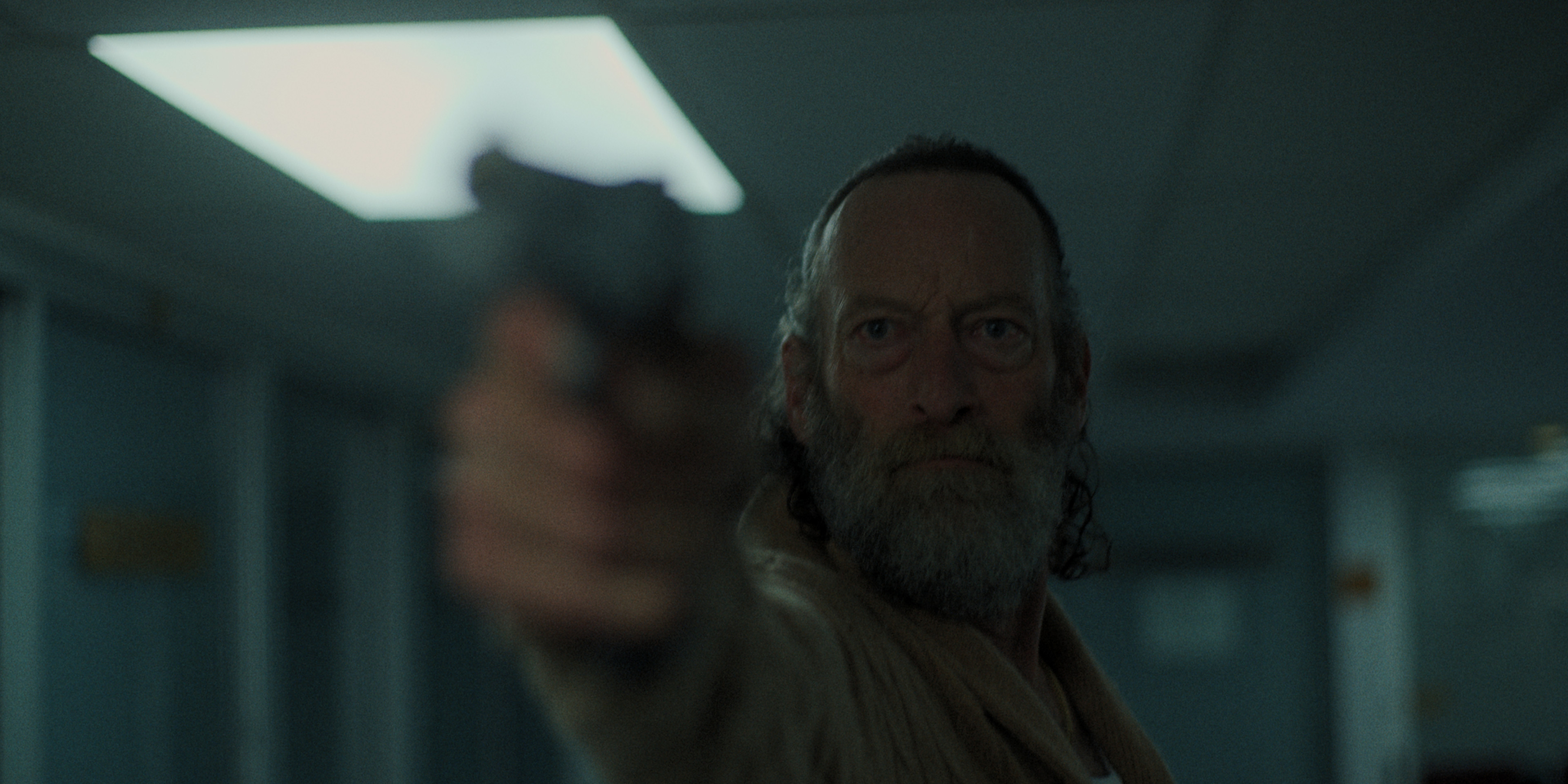
Joe’s “workplace” issues further humanize the criminal. In addition to dealing with less than trustworthy business associates, he has the additional challenges which his deafness presents. In Joe’s line of work you always have to watch your own back. “Trust is number one in crime. Mancuso wants to ensure that no one is taking advantage of him. It’s really hard for him to trust people,” shared Kotsur. His approach was to keep the menace restrained, relying on subtle visual intensity to enforce his power. “The point is to really keep it all beneath the surface. You don’t want to scare people, but you want to be intimidating if you need to.”
“In deaf culture and communication, everything is eye to eye. Joe Mancuso listens through his eyes, not his ears. So if someone’s eyes are closed or they turn their head to the side, then something is missed. So everything is visual. And so it’s really important to what’s going on through the eyes and what’s going on behind the eyes and the nuance there.”
This commitment to detail transforms Joe from your common villain into a fully fleshed-out, hardened gangster. Kotsur brought more to the character, including an intricate backstory that fueled the character’s edge. “So I was imagining, and my gut feeling was, in the past, Joe Mancuso was involved with a group of criminals, maybe working as a janitor or a cleaner, and with a job like that, he was able to build trust, because, of course, they felt safe around me because I couldn’t hear these mobsters’ private conversations. I slowly rose the ranks as I built that trust,” explained Kotsur.
“Then, having a son, I’m trying to teach my son how to run the business, but he doesn’t have any common sense. And I feel like maybe I failed a bit as a father. And also, Joe Mancuso doesn’t wanna rely too much on hearing people. He wants to make good choices on who he can connect with and communicate with, because sign language is a different language. And so from Joe’s perspective, he’s really on the edge of caring for the two brothers as well.”
What makes Joe truly chilling is that moral grayness Kotsur infuses beneath the surface menace, keeping viewers’ hearts racing with a quiet intimidation, which is like a volcano that may erupt without warning. “You know, this world isn’t black and white. It’s all kind of murky and gray. And so Joe is just going through this ethical journey and struggling a bit with it. And so that’s what’s beneath the surface, is he is sensitive, and sometimes he’s extremely insensitive. And so imagine you’re swimming in the ocean and you happen to see a shark, and the shark surrounds you. Is it a friendly shark? Is it an unfriendly shark? You don’t know.”
Kotsur carefully balanced the terror with subtle humanity, especially in Joe’s father-son dynamic. “You know, of course Mancuso wants what’s best for his son Junior (Forrest Weber), but of course Junior never listens. That’s where a lot of the frustration comes from, his patience is gone or his mother passed away when he was growing up. Joe didn’t have time to take care of him because he had to focus on the business.” Kotsur continued, “Joe hopes that Junior is successful but he isn’t and Joe feels like a failure as a father.”
Spoiler Warning!
Black Rabbitis steeped in tragedy and Joe Mancuso is not immune. After he suffers an excruciating loss, Kotsur needed to tap into the character’s darker side driven by the pain and vengeance burning inside of him. “Of course, Mancuso feels lousy because he didn’t really have closure. He (Junior) doesn’t listen and he dies. So Joe’s last moment with him wasn’t pretty. Leaving Joe with the guilt and that pain from his death. He feels crushed,” reflected Kotsur. “And of course now he’s alone. He doesn’t have any more children and it’s really painful. That’s why Mancuso is looking for payback.”
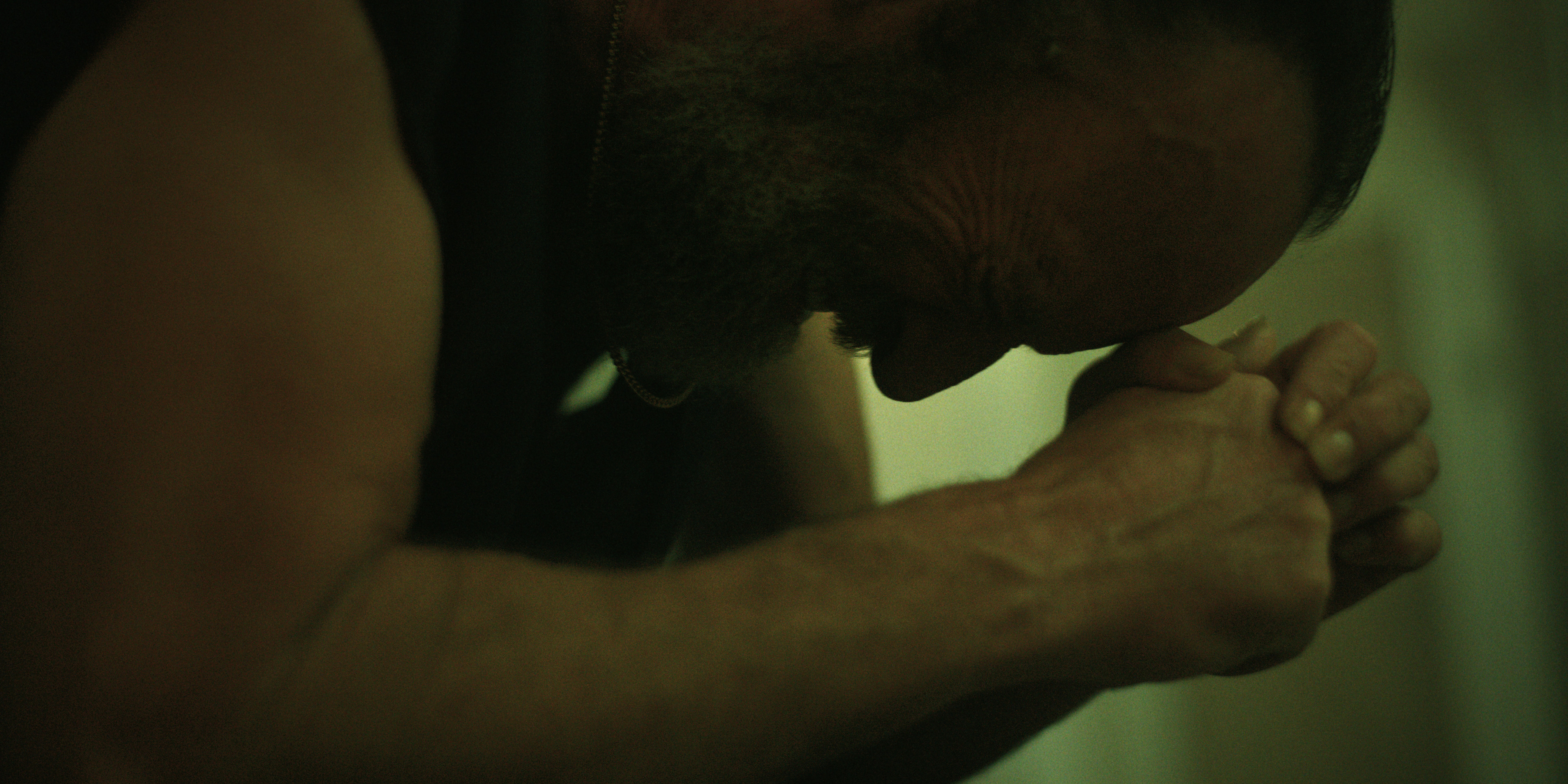
Joe’s isolation only compounds his bitterness: “I think he’d be a bit bitter, a bit lonely. He doesn’t have a wife. He doesn’t have a son. What does he have left?,” asked Kotsur. “Does he have to start all over again and have new recruits and build the trust? Is that really worth his time?”
Through meticulous backstory, subtle acting choices, emotional depth, and his own sign language custom fit for his character, Kotsur crafts Joe Mancuso as a badass villain you do not want to get on the bad side of, yet can’t help but understand. In Black Rabbit, he reveals the fractured man beneath, proving just how versatile of an actor he is.
What’s next in the book of Troy Kotsur? The actor has a lot of projects in development. The most intriguing would take that versatility to a new level. For the answer just think, ‘What is the furthest thing from playing Joe Mancuso?’ How about a sitcom? Kotsur confessed, “I would love to do a straight comedy one day.” Someone make this happen, because we’re all in.


Comments
Loading…