
 Joey Magidson
The career of James L. Brooks has been a glorious one. Three Academy Awards, 22 Emmy Awards, and a host of other honors are more than enough evidence that Brooks is a legend. However, the days of Terms of Endearment, or even As Good as It Gets, are long gone. Brooks always directed sporadically, but in the big gap before making the misfire How Do You Know and now the even longer one before helming Ella McCay, something has been lost. The human touch that he brought to his films is long gone, replaced by a just ponderous and meandering feeling, stranding all those who act within, as well as those who ultimately watch the final product. Sadly, Ella McCay is bad, but not bad enough to be fun. Instead, it’s just a big old antiquated nothing, one that has no reason to exist, while fumbling incredibly easy material. This movie is, without question, one of the year’s most disappointing works.
Ella McCay depressed me, not because the film is sad, as it’s purportedly an uplifting crowdpleaser. No, it was depressing due to how much of a misfire it is, showcasing none of the skills that Brooks had so deftly shown for decades. Instead, the improbable dialogue and sitcom level developments just feel completely half baked. For nearly two hours, you just keep waiting for the movie to actually get going, which it never does. Frankly, it’s hard to imagine how this could have turned out worse, without actually derailing into incompetence. That’s what makes this all the more dispiriting, because you hold on to hope far longer than you should. Alas, abandon all hope, ye who enter here.
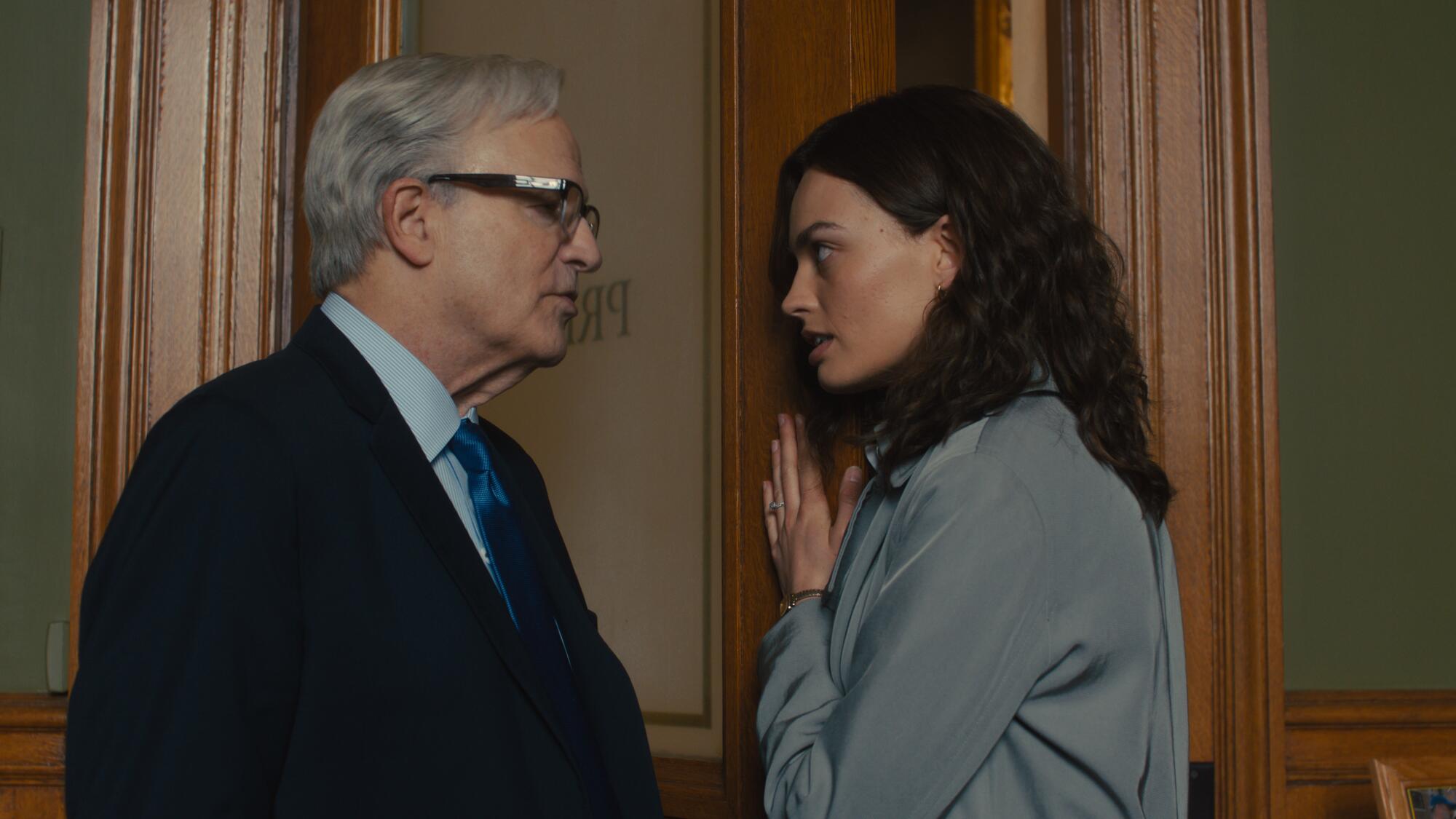
Set in an unnamed state in 2008, Ella McCay (Emma Mackey) is a 34 year old Lieutenant Governor. She’s a law graduate and cockeyed optimist, putting in the long hours for the causes she’s passionate about. Her popular Governor (Albert Brooks) knows how to deal with people, while she’s in the background, spending her working hours with longtime assistant Estelle (Julie Kavner, also pointlessly the narrator). Her home life consists of dealing with her husband Ryan (Jack Lowden), who constantly pokes his head into her work life, as well as Aunt Helen (Jamie Lee Curtis), who took care of her in her teen years and still has a hand in all her decisions. When Governor Bill is appointed to the cabinet of the incoming Obama Administration, Ella McCay is suddenly Governor McCay.
While Ella seeks to keep her head down and remain the same, including keeping her State Trooper security detail (Kumail Nanjiani) the same, but a reporter eyeing a potential scandal involving her and Ryan immediately becomes a concern. Ryan says he’s on it, while Ella is thrown by the reemergence of her estranged father Eddie (Woody Harrelson). Throw in her shut-in younger brother Casey (Spike Fearn) and she sure seems to be spending more time out of the State House than in it now that she’s Governor. We’re supposed to be charmed watching her juggle life, love, and work, but it’s all done in such a sitcom-y manner than not one bit of it lands.
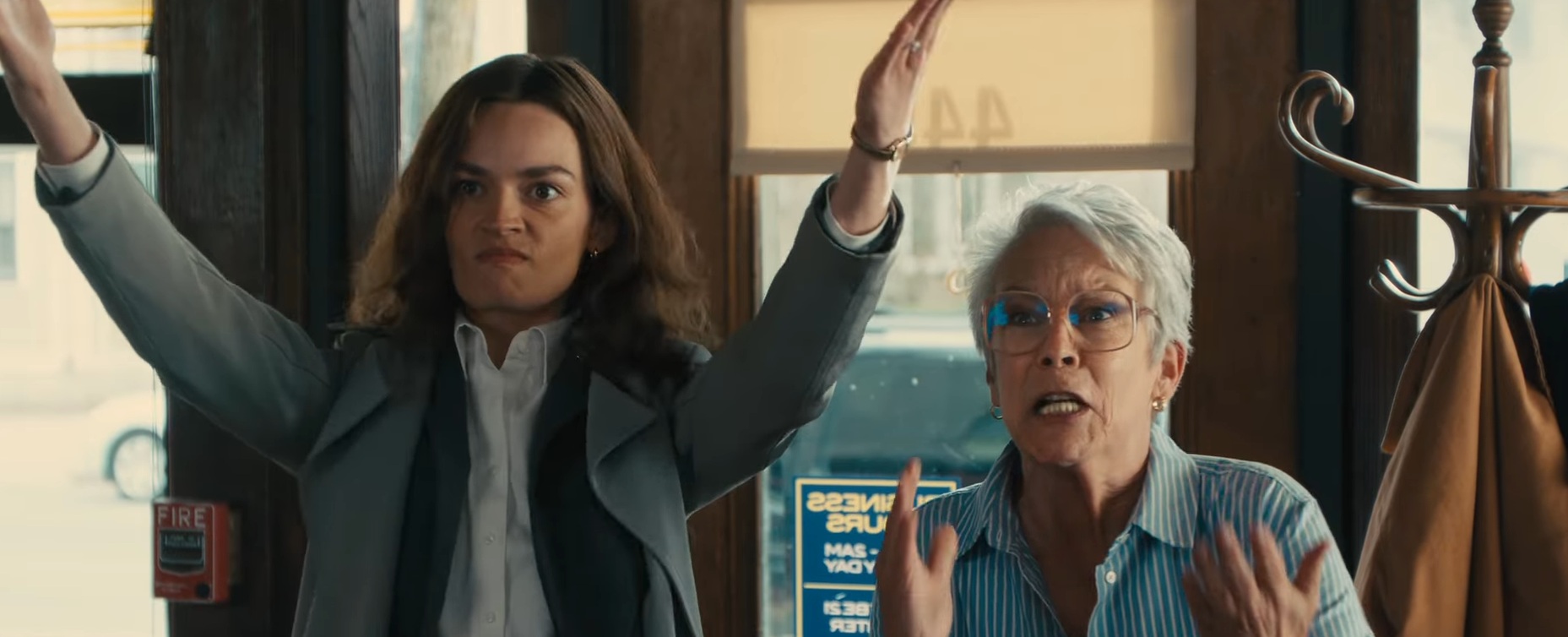
Emma Mackey does what she can here, though it’s all in vain, as the character is so thinly conceived. Brooks has a very old-fashioned view of things, which in Mackey’s case, makes Ella sadly very boring. With other characters, his views on mental health are far worse, but in making his title character a snore, we never care about anything that happens to her. Jamie Lee Curtis would seem like a perfect fit for a supporting role in a James L. Brooks picture, but she’s given a character that’s far more shrill than engaging. She has the type of role that would seem broad on a sitcom, let alone a feature film. Jack Lowden is drawn so annoyingly obvious as a bad guy, the way he keeps popping up without Ella knowing to get rid of him strains credulity. Woody Harrelson and Kumail Nanjiani both have parts that could have been left on the cutting room floor, though neither sleepwalks their way through the porous material, so at least there’s that. The same goes for Spike Fearn, though he’s got the least interesting character of the lot, complete with his sister accidentally getting into his edibles. It’s nice to see Albert Brooks and Julie Kavner reuniting with Brooks, though they’re given very little of consequence to do, until the script calls for them to suddenly be around or spout some wisdom. Supporting players include a completely wasted Ayo Edebiri and Rebeca Hall, as well as Becky Ann Baker, Joey Brooks, and more. No one gets out unscathed.
Writer/director James L. Brooks has lost the touch that once made him among the most beloved filmmakers in the business. His writing is just all over the map and misses the mark at all turns, stranding his cast, while his direction feels indifferent. If there’s one thing to praise, it’s the technical aspects, including solid cinematography from Robert Elswit, as well as a jaunty score by Hans Zimmer. To be clear, they’re wildly overqualified for this, but at least they give it a sheen. Brooks wants to be doing a throwback screwball comedy, but instead of bringing to 2025 what worked in the 1950s, he gives everyone the mindset of the 50s, which just does not work. Look no further than the sequence where Ella accidentally consumes a bunch of her brother’s marijuana edibles. Like, seriously? Are we still doing that kind of humor. It’s just low hanging fruit, which Brooks can’t even make funny, so the easy targets are still being missed.
Ella McCay might have been an acceptable streaming series, spinning its wheels for six hours to tell essentially the same story. As a two hour film, however? No. Just, no. It’s not well done at all, serving just as a measuring stick for how far the might have fallen. Brooks once seemed incapable of making a bad flick. Now? He hasn’t made a good one in, at minimum, two decades, and it sure seems like there isn’t another one in his future. At 85, he has nothing left to prove, and I’ll always love him for The Simpsons alone, but his ability to make a movie appears to have left him, which just makes me sad.
SCORE: ★★


One lingering question I had when I was writing up my preview of this movie and ultimately decided to just not bring this up at all because I couldn’t really figure out a way to address it was… why did James L. Brooks set this movie in 2008? When you were watching the film, did you get a sense that he was trying to “say” something about the dawn of the Obama era, with the benefit of 16 years of hindsight? Was he wanting to feel nostalgic for when things seemed a little more hopeful for our country, or maybe he just didn’t want to deal with post-COVID politics?
Also, since she’s obviously a Democrat (being the Lieutenant Governor for someone selected to serve in the Obama Administration and all), and this takes place in 2008, and she’s ascending to this position vice being elected to it… is it fair to assume Ella McCay got wiped out with virtually every other Democrat in the 2010 midterms?
So, no, not really. There’s some lip service done to the recession, but that’s about it. Kumail’s character has another Trooper with him at one point who wants to sneak some extra overtime and gets yelled at for taking the state’s money when people are struggling, but aside from needing a way to get Governor Bill appointed, there’s no other reason.
As for Ella getting wiped out, I do think this unnamed state is probably a Rhode Island/Vermont type, so it might not have been a landslide, though without spoiling things, the movie does end in a way that makes that issue a nonissue. I’d say more, but spoilers, and also, you’d probably get annoyed and baffled by the choices Brooks makes here.