
 Shane Slater
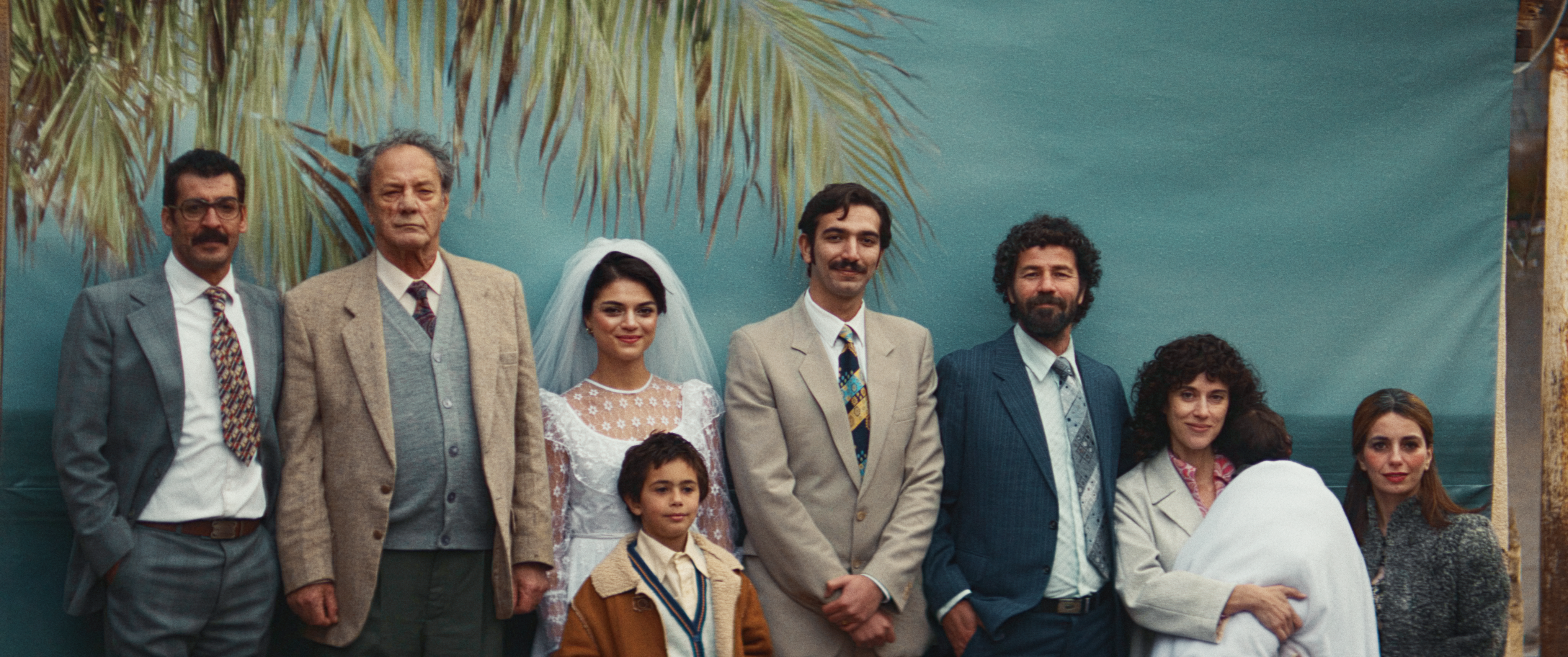
As one of several International Feature Oscar submissions exploring the Israel-Palestine conflict, Jordan’s All That’s Left of You stands out as one of the more memorable entries. This decades-spanning drama charts the course of Palestinian history from the initiation of the Nakba to the present day, through the eyes of one family. The result is a truly heartrending film that has duly won accolades along the festival circuit. It was therefore a pleasure to chat with the film’s director Cherien Dabis, who also stars in the film, as she spoke candidly about the story’s personal inspirations, the distribution challenges facing Palestine-centric films and subverting the Hollywood mold.
Shane Slater: With the seemingly collective amnesia of earlier events in the aftermath of October 7, this film is very timely and relevant. What was your motivation behind telling such a historically expansive and ambitious story?
Cherien Dabis: I was really inspired by my own family, actually. My dad’s side of the family is Palestinian. He’s from the West Bank, and he was exiled in 1967. It took him many years to get foreign citizenship so that he could just return to visit his family and the only home he’d ever known. So that part of the film is inspired by him. I was the first in my family to be born in the US and raised mostly in the diaspora, but going back and forth and spending time in Palestine. So I got windows into occupation. I saw my dad harassed and humiliated at borders and checkpoints. In fact, at some point, my dad stopped taking us to the West Bank because he didn’t want to subject us to that. And he also didn’t want to be humiliated in front of his family anymore.
And I think what I was particularly struck by over the course of my life, was just really watching how impacted he was by the events happening back home. How he became more and more disillusioned, more and more obsessed with Palestine. The news was always on in our house. He was just so obsessed with the things that we did wrong and the things we should have done and the things we need to do. And as he got older, he got angrier and angrier about it as well. You know, watching the total deterioration of his homeland, and the chronic stress and worry and devastation just really impacted his health.
And I saw kind of my own identity form in opposition to that, you know? Seeing his anger and seeing how it was just creating so much suffering for him, I wanted to find a different way. I wanted to really figure out how I could look to the future. Whether there was anything I could do to help, how I could channel my anger into something constructive.
So there was that kind of intergenerational aspect of my relationship with him. And then also seeing my grandfather, who actually lived in Palestine his entire life in the West Bank, he was a farmer and just lived such a simple life. He had such a sense of peace about what was happening. So it was just very interesting for me to kind of see my grandfather, my dad, and then myself, and how our identities formed in relationship or in opposition to one another.
And I really wanted to tell a story about how the events that we’ve just been reading about for so many decades impact people and impact relationships between people, and really change the fates of entire families. And I really, inspired by my dad, wanted to tell the story of how Palestinians became refugees. The largest amounts of Palestinians became refugees first in 1948, and then again in 1967. And my dad is a ’67 refugee, but that story’s really never been told. There are millions of Palestinian refugees all over the world, but mostly people don’t know how Palestinians became refugees and when and how it all began. And of course, you can go back even further than 1948, but 1948 is essential in understanding how we got to where we are today.
So for me, the story had to begin in ’48. And ’48 is a collective trauma for all Palestinians. I wanted to examine my own intergenerational trauma within this film, and really kind of explore some of the questions I was asking myself about that trauma. What can I do with it? Is it possible to heal it when it’s ongoing? It’s not post-traumatic stress syndrome. It’s present traumatic stress syndrome for so many people, so many Palestinians who live there.
SS: There’s a strong sense of these characters’ coping mechanisms for the trauma, like when they embrace the grandfather’s memory loss as a blessing, or finding a silver lining to a tragic dilemma. Could you touch on how you explored these sentiments?
CD: I sort of put my characters in a similar dilemma that I was facing. Just needing to answer that question, like, can we make meaning out of this? Is there a way that we can suffer a little bit less by making meaning out of this? Can we transcend our suffering in some way and continue to hold on to our humanity in the face of such horrible circumstances.
SS: The 1948 chapter struck me in the way it mirrors some of the familiar narrative beats of Holocaust dramas. Were you intentionally leaning in to those tropes?
CD: I think in part, it was a natural outcome of how these things played out in truth. But I was also leaning into this classic Hollywood style. I grew up watching these classic Hollywood films about war and occupation, and I was very influenced by them. And I always wondered why our story wasn’t told in that way. Because the Nakba, there’s so many aspects of that story that lend themselves to this classic Hollywood style that are very similar.
And so for me, it felt almost subversive to use some of some of the tropes of that genre, because we’ve been so shut out of Hollywood. And this story, not only has it not been recognized, it’s been kind of erased from the world’s consciousness. It’s still actively, being erased. And so I thought, what better way to tell the story than to borrow from that genre and really create something that feels like it is a classic Hollywood film, but a story that, sadly, Hollywood is not embracing, but is a reality, you know? It is the lived reality of of hundreds of 1000s of people who survived the Nakba.
SS: As you mention Hollywood’s refusal to embrace these kinds of stories, I can’t help but think of No Other Land last year. A film that was well-received and won an Oscar yet struggled to find distribution in the US. Your film is similarly critical of the occupation and I was curious to know what has been your experience in navigating the distribution landscape?
CD: It’s interesting because, I would say that in some ways, it has been remarkable that the film is really connecting with audiences. It’s really having a kind of profound, powerful, emotional impact on people. And I’ve seen that all over the world, at screenings and festivals all over the world. We’ve won 20 festival awards, including 10 audience awards, which for me, is a filmmaker’s dream to really see how much the film is connecting with audiences and people.
On the other hand, it does feel like, especially in the United States and especially in the distribution world, it has been definitely disappointing. We premiered at Sundance, we had the hottest slot of the festival. We had a standing ovation that was twice as long as standing ovations usually are at Sundance, we got great reviews. People were sobbing in the theater. I mean, you could hear the emotion. And still, distributors expressed fear of the subject matter. You know, if distributors said this about any other group of people, we would call it what it is. We would call it racism.
And I think, it was tremendously disappointing to work so hard to make a movie, a movie that basically lived what most Palestinians live, which is war, exile. You know, we were in Palestine. We had prepped the entire film. There we were, and we were two weeks away from shooting when October 7 happened. We ended up having to flee and evacuate and basically start from scratch. I’ve never worked so hard in my life. And then to have a film that I feel like, despite everything we went through, really turned out well in the sense that it is powerfully connecting with people. And then to have distributors react in this way, I think it was a huge kind of wake up call for me, in that I realized the depths of racism and kind of the extent to which the gates are closed to us Palestinians.
In some ways it’s not surprising, because our films have never gotten mainstream distribution, even before No Other Land. I think what makes No Other Land so shocking was that it did so well at the box office. It got so many accolades, it won so many awards, and then it won an Oscar, and still no one would pick it up. And still, no streamer would purchase it for the longest time. I think finally, they did get a streaming offer.
But I think that that’s what made that film so noteworthy. You started to see the extent of the racism and the fear and the unwillingness to take any risk. I don’t even know why our stories have to be a risk. But even if you want to say they’re a financial risk because they’re unproven, you could say No Other Land disproved that and did exceptionally well, you know? Especially for a documentary.
So it’s been very sobering, I would say. But I’m looking to empower myself within that really, and to kind of see the opportunity in this. To empower myself as a filmmaker and to really learn self distribution. I have partnered with Watermelon Pictures, but I am co-releasing the film with them. We are co-distributing the film. I’ve started my own distribution banner because I don’t want to ever be in this position again. And I really think the future of distribution for artists is artist to audience.
SS: Could you comment on casting members of the Bakri family to play these roles? It was so lovely to see them on screen together.
CD: It was my dream to have them all in one film. As I sat down to write this film, and I knew it was an intergenerational portrait of a family, I thought, what better way to cast it than to cast members of the same family? And there’s only one acting dynasty in Palestine, it’s the Bakri family. So they immediately came to mind. And I just saw them as I was writing, you know?
To get them all, and for them to be available for this, was kind of a massive coup, because they’re always constantly working. At first they weren’t all available, so it took time to kind of get them all. It’s Mohammad Bakri, who’s the patriarch, and six of his kids are actors. His eldest son, Saleh, plays Salim in the film, and then one of his younger sons, Adam, plays the younger version of him. And then Mohammed’s nephew plays teenage Noor.
So it’s actually four generations of one family, which was amazing. And as a director, it definitely made my job easier. Like, what director doesn’t want to make their job easier by casting a film really well and smartly. It made my job easier in so many senses, because they not only resembled each other, and really lent such a sense of authenticity to the family, the intergenerational portrait, but also their voices sound alike. Their mannerisms are really similar.
So the whole thing, just elevated the movie immediately, just by having them be a part of it. They brought so much nuance. Mohammed and Saleh are on screen quite a bit in the 1978 part of the film, and they brought so much of their own relationship to that relationship on screen, which was just beautiful. And honestly, when I say they made my job easier, I really found myself just not even having to communicate that much, because they were already bringing so much. It was really amazing.
All That’s Left of You opens in select theaters January 9, 2026.


Great article. I especially appreciate the fact that, they rose above all averserties. Great work done by the author of this article Shane Slater.