
 Shane Slater
Among the myriad ongoing conflicts around the world, the Sudanese Civil War is surely one of the most underreported. With their new documentary Khartoum, directors Anas Saeed, Rawia Alhag, Ibrahim Snoopy Ahmad, Timeea Mohamed Ahmed and Philip Cox hope to change that unfortunate reality. Weaving together the stories of five diverse individuals, Khartoum creatively conveys the human impact of war. As the film made its Sundance debut, Awards Radar interviewed its collective of directors to discuss the making of the film and its important message.
Shane Slater: This is quite an ambitious project, with multiple directors. How did it get started?
Rawia Alhag: The project started in 2022. So it started in 2022 when there was like an online open call for filmmakers to do a poem story on Khartoum. And that’s where everyone applied and then got selected. Then we went through a series of workshops to come up with the perfect link between different stories. After the workshop, we continued with the film until the war broke out.
Then we had to decide whether to continue with the film and show our story to the world or stop here. So we decided to continue until we came to an agreement with our partners in the film and talked to them. So after the workshop, we started filming and then war happened. And then everything paused. We lost our participants for a few months. We didn’t get in touch with them because they were in war zones. Obviously, no internet, no type of connection. So after that, we brainstormed a couple of ideas and at the end we decided to get in touch with them and then bring them to Kenya to be able to continue the film. So then we got the participants into Kenya.
We all lived together. And then we started filming to try to test many different approaches. And then after we finished, some of the participants remained in Kenya and some of them went back to Egypt and Sudan.
SS: What struck me most about this film is that it’s so much about the storytelling. We often differentiate between fiction films and documentaries in terms of narrative. Could you speak more about the approach that you took and the creativity in the storytelling?
Timeea Mohamed Ahmed: We had a mixture of styles. We have archive, dreamscape, green screen, interviews. We have different types of roles, diverse styles, just to create something artistic. As you know, we are five directors and also five subjects, so that was a bit challenging for us and we were not able to navigate all the time. But that helped us to create something that is more creative than we expected and we used different types of styles. The way it turned out, that’s the way it should be.
RA: So after the war, because we couldn’t film some of the scenes. We preferred a creative way, which combines green screen, interviews, dreamscape. We didn’t want the film to be another report on war, like other movies. So we wanted to do something creative in a way that balances negativity and positivity. At the end of the day, there are people who have dreams and all that. So, yeah, it was a perfect mix. And we tested out many different ways. And then at the end, we came up with this film.
SS: What were those initial conversations like with your subjects, and how did those discussions shape the film?
Anas Saaed: Most of the participants in the film are our friends. Also, with Khadmallah, I’m a regular customer in her place. I take tea, coffee, with friends. And we speak together and gather in her place. That’s why we have a good connection and good trust. Also, Jawad is part of the resistance committee and we are also part of that thing. That helped us a lot, for it to be easy to speak to them and trust us.
TMA: It’s not the easiest navigation with all the subjects. For example, I know that Rawia spent a lot of months just to find kids that matched with her story. And I personally met Jawad in the second phase of filming in Kenya. And that was also not easy, because the story was already starting to be shaped and then we had recreate from that original format and refigure how we could mix these new stories and old stories with the dreams. Also, the developments in his personal story and how that is also related to Sudan.
It was also very confusing even for us. We faced these issues ourselves. We were under the fire. Anything that happened to our subjects also happened to us and to the majority of the Sudanese people in conflict areas, which is most of Sudan. And that helped us also in the making of the film, especially in the second phase, since they know that we are not just some directors from nowhere. We are the same people, who are facing the same problems that they are facing. And we know the issues that you want to reflect, but more or less in a personal way. We also interacted with them in the green screen. And we would tell them about what’s happened to us, specific moments and events. We – all the four directors – did that with them and after that, we made something together.
Ibrahim Snoopy Ahmad: Adding to that, before shooting with them, we went to a group therapy session, just to let them heal from war. Getting them back into thinking about the situation that they were in, can be a little bit annoying or hurtful. So we had to make sure that they recover first. So we had many sessions with a professional therapist, including us ourselves. We had those sessions, so that we can recover from what we saw over there.
Seeing a lot of dead bodies and stuff like that, you need to go through a phase of healing first. So we had to make sure that we recover first, and then we use those methods that were implemented on us, on our participants. So that they can feel like these guys aren’t just using us, like Timeea said. We are all in this together. We’re not just telling their stories, but we are also part of this together. And that’s why you see us in the film also, because we wanted to share some of our moments as well.
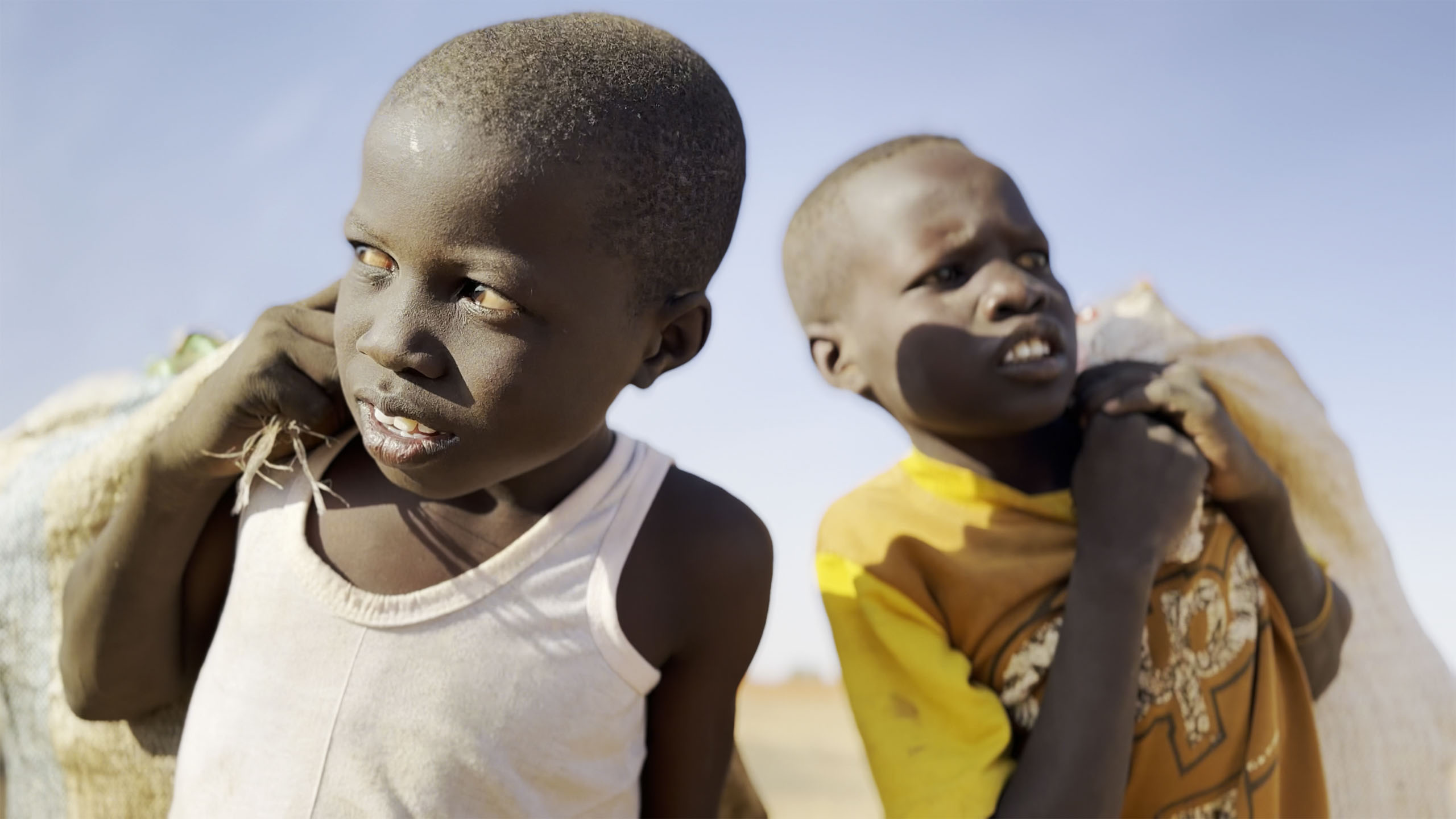
SS: Was it particularly challenging working with the kids? How did you address the trauma and prepare them for the film?
RA: For the kids, their journey to Kenya was not easy. The children spent a lot of time in war. After we came to Kenya, the main goal was to let them return to their normal life. So, the kids’ journey was a challenging journey itself because they were in the middle of the war zone.
ISA: It took us a few weeks to reach out, or even a month. And what happened once we got them here, we made sure that they had private sessions, but we also made sure that everyone got along with them, everyone befriended with them, and made them feel better. Even though some of us hadn’t seen them before or saw them just a few times, we had to make sure that they feel comfortable opening up and then being friends with us helped.
Also, when they had to be evacuated, they were escorted by one of their family members, and that also helped a lot in their journey, so that they’re not alone. And now the kids are in safe here in Kenya, and Rawia is their custodian.
SS: What are you looking forward to from your Sundance experience, and what do you hope the audience takes away from this film?
ISA: It’s the first time for us to be participating in Sundance and we don’t know how things will be like. A lot of filmmakers’ career got propelled because of Sundance. So that alone is a whole different spectrum. But we’re here on a specific mission, and that mission is to raise awareness about Sudan.
This side of the world, they don’t have any idea of Sudan. They know about Darfur, because a few years ago there was a campaign, Save Darfur. But it has a bigger, wider spectrum. And what’s happening right now in Sudan, it’s affecting 14 million people. 14 million people are being displaced internally and externally. And a lot of people’s lives have changed. And you’re never safe, you know? No matter how much you think that you’re safe in a war zone, one of those days you will get hurt.
So we’ll try as much as possible to be advocates for Sudan abroad, you know? Acting like temporary ambassadors and letting the world know what’s happening right now. We hope that through our film, changemakers will notice what’s happening in Sudan.
We try to digest as much as possible information about the situation in Sudan, but also not too much information to the point where it becomes news, so that you can understand the internal feelings of people. We represented it through five different participants, but that’s just an example of what people go through. People go through way worse things in Sudan. But we just tried to, as much as possible, simplify what’s happening right now.
AS: We need to share with the world our story. Normal stories from normal people. Not from political sides, but from artistic sides. And we need people to know about their ambition and their hope in a creative way and in artistic way. We need to share these different sides because right now, Sudan is facing a very tough war and we need to keep an eye on Sudan.
TMA: We need people just to feel something. That’s the reason why people watch movies. To feel something towards Sudan. It’s a lot of numbers. There is something called emotional fatigue. People get exhausted by too much information being fed to them. So we tried to personalize it, as Anas said, in a creative, artistic way. And we’re just expecting people, when they get out of the screening, just to feel solidarity with Sudan, with the Sudanese people. And also, maybe even feel further impacted to do something. Someone might donate. We have a website that has access to the film and we are hoping a lot can be impactful coming outside of Sundance and the coming screenings.
AS: Also, there are so many stories in Sudan that are absent from the cinema world. This is the first film to be in Sundance, and for our colleagues in Sudan right now, journalist and filmmaker, to hold cameras in this moment is very difficult. There are many stories there.
[This interview has been edited for length and clarity]


Comments
Loading…