
 Steven Prusakowski
Similar to the vast deserts of Arrakis, the universe that has been created in Dune can feel endlessly expansive. So much, in fact, that tackling its full scope may seem like a insurmountable task for new fans. I will admit, Dune: Prophecy intimidated me at first—so many settings, countless characters and storylines spanning across decades of time. The same thing that intrigued me made me hesitate if it was going to be too much for this newly established Dune fan. The series, which is inspired by “Sisterhood of Dune”, a novel by Brian Herbert and Kevin J. Anderson, takes place 10,000 years before the events of the films – that is a lot of ground to cover.
As I started the series I quickly found myself captivated by the chess match that played out on screen. While taking place in distant worlds and even more distant times, it’s the humanity at the core of the series, and its connection to many qualities of our world today, that made it far more accessible than I initially anticipated.
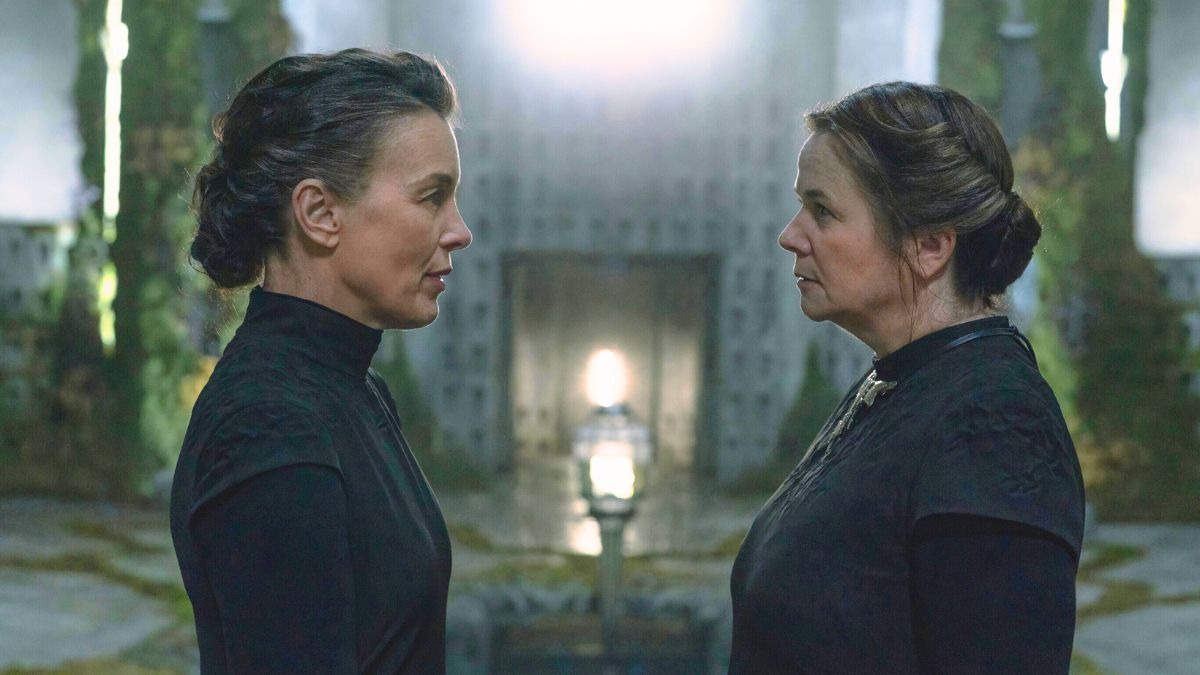
Beneath the surface of intricate power struggles, profound revelations, and the shifting tides of truth and lies, the relationships in Dune resonate with not just our contemporary world but also with the entire sweep of human history. Being a Dune series, Prophecy is overflowing with stunning visuals, unique science fiction innovations, mystifying powers, and other elements that build a one-of-a-kind world that aligns perfectly with the universe that precedes it.
But at its core, what is truly gripping are the themes and ideas that transcend friction to reality. The inner truths that drive the characters and are rarely what is expected – layers of deception, ambition, and manipulation by those in power are all just as relatable today in our world. Much like the political intrigues of the Landsraad or the schemes of the Bene Gesserit, the series explores how basic human qualities can help shape the fate of entire worlds for evil or good.
I had the opportunity to speak with the cast and crew about their work on the series (which you can find in full below), and the insight they shared only deepened my appreciation for the way Dune merges its speculative elements with timeless human conflicts. In addition to discussing their work on the series each actor and producer interviewed, also shared the Dune power they would most like to have and how to use it – you can find their answers exclusively in the video interviews.
Olivia Willams and Emily Watson, who play sisters Emily play Harkonnnen sisters, Vayla and Tula who are leaders of The Sisterhood, the group that that will become the Bene Gesserit spoke about developing heir characters on the series, both as sisters and leaders.
EMILY: In terms of the Sisterhood, I think that the sisters have many terrible shared secrets, which they have to keep each other close to protect. They also have, just like, all the younger sister thing that anybody can recognize. The older sister is very domineering. The younger sister is very sort of apologetic and and quiet. I think it’s very, very recognizable to us. We both have siblings.
OLIVIA
Emily had a brilliant idea when we first started discussing the job to go and look at the portraits of the Tudor kings and queens and the various sisters and cousins of Elizabeth the First and how she disposed of them. There are so many extraordinary parallels if you think of family and grudges and religion, but also these they wrote letters of love to each other.
EMILY: And it was really a police state where everything was spied on and controlled. They say that the image that we have of Elizabeth the First now as the Golden Queen is absolutely a product of the PR of the day. So that was like The Sisterhood controlling the narrative. We have truth is a commodity. We own it. ‘This is what’s true and this is what isn’t,’ we use it. It’s the dark arts to control society, control who’s in power, who’s out of favor. It’s quite bad.
Travis Fimmel who plays Desmond Hart, a charismatic soldier with an enigmatic past and Executive Producer Jordan Goldberg, whose credits also include Westworld, Interstellar, Inception, The Dark Knight, and The Dark Knight Rises discussed what interested them most about the series.
TRAVIS: Political craziness.
JORDAN: Yeah, we have a lot of political intrigue in our show when we have a lot of people trying to control things.
TRAVIS: You don’t know what to believe. I like the games that are played in scripts. It’s a big chess match. It’s one big riddle. Coming on for the journey, tou’re always second guessing yourself. You don’t know who’s a hero, who’s a bad guy. And there’s just a real big competition too. Who’s going to win? It’s always great to watch a game. It’s fun and adventurous.
GOLDBERG) And in this version that we’re telling, it really kind of dives into that because we’re just now getting started with the story. The universe as humanity has been untethered from thinking machines. That story is sort of our take on what’s going on in the Dune universe right now. But, we adhere to canon. We adhere to the echoes. We want to make the fans who know the series feel fulfilled about the series, about watching it. But at the same time, for those who don’t know about Dune, it’s sort of an introduction of what the universe is.
Goldberg’s fascination with exploring the origins of key elements in Dune, such as “the voice” and the Harkonnen family’s history and uncovering where these iconic aspects began, as well as the complexities of the feud between the Atreides and Harkonnens is at the core of Dune: Prophecy.
Showrunner, Executive Producer, and self-proclaimed geek, Alison Schapker discussed tackling the massive ‘Dune: Prophecy’ series. She also got into the caution about AI which has lept from the pages of sci-fi to real life.
ASHLEY: You need a tremendous respect for the material and a privilege to be working in it. I think that the, I approached it the way I would approach any story, which is like breaking down character arcs and emotional through lines and, and the world building is, to me, it’s so much about assembling people who you’re like-minded with, but at the same time are bringing their own genius to every aspect of the production.
Actresses Jade Anouka and Chloe Lea two women raised by The Sisterhood, both who have their own secrets talks about their experiences joining the Dune universe with brand new characters, Sister Theodosia and Sister Lila, respecitvely.
CHLOE: I think I was at first intimidated. Then when I spoke to Alison and read the scripts, I kind of just trusted the script so much.(1:36) And also, it’s already got a fan base, like the Dune universe, who are rooting for us to do well, and they’re excited about the show. (1:44) So I think initially I was intimidated, but I’ve come to realize everyone wants us to do well and everyone wants to like the show and the scripts are just amazing and the sets and filming was such a great experience. (1:54) So I think that kind of put me at ease a bit.
JADE: Maybe naively, I wasn’t intimidated. I was just really excited. I think part of that being the fact that my character, and I think yours as well, are new characters. So we didn’t have the weight of that character existing before and what that means. We had a bit of freedom to create a character that was brand new, that obviously is based in Dune. There were things about these characters that Dune fans will know, but it’s a brand new thing. It just felt really exciting to be able to create a new character that would now exist in the Dune universe.
Actress Johdi May who plays “Empress Natalya Corrino” shared her pleasure with the casting and how it tells stories that remember living does not end in your thirties.
JODHI: The series is groundbreaking in that we see a lot of actresses over the age of 40 on screen – which I think is really important. We don’t see enough of that. I think that it provides this incredible sense of what leadership is for a woman, what power is for a woman. I think if I were a young girl today, this is absolutely the kind of TV I would want to be watching. And it’s absolutely the kind of representation on screen that I would want to be seeing, or I would want any daughter of mine to see, because it’s complex and it’s morally ambiguous. What if there were a matriarchy? We don’t see that enough, I think. So it’s very fresh.
In addition to a very entertaining response to the Dune power they would choose, a trio of stars who all have very different ties to royalty on the series Josh Heuston (Constantine Corrino), Sarah-Sofie Boussnina (Princess Ynez Corrino), and Chris Mason Keiran Atreides (the royal swordmaster) discussed working on the series and some of the challenges it offered. Mason also discussed how the series exceeded the limits of his own imagination.
CHRIS: What’s been amazing for me is now that we’ve seen it, you know, you read the full script, obviously, and you have an idea of other people’s scenes, but seeing other people’s work and how those scenes come to life and the imagine my imagination, I thought was really good. But reading these scripts, I would turn up to set and realize my imagination was nowhere near as good as whoever was designing the sets or the props or the costume or the hair and makeup. Seeing everyone, the wealth of talent on screen in the scenes that you’re not in has been really rewarding.
Be sure to watch all SIX interviews (above), each providing more layers to the already robust universe of Dune while also making it increasing alluring to learn what secrets the series has in strore. Also check out our NYCC press room and panel coverage of the series, and look for more coverage to come of Dune: Prophecy.
Dune: Prophecy continues with its fourth of six episodes on Sunday, December 8th only on HBO.


Comments
Loading…