

 Cory Stillman
“Being a female director in a generally male-dominated industry, I totally understand how it felt to be a female scientist back in the day,” says director Millicent Shelton. “Knowing that you’re qualified for the positions and are worthy of the job title but not getting the type of attention or opportunities that your peers are getting just because you are a female is very similar to what it feels like being a female director. The tides are turning, but they are turning slowly.”
Shelton’s personal connection to the story of Elizabeth Zott in Apple TV+’s Lessons in Chemistry is just one of the many reasons she has garnered her career’s second Primetime Emmy nomination for her work on S1E6 “Poirot.” Shelton was previously nominated for Outstanding Directing for a Comedy Series for her direction of the hilarious “Apollo, Apollo” episode of 30 Rock. But with a background directing music videos for such iconic artists as Mary J. Blige and Aaliyah, it is no surprise that Shelton possesses a diversity of credits, including episodes of other hit shows like Black-ish and The Morning Show.
Lessons in Chemistry just might mark Shelton at the height of her powers, tapping into an authenticity rarely seen in period dramas.
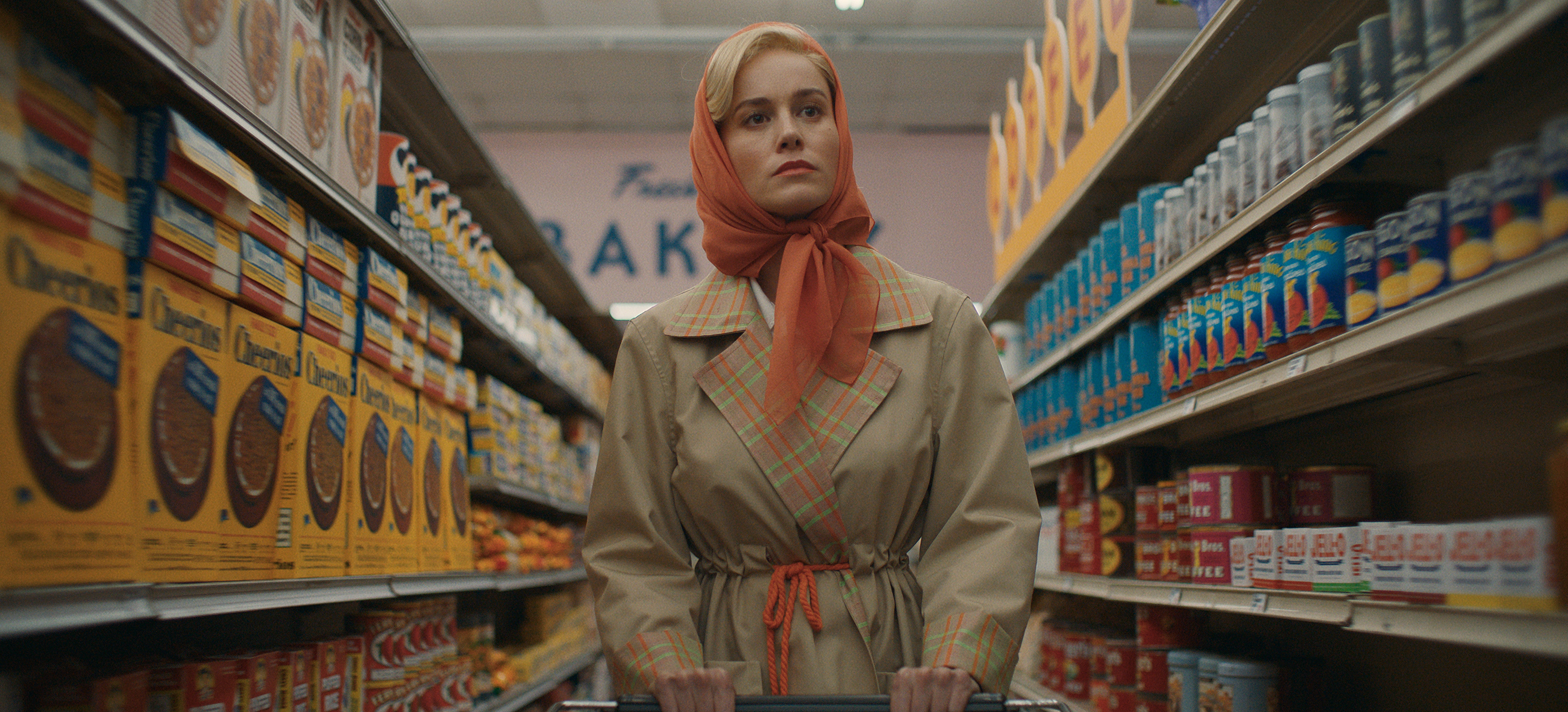
“Too often, portrayals of the 1950s are too glossy and clean,” says Shelton. “I wanted to convey the messy, realistic nature of the world the characters lived in despite their perfectly pressed wardrobe.”
Shelton achieved that sense of realism with a keen attention to detail. Because “Poirot” required her to differentiate between the 1950s and 1930s, Shelton and her team looked for ways to design each period without relying on post-effects like desaturating the colors or doing a color wash. They used atmospheric smoke to make the air feel heavier in the 1930s, and even added bits of dirt to actors’ teeth to acknowledge the fact that toothpaste would have been exorbitantly expensive at the time. The St. Louis native attributes much of the episode’s success to the shared vision maintained across all departments, which proved especially vital as the episode shifted towards the pivotal Sugar Hill protest in the late 1950s.
“Everyone on set that day did an amazing job to honor the ‘real’ pain these non-violent protestors experienced, which is deeper than being beaten and dragged away. The emotional toll is traumatizing,” Shelton says.
As the talented director points out, actress Aja Naomi King was nominated for an Emmy for her work in this stirring sequence. Shelton and King’s nominations are two of the ten total nominations for Lessons in Chemistry, including another nomination for Outstanding Limited Series.
Shelton and the rest of the Lessons in Chemistry team will aim to bring home the gold next month. In the meantime, check out our full conversation with Shelton below. We discuss her background as a music video director, as well as the historical research that went into her work on the series.
Congratulations on your Emmy nomination! How did you integrate your unique style with the show’s established tone and vision?
Luckily, the showrunner for Lessons In Chemistry, Lee Eisenberg, really empowered the directors to create their own movie for each block. The goal was to tell the intimate story of Elizabeth Zott in a cinematic manner. Drawing from my experience in music videos, I have a love for movements and aesthetics, which made it easy for me to incorporate these elements into the world of Lessons In Chemistry. Directing a period piece is magical. The cars, costumes, and sets suddenly transport you back to a different time. The challenge is to not overly romanticize it and remain authentic. Too often, portrayals of the 1950s are too glossy and clean. I wanted to convey the messy, realistic nature of the world the characters lived in despite their perfectly pressed wardrobe.
Were there specific aspects of the “Poirot” script or storyline that you found particularly challenging or rewarding to direct?
One of the biggest challenges for me was that I was the first director to film multiple scenes inside the “Supper at Six” set and had to film there for an entire week. We had many scenes, and making that set feel alive and different for each scene was challenging. I felt that “Supper at Six” was not only a set piece but an important character in the storytelling. It’s symbolic of Elizabeth’s rise as an independent feminist. Zack Galler (DP), Kris Kolpek (AD), and I prepped and walked the set for a couple of days. We discussed what we should do cinematically to keep the camera alive and what we should do with the extras to keep it moving with the appropriate tone per scene. For me, I had to think about how I was going to represent each space and what role it played in relation to each scene and character arcs. By the end of that filming week, my head was spinning. We had filmed so many scenes in the exact same set that I felt bleary-eyed. I was hyper-focused on trying to visually reinvent the space each time we returned so the audience was not bored by it.
I found it most rewarding to have storylines that allowed me to explore characters and humanize them to the audience. In this episode, I was tasked with revealing why 1950s Elizabeth was emotionally closed off based on the limited pieces of her childhood that we flashed back to in 1932. She witnesses her father, who was unaccepting and abusive of his son because of his sexual preference, drive her beloved brother to suicide. I wanted to make sure that her father and brother were not one-note caricatures. It’s difficult to show the depth and history of a character in a flashback. I believe in finding the humanity in both good and bad characters, so this was a challenge. Luckily, I had two gifted actors, Jon Fletcher and Jackson Kelly, to work with.
How did you approach distinguishing between the 1950s and the 1930s time periods in “Poirot?”
I wanted the 1930s to visually feel different from the opulence and ease of the previously established 1950s without resorting to a post-effect like desaturating the colors or doing a color wash. The 1930s was a time of the Great Depression in the US. It was a more desperate time for people. I wanted that to be reflected in the characters’ attitudes and environment. I chose a muted color palette for the 1930s. The sets and wardrobe (Production Designer, Cat Smith and Costume Designer, Mirren Gordon-Crozier) reflected that same attention to the color palette. We stayed away from anything bright but didn’t limit ourselves to brown. Everything had to have a used and worn esthetic. When the Head of the Make-up Department, Miho Suzuki, came to me to discuss the dirt level on the actors’ teeth because toothpaste would have been too expensive during that time period, I knew we were all on the same track! We even made the air in the 1930s feel heavier by the use of atmospheric smoke.
How did your directorial background influence your approach to depicting the protest by the Sugar Hill residents?
I think that for every director, your background and personal life affect how you direct. The more of a life you live, the more nuances and heart you can work into a performance. In the Sugar Hill Protest, I understood those characters, but I also understood Elizabeth’s plight throughout the series; being a female director in a generally male-dominated industry, I totally understand how it felt to be a female scientist back in the day. Knowing that you’re qualified for the positions and are worthy of the job title but not getting the type of attention or opportunities that your peers are getting just because you are a female is very similar to what it feels like being a female director. The tides are turning, but they are turning slowly. To feel like, “Wow, I am capable; there’s no reason why I shouldn’t be able to rise up,” because being a director has nothing to do with your sexuality; it’s all about creativity, which is how Elizabeth felt about her place in the Science world. I was drawn to this project because, like Elizabeth, I believe that you don’t give up; you preserve, and you fight back. You will achieve if you hang on to your dream. A lot of me was put into the ups and downs of Elizabeth’s journey because I have lived a version of that journey. Also, I have children, and her relationship with her daughter was something that I could understand and relate to. The love between a mother and daughter is something that is very unique, and I have a great relationship with my daughter that I could draw from and with my mother as well. You always put a little bit of you into the piece, and it’s great when you have that personal connection with it because I think you can work with that and work with the actor to make it feel human and rounded and to give it those nuances between the dialogue that bring it to life.
Interestingly enough, we could not find real photographic evidence of the Sugar Hill protest in the late 1950s. I did a lot of research, talked with a historian, and got a lot of information about what a protest of this type during this period would have looked like. That day was the toughest yet most beautiful day of filming. The cast and crew all wanted to tell the story as authentically as possible. I had to push the stunt police officers to be very aggressive with the protestors and, conversely, for our protestors to not fight back. We’ve seen many Civil Rights films with protests, and they are horrible; however, I wanted to capitalize on this opportunity to make this one feel personal. As an audience, we know Harriet prior to the protest. Witnessing this ugliness happening to her and her husband should hurt because she’s not just an unknown Black Woman; she’s our friend. I believe that if you are going to show any character’s pain, you must humanize his/her journey and not exploit it. Everyone on set that day did an amazing job to honor the ‘real’ pain these non-violent protestors experienced, which is deeper than being beaten and dragged away. The emotional toll is traumatizing. I was thrilled that Aja Naomi King was also nominated for an Emmy for her performance. She’s the heart and soul of that scene because you experience it through her character. She has strength on the outside, but the hurt is palpable just under her skin. The moment when the woman is thrown to the ground and stomped on was not written in the script. The stunt performers found it on the day. I used it to specifically show how it emotionally affected Harriet and, conversely, her White friend, Elizabeth.
What specific messages or themes did you aim to convey through the protest scene, and what techniques did you use to achieve them?
I wanted to make this protest feel real and for it to touch people in a way that could hopefully open their eyes to the injustice and hurt of discrimination. I didn’t want to just showcase another incident of Black pain. I wanted to make this moment feel personal to the character and the viewing audience as well. I wanted the audience to feel. I came up as a music video Director, so I think making things “pretty” is part of my DNA. I like big, moving, landscape-wide shots for that reason. We get into the scene, and it’s pretty. The cars are nice to look at. The people are well dressed. However, once the Police officers get out of the cars, that all changes. Cinematically, it changed also. We went from smooth sweeping crane shots to handheld. I had three cameras and told the operators to feel the energy of the scene and follow the emotions of the characters. Going handheld, I put the audience in the perspective of the protestors to intentionally elicit the emotion of being ‘inside’ the protest. With each new take, I would slightly change up things that the Police were doing, so it surprised the camera operators and the cast. The emotion was raw and the cameras discovering it felt just as alive. People tell me that this scene is triggering. I take that as a compliment. It’s supposed to be triggering. I want people to witness the ugliness of the moment and to feel the pain of an injustice to characters that they have grown to adore. I want people to fight to never let anything like that happen again.
What do you hope the audience takes away from this episode?
I hope that the audience is inspired by Elizabeth’s journey. She starts as an almost antisocial woman who has been repeatedly traumatized by a life filled with either being discriminated against or witnessing those she loves suffering the immense pain of discrimination. By the end, she experiences true love, finds her independence, and finds joy because she never gives up; she perseveres. I hope her resilience and personal growth throughout the story remind the audience that, despite difficult circumstances, it’s possible to find hope and happiness.


Comments
Loading…