
 Steven Prusakowski
Mike Makowsky found a simple thematic thread at the heart of Death by Lightning and used it to build the series around something much bigger than the assassination of President James Garfield (Michael Shannon). By exploring the idea of how people want to be remembered, Makowsky creates a story about ambition, ego, political power, and the ways people convince themselves they are the heroes of their own stories.
That theme connects Garfield to the people around him, including those who seek power and those who ultimately lose themselves in the pursuit of being remembered. In a conversation with Awards Radar, Makowsky discussed bringing history to life, working with an extraordinary cast, the underestimated Nick Offerman‘s dramatic transformation into Chester Arthur, and the unfortunate parallels between the show’s world and our own. The ability for this little discussed 160 year old piece of history to connect with the modern political landscape may explain why the niche historic tale was such a hit on Netflix.
Below is our conversation:
Steven Prusakowski: Thanks for doing this. I just re-watched it, and I just re-watched it this time with my daughter, who’s 15.
Mike Makowsky: Oh my gosh.
Steven Prusakowski: She really enjoyed it. I started it and was thinking she’d go to bed. She was like, “Can I watch this with you?” So she joined me and stuck through the whole thing.
The first episode is a little bit much, there’s a lot going on, for a younger viewer that may not pull them in. But once she understood she was all in. I stopped and explained “Okay, this is what’s going on.” Kind of broke it down. She remembered a lot from high school and from social studies, and she really was engaged.
The only thing she complained about, she said, “The shameless cameo.” (I said with a touch of deadpan.)
Mike Makowsky: Oh, me? (Slightly thrown off by my critique.)
Steven Prusakowski: Yes. I’m just kidding.
Mike Makowsky: You know what, when you’re shooting in Budapest and there are so few people that can speak with reasonably convincing American accents, you use the whole Buffalo. Anyone that you could pull in. It was quite literally the difference between cutting the one-line role out of the show or me just stepping in.
Steven Prusakowski: No worries. I loved it.
Mike Makowsky: I think you’re the first person to comment on that.
Steven Prusakowski: Well, when I saw the series the first time, it was before the premiere. I was at the red carpet and I had not met you, so I didn’t know who to look for. When I was watching, I was like, “That’s him. That’s gotta be him.”
Mike Makowsky: Yeah. There is an 1880 Chicago. My wife, that was very cool. She’s also in that episode. She has a line, which is really funny.
Steven Prusakowski: Well, that kind of goes right into the first thing I was thinking about when watching. You take a book, and then you put years of time into it and you get to write the script and develop it and produce it. But then to see it come to life in as big as it is, full of all this detail and bringing history to life, something that most people never would have known about if you hadn’t done it, that must be pretty cool, right?
Mike Makowsky: It’s the coolest privilege on the planet.
I mean, when I first read Candace Millard’s book, Destiny of the Republic, I called up my agent and I was like, “I need to write a darkly comic limited series about the Garfield assassination.” He almost fired me. He was like, “You’re never getting that made, but good luck to you.”
And it was truly just a pipe dream, passion project. And to see it come to fruition, and let alone with the auspices in which I was able to collaborate with this incredible murderers’ row of actors, who I’ve loved for years and years. And David and Dan, the producers of Game of Thrones, who produced the show, and Bernie Caulfield, Matt Ross. I’ve gotten to work with so many of my heroes on this thing and learn so much from all of them.
And to be able to have them all as champions and to be able to call them all friends at the end of the journey is just a remarkable, remarkable privilege. And to be able to make this show and bring James Garfield back into the public consciousness, however minimally, you know, inspiring, noble, good, and a rare breed of politician, both in 1880 and by today’s standards as well. So to be able to cast a spotlight on him again and sort of dredge him up through the dusty annals of our historical memory and try to mount a case for why he mattered in spite of his very short presidency was just a really, really fun challenge.
Steven Prusakowski: This series is a big trophy that will forever be out there that people enjoy. But, like you said, to work with heroes, to work with the who’s who of the best and my favorite actors, Michael Shannon, Shea Whigham, Betty Gilpin, Nick is the best.
Mike Makowsky: I talk to Shea once a week. Betty is the smartest actor I’ve ever worked with on the planet. Nick is the nicest human being you could imagine. He was born to play Chester Arthur.
As soon as I read Candace’s book, I was like, “The show isn’t even worth making if we can’t somehow finagle Nick Offerman as Chester Arthur.” I read my very impassioned note, that he has since made fun of quite a bit.
Steven Prusakowski: The second time around, it’s great to go back and rewatch a show because I had gone in and you read the tagline and you know what it’s about. So you’re anticipating that. That’s kind of where your brain, even if you don’t want to, you try to go in blank slate, you’re waiting for the moment – left wondering how does it, when does this demise occur? What triggers it, et cetera, et cetera. So you’re watching it differently.
It’s kind of like watching M. Night Shyamalan. The first time you watch it, you can go, “Oh, that was amazing.” The second time you’re like, “Oh wait,” now you’re starting to see the nuances. So same thing here. And I thought Nick’s performance was insanely good.
I mean, I noticed it the first time, but I was just blown away. I was getting moved. I was thinking, I have had already seen this. I know where everything goes and still I am emotional.
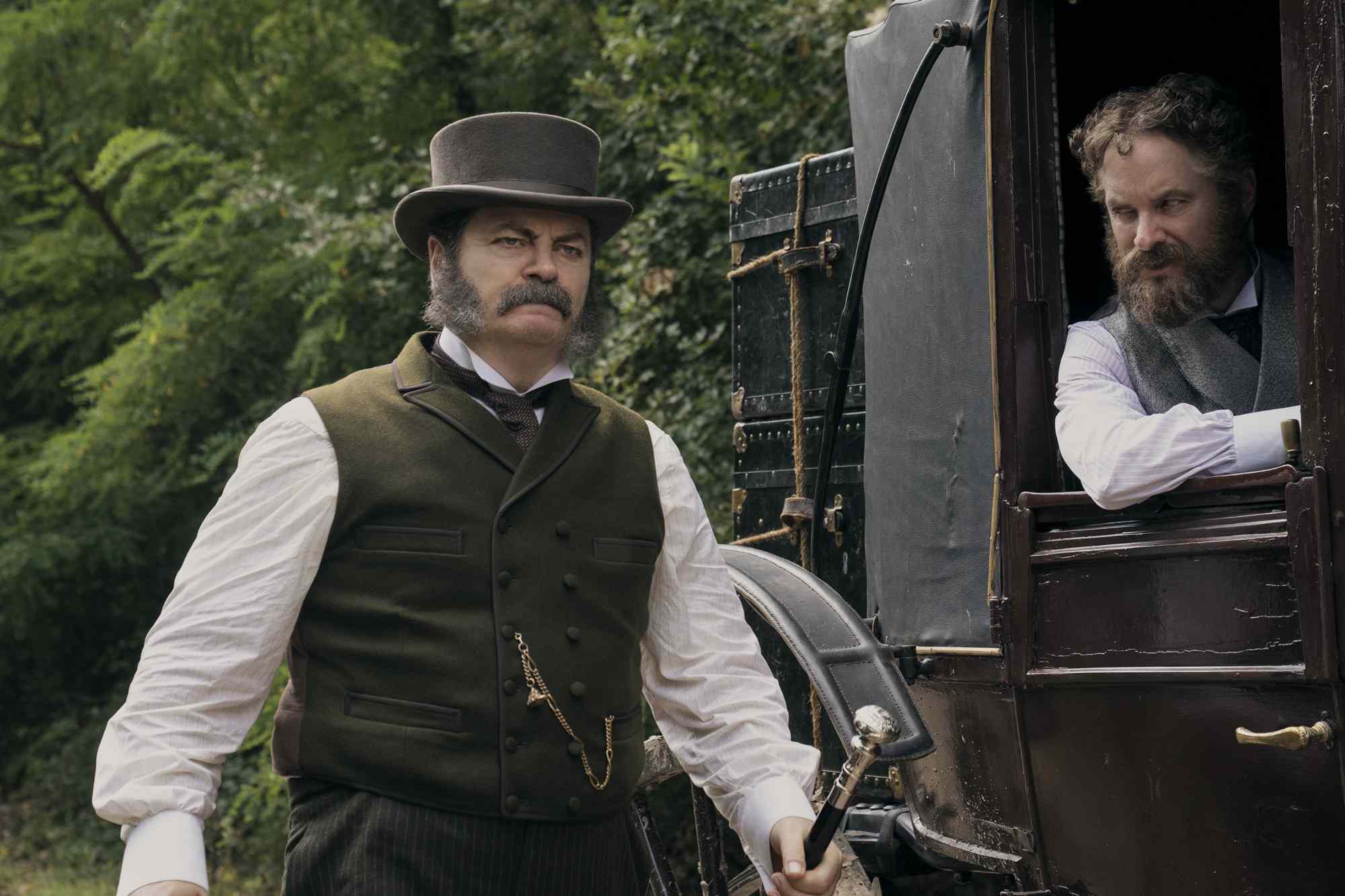
Mike Makowsky: When you have an actor like that, who just shows up and understands the character and how to pitch him so well, implicitly it makes you seem like a real genius. You’re the most grateful when you’re sitting there behind the monitor and you’re watching that guy embody this character. You’re just like, “This is, you know, there’s nothing better.”
And Chester Arthur does have the most defined arc of any character in the show, probably. I mean, he has a very clear and historically accurate redemption.
Steven Prusakowski: I was going to say, he’s got a redemption story and I love it.
Mike Makowsky: He goes from being a lackey of the machine, a sort of bruiser, who had never held elected office in his life, to being accidentally made vice president, to an accidentally made president.
And by the end of the journey, thanks to Garfield in part, he’s really convinced of his better angels and actually rebuffs the Kingmaker who made him and ends up enacting, in theory, enduring civil service legislation and all of the reforms that he intrinsically, endemically was opposed to at the start of the journey.
So, I mean, what a cool journey to be able to portray. And have Nick play that character, and he’s such an amazing blend of humor and unexpected pathos. It’s still somehow, he’s done so many great dramatic roles at this point, people are still surprised when he gets you there, when he makes you cry.
I mean, I don’t think anyone should be surprised after The Last of Us or Hearts Beat Loud or Devs, but he really is working with a very, very full color palette as an actor.
Steven Prusakowski: First of all, going back to what you were saying about makes you look like a genius. Well, you know what? The chef uses the same spices every other chef uses, but you knew which spices to use you make a masterpiece. And if you were to put somebody else in that role, does it work? I don’t know. I don’t know how it could. It would have been hard to conceive of anyone else playing that character.
Mike Makowsky: But, you know, it’s like really, of all of the, and I love every actor on our show, and they’ve done such incredible work. Nick is the only one that I think if he didn’t play Chester Arthur, I don’t know that the show could even happen, you know, just in terms of, I just don’t think that that character would work.
Steven Prusakowski: Well, so much goes through him because the one great moment that I paused it and talked to my daughter about was, you kind of touched upon it, was the machine discussion when he said, “You were a good man, and then you got kind of held down by the system. But now you’re part of the system. Now you’re part of the machine.”
And you could see, that’s what’s great about it. Nick is watching him process. There were a few times that I was like, “This is triggering things.”
Mike Makowsky: It’s those tete-a-tetes between him and Mike Shannon. And they’ve known each other for 30-plus years from doing Chicago theater together in their early 20s. They have such an easy rapport.
And I think Nick also really brings out the unexpected playful side of Michael Shannon. You don’t get to see the playful side of Michael Shannon that often. But that twinkle in Mike’s eye when he’s able to put the screws to Nick Offerman, it’s just like, I think those had to have been Shannon’s happiest days on set. And certainly some of mine, to be able to see them say my dialogue like that. It was like, “My God, you have two masters.”
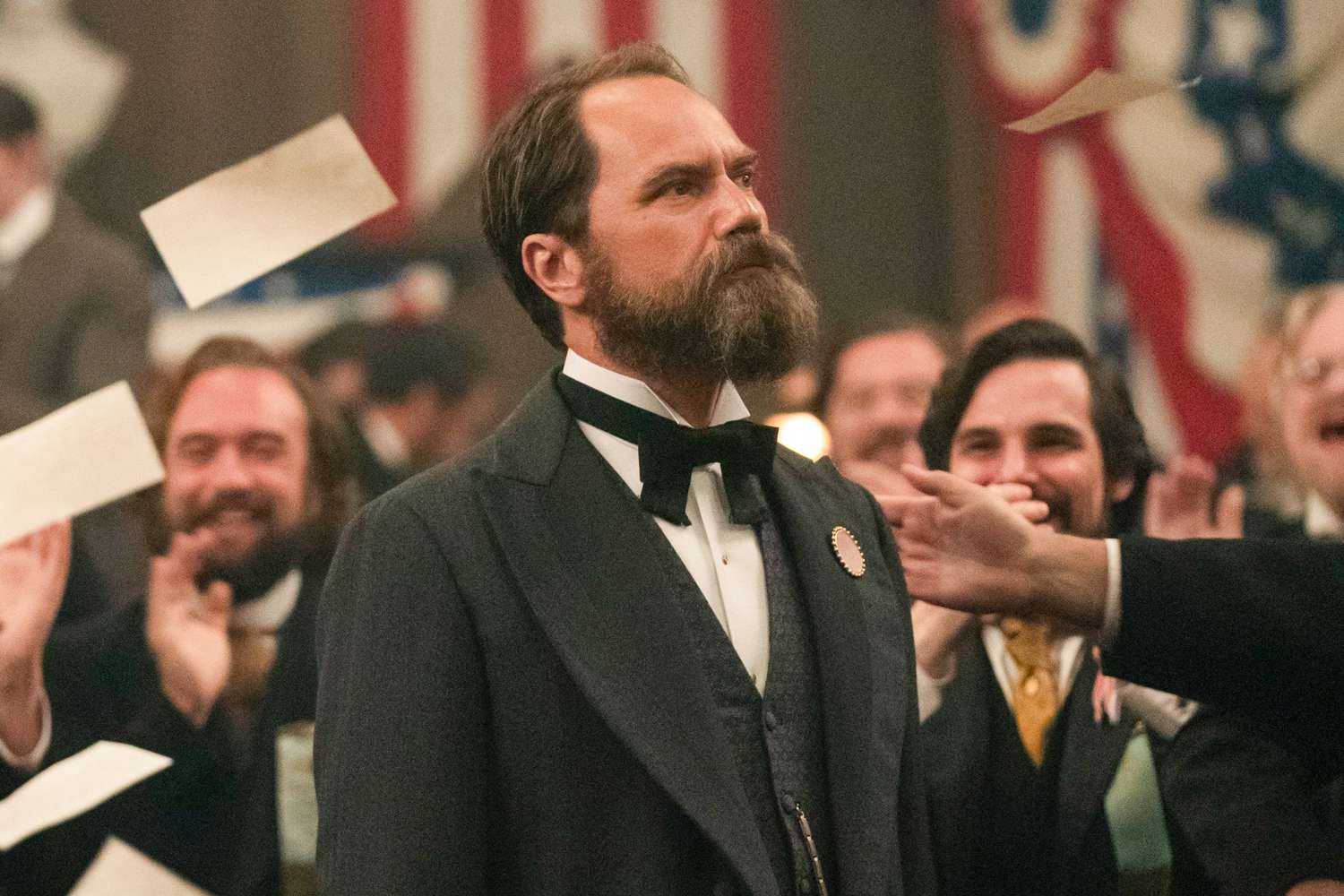
Steven Prusakowski: Michael has a good poker face, and I’d spoken with him and he’s intimidating. But I got to see that twinkle. I forgot what we were talking about, but I got to make him laugh.
And I was like, “Damn it.” If I can make Michael Shannon laugh, and he’s just like, you know, because he just plays back, like, you know, he’s, does this guy have a full boat in his hand or is he kind of a pile of nothing? You can’t read him.
And then he opens up and I was like, oh, he’s such a great guy too.
Mike Makowsky: Radically intelligent, very humanistic. It just does have wells of humanity that you might not readily expect from General Zod at first glance.
Steven Prusakowski: But that’s what he brings to the character too. That’s what shows up on screen. For sure. So I was curious too, what do you think the politicians of this era, of the 1860s, 70s, 80s, would think of today’s world? Would think of where the country has gone?
Mike Makowsky: I mean, I just think that, just for any number of reasons, they would be so fucking baffled by all of it. Yeah. I mean, there’s so much about today’s politics that is completely unprecedented and horrifying.
And certainly there is a nature to institutional corruption, let’s say, and abuses to the civil service that maybe we’re seeing play out on a daily basis, spades of political violence and assassination. There are a lot of eerie modern-day parallels.
But I do think that history, when properly examined, can really serve as a Rosetta Stone for our present moment. And while it might not be totally one-to-one, I don’t think that we had a Donald Trump, although there were certainly Trumpian analogs from that era.
Steven Prusakowski: I think they worked in the circus though, didn’t they? They were showmen.
Mike Makowsky: Yeah, yeah, sure. No offense.
Steven Prusakowski: We didn’t put our faith in change, in running society and making sure everything stays afloat. More snake oil salesmen.
Mike Makowsky: Yeah, exactly. Random cult leaders. The Oneida sex cult. John Noyes. But yeah, I don’t think that we probably not elevated a man to the highest office in our country like Donald Trump. And I don’t know that either our Founding Fathers or the politicians that succeeded them 100 years later, at the time of Garfield’s era, would have been able to fathom that the mechanisms of our government could so spectacularly fail us.
Steven Prusakowski: When you’re watching this you notice there’s a certain limit to these men. They all have their limits, how far they’ll push the system. And they all have their aspirations, where they want to be. And yet, there’s a certain level of, like, “Well, we have to do good. This is, we’re still Americans.” And that’s where I go, where the hell are we now? Because that’s, it’s, we got to the point where like…
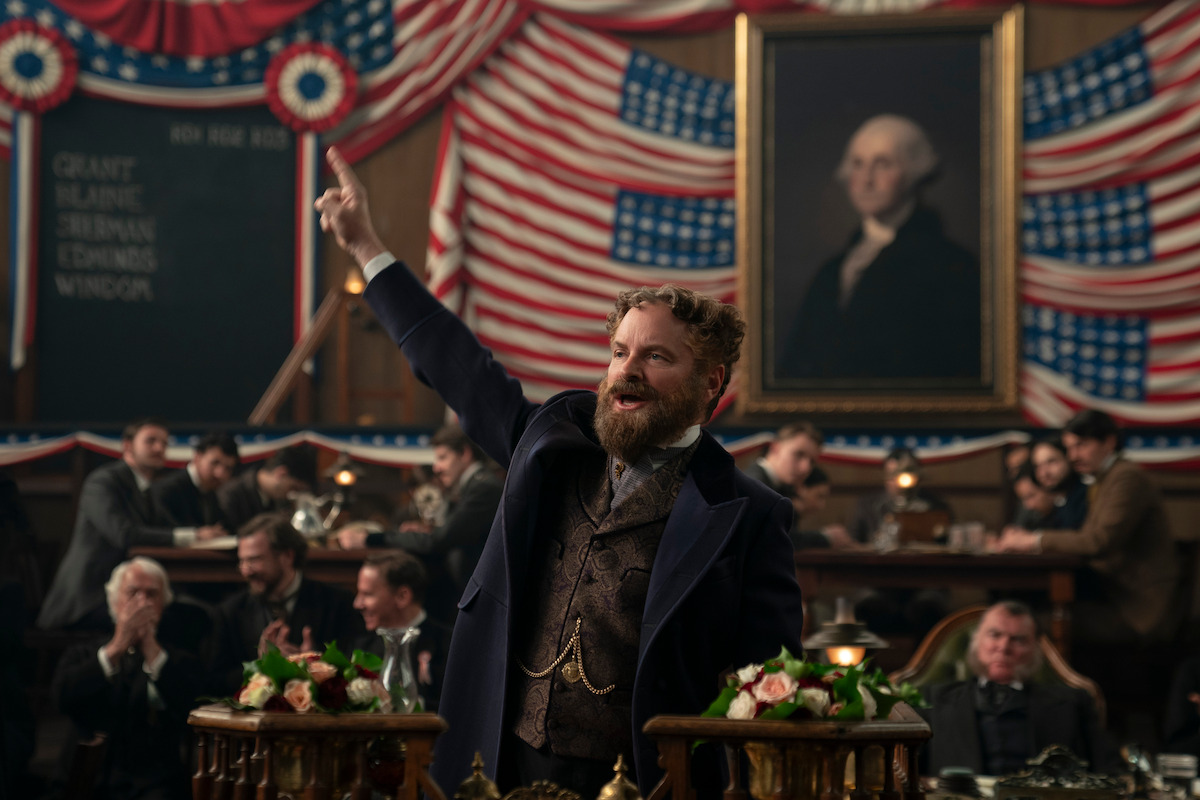
Mike Makowsky: Even Roscoe Conkling (Whigham), and whether or not I gave him his true due and how much I was able to really include of that in less than four hours of a story. But even Roscoe Conkling was responsible for some real hallmark legislation during his time in Congress that really advanced a lot of progressive policy.
Philosophically, Conkling and Garfield agreed on most things, but there were one or two linchpin issues that proved existential for both of their fates. Right. But politically and fatal, they would both be dead by the end of the story.
But yeah, it’s all very interesting to think about for sure. I don’t know.
Steven Prusakowski: And then you weave in the Charles Guiteau (Matthew MacFadyen) side of the story. And it’s like, that’s what’s great. There are these two parallel trains heading to a collision that I don’t even know if either at the beginning know is going to happen, but suddenly everything shifts.
But you’re watching this and it’s, again, a very nuanced telling of who this guy is. My daughter’s asked me, “Why would they, why would he go to his sister and all these different things?” I’m like, “Because he’s a scumbag, because he’s a broken man.”
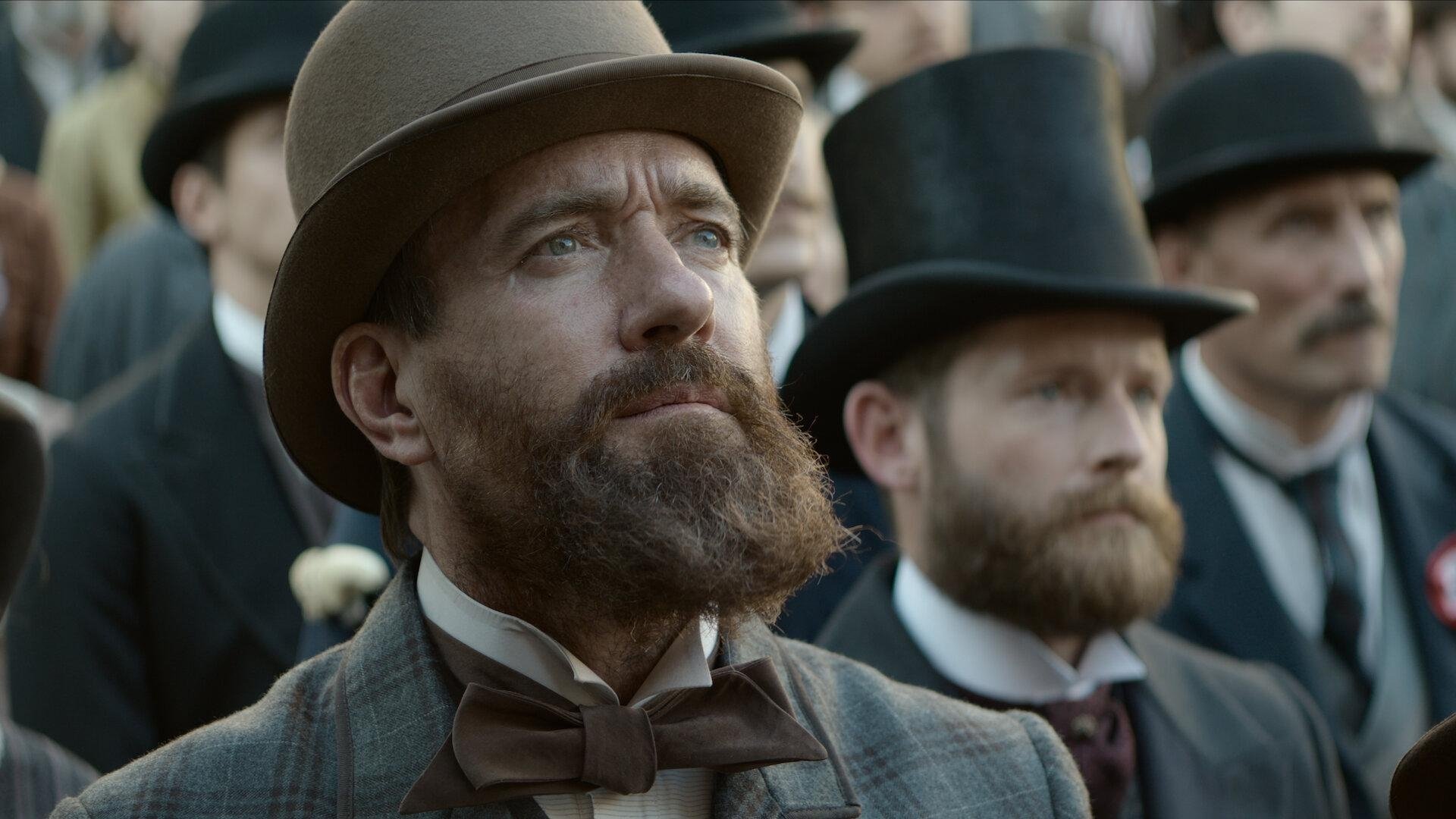
It’s like, he’s not a good person, but he also doesn’t realize how bad of a person he is. He thinks he’s like, and that moment just before his fate is given, and he was like, “Oh shit. I…”
Mike Makowsky: That was a really important moment for me always. And I’ve been, I’ve fought a kind of crazy battle to keep it in the show.
He believes he’s the hero of his own story. He self-mythologizes. All the men in the show do, by the way, to varying degrees. He is quite convinced that his destiny is to matter and be remembered.
And he genuinely, and I took it as genuine and not totally self-serving, but he did, I think, have a genuine desire to be of help and be a part of something larger than himself and help affect positive change on our country.
Unfortunately, he could not separate it from just viewing it through the prism of his own selfish ambition. And certainly the sort of ambition endemic to politics and to male ego, seemingly evergreen, but a prevailing detail in all of these men’s journeys, whether it be Bradley Whitford’s character, James Blaine, who is a ruthless pragmatist, but also is constantly waiting for his shot.
Or Garfield, who insists that he had no designs on being president. But you don’t, and this is my own theory, right, but you don’t get up on that stage in front of 10,000-plus people at your party’s nominating convention to nominate an entirely different candidate. You’re a relative unknown in the national arena.
And you don’t give an Obama in 2004 DNC speech if you don’t kind of want it for yourself. As Alistair Petrie’s character, John Sherman, the aggrieved nominee, says to Garfield early on. And Betty Gilpin, Crete, continues to push her husband on that. He’s like, “Oh, you didn’t want it. You always said you didn’t want it, right?”
And just on his deathbed, he has that conversation with her where he’s like, “I wanted them to know me.”
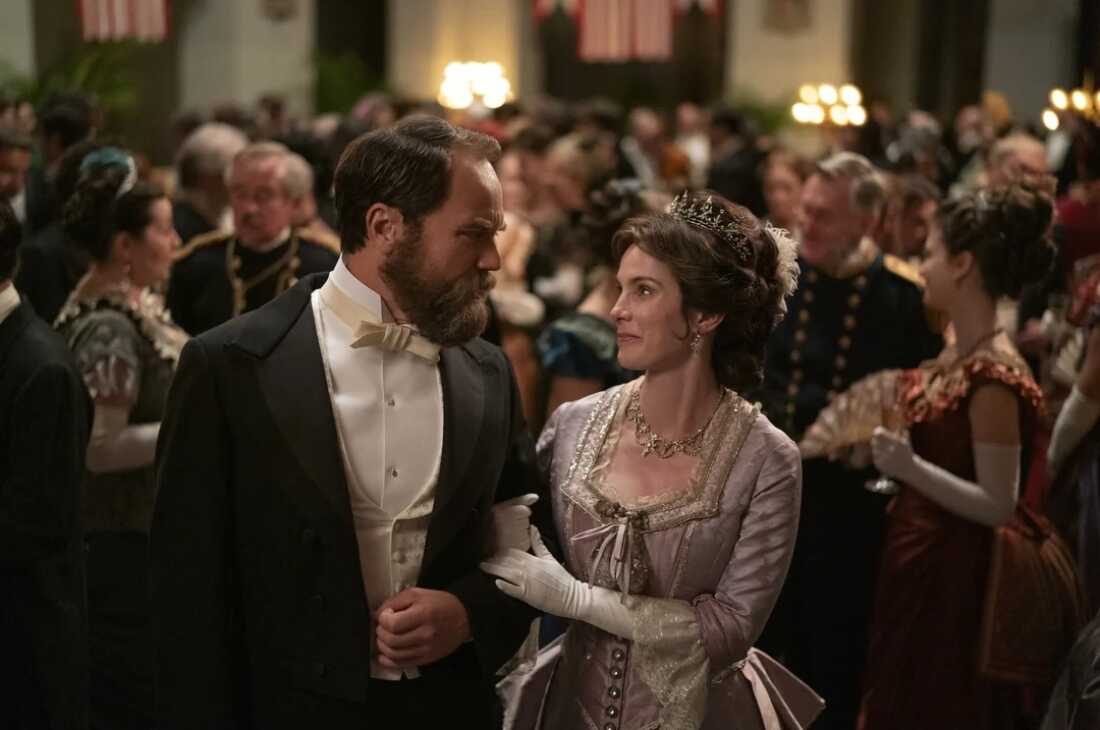
And what I found very telling about, and this actually was a real interaction that Garfield had, short of the last recorded interaction Garfield had before he expired was him asking, “Do you think my name might be remembered in human history, might have some place, some grand place in human history?”
Sorry. It’s been like nine months since the show premiered or whatever. And I just sort of laid that in more word for word because it felt very telling that the last preoccupation on his mind was whether or not he would be remembered.
And Crete, in the case of our show, Betty Gilpin, sort of pauses for a second and she’s like, “Totally. You’re totally going to be remembered, but you’ll have a grander place still in human hearts.”
And that to me felt like really, really interesting thematic territory. And then to be able to give Crete, to give Betty that moment in the jailhouse the night before the execution where she is like, “I lied to him. Of course, he’s not going to be remembered.”
And it is true. We don’t remember James Garfield. We don’t remember the James Garfields.
But the one person that he will have continuing resonance for is Crete and his, and by extension, his family, and the grandchildren, great-grandchildren, the people whose lives that he enriched on a personal level, Chester Arthur.
I think Garfield mattered more than the history books might remember, just by virtue of being this true noble good in a sea of pragmatic pieces of shit.
Steven Prusakowski: Well, and that’s the thing. In this world where you’re seeing all the people taking credit for the masses contributing to their cause and to the tax dollars that are given to supplement businesses and corporations and help raise them up. And then they go, “Guess what? I’m sitting here on my throne. I did this on my own.”
And then at the same time, it’s just like, it all comes down to people would need to be seen. And how many supervillains have we created because someone felt like they were left out? They weren’t in the conversation. They weren’t in the room.
Mike Makowsky: Yeah. It’s a story that still plays out to this day. Like, a good tell would have been on 4chan, right?
These are the profile, the psychological profile and the historical profile of Guiteau. There are uncanny similarities in most, if not all, of these people who have severe enough breaks with reality that they believe that the only possible recourse is to pick up a gun and assassinate a political figure to thus ensure their own notoriety, their own fame.
It’s a fascinating archetype, but also a devastating, horrific one.
Steven Prusakowski: It is. Well, I thank you for your time today. Your work. Excellent. I’ve only got through like a third of my questions because there’s so much.
What’s your favorite one you didn’t get to was, I mean, I don’t know if it’s my favorite, but I was just wondering the legacy. Where would Garfield stand if he had, like, would he be one of the greats? Do you think if he got to complete his term?
Mike Makowsky: Listen, I want to believe that. I think he was certainly the most progressive man ever elected to the presidency up until that point. Which maybe is my conjecture, but certainly his platform was the most progressive ever espoused on a national stage at that point.
But he’s still a man of his era, right? You know, I mean, could he have got there on universal female suffrage, for instance? I don’t know.
He had many grand designs for how he planned to address civil rights, for instance. And his legislative record absolutely had backed that up, up until that point.
And in Blanche Bruce, Stephen McKinley Henderson, we originally had Stephen McKinley Henderson slated to play Blanche Bruce and he had to drop out last minute. And then we have the great Barry Chewack Henley as Blanche Bruce.
In Blanche Bruce, you know, it was the highest station that a Black man had ever reached in the history of our politics. And it sounds, you know, he was the Treasury registrar, which most people can’t explain what a Treasury registrar is.
So it still wasn’t everything, as various characters say in the show, but it was a start. His name, his signature would be on every piece of legal tender produced in the United States. Like, that is something.
But is it everything? Like, yeah. What were the limits of Garfield? I guess we just don’t know.
We don’t know. And I believe he would have been a great, truly great president.
Steven Prusakowski: We don’t have to get into it, but how important is your name on something? Look how important it was for us to get a certain person’s name off of a certain Kennedy Center.
Mike Makowsky: Oh, you didn’t like that.
Steven Prusakowski: We’re not a big fan. Your name on something says a lot. So even if it’s only a small, small step to the greater, it’s a step in the right direction.
You can watch Mike Makowsky’s four time Emmy nominated Death By Lightning, exclusively on Netflix.


Comments
Loading…