
 Sophia Soto
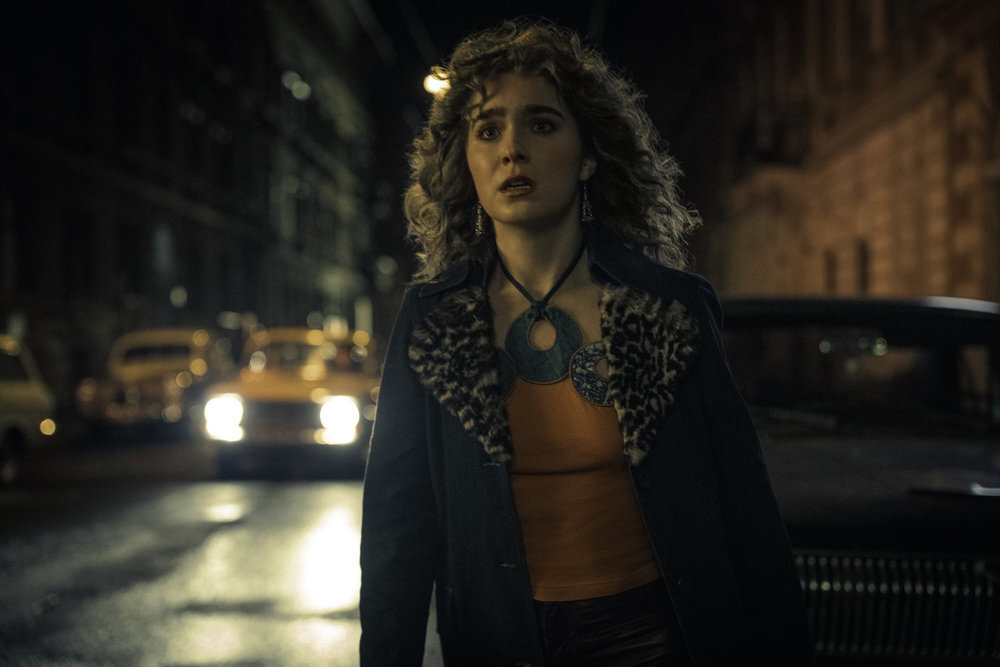
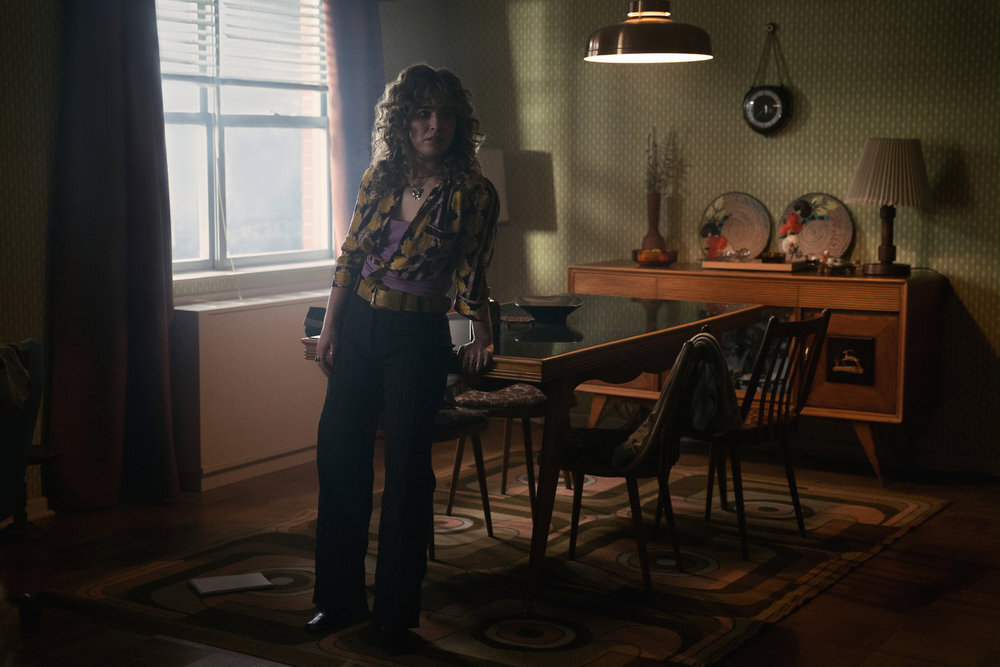
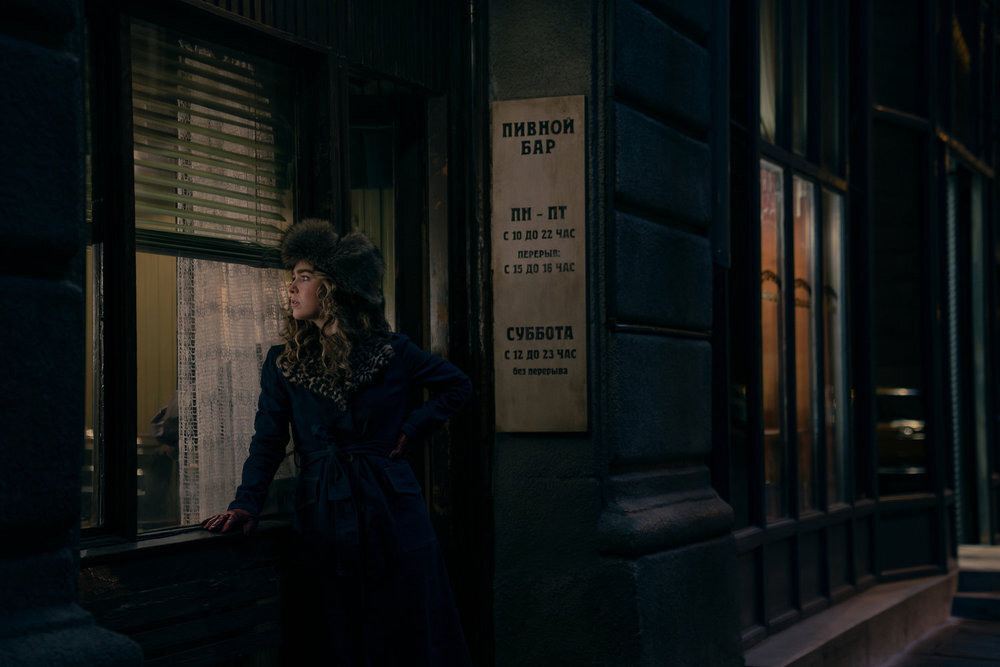
Haley Lu Richardson gives a standout performance as Twila in Peacock’s PONIES, which is set in 1977 Moscow and explores how two “persons of no interest” become CIA operatives.
The heart of the series is the friendship between Twila and Bea (Emilia Clarke) as they work to uncover a vast Cold War conspiracy and figure out the truth behind why their husbands were killed.
Read Awards Radar’s latest interview with the actress below (she recently spoke to Joey here about Good Luck, Have Fun, Don’t Die), where we talk about why she views this role as a “beautiful gift,” how this project changed what she prioritizes in future work, Twila’s season 1 arc, why Bea has become her safe space, and much more.
I’ve been following you and your career for quite a long time, but this performance just really got me, and I am so excited to speak with you about it. Congratulations, seriously.
Haley Lu Richardson: Thank you. That means a lot. Yeah, Twila means a lot to me, so it genuinely means a lot that you say that.
Why do you think it was so important for these two women to find each other at this particular point in their lives? Why do you think Bea was the one who was able to show Twila that it was okay to be vulnerable and trust people?
Well, they are perfect kind of puzzle pieces that fit together in this unexpected, but life-changing and expansive way. But I don’t know if they would have found each other and had the kind of need and trust to fit together and learn from each other, and trust each other in the way that they do if it weren’t for the amalgamation of all these external situations that they share that lead them to do that so naturally. I just think that they’re both, to their core, good, real, powerful, but also vulnerable women, and I think that as they’re thrown into these life-changing situations, their husbands dying, like, what are they left with? Who are they? What do they want to be? Spies? Okay, that’s fucking crazy. Now they’re doing spy shit, and their lives are in danger, and they’re uncovering all this crazy shit, and they really have each other to physically rely on as partners.
It’s the whittling down of these masks that they both wear. Bea’s are definitely more to be perfect, to be liked, and to be good, and Twila’s are strength and the masks of her real kind of vulnerability, shame, and softness. I think that whittling away at these external factors do at them, and them being the only people that they have really, and then them really earning true trust in these crazy scenarios, it’s like, not only are Bea and Twila kind of a perfect opposite mix for them to grow from one another, but then their external situations just make that the most unexpected, fertile ground for them to grow and connect in those ways.

What do you think Twila helped unlock in you that you’re going to carry with you, whether that’s what you look for in a character moving forward or personally?
Oh my God, so much. I guess the simple answer, if I had to pick one real thing that has affected my life the most from Twila is Twila is so many of the things on steroids that I personally have been shamed for being, are insecure about, or have been too much for people and in understanding Twila and playing Twila, I just love her so much and all of those things about her, I love. And so, they’ve made me love those things about myself, which has been a beautiful gift. I’ve never experienced that with a character in my career before, such a personal life shift, personal and positive life shift. So that’s honestly amazing. I played a character that made me love myself more, which is fucking cool because that’s hard to do in life, love yourself.
But also something that I really look for now and value that I didn’t put as much value into before Twila, with projects and characters, is a real personal connection, even if it’s still a totally different type of person than me, living a completely different life, but it’s like, when there’s something that personally is so resonant about a character and story, that’s really a draw for me because I know that there’s a chance that there’s real personal growth and catharsis for me, selfishly. And then, I also know how much I’ll really be able to give artistically to that project when I have that real core connection in the way I did with Twila and her arc through the season. So, that is something that, when I’m like, Oh my God, that is deeply so relatable for me for whatever reason, I prioritize that now more than I did.
I love that. I love how she was unapologetically herself, but it wasn’t for comedic relief. It was for her own beautiful arc, learning vulnerability and its importance because that’s something I relate to as well, and just seeing that on screen and the way you portrayed it was absolutely beautiful.
Thank you so much. Thank you. I have goosebumps at you saying that because, honestly, like I said, I really feel the same way. She was shedding masks, and I felt I was able to shed masks in tandem with her. I really do feel when, as an actor, you feel that when you’re playing a character, it’s all the more chance for someone watching the show or the movie to be able to feel that and have that same kind of cathartic healing journey. I hope people relate to similar things I did with Twila. When you relate, you feel less alone, and it’s easier to kind of let go of things and heal, so I hope she was able to be that for anyone watching.
The spy world is male-dominated, which makes the title of this even more ironic. What do you hope having Twila and Bea as the leads of this show makes audiences think or talk about in terms of the genre and the conversations we’re having around it?
Gosh, you know something that I love so much is, like a decade ago, one of my friends’ dads said this quote; he was like, “Every strength overplayed is a weakness, and that means that every weakness is born from a strength.” So that’s really stuck with me throughout my life because it makes me look at my own weaknesses differently. It’s like, oh, but where does that actually come from? What’s the good in that? How can I balance this out, or use this actually to my advantage? And I think that that’s something that is societally lost on women. So many of our inherent traits are seen as weaknesses, especially in a world like espionage and spy shit.
The things that Twila and Bea inherently are because of who they are and because they’re women are looked at like they’re going to be weaknesses within this world, but a lot of them end up being unexpected strengths that make them crack these codes that weren’t able to be cracked for like decades. That concept’s just really beautiful to me, that these things that — this is another reason why Twila, I think, made me love myself more — is because of just the concept of these two women actually being so powerful because of the exact things that they thought were going to hold them back, you know? So, that’s cool. I look at my “weaknesses” differently now.
At one point, Twila says that she would rather die here than go back. In terms of that quote and who she’s become, do you think she’s changed how she views or values her own life, even though she still has a lack of fear? While she isn’t going to want to go back, do you think this whole journey, being with Bea and who she’s become, has kind of changed how she values herself?
Yes, but I don’t know if that’s consciously happening for her, even by the end of this season. I think what’s consciously happened for her in terms of valuing a life and how she moves through the world, like, she’s kind of actually always only been able to fend for herself because no one else is fending for her. So she has to fucking fend for herself if she wants to get anywhere in life, but I realized in one of the final scenes when we’re interrogating Andrei in the bubble, Susanna [Fogel] asked me randomly in the middle of filming that scene, she was like, “Haley, I’m just curious, from the first scene in the first episode to now this scene, what’s the one main thing you think has changed in Twila?”
I hadn’t really thought about it, but instinctually, the thing that came to my mind was like, well, obviously, she would do anything to protect Bea because she loves her. She cares about her, and she has maybe never felt that way for anyone in her adult life, I guess, maybe since her dad. But I don’t think she’s ever really put someone else first or truly cared for someone else and their livelihood until Bea. So if there’s a second season, maybe she could really start kind of having more of a conscious love and respect for her own self and life. But I think what she’s really conscious of by the end of the first season is, Oh my God, I actually would do anything for this person, this other person. That’s my friend, that’s my actual friend that I love. Like, what the fuck?
I don’t even really know if she’s consciously valuing her own life yet because the things that she’s had to kind of fight for weren’t necessarily her life, but they were like her dignity. I mean, I guess it is her life in a way, but to a point where it’s not really valuing herself and the person she is, it’s just on a primal level. She’s had to fend for herself since she was a kid, but then the emotional valuing [of] someone else’s life and being willing to sacrifice anything for their safety because of this love you have for them, she experiences with Bea for, I think, the first time.
In the final episode, Twila opens up about her childhood and the death of her dad. Do you think that’s the first time she’s ever told anyone that, and is it the first time she’s been told that she matters? What did that moment and hearing those words from Bea, of all people, mean to her?
Yes, I think it’s the first time she’s ever said those things out loud to anyone, and I do think it’s definitely the first time someone looked at her and honestly said that you matter, because that happens at the end of the last episode, so I think that’s a new concept to Twila that she matters, you know? Because it’s like, when you live a life that you’re literally fighting for survival, and no one supports you on any level, it’s hard to even start the healing journey or the journey to awareness that you matter, even on an emotional level, like on a vulnerable level that your feelings matter is such a foreign concept to someone who’s had to fight for just their life. So, being vulnerable and being told that those feelings matter is like, yeah, it’s a foreign concept. It’s probably going to unlock a totally new chapter of her existence and her relationship with Bea, obviously, and even more deeply, her relationship with herself.
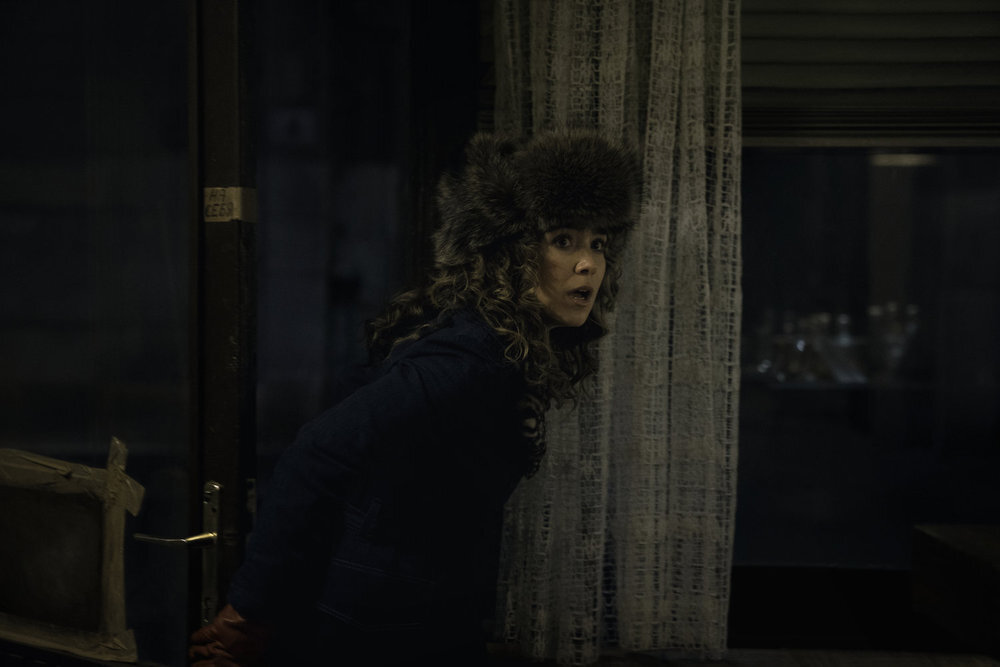
We didn’t get to see much of Twila and Tom, but Tom originally loved that she wasn’t like other women, only to then tell her that he wanted her to be more traditional after they got married. So she felt like she was always disappointing him for not being that person, and while the show takes place in the ‘70s, it’s something that we can still connect to. For you, when you have a piece of dialogue like that, and you are embodying a character that, like I said, is supposed to be from the ‘70s, but is still facing themes that women are facing today, what does that mean to you from a storytelling perspective?
Oh, God, you know, that is — I really appreciate your questions, and I feel very aligned with you because these things that you kind of took away from Twila are what attracted me to needing to play her. There are so many parallels that are resonant with things that I’ve gone through and things that Twila is actively going through, and that’s why it was really so healing for me. But I remember when I first got the offer and read the first episode, one of those first scenes was that argument with Twila and Tom, and there was a line that was cut out that I was actually so sad about and really tried my darndest to get them to add it back in because it was so meaningful for me and I knew it would have the chance to be so meaningful and resonant to so many people watching.
But in that argument, Tom said, “You are too much, you’re too loud, you drink too much, you’re embarrassing,” and Twila was like, “You used to love that about me. You used to love that I was so much.” I read that, and I already felt an instinct that I wanted to do this show, but then I read that interaction and I was like, damn, I have to be Twila. I have to be her, because this is so pertinent in my experience of life so far, being shamed in this manipulative way in relationships, that it’s like, the thing that attracts someone to you is this alotness, but then it’s the thing that they use against you in the end and just the amount of shame and then, overcompensating with all the masks and armor she wears, it was so resonant.
Like you said, it’s not exclusive to the ‘70s. This is something that I’m dealing with now, that my friends can relate to, that I hear people talk about left and right is this like, what does it mean to be deemed too much and what shame that we carry is actually ours from being too much in actual harmful, offensive ways to people versus the person who’s projecting that we are too much for them, when is it a them issue versus something that we have to face or that’s real within ourselves, if there is anything that’s real within that, you know? Or is it really just projection and someone’s own kind of insecurity or insufficiency that they’re dumping on us? It’s definitely an interesting journey to separate what is actually mine or Twila’s shame, or areas to grow, versus what is just some insecure man that actually hates himself. So that was very interesting for me, and yeah, therapeutic.
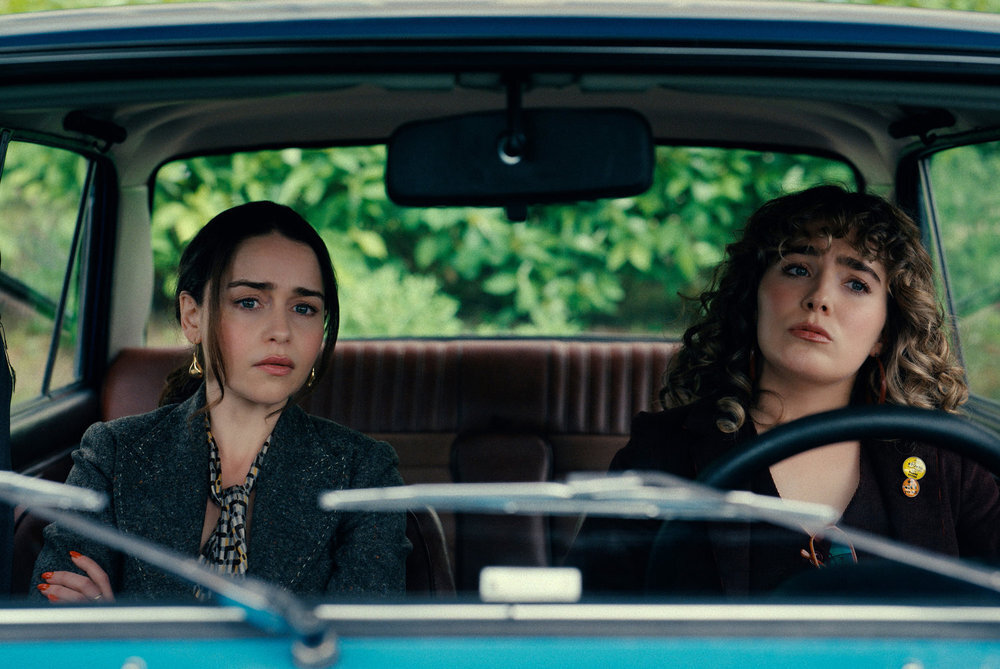
We also find out the truth about the miscarriage, going from her saying she had a miscarriage earlier to peeling back the onion and finding out that she actually couldn’t have kids. For you, what did that represent in terms of the front she put up, then unraveling who she is and becoming free?
Well, she lied about that to Tom and to everyone because it was self-preservation. She needed to get out of this small town, and her way of doing that was getting this guy to marry her, and he wouldn’t marry her, want to stay with her, and show her a bigger life if he knew that she couldn’t be a mother and give him a kid. All of this kind of lying and masking was out of self-preservation and finding a true safe space with a woman that becomes her friend, like, to be able to say these things, these things that have been these lies and the shame she’s carried in these mistakes and this regret, and she’s just had to carry the burden of that to be able to get through life, and to be able to get out of truly abusive, awful situations. So all of that has been self-preservation, but she’s carried the burden of it, which is inhibiting her from tapping into her real self, her real power and capabilities, and yada, yada, yada.
But finding a real safe space in Bea to be able to just dump that all out the way she did, and knowing that Bea didn’t come back at her with, “Oh my God, how could you,” because Twyla is saying that in her mind, like, ‘How could you have done this, Twila? You lied to everyone. You’re an awful person. You’re a fraud. You’re too much. You’re all these [horrible things],’ you know what I mean? Like, all this shame and all these voices that she carries within her, and to be met with being fully vulnerable and honest with a friend, and the friend not just saying, “How could you have done all that,” but saying, “It’s not your fault, and your feelings matter,” is so powerful. That’s why real relationships, whether they’re the safe space of a female friendship or just any safe space, family, a romantic relationship, or friendship, are literally the most beautiful thing in the world to be able to have that kind of trust that you can be, say, and do anything, and someone will unconditionally accept you and be there for you. It’s really important.
Haley, thank you so, so much for this. I really appreciate it. Thank you for your openness. I adore this character, and I love your performance.
Thank you so much. This meant a lot, this interview.
All episodes of PONIES are now streaming.


Comments
Loading…