

 Maxance Vincent
The first season of Marvel’s Daredevil: Born Again was a tale of two creative visions, one that suffered a creative overhaul after a good chunk of the series was shot to incorporate closer ties to the Netflix series. Once directors Justin Benson and Aaron Moorhead were brought into the fold after showrunner Dario Scardapane joined the series, the directorial duo known for their unique visual style brought expressive, heightened colors to the look and feel of Daredevil, while also employing key aspect ratio changes to visualize a non-visual superpower.
With the second season of Daredevil: Born Again now having a clear creative vision from beginning to end, cinematographer Hillary Fyfe Spera, who worked on episodes one, two, five, and six of this season, explained to Awards Radar on Zoom that season two allowed the creative team room to evolve the aesthetic that was established in the first season:
“The lensing is the same for seasons one and two. We shot with the Alexa 35 and Panavision G and T-Series primes. We were anamorphic for both seasons. All of that remains the same. Starting off in season two, it was great that we had a really cohesive plan from the beginning, in terms of the storyline and where we knew it was going to go, arc-wise. By the end, we could do the same with the visuals. We could follow a visual arc from beginning to end. In season one, it obviously suffered from a lot of rearranging that we didn’t have in season two. It made the season much stronger. We did use season one as a launch place. However, for season two, we were able to really evolve and develop it, while still maintaining that foundation that was built in the last season.”
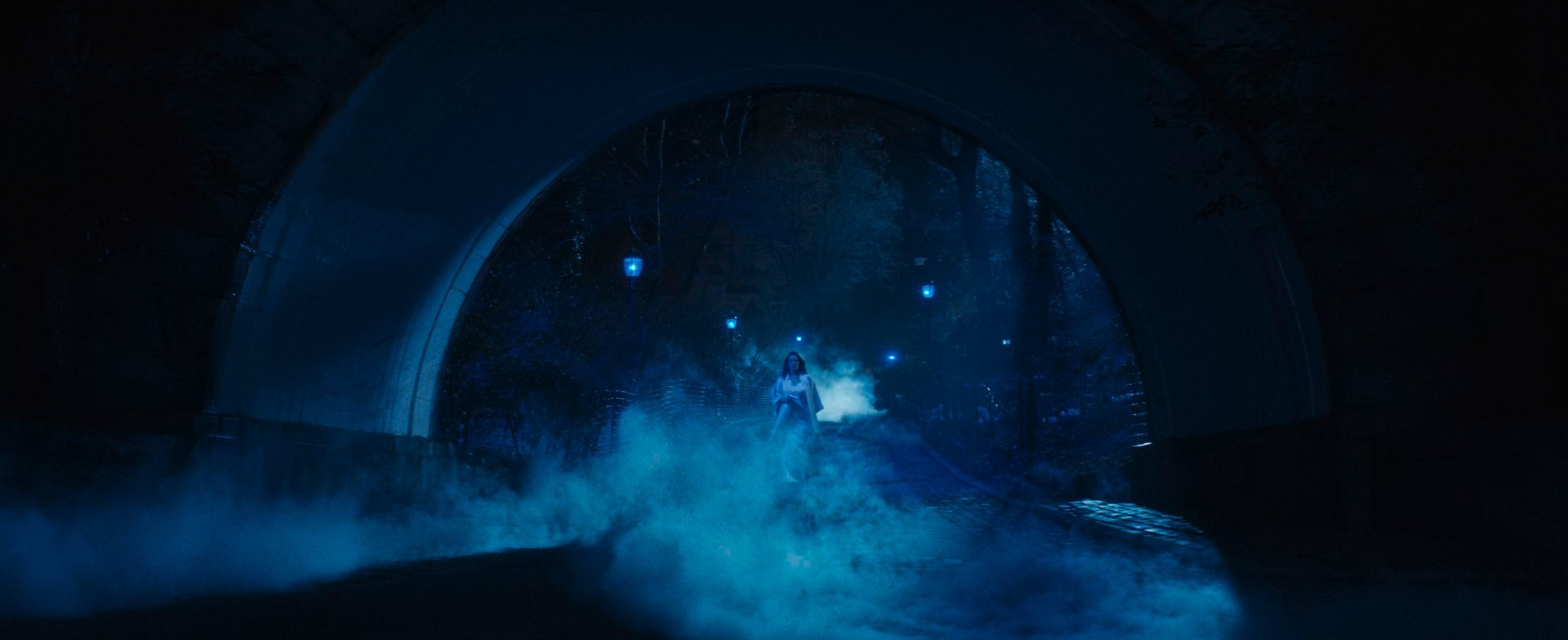
Spera’s collaboration with Justin Benson and Aaron Moorhead has also evolved, stating that “they’ve become incredible collaborators, and we’ve become all really close. I feel so thankful for that. It’s been really fun to have that consistency in that through line. We were able to build that relationship in season one, and when we came back for season two, there was a place to start. A lot of the stuff we did, which I ended up being just infinitely proud of, such as the sensory powers, our dolly zoom, aspect ratio changes, some of the color changes, and the interactive lighting we developed in season one.
We started doing those in season one, but went bigger and harder with season two. The Bullseye lighting effect is one of my absolute favorites. I loved where that went, and it was great to have that through line, because when it showed up in season two, I just felt like it was that much more. The sensory moments feel like big payoffs in season two because we’ve already established the language. So it’s really fun to come back and have a place to start. There was a lot of blood, sweat, and tears to figure them out in season one.”
Of course, there was much to break down on the visual look of this season, perhaps too much, but the extended conversation you’ll hear below discussed many of the significant setpieces of the season. Among other topics, we talked about the opening sequence of the show’s first episode, the use of the Dutch tilt to signify Heather Glenn’s (Margarita Levieva) shift into Muse, Vanessa’s (Ayelet Zurer) Lynchian nightmare, the use of Biblical imagery as Matt Murdock (Charlie Cox) enters a church for the first time in a very long time, matching the look of the Netflix series during flashback sequences, and Jessica Jones’ (Krysten Ritter) reintroduction in the season’s sixth episode.
Listen to the full conversation below and stream all episodes of Daredevil: Born Again on Disney+ today:
[Some of the quotes in this article have been edited for length and clarity]


Comments
Loading…